
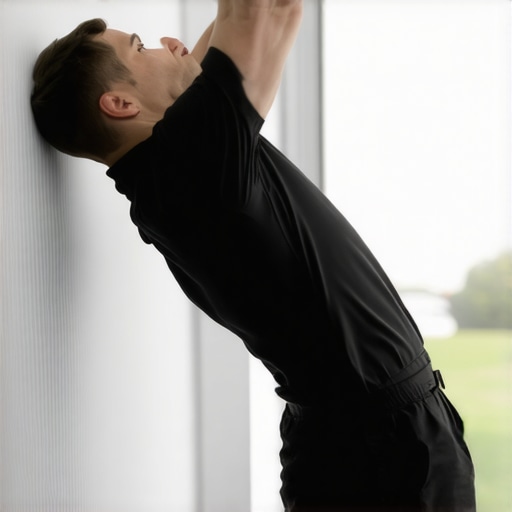
Ever felt that sinking sensation of frustration when you catch a glimpse of yourself in the mirror and realize your shoulders have started to round forward again? I remember the moment vividly—standing there, feeling defeated because no matter how many stretches or fancy gadgets I tried, nothing seemed to stick. It was as if the postural issues had a stubborn mind of their own, sneaking back just when I thought I was making progress. That lightbulb moment—realizing the power of a simple, quick movement—completely shifted my approach.
Today, I want to share with you a game-changing technique that takes just three minutes but can have a lasting impact on fixing those rounded shoulders. And trust me, I’ve been on both sides of the mirror—knowing the struggle firsthand—and I’ve seen how small, deliberate actions can turn the tide.
Why Poor Posture Isn’t Just About Looks
Many of us dismiss slumped shoulders as a minor cosmetic issue, but it’s about so much more. Rounded shoulders often lead to neck pain, headaches, and even decreased lung capacity. Plus, the emotional toll—feeling self-conscious or tired—can be surprisingly significant. I’ve seen countless clients (myself included) fall into the trap of repetitive habits—slouching at desks, scrolling on phones, or sitting too long without breaks—that reinforce this postural pattern.
What’s more, traditional stretching routines often fall short because they target the wrong muscles or ignore the root cause. For example, focusing only on your chest muscles without addressing the upper back usually leaves shoulders poised to slide forward again. That’s when I discovered the astonishing effectiveness of a simple mobility drill that I now swear by—the 3-Minute Wall Slide.
This move is not about quick fixes or miracle cures. Instead, it’s about resetting your muscle memory, engaging the right muscles, and creating a healthier movement pattern. It’s a practical step that complements any posture improvement plan.
If you’ve been struggling with persistent rounded shoulders despite your efforts, I’ve been there. And I want to help you break free from that cycle. By the end of this post, you’ll understand exactly why this exercise works and how to incorporate it into your daily routine.
But first, let’s clear a common misconception that might be holding you back—does this really work? Is it worth your limited time? Keep reading, because I’ll answer these questions in the next section, along with the common pitfalls I encountered early on and how I learned to avoid them.
Get Set for the Wall Slide
Start by finding a clear space near a wall with enough room for your arms. Stand upright with your back flat against the wall, feet shoulder-width apart, about a foot away from the wall. Keep your buttocks, upper back, and head gently resting against the wall. This initial setup is like calibrating a machine before operation—ensuring your baseline is correct.
Position Your Arms Correctly
Raise your arms to form a 90-degree angle at the elbows, with your hands pointing upward. Imagine holding a goalpost—your elbows should be aligned with your shoulders, and your hands should stay close to the wall as you move through the exercise. Keep your shoulders relaxed but engaged, like bracing for a gentle push. This positioning targets the upper back muscles while keeping your shoulders rooted in healthy alignment.
Engage and Move
Slowly raise your arms overhead, sliding your hands upward along the wall, aiming to reach as high as comfortable without losing contact. Focus on squeezing your shoulder blades together—it’s like trying to pinch a coin between them—while maintaining contact with the wall. Then, lower your arms back to the starting position with control. This movement acts as a reset button for your shoulder mobility, retraining your muscles to maintain proper alignment throughout the day.
Maintain Proper Breathing
Inhale as you prepare to lift your arms, and exhale slowly as you move upward, emphasizing a smooth, controlled motion. Think of your breath as a buoyancy aid—helping you stay relaxed and maximizing muscle engagement without tension. Proper breathing ensures your nervous system remains calm, which is crucial for motor learning and postural adjustment.
Repeat with Precision
Perform 10-15 repetitions, focusing on movement quality over speed. It’s better to do fewer reps consciously than many haphazardly. During my first attempt, I watched myself in the mirror—initially jerking my arms or letting my shoulders shrug—until I corrected my form. That mess turned into a valuable lesson: consistency and care in each rep build durable, positive change.
Integrate into Daily Routine
Do this exercise twice a day, ideally morning and evening. Think of it as brushing your teeth—simple, routine, and essential. Over time, this drill signals your nervous system to adopt better posture habits, akin to rewiring a stubborn circuit. Remember, the goal is to reinforce the correct movement pattern, not to push through pain or fatigue.
Adjust and Progress
Once this feels natural, you can increase challenge by adding light resistance bands or extending your range of motion. But never compromise form—quality is king. For more insights into enhancing your mobility, check out targeted mobility exercises and practical chiropractor strategies.
Many people assume that chiropractic adjustments alone will fix postural issues and mobility limitations, but this oversimplification misses crucial nuances. The truth is, relying solely on quick fixes like adjustments or stretches often leads to temporary relief rather than sustainable improvement. In fact, a common myth is that passive treatments—such as receiving adjustments or applying foam rollers—are enough to correct ingrained movement patterns. However, research shows that active engagement and targeted mobility exercises are essential for lasting change, as highlighted in this comprehensive guide. Understandably, many fall into the trap of thinking muscle tightness equals poor mobility, but sometimes over-flexibility can be a problem too, leading to instability rather than mobility.
Another misconception is that more stretching is always better. While flexibility is important, excessive or improper stretching can disrupt joint stability and nerve function if not paired with strengthening and mobility drills. This is why integrating specific exercises, like targeted mobility routines, is crucial.
Take caution with the idea that all adjustments are the same; many clients I see have misconceptions about the ‘pop and crack’ being the ultimate fix. The reality is, skilled chiropractors focus not just on spinal alignment but on retraining your nervous system to maintain those adjustments through movement correction and neuromuscular training. A pivotal question to consider:
Is Your Posture Problem Rooted in Muscle Imbalances or Neural Patterning?
Often, the stubborn persistence of rounded shoulders or forward head posture stems from brain-based movement patterns rather than structural issues alone. Addressing these requires advanced strategies, including neuroplasticity exercises and proprioceptive training, not just mechanical adjustments. This layered approach is supported by studies like those from the NHS evidence.
Misconceptions also extend to the role of mobility exercises. Many believe stretching or foam rolling is enough, but neglecting strengthening and neural retraining can limit progress. For example, combining mobility drills with stability exercises results in better postural corrections, as outlined in these expert tips.
Remember, the key lies in understanding that posture correction is a dance between mechanical, neurological, and behavioral factors. Simply cracking your neck or stretching your chest isn’t a comprehensive solution. Instead, cultivating awareness, coupling adjustments with active mobility, and correcting movement habits create lasting change.
If you’re committed to transforming your posture beyond superficial fixes, I encourage you to explore a layered approach that involves both passive and active strategies. Have you ever fallen into this trap? Let me know in the comments and share your experiences. To learn more about implementing these techniques into your daily routine, check out this deep dive.Maintaining your posture improvements over the long term requires more than just occasional stretches or adjustments. It involves integrating effective tools and consistent habits into your daily routine. One of my top recommendations is utilizing targeted mobility devices, such as the foam roller and massage balls. I personally keep a dense foam roller in my設定space because it helps release muscle tightness in my upper back and shoulders, preventing regression into poor posture. When used properly, as described in this guide, foam rolling can enhance tissue flexibility and neural mobility, which are crucial for lasting results.
In addition, investing in a posture corrector brace can serve as a reminder to maintain proper alignment throughout the day. I recommend using it sparingly—primarily during prolonged desk work—to reinforce good habits. However, over-reliance can weaken your muscles, so it’s vital to pair this with active exercises. Speaking of exercises, integrating mindfulness apps like Peloton or Apple Fitness+ can help track your mobility routines and remind you to perform your daily drills, keeping you accountable.
For virtual assistance, I use specialized posture tracking software that provides real-time feedback. These tools analyze your movement via camera or motion sensors and suggest corrections, enabling you to fine-tune your habits without needing constant therapist supervision. While technology continues to evolve, nothing replaces the importance of personal awareness and deliberate practice. Regularly reviewing your progress and adjusting your routine is essential, and many professionals recommend recording short videos of your exercises to observe improvements and identify areas for correction.
Looking ahead, the trend is moving toward intelligent wearable devices that monitor posture and muscle engagement throughout the day. Companies are developing smart garments equipped with sensors that vibrate to alert you when your posture falters. I predict this fusion of tech and movement correction will become standard practice, making maintenance more intuitive and continuous.
So, how do I sustain my postural gains over time? The key is consistency combined with the right tools. Incorporate foam rolling sessions into your evening routine, use a posture brace selectively, and leverage technology to stay aware of your habits. Remember, lasting change isn’t about perfect posture all the time—it’s about building resilient movement patterns that become second nature.
To truly lock in these improvements, I challenge you to try one advanced tip today: use a foam roller as I described to release upper back tension before your main mobility work. It’s a small step that can vastly improve your progress and help prevent regression. Keep experimenting with the tools that work best for you, and stay committed to the journey of better posture.After countless setbacks in my posture improvement, I realized that some of the most valuable insights came not from the exercises themselves but from the misconceptions I had along the way. One lightbulb moment was understanding that consistency beats intensity—doing a little each day truly outperforms sporadic, intense sessions. Another was recognizing that passive treatments are only part of the solution; active mobility and neural retraining are essential for lasting change. Finally, I learned that patience and self-awareness are the real drivers of progress, turning a frustrating cycle into a sustainable habit. Implementing these lessons transformed my approach and can do the same for you, helping you develop resilient, lifelong posture habits.