
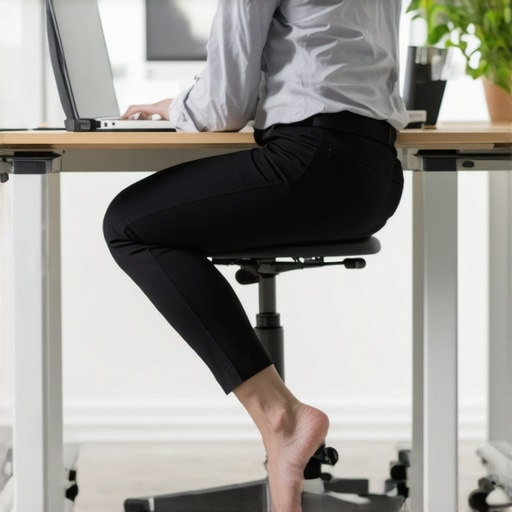
I remember the first time my ankles swelled up after a long day spent at my standing desk. It was a frustrating and confusing experience—one that caught me off guard because I had believed that standing would help improve my posture and reduce discomfort. Instead, I woke up the next morning with tight, swollen ankles that made every step feel like a chore. That moment was a lightbulb for me: sometimes, our solutions can come with unexpected side effects.
Why Standing Desks Might Be Sabotaging Your Mobility
Standing desks have become quite the health trend, promising to combat the pitfalls of sitting all day. But for many, especially newcomers, they can turn into a double-edged sword. In my case, I didn’t realize that prolonged standing could hinder circulation and lead to swelling, particularly in the ankles. These tiny but persistent issues can snowball into bigger health concerns if ignored. According to recent research, standing for extended periods without movement can actually increase the risk of varicose veins and edema—conditions associated with poor blood flow and fluid retention (Healthline).
Is the hype about standing desks actually worth the hype?
This was a question I had early on, and honestly, I made some mistakes that I won’t repeat. I believed that just standing more was enough, without paying attention to movement or posture. It seemed logical—right? But the reality is more nuanced. A standing desk isn’t a magic fix; it requires proper use and understanding of your body’s limits. The key is not just standing but engaging specific adjustments and micro-movements that help maintain circulation and reduce strain.
Handling my own experience, I learned that making simple changes—like shifting weight, taking breaks, and incorporating targeted stretches—can transform the standing experience from a source of discomfort into an energizing practice. Want to learn how to avoid the pitfalls and truly benefit from standing desks? Stay with me, because the next sections will guide you through practical strategies that can help you stand smarter, not harder.
Master Your Micro-Movements to Boost Circulation
Imagine your body as a well-oiled machine – if you keep the same position for too long, parts start to seize up. During my early days using a standing desk, I would often stand rigidly, thinking I was doing it right. But I noticed my legs and ankles aching after just an hour. The fix? Incorporate micro-movements like shifting weight from heel to toe, side to side, or rocking gently. These subtle shifts stimulate blood flow and keep tissues healthy.
Set a Timer to Remember Movement
Just like a coach keeps athletes alert, set a timer every 15-20 minutes to remind yourself to move. When the buzzer rings, perform a quick sequence: shift your weight, stretch your calves, and wiggle your ankles. I started doing this and doubled my endurance at the desk without discomfort. Think of it as tuning your body’s lubrication system each time you reset.
Adjust Your Posture for Optimal Alignment
Aligning your body correctly prevents strain and encourages mobility. It’s like assembling furniture: each piece must fit perfectly. Place your monitor at eye level to avoid craning your neck, keep your elbows close to your sides, and distribute your weight evenly across both feet. I struggled at first, often tilting to one side, which caused a hip tilt. Once I used a small cushion under my standing foot, my pelvis balanced out, reducing lower back pain.
Use a Chiropractic Technique for Immediate Relief
If your posture feels off or you’re experiencing persistent discomfort, consider a quick chiropractic adjustment. These targeted tweaks can realign your vertebrae and joints, restoring smooth movement and reducing inflammation. I experienced immediate relief after a session, and the difference lasted for days. To deepen your understanding, explore how chiropractic adjustments enhance posture and mobility by visiting this detailed guide.
Incorporate Dynamic Breaks into Your Routine
Static standing is just part of the puzzle. Incorporate dynamic stretches like leg swings, hip circles, or gentle squats to activate muscles and improve joint mobility. Think of your body as a hinge that loosens up with movement. During a recent workday, I paused every 10 minutes to perform a quick set of hip openers, which noticeably reduced stiffness and boosted alertness.
Apply Targeted Exercises to Reverse Postural Imbalances
Over time, certain muscles become tight while others weaken, leading to imbalance. Targeted mobility exercises can counteract this. For example, if you notice rounded shoulders, try the revolutionize your posture with targeted mobility exercises by visiting this resource. Consistent practice restores symmetry and enhances overall mobility, reducing the risk of chronic pain.
Integrate Breathing Techniques for Relaxation and Posture
Deep diaphragmatic breathing not only calms your nerves but also supports proper posture by engaging core muscles. I adopted a simple 3-minute breathing routine that helped relax tight chest muscles and encouraged an upright stance. When I focus on slow, deep breaths, my shoulders naturally roll back, and spine elongates.
Leverage the Connection Between Breath and Movement
Integrate breathing with your micro-movements and stretches. Inhale as you expand, exhale as you settle into a stretch or shift. This synchronicity enhances tissue elasticity and promotes efficient circulation, making every movement more effective. Consider exploring how breathing impacts mid-back relief by visiting this article.
Many people assume that all adjustments, stretches, or chiropractic techniques are created equal, but this couldn’t be further from the truth. **One common myth is that any spinal manipulation guarantees long-term mobility improvements**. In reality, the effectiveness of a specific technique depends heavily on proper application, timing, and how well it integrates with your body’s unique biomechanics. For example, a gentle chiropractic adjustment can unlock immediate relief, but without subsequent targeted exercises, the gains may quickly fade. As highlighted by Dr. Robin McKenzie, the key lies in tailoring interventions to individual postural patterns, instead of relying on one-size-fits-all solutions (source).
Keep It Working: Essential Tools and Methods for Long-Term Posture Health
Maintaining your newfound mobility and posture improvements requires more than initial efforts; it demands consistent use of effective tools and techniques. Personally, I’ve found that integrating specific equipment and routine adjustments can sustain progress and even scale your results over time.
One game-changer is the use of a foam roller, especially the Tennis Ball Arch Technique. I incorporate a small, firm ball into my daily routine to target tight spots and trigger points in the upper back and shoulders. This DIY approach provides immediate relief and prevents the re-accumulation of adhesions (source). For long-term maintenance, I schedule weekly sessions to address stubborn areas, much like a regular chiropractic tune-up.
Another must-have is a posture-crompting wearable device. I personally use a smart posture trainer that vibrates gently when I slump or lean forward. This real-time feedback trains my subconscious to adopt better habits and reduces strain during desk work. Recent advancements in biofeedback technology suggest these devices can rewire neuromuscular pathways, leading to improved postural reflexes (future trend).
Complementing physical tools, software apps like posture monitors on your smartphone can help track progress and remind you to stay active. I use a dedicated app that prompts micro-movements and stretches based on my schedule, ensuring I don’t fall into prolonged static positions. This integrated approach helps sustain circulation, especially in areas prone to stagnation, such as the ankles and hips.
Looking ahead, increasingly sophisticated AI-driven platforms are emerging that analyze your movement patterns via wearable sensors. These systems can prescribe personalized routines and adjustments, making long-term maintenance more accessible and effective. As this technology evolves, expect a future where posture correction becomes seamlessly integrated into daily life, ensuring your mobility remains robust and scalable.
How do I maintain my mobility and posture over time?
The secret to lasting results lies in a combination of targeted tools, disciplined routines, and adapting to evolving needs. Regularly re-assess your posture and mobility, incorporate my recommended foam rolling and biofeedback devices, and stay engaged with expert-guided routines. To explore more advanced strategies, consider consulting professional resources like this comprehensive guide and stay proactive in your journey towards a pain-free, mobile lifestyle. Don’t wait — pick one of these tools today and start elevating your posture game!
The Hardest Lesson I Learned About mobility, adjustments, chiropractic, posture
One of my biggest realizations was that no single fix—be it an adjustment or stretch—can sustain long-term improvement if I neglect the importance of consistency and personalized care. I once believed that a quick chiropractic session could set everything straight, but I soon discovered that true mobility demands daily attention and tailored strategies. This taught me to view each session as a piece of a larger puzzle, emphasizing ongoing self-care and mindful movements.
3 Myths About posture and mobility That Held Me Back
- Myth 1: You only need adjustments when pain strikes.
Reality: Regular check-ins and proactive habits prevent issues before they become painful. - Myth 2: Stretching alone fixes everything.
Reality: Without strengthening and proper alignment, flexibility gains can be fleeting or even harmful. - Myth 3: Posture corrections are complex and require constant effort.
Reality: Small, intentional changes integrated into daily routines lead to lasting results.
What Experts Won’t Tell You About mobility and chiropractic care
Many professionals emphasize quick fixes, but the real secret lies in understanding your body’s unique biomechanics and committing to comprehensive routines. I’ve learned that combining targeted exercises with gentle chiropractic adjustments enhances both posture and mobility more effectively than isolated interventions. For deep insights, explore how expert adjustments can elevate your health.
My Essential Toolkit for maintaining mobility and posture
Over time, I’ve curated a set of tools that keep me balanced. The foam roller with tennis ball helps me release tension and prevent tightness, especially after long days. A posture trainer wearable subtly reminds me to stay upright, retraining my body to adopt healthier habits. Additionally, I incorporate digital cues from apps that prompt micro-movements, making maintenance effortless. These tools have become my allies on the journey to lasting mobility.
Seize Your Mobility: Are You Ready?
Taking charge of your posture and movement isn’t just about immediate relief—it’s about crafting a resilient, pain-free future. Every small shift, whether it’s a daily stretch, an adjustment, or a mindful breath, adds up to profound change. Remember, your mobility is a reflection of your care; nurture it daily, and watch your body thank you. Start today—choose one new movement or habit, and commit to it. Your future self will thank you for it.