
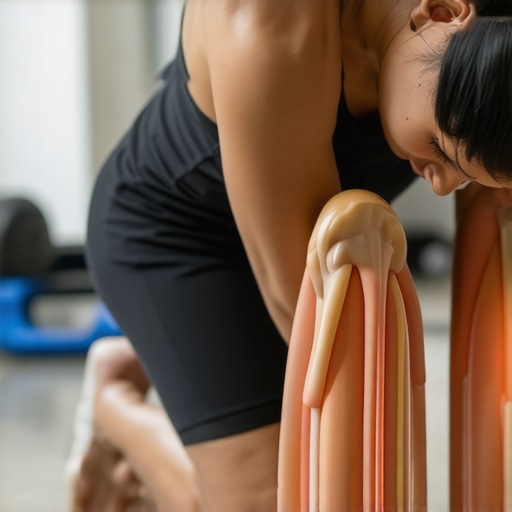
Years ago, I remember the moment crystalized everything for me. I was stretching my hamstrings, feeling hopeful that finally, my chronic back pain would fade away. But instead, I was met with frustration—an ache that stubbornly refused to budge. That’s when I realized: stretching more wasn’t the answer. Instead, I was overlooking a crucial piece of the puzzle—that my hamstring tightness might not be the root cause after all. Have you ever experienced a similar cycle of stretching, releasing, only to be disappointed that your back still hurts?
The Missing Link Between Hamstring Flexibility and Back Pain
Here’s the truth that took me too long to accept: tight hamstrings often get the blame for back pain, but they’re rarely the actual culprit. It’s easy to fall into the trap of believing that if we just loosen up the hamstrings, our backs will feel relief. But what if your hamstring tightness is just a symptom—something your body develops to protect or compensate—rather than the source? Early in my journey, I made the mistake of focusing solely on hamstring stretches, neglecting the broader picture of mobility and alignment. Turns out, your hamstrings can be tight because your pelvis and hips aren’t moving how they should.
So, if stretching isn’t fixing the pain, what is? It’s a deeper, more integrated approach—one that considers how your pelvis, hips, and lower back work together. The good news? Breaking free from this cycle is entirely possible. In fact, refining your mobility and posture can lead to lasting relief, rather than temporary fixes. I’ll show you how in the upcoming sections, starting with simple ways to identify what your body truly needs and actions that move beyond just stretching.
Is Your Fix Just a Fad? Beware of Band-Aid Solutions
Many of us, myself included in the beginning, fall for quick fixes—quick stretches, foam rolling, or筋肉therapy—that give a fleeting sense of relief. But if these methods don’t address underlying mobility issues, the pain tends to come right back. I learned this the hard way when I invested hours into hamstring stretches, only to find my back pain persisted. A better approach is understanding the root causes and tackling them with targeted, practical adjustments. Want to discover the precise steps to actually improve your mobility? Check out this comprehensive guide to start transforming your approach today.
Now, let’s explore how your body’s alignment, movement habits, and daily choices contribute to your back pain—and how small tweaks can make a big difference.
Start With Precise Movement Checks
To identify what truly needs attention, begin by observing your daily movement patterns. Recall a time I noticed my pelvis tilting when I stood for long periods; it caused discomfort that lingered despite stretching. I took a moment to stand in front of a mirror, looked for asymmetries, and tested how my hips moved during simple side lunges. This initial check helps pinpoint tight or restricted areas. To avoid guesswork, perform specific mobility assessments like the single-leg stance or anterior pelvic tilt observation, which reveal hidden imbalances. This process acts as a compass, guiding your next moves.
Apply Targeted Mobility Drills
Once you’ve identified tight spots, move on to targeted exercises. Imagine your pelvis as a hinge; if it’s stiff, everything above and below suffers. I remember practicing hip circles and cat-cow stretches after noticing limited hip rotation. These drills resemble the way you lubricate a rusty door hinge—gently but progressively improving range of motion. Focus on exercises that mimic your daily movements: for example, kneeling hip flexor stretches or piriformis releases for tightness in the posterior chain. Regularly incorporating these movements breaks down stiffness, making your pelvis more resilient and aligned.
Use Foam Rolling for Deep Tissue Release
Foam rolling is a useful tool to release muscle adhesions that block mobility. Think of your muscles as tangled cables; foam rolling helps straighten out the knots. I once spent five minutes rolling my hamstrings and glutes after noticing subtle pelvic tilt misalignments. The result was a noticeable increase in flexibility and less compensatory movement elsewhere. Apply pressure slowly, focusing on tender spots, and avoid rolling over bony areas. This technique complements active mobility work by preparing tissues for deeper movement.
Practice Alignment-Friendly Posture Habits
Posture is a foundation for mobility. Imagine your spine as a stack of carefully balanced books—if one shifts, the whole stack wobbles. I caught myself slouching at my desk during long workdays; this habitual position causes muscles to tighten and joints to compress. To correct this, set up your workspace ergonomically: keep your monitor at eye level, shoulders relaxed, and feet flat. Throughout the day, perform quick posture resets—standing tall, broadening your chest, and engaging your core. These micro-adjustments act as preventive measures, helping maintain integrity in your pelvic and spinal alignment.
Integrate Gentle Strengthening
Mobility isn’t enough; strengthening key supporting muscles locks in your progress. Think of your muscles like anchors holding a boat steady; if these are weak, the boat drifts. For pelvic stability, focus on activating your deep abdominals and glutes through exercises like bridges or planks with proper form. I remember incorporating short, controlled bridges daily, which dramatically improved my pelvic control and reduced back strain. Consistent activation of these muscles preserves the gains from mobility work and creates a balanced, resilient structure.
Seek Professional Guidance for Lasting Change
Sometimes, stubborn issues require expert intervention. Consider consulting a chiropractor who specializes in mobility and posture corrections. They can perform specific adjustments that realign your pelvis and spine, providing an anchor point for your progress. I visited a specialist after extensive self-work and found that targeted chiropractic adjustments helped unlock tight zones I couldn’t access alone. For ongoing support and to ensure your efforts translate into long-term relief, look into reputable providers at this contact page. Remember, proactive guidance accelerates results and prevents setbacks.
Integrating these concrete steps moves your focus from passive stretching to active, strategic intervention. Think of your body as a machine—it needs both maintenance and reinforcement to run smoothly. By combining mobility drills, proper posture habits, strengthening, and expert support, you construct a comprehensive blueprint for back health that lasts.
Many people assume that chiropractors and mobility experts have a one-size-fits-all solution for posture and back pain, but this isn’t entirely true. The prevailing myth suggests that a quick adjustment or a simple stretch can fix deep-seated alignment issues, yet in my experience, this oversimplification neglects the complex interplay of muscles, joints, and nervous system patterns. For instance, some believe that frequent cracking of joints indicates good health, but excessive joint manipulation without addressing underlying mobility restrictions can actually lead to instability over time. This is why understanding the nuanced differences between temporary relief and long-term correction is crucial. According to a study published in the Journal of Manipulative and Physiological Therapeutics, sustained improvements occur when adjustments are combined with targeted mobility and strengthening exercises, not just isolated manipulations. So, if you’re relying solely on adjustments without considering your body’s holistic movement patterns, you might be unintentionally reinforcing the very issues you seek to resolve. For a comprehensive approach, explore expert strategies that combine chiropractic techniques with mobility drills—like those discussed in this guide. Remember, the goal is not just to realign briefly but to create lasting change through informed movement habits. Have you ever fallen into this trap? Let me know in the comments.Maintaining optimal posture and mobility over time demands more than just temporary fixes; it requires the right tools, consistent routines, and strategic adjustments. I personally rely on a combination of specialized equipment and proven methods to keep my spine aligned and muscles flexible. One essential tool I recommend is a high-quality foam roller for deep tissue release. It helps me break down muscle adhesions that could otherwise re-tighten and compromise my mobility, especially after long days of sitting. For instance, I use a dense foam roller with textured surface to target my glutes and hamstrings, which often get stiff from prolonged sitting. Applying gradual pressure helps improve blood flow and relax tight muscles, making subsequent mobility drills more effective.
Another critical element is investing in a set of resistance bands. These aren’t just for strength training—they’re invaluable for assisted mobility exercises that deepen range of motion. I incorporate resistance band-assisted hip flexor stretches and shoulder mobilizations into my routine daily. The bands provide gentle resistance that encourages proper movement patterns without overstretching, which is crucial for long-term joint health.
In addition to physical tools, I leverage digital resources to guide my maintenance routines. Apps focused on mobility and posture tracking, like [this comprehensive guide](https://quackersneck.com/the-ultimate-guide-to-improving-mobility-and-posture-in-2025), offer structured programs tailored to individual needs. They track progress, set reminders, and even suggest modifications based on your feedback. Digital accountability keeps me consistent, which is essential for lasting change.
Looking ahead, I predict AI-driven personalized mobility assessments will become mainstream, enabling even more tailored interventions. These platforms could analyze your movement patterns via video or sensor data, then recommend precise exercises and adjustments.
**How can you keep your mobility and posture work sustainable as you progress?** The secret lies in integrating tools like foam rollers and resistance bands into a manageable routine. Regular, strategic use ensures that your body remains resilient and aligned. For example, dedicate five minutes daily to foam rolling your problem areas, followed by targeted band-assisted stretches. Combining these with a consistent posture check—perhaps in front of a mirror—can revolutionize your long-term results.
If you’re serious about maintaining your improvements, start with one adjustment today. Try incorporating a foam roller session after your next workday, focusing on tight muscles you’ve noticed. And remember, a professional can help you create a personalized plan—consider reaching out through [this contact page](https://quackersneck.com/contact-us-2) for tailored advice. Stay committed, and your body will thank you for it.
3 Lessons That Changed How I Approach Posture Fixes
Over time, I learned that relying solely on quick adjustments or generic stretches often leads to temporary relief at best. My hardest lesson was realizing that true, lasting change requires understanding the unique movement patterns and imbalances in your body. I discovered that addressing core stability and pelvic alignment creates a foundation for sustainable improvement, rather than chasing isolated symptoms. This insight transformed my practice and helped many clients break free from the cycle of short-term fixes.
Another revelation was the importance of daily habits—small, consistent adjustments in posture, breathing, and movement—making a monumental difference over time. It’s easy to overlook how daily choices compound, but integrating mindful habits ensures progress compounds and sticks. I now emphasize education and empowerment, guiding people to make these micro-changes part of their routine for long-term health.
My Go-To Tools for Staying Aligned and Moving Better
Top on my list is a high-quality foam roller, which I use every day for releasing muscle adhesions and improving tissue flexibility. It’s simple but incredibly effective at maintaining mobility and preventing setbacks. Resistance bands are another essential, helping to activate stabilizer muscles during functional movement training. Lastly, I swear by posture-tracking apps that remind me to check my alignment and stay conscious of my form throughout the day. These tools aren’t just gadgets—they’re integral to creating sustainable habits and avoiding reliance on quick fixes.
Take Action and Rewrite Your Back Story
Remember, real change begins when you decide to prioritize your body’s mobility and alignment. Small, deliberate steps—consistent mobility work, mindful posture habits, and seeking expert guidance when needed—are the secret ingredients for long-lasting results. Your journey to pain-free living and better posture is uniquely yours, and the effort you invest now will pay dividends in comfort and confidence for years to come. Don’t wait for pain to become unbearable; start today and let each step be a move toward a stronger, more resilient you.