
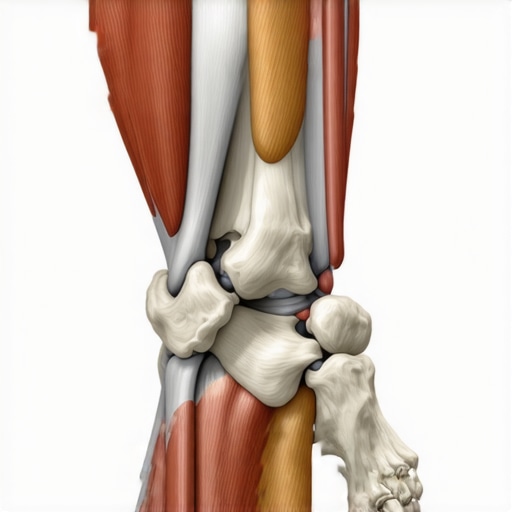
I remember the first time I realized that my persistent knee stiffness wasn’t just about my knee. I was in the middle of a run, feeling good until suddenly, a tightness crept in that made every stride feel awkward. It was like my knee had forgotten how to move properly, and I couldn’t shake the feeling that something else was causing it. That lightbulb moment led me down a path of self-discovery about how issues elsewhere in my body—like a locked ankle—can drastically influence the health and mobility of my knee.
The Connection Between Your Ankle and Your Knee
Many people overlook the fact that our joints don’t work in isolation. When one part becomes restricted or stiff, it can send compensatory signals up and down the chain, affecting distant areas. In my case, I learned that a stubborn, immovable ankle gumming up the works could explain why my knee felt so stiff and sore, even after rest and stretching. This realization changed everything for me, as I began exploring how addressing the root cause could unlock my entire mobility system.
What I found was enlightening—simple tweaks to improve ankle mobility had a ripple effect, easing knee pain and restoring natural movement patterns. It’s a reminder that sometimes, the key to relief isn’t where you expect it to be. If you’ve been battling persistent knee stiffness without clear reason, it might be time to look downward, to your ankle, and see what’s holding things back.
Are We Overcomplicating Your Knee Pain?
Trust me, I made this mistake early on—pretending my knee was the only culprit. I spent countless hours icing and stretching, only to find relief was elusive. It wasn’t until I examined my ankle’s range of motion that progress finally happened. That experience made me realize the importance of holistic assessment. For more about the link between mobility and posture, check out this comprehensive guide. If you’re curious whether your ankle is locking up and causing your knee issues, I encourage you to get a professional assessment to identify the real problem.
So, are you currently facing stiff knees that seem resistant to all your efforts? It might be time to look a little lower and explore whether your ankle mobility is holding you back. Stay tuned—I’m going to share practical steps you can take to unlock those joints and walk, bend, and squat like you used to.
Assess Your ankle mobility with targeted tests
Start by checking your ankle’s range of motion. Sit on a chair, place one foot flat on the ground, and try to lift your toes while keeping your heel planted. If you notice stiffness or limited movement, this could be a sign your ankle is restricting your mobility. I once found my own ankle was barely moving during this test, which explained my persistent knee pain. Improving this test result was my first step toward relief.
Implement specific mobility drills daily
Dorsiflexion stretches
Stand facing a wall, place your toes near the wall, and gently bend your front knee toward it, keeping your heel flat. Hold for 15 seconds, then relax. Repeat 10 times. This enhances your ankle’s ability to move forward smoothly, reducing compensation in the knee.
Heel-toe rocking
Kneel on all fours, then lean back onto your heels, stretching your ankles. Rock forward onto the balls of your feet, then back. Do this for 2 minute sessions. It mobilizes your ankle joint and prepares it for movement.
Consistency is key. I adopted this routine after a messy trial where I forgot to do it for several days, and my knee stiffness persisted. After two weeks, my ankle felt more flexible, and my knee pain started to diminish noticeably.
Use automatic adjustments to support improvement
Consider brief chiropractic sessions focused on ankle and foot alignment. These adjustments can relocate restricted joints, easing the process of mobility exercises. Think of your joints like a rusty hinge; a quick tap can free it up, allowing smoother movement. I visited a chiropractor specializing in extremity adjustments and experienced instant improvements, which made my daily drills more effective and less painful. Learn more about how chiropractic adjustments can unlock your mobility.
Maintain proper movement habits throughout the day
Be mindful of how you position your feet and knees during walking, standing, and exercises. Avoid prolonged heel lifts or excessive toe-leaning that can reinforce poor mobility patterns. I caught myself walking with my toes pointing outward, which restricted ankle flexion. Correcting this gait distributed forces evenly, decreasing strain on my knee and hip.
Monitor progress and adapt your routine
Keep a journal of your mobility tests and discomfort levels. If you observe improvement, continue the drills. If not, consult a professional to reassess. I tracked my ankle’s range weekly, and when progress plateaued, a quick session of targeted chiropractic care reignited my improvements. Remember, each body responds differently; individual adjustments might be necessary.
Embark on this process with patience and consistency. Improving ankle mobility isn’t just about easing knee pain; it’s about restoring your body’s natural movement flow. For personalized guidance and to explore further techniques, you can reach out to a trusted professional at Quackers Neck.
Many believe that posture corrections and chiropractic adjustments are quick fixes or superficial fixes, but the truth is much more nuanced. A widespread myth is that once you get an adjustment, your problems are permanently solved. In reality, maintenance and understanding the underlying neuromuscular patterns are crucial for sustainable improvement. Relying solely on adjustments without addressing behavioral habits can lead to temporary relief but recurrent issues over time.
Another misconception is that posture problems stem only from subtle muscle weaknesses or stiffness. While these are factors, experts emphasize that often, the root lies in structural imbalances or nerve restrictions that are not visible on the surface. Overloading the body with stretch-and-release routines without a comprehensive assessment can be something of a trap, leading to frustration and misinformation.
It’s also important to recognize that not all adjustments are created equal. Some practitioners focus on quick manipulations that cater to symptom relief but ignore the importance of re-educating neuromuscular control and mobility training. A deeper approach involves integrating adjustments with mobility exercises and corrective strategies that promote lasting change.
Advanced question: How do neural pathways influence postural habits, and can chiropractic care rewire these effectively?
Great question. The nervous system plays a vital role in muscle activation patterns and postural reflexes. According to research published by neuroscience experts, persistent misalignments and nerve restrictions can create maladaptive motor patterns, effectively hardwiring poor posture over time. Chiropractic adjustments may offer temporary relief, but true rewiring requires targeted neuromuscular retraining. This involves specific mobility, strengthening, and proprioception exercises, which help re-establish correct neural pathways for posture control. Without this, the risk of reverting to old habits remains high, emphasizing the need for a comprehensive, multi-faceted approach.
Many fall into the trap of thinking that adjustments alone can permanently correct posture issues. But sustainable change comes from understanding the complexity of the neuromuscular system and actively engaging in mobility and movement habits that support healthy alignment. If you’re interested in a personalized plan that combines chiropractic, mobility, and neural retraining, consider reaching out for expert guidance. Meanwhile, avoid the common mistake of neglecting how your habits and nervous system mutually influence your posture. Have you ever fallen into this trap? Let me know in the comments.
Maintaining your posture and mobility requires not just consistent effort but also the right tools and strategies that support long-term health.
Investment in Quality Mobility Equipment
One of my go-to tools is a foam roller, specifically the Gaiam Essentials Thick Foam Roller. I prefer this because its density strikes a perfect balance between firmness and comfort, allowing me to release fascial restrictions around my hips and back effectively. Regularly rolling out my lumbar and thoracic regions has helped sustain the benefits of chiropractic adjustments and mobility drills. Incorporating daily foam rolling sessions is an easy yet powerful way to reinforce spinal health, especially after long periods of sitting.
Another essential piece is a set of resistance bands, like the TheraBand Resistance Bands. I use these for targeted strengthening and mobility exercises—such as shoulder rotations or hip abductions—that enhance neuromuscular control. Strengthening the stabilizer muscles around my joints supports the corrections achieved through chiropractic care, ensuring that improvements aren’t lost over time. These bands are portable, affordable, and versatile, making them a staple in my ongoing maintenance routine.
Leveraging Digital Resources for Guidance
Digital platforms like expert-led mobility routines have transformed how I approach sustained progress. I rely on apps such as MobilityWOD or Pocket PT to get personalized, evidence-based mobility drills that integrate seamlessly into my daily schedule. These tools incorporate instructional videos, progress tracking, and customizable routines, empowering me to maintain and adapt my mobility strategies as my body evolves. The future of mobility support will likely involve more AI-driven programs and wearable tech that provide real-time feedback, making progress more measurable and tailored than ever before.
Consistency Through Professional Support
While DIY tools are invaluable, periodic professional assessments are critical. I schedule quarterly visits with a chiropractor specializing in extremity adjustments via targeted manual therapy. These sessions help address subtle structural imbalances that might go unnoticed but can undermine my maintenance efforts. Combining hands-on care with self-led mobility routines creates a synergistic effect, ensuring long-term sustainability of optimal posture and movement.
Future Trends in Posture Maintenance
Looking ahead, I predict a rise in integration between wearable sensors and smart home devices. These could monitor posture dynamics continuously, alerting us before issues become ingrained. For instance, smart insoles or posture-correcting belts with embedded sensors could guide proper alignment in real time, making maintenance more proactive. Until then, consistent use of the tools mentioned and ongoing professional support remain essential.
Practical Tip for Lasting Results
To keep your progress on track, I recommend trying a simple daily mobility drill such as the hip hinge exercise. It takes just a few minutes but reinforces proper movement patterns that support your entire kinetic chain. Pair this with regular use of a foam roller and resistance bands, and you’ll build a resilient foundation for better posture and mobility. Remember, consistency is key—make these tools an integral part of your daily routine, and you’ll see lasting change. For personalized advice or to explore advanced techniques, don’t hesitate to reach out here.
Which Truth Transformed My Approach to Posture
One of the most profound lessons I learned is that quick fixes often offer only temporary relief. True progress in posture and mobility demands patience, consistency, and a deep understanding of your body’s interconnected systems. Real change happened when I stopped focusing solely on superficial adjustments and started addressing the roots—like neural pathways and movement habits—that underpin lasting alignment. This shift in perspective was a game-changer, revealing that the most effective solutions are often the ones we least expect.
Tools That Became My Personal Secret Weapons
Over time, I discovered that certain tools can accelerate progress and reinforce positive habits. My go-to resources include a high-quality foam roller, like the Gaiam Essentials Thick Foam Roller, which helps release fascial restrictions and maintain spinal health. Resistance bands, such as TheraBand sets, became invaluable for strengthening stabilizer muscles and improving mobility. Additionally, apps like MobilityWOD provided structured routines and motivation, making it easier to stay committed. These tools don’t just supplement your efforts—they amplify your body’s capacity for sustainable change.
Embracing the Journey: A Message to Your Future Self
Remember, transforming your posture and mobility is a marathon, not a sprint. Every small effort compounds over time, leading to a more resilient, pain-free body. It’s inspiring to realize that with the right mindset, strategies, and support, lasting change is within your reach. So, take that first step today—whether it’s practicing a mobility drill, consulting a professional, or simply becoming more mindful of your daily habits. Your future self will thank you for embracing this journey.
Have you ever experienced a breakthrough that shifted your understanding of posture or movement? Share your story below—I’d love to hear about the moments that changed your approach to staying healthy and mobile.