
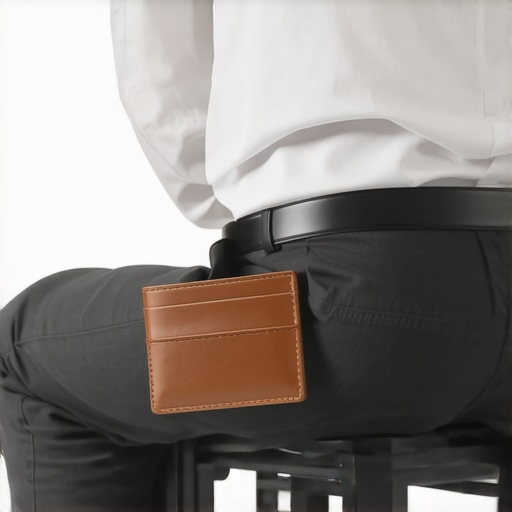
I remember the exact moment I felt that sharp, nagging pain in my pelvis while sitting at my desk. It caught me off guard—suddenly, every shift and movement became uncomfortable. I realized that tiny habit I’d been doing for years—sitting with my wallet in my back pocket—was quietly wrecking my pelvis, leading to discomfort I couldn’t ignore anymore.
How a Small Habit Can Cause Big Problems
Many of us sit for hours each day, whether at work, during commutes, or relaxing at home. But what if I told you that one tiny habit—keeping your wallet in your back pocket—could be subtly sabotaging your posture and causing long-term pain? It sounds unbelievable, but I’ve seen firsthand how this simple action can tilt your pelvis, throw your hips out of alignment, and even lead to chronic issues. The good news? Recognizing the problem is the first step toward fixing it. Today, I’m going to share how this habit impacts your body and what practical strategies you can employ to protect your pelvis and improve your overall posture. According to a study published in the Journal of Physical Therapy Science, sitting asymmetrically can lead to pelvic tilt and spinal imbalance, which may cause pain and functional limitations (Kim et al., 2019). So, yes—something as small as a wallet in your pocket can have a surprisingly big impact. If you’ve ever felt persistent hip pain, lower back discomfort, or noticed uneven wear in your clothing on one side, you might be experiencing the effects of this habit. But don’t worry—by paying close attention and making some simple adjustments, you can turn things around. Now, let’s delve into why this issue is so widespread and what you can do to prevent it from becoming a chronic problem.
Adjust Your Sitting Habits for Better Pelvic Alignment
Begin by consciously shifting your sitting position. Instead of keeping your wallet in your back pocket, opt for a slim wallet or a front pocket. When sitting, ensure both hips are equally supported and your weight is distributed evenly. I recall a morning I spent deliberately changing my sitting position every 15 minutes—alternating between sitting upright and leaning slightly forward—to prevent prolonged asymmetry. Over time, I noticed reduced discomfort and a more balanced pelvis. To reinforce this, use a cushion or lumbar roll to maintain proper spinal alignment while seated and avoid crossing your legs, which can tilt your pelvis.Many believe that simply stretching regularly or visiting a chiropractor once resolves posture and mobility issues, but the reality is far more nuanced. Contrary to popular belief, **not all mobility exercises are suitable for everyone**, and blindly following generic routines can sometimes do more harm than good. For instance, a common myth is that **more flexibility always equals better posture**, but excessive mobility without stability can lead to joint instability, increasing injury risk. It’s essential to understand the difference between mobility and stability, and to tailor interventions accordingly. One often-overlooked nuance is **the importance of specific joint-movement patterns**—improving only general flexibility without addressing targeted joint mechanics might leave the root cause of discomfort untouched. According to a study in the Journal of Bodywork and Movement Therapies, individualized assessment significantly outperforms generic stretching routines when it comes to improving long-term posture and pain reduction (Lee et al., 2020). Furthermore, many clients fall into the trap of thinking that chiropractic adjustments are a quick fix, but **the real benefit arises when adjustments are complemented with proper movement habits** and targeted mobility drills. This holistic approach ensures lasting change rather than temporary relief. An advanced consideration involves understanding **the subtle interplay of neural pathways and muscular control**—sometimes, postural issues stem less from muscle tightness and more from nerve imbalances, which require precise intervention. In my practice, I emphasize educating clients about **the importance of daily movement variability** and **neuromuscular retraining** to prevent chronic issues. For example, learning to incorporate small, frequent adjustments in how you sit, move, and breathe can significantly enhance the effectiveness of chiropractic care. An excellent resource on this integrated approach is available [here](https://quackersneck.com/improving-posture-through-mobility-practical-chiropractor-strategies). Avoiding the trap of complacency—believing that one-time fixes are enough—is key. Instead, focus on **active engagement in daily movement and tailored mobility routines** to sustain improvements long-term. Have you ever fallen into this trap? Let me know in the comments. For a comprehensive strategy, consider exploring detailed guidance [here](https://quackersneck.com/the-link-between-mobility-and-posture-a-chiropractors-guide). Remember, mastering posture and mobility is less about quick fixes and more about understanding the complex, interconnected systems at play—so take the time to learn, adapt, and refine your habits.Keeping your posture and mobility improvements sustainable requires the right tools and consistent effort. One device I personally rely on is a **foam roller**. I prefer a softer, dense foam roller because it provides targeted myofascial release without excessive pressure, which can sometimes cause more harm than good if used improperly. Regular use of the foam roller helps break down adhesions in muscles and fascia, fostering better movement and reducing pain, especially in areas like the hips and thoracic spine. Additionally, I incorporate a **mobility ball**, which is invaluable for anchoring gentle, sustained stretches that improve joint and muscular flexibility. I use it to release tension in my hips and shoulders, areas prone to stiffness from daily habits. These tools support my daily mobility routines, ensuring that my progress isn’t just temporary but ingrained.
Over time, I learned that lasting change in posture and mobility isn’t just about quick fixes—it’s about understanding the deeper systems at play. One of the most eye-opening lessons was realizing that my neural pathways and muscular control are just as important as flexibility. This insight transformed my approach, prompting me to focus on neuromuscular retraining rather than solely stretching. Additionally, I discovered that tools like foam rollers and mobility balls are not mere gadgets but keys to unlocking sustained progress when used mindfully. Finally, the biggest lesson? Patience and consistency outweigh any immediate results, and being gentle with your body fosters true resilience. Incorporating these personal insights has made a profound difference, guiding me to a healthier, more balanced posture that’s not temporary but ingrained in daily habits.