
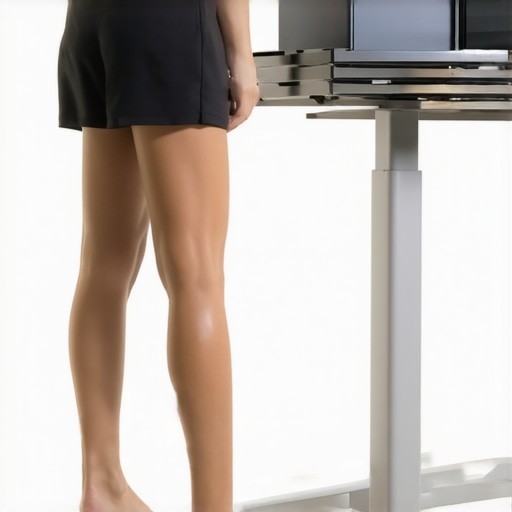
Have you ever stood at your desk feeling a sudden, almost painful tightness creeping up your calves? One moment you’re adjusting your posture, and the next, your lower legs feel like they’ve been stretched too far, as if you just ran a marathon. I remember the lightbulb moment when I realized it wasn’t just tired calves—it was my own setup sabotaging my mobility. It’s frustrating, right? You invest in a standing desk to improve your health and boost productivity, but instead, you’re facing discomfort that makes standing unbearable.
What’s Really Going On When Your Calves Become Tight?
Here’s the truth: standing for long periods without addressing underlying posture and mobility issues can lead to muscle imbalances. When I first started using my standing desk, I thought all I needed was to stand more often. But I soon discovered that my calves were becoming painfully tight, and my ankles felt stiff. It turns out, this is a common problem among desk workers who stand all day. Your calves are meant to be engaged, yes, but overactivation combined with poor posture creates unnecessary strain. The likeliest culprit is that your support system—your ankles, feet, and calves—is not functioning optimally.
Research shows that muscle tension can develop when your body adapts to prolonged static postures, especially if your movement variability decreases. And let’s face it—many of us forget to incorporate regular mobility breaks. Regularly, I was ignoring those tiny adjustments that keep muscles healthy. A mistake I made early on was assuming that standing itself was enough to maintain good posture. Nope. The real secret is mobility and alignment. Want to learn how to ease those tight calves and genuinely enhance your mobility? Keep reading. We’re about to dive into practical steps that transformed my daily work routine.
Are Standing Desks Really Worth the Hype?
This question haunted me for a while. I was convinced that standing all day would solve my back pain and boost my energy. But without strategic movement and proper posture, standing can become an Achilles’ heel—literally. Early on, I overlooked the importance of proper footwear, ankle mobility, and dynamic stretches. That was a mistake. If you’re worried that your standing desk is causing more harm than good, I understand. It’s easy to fall into the trap of believing that just standing is enough—trust me, I’ve been there. Thankfully, with some adjustments and expert advice, I turned the situation around. Want to know how? I’ll show you the steps that will make standing healthier and more comfortable for your calves and the rest of your body. First, let’s understand what’s really causing the tension, so we can target it effectively. For more insights on improving posture through mobility, check out this practical chiropractor strategies.
Start with a Dynamic Warm-Up
Before diving into stretches or adjustments, warm up your calves with light activity. For example, stand on your toes for 10 seconds, then lower slowly. Repeat this 3 times, like I did one hectic morning when I noticed my calves felt like stone. This simple move increased blood flow, making subsequent stretches more effective.
Incorporate Targeted Stretching
Calf Stretches with a Wall
Place your hands against a wall, step one foot back, keep both heels flat, and lean forward. Hold for 30 seconds, then switch sides. Think of your calf as a rubber band: gentle, sustained tension helps it relax. I once spend 2 minutes per side, focusing on deep breathing—suddenly, the tightness eased significantly.
Enhance Ankle Mobility with Specific Drills
Flexible ankles are fundamental. Try the ankle circles: lift one foot, rotate the ankle clockwise 10 times, then counterclockwise. I did this during a break, imagining my ankle as a compass. Improved mobility here can reduce calf strain and support better posture.
Integrate Gentle Chiropractic Adjustments
Monthly chiropractic sessions can realign your spine and pelvis, reducing muscle compensations that cause calf tightness. I personally noticed that after a few adjustments, my standing posture improved, and calves felt less tense. For deeper understanding, explore how chiropractic adjustments enhance posture and mobility at this link.
Practice Regular Mobility Breaks
Set a timer every 30 minutes to perform small movements—ankle pumps, toe stretches, or calf lifts. When I committed to this, I found my muscles staying more relaxed throughout the day. These tiny, consistent actions sum up to significant relief over time.
Use Foam Rolling for Deep Tissue Release
Foam roll your calves by sitting with a rolled-up towel under your calves and gently pressing and rolling for 1-2 minutes. Think of this as kneading dough—breaking up adhesions restores flexibility. I made this a habit after long work sessions, noticing a quick decrease in tightness.
Maintain Proper Footwear and Posture
Wearing supportive shoes prevents overactivation of calf muscles. Also, focus on standing evenly—don’t lock your knees or lean excessively forward. Proper posture is like a well-bracked building—each element supports the next. These adjustments can turn your standing desk from an Achilles’ heel to a boon for mobility.
Explore Expert Techniques and Further Reading
For comprehensive strategies, check out reports on improving posture through mobility exercises at this resource. Engaging in consistent, targeted actions transforms discomfort into mobility and comfort, making your standing desk work for you—not against you.
Many believe that a single chiropractic adjustment or a perfect posture will permanently solve all mobility issues. But in my experience working with clients who seek long-term relief, this misconception can lead to complacency and frustration. The truth is, adjustments are valuable, but they are just part of a larger puzzle involving consistent movement patterns, understanding nuanced biomechanics, and addressing subconscious habits. For example, some assume that frequent crackings or manipulations will realign the entire spine for good, overlooking the importance of integrated mobility exercises and posture retraining. According to a study in the Journal of Manual & Manipulative Therapy, holistic approaches yield better, sustained outcomes than quick fixes alone. Practitioners often warn against the trap of over-reliance on adjustments, which can mask underlying issues and delay essential movement-based interventions.
What Advanced Mistakes Do People Make When Fixing Posture and Mobility?
A common error is neglecting the role of neural pathways and motor control in maintaining posture. Many focus solely on alleviating muscle tightness with static stretching, but fail to engage the nervous system to improve movement patterns. This oversight can cause the same problems to recur once the stretching session ends. For instance, someone might loosen tight calves but ignore they have ingrained movement habits that reinforce poor alignment—like habitual forward head posture or uneven weight distribution. Incorporating functional mobility drills, dynamic exercises, and proprioception training ensures that improvements stick. Recognize that true change requires a synergy of manual therapy, targeted exercises, and behavioral adjustments. To deepen your understanding, check out how expert strategies combine chiropractic care with motor control training at this resource.
Beware of the “quick fix” trap—believing that one adjustment or stretch can eliminate deep-seated patterns. Instead, view corrections as part of an ongoing process where consistency and nuanced attention to your movement habits are key. Developing awareness of your subconscious habits, like how you position your mobile device or sit during different activities, significantly impacts your progress. Avoiding these common pitfalls accelerates your journey toward sustained mobility and better posture. Have you ever fallen into this trap? Let me know in the comments.
Maintaining your improved posture and mobility over time requires more than just occasional stretches or chiropractic visits; it hinges on having the right tools and habits integrated into your daily routine. One of my go-to devices is a **foam roller**, especially designed for deep tissue release of calves and the lower back. I personally use a **3020 Foam Roller** from TriggerPoint because its textured surface effectively targets knots and adhesions, helping me sustain flexibility and reduce tightness after long work sessions. Regular use of this tool, combined with targeted mobility exercises, keeps my muscles pliable and prevents regressions. For instance, wrapping up my day with a quick 2-minute foam rolling session ensures I wake up feeling refreshed and mobile.
Building on manual tools, I recommend incorporating **mobility apps** like **MobilityWOD** to track your progress and stay consistent. These apps offer guided routines that adapt over time, helping you prevent imbalances from creeping back in. Personally, I find their guided ankle and hip mobility drills invaluable, especially when I notice my movements becoming stiff or restricted.
In the realm of professional support, **chiropractic adjustments** play a pivotal role in long-term maintenance. I schedule regular sessions at my trusted clinic, which help realign my spine and pelvis. This isn’t just a quick fix; it’s an essential part of my ongoing strategy. As detailed in a study in the Journal of Manual & Manipulative Therapy, periodic chiropractic care enhances neuromuscular function, supporting better movement patterns and posture retention.
For ambitious individuals looking to future-proof their mobility, I predict a rise in **integrated smart technology**, such as posture-correcting wearables that provide real-time feedback. Already, some companies are developing devices that alert you when you slouch or fix your alignment automatically—think of it as having a personal trainer 24/7.
But how do you keep this work sustainable? My number one tip is to **set deliberate reminders** to perform targeted mobility drills during your day. For example, a quick ankle pump or calf stretch every hour can exponentially improve your long-term mobility. Utilizing tools like the foam roller or app guidance makes this easier to sustain.
If you’re ready to take your mobility management to the next level, try incorporating a **daily foam rolling routine** focused on your calves and lower back. It’s a simple step that delivers noticeable benefits after just a week. Remember, consistency is key—these tools are your allies in maintaining a pain-free, mobile lifestyle. Want more expert insights? Explore our comprehensive guide on improving mobility and posture in 2025.
The Hardest Lesson I Learned About Integrating Mobility into My Routine
Initially, I believed that occasional stretches and monthly chiropractic visits would fix my calf tightness and postural issues. However, I discovered that true progress requires daily consistency and an understanding of my body’s subtle signals. Real change came when I embraced a holistic approach—combining manual therapy, targeted mobility drills, and mindful habits—making them part of my everyday life.
Things That Surprised Me About Posture and Chiropractic Adjustments
I used to think that a quick spinal adjustment was a magic bullet for my mobility woes. Instead, I realized that sustained improvement depends heavily on reinforcing proper movement patterns through active exercises. The key insight was understanding that adjustments open the door, but lasting success depends on how you walk through it each day.
The Most Unexpected Habit That Boosted My Mobility
Incorporating micro-mobility breaks during work—like ankle circles or calf pumps every hour—made an incredible difference. These small actions prevented tightness from building up and kept my muscles relaxed. It was a game-changer in maintaining my progress without exhaustive routines or lengthy sessions.
Curated Tools That Transformed My Approach
Using a foam roller designed for lower legs and back, like the TriggerPoint 3020, helped me release knots and adhesions effectively. Pairing this with guided routines from mobility apps kept me accountable and provided structure. Additionally, reading authoritative resources—like this article—expanded my understanding of the interplay between manual therapy and active movement, making me more confident in my mobility journey.
Let Your Progress Inspire Your Next Steps
Remember, improving mobility and posture isn’t a quick fix; it’s a continuous process filled with small, deliberate actions. Don’t let setbacks discourage you—each mindful movement brings you closer to a pain-free, more active life. Embrace the journey, stay consistent, and celebrate every milestone along the way. Your future self will thank you for investing in mobility today.
Have you ever experienced a breakthrough that changed how you approach posture and mobility? Share your story below—let’s learn from each other’s successes and challenges!
,