

I remember the day I finally admitted that my daily commute was causing more than just impatience—that it was silently destroying my tailbone. Sitting there in traffic, feeling that dull ache creep up my lower back, I had a lightbulb moment. It wasn’t just the traffic; it was how I was sitting—poorly supported, often slouched, and completely unaware of the long-term toll. Most of us brush off these discomforts, assuming they’re just part of everyday life, but the reality is quite different. Chronic sitting in an unergonomic position can lead to serious issues like tailbone pain, sciatica, and even posture imbalance that sticks with us long after the commute ends.
Rethinking Your Daily Sitting Routine for Better Comfort
What if I told you that your daily commute, that seemingly innocent hour or two in the car or on the train, could be a slow-motion disaster for your tailbone? It’s true. The way we sit during those hours often involves poor posture, limited movement, and a lack of proper support, all of which add up to chronic discomfort. Luckily, after experimenting with various adjustments and learning from experts—like visiting our mobility experts—I discovered practical ways to combat this silent damage.
Is there a way to make your commute more comfortable and less harmful? Absolutely. I’ll share some personal insights and proven strategies that transformed my own daily routine, and I believe they can help you, too. Because the truth is, you don’t have to accept ongoing pain as just part of life. With some simple tweaks, you can protect your tailbone and improve your overall posture, turning the commute into a healthier experience rather than a destructive one.
Is It Really Worth the Effort to Change?
Early on, I made the mistake of dismissing minor discomforts as temporary or insignificant. That was a costly oversight. According to a study published in the Journal of Back and Musculoskeletal Rehabilitation, prolonged sitting without appropriate ergonomic support increases the risk of tailbone pain and other discomforts over time. Small adjustments, like changing your seat position or incorporating mobility breaks, can make a huge difference in preventing chronic issues. The good news? You don’t need to overhaul your entire routine—just a few mindful changes can set you on the right path.
So, if you’ve ever felt that persistent ache after your drive or train ride, ask yourself: am I waiting for the pain to worsen? Or am I ready to take control and do something about it? The upcoming sections will guide you through simple, effective steps to turn your commute into a wellness opportunity instead of a health hazard. Let’s get started!
.
Optimize Your Seat Position
Begin by adjusting your chair or car seat to ensure your hips are level with or slightly higher than your knees, promoting a more natural pelvic tilt. I recall the first time I experimented with this; I moved my seat back, reclined slightly, and immediately felt less pressure on my tailbone. This small tweak distributes your weight evenly, reducing strain. Think of your pelvis as a foundation of a building—if it’s tilted, everything else shifts and causes discomfort.
Use Supportive Cushions Effectively
Invest in a ergonomic cushion with a cut-out for the tailbone or a wedge-shaped support. Placing it properly ensures your sacrum and pelvis receive better alignment. I once used a simple donut cushion during my commute, which alleviated my tailbone pain significantly, even though it looked basic. Consider adding a lumbar roll for additional lower back support, aligning your spine to prevent slouching, akin to setting the foundation perfectly straight before building up.
Incorporate Movement Breaks Regularly
Set a timer for every 15-20 minutes to stand, stretch, or walk briefly. When I started this practice, I’d lean over to stretch my thighs and roll my shoulders—this broke the static load on my tailbone and invigorated my circulation. Movements like pelvic tilts and gentle spinal twists mimic the natural mobility in your joints, akin to oiling a rusty hinge. These small actions prevent stiffness and foster better posture.
Implement Targeted Mobility Exercises
Engage in daily mobility routines focusing on hip flexors, hamstrings, and lower back. For instance, the pelvic clock exercise is excellent for retraining your pelvic positioning—imagine your pelvis as the face of a clock, gently rocking it forward and back to find your neutral stance. I personally dedicate five minutes to this each morning, noticing a decrease in tailbone discomfort and improved posture throughout the day. Regular practice keeps your joints supple, much like maintaining a flexible pipe that resists cracks and leaks.
Adjust Your Posture During Maintenance
Be mindful of your sitting dynamics: avoid crossing your legs or leaning to one side. Maintain a slight anterior pelvic tilt—think of your pelvis tilting forward just enough to support the natural curve of your lower spine—with your feet flat on the floor. I found that consciously correcting my posture during brief pauses in my day made a notable difference in long-term tailbone health. Consider using a mirror or video feedback to ensure proper alignment, similar to a coach watching your form.
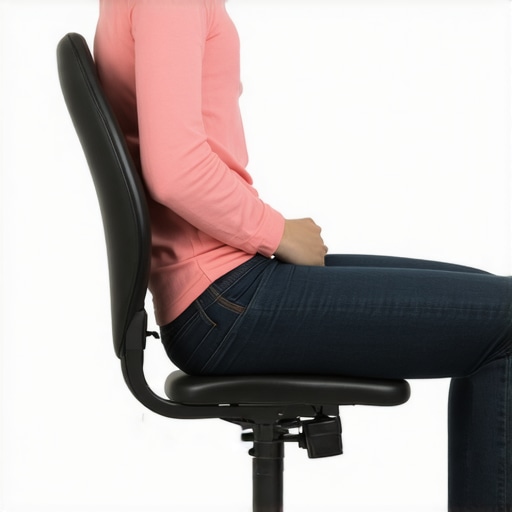
Visualize proper sitting posture with an ergonomic seat setup, emphasizing hip alignment and support.
While many believe that simple stretches or quick adjustments are the key to optimal posture, the truth is far more complex and nuanced. A common myth is that only extreme or frequent interventions can make a real difference, but seasoned experts understand that subtle, consistent refinements often produce the most lasting results. For example, focusing solely on thoracic mobility without addressing pelvic alignment can lead to persistent imbalances, as highlighted in a recent study published in the Journal of Bodywork and Movement Therapies. These small but strategic modifications help in retraining your body’s motor patterns, leading to more sustainable improvements.
Are All Mobility Exercises Created Equal, or Is There a Hidden Trap?
Many practitioners fall prey to the misconception that more is always better. Excessive stretching or aggressive manipulations can sometimes do more harm than good, especially if your body is not ready for advanced techniques. Overstretching ligaments or forcing joints into positions they aren’t prepared to handle can cause microtrauma, leading to increased pain or instability. The key is understanding your body’s unique limits and progressing gradually—something experts emphasize through specialized assessments and tailored routines. To dive deeper into this sophisticated approach, explore our ultimate mobility guide.
Another often overlooked aspect is the role of chiropractic care in fine-tuning these adjustments. While many think of chiropractic as merely relieving acute pain, its real power lies in aligning your neuromusculoskeletal system to support ongoing mobility efforts. According to Dr. Peter M. Maluf, a leading expert in biomechanics, strategic chiropractic interventions can unlock patterns of movement that passive stretches alone cannot achieve. This integrated approach ensures that mobility is not just a short-term fix but part of a sustainable lifestyle.
However, beware of the trap of over-reliance on passive treatments. The ‘set it and forget it’ mentality can lead to complacency, where patients become passive recipients rather than active participants in their health. True progress arises from understanding the complex interplay between muscles, joints, and nervous system health—something best addressed by combining mobility exercises with proper adjustment routines. For advanced readers eager to understand these subtleties, check out our mobility hacks article.
In essence, the journey to better posture and mobility is less about quick fixes and more about embracing nuanced, scientifically-informed strategies. Recognizing that small, consistent adjustments—supported by expert guidance—can lead to profound, long-lasting change is the cornerstone of effective practice. Remember, optimizing your mobility involves understanding your body’s unique needs and respecting its limits. Have you ever fallen into this trap? Let me know in the comments.Maintaining optimal posture and mobility requires consistent effort, but having the right tools can make this ongoing process more effective and sustainable. **Personalized Support Devices** like ergonomic cushions and lumbar rolls have been game-changers in my routine. I personally use a memory foam wedge cushion that perfectly contours to my lower back when sitting for extended periods, providing support that prevents tailbone pressure and encourages healthy pelvic alignment. Integrating support tools tailored to your body can dramatically reduce discomfort and promote long-term posture health.
**Mobility Rigging and Home Equipment** such as resistance bands, foam rollers, and small therapy balls are indispensable. I recommend a set of quality resistance bands for targeted stretches and strength exercises, especially for hip flexors and glutes—areas critical for spinal health. Foam rollers, particularly softer ones made from EVA foam, help release muscle tension and improve tissue mobility, making daily movement routines more accessible and less painful.
**Digital Tracking and Reminders** are becoming increasingly vital. Apps like PostureScreen or SetPoint remind me to check my alignment and perform mobility drills at intervals throughout the day. These digital tools keep accountability front and center, ensuring that I don’t revert to poor habits during busy days. As technology advances, we can expect these apps to incorporate AI-driven posture correction and real-time feedback, further personalizing maintenance strategies.
**Professional Guidance and Structured Programs** should also be part of your toolkit. Regular virtual consultations with a chiropractor or mobility expert—accessible via online booking—can ensure your routines evolve with your progress. Additionally, following comprehensive plans like the ones detailed in our 2025 mobility roadmap ensures you’re working with the latest science-backed techniques.
### How do I sustain my posture and mobility support long term?
Creating a sustainable maintenance routine involves integrating these tools into daily life seamlessly. Establishing specific times for mobility exercises, setting up ergonomic zones at home, and continuously educating yourself through expert content keeps progress steady. Remember, consistency is key—over time, these tools combine into a fortress of long-term spinal and joint health.
Prediction-wise, the future points toward smarter, AI-powered support systems that adapt dynamically to your body’s changing needs, offering personalized adjustments and real-time feedback. Staying ahead involves embracing these innovations early and making them part of your habitual maintenance.
One advanced technique I highly recommend is incorporating deep tissue foam rolling with a focus on the hip flexors and lower back. This can be supplemented with an app-guided session to maximize effectiveness and prevent common mistakes, like over-rolling or improper position—lessons thoroughly detailed in our mobility hacks. By actively engaging with these tools and methods, you set yourself up for long-term success, ensuring your posture and mobility stay resilient despite daily stresses. Give this a try today, and observe how your body responds over the following weeks.
Lessons That Changed My Approach to Posture and Mobility
One of the hardest lessons I learned was that small, consistent adjustments outperform sporadic, intense efforts. Initially, I believed only drastic changes could make a difference, but I soon realized that gentle, daily tweaks—like adjusting my seat or practicing a quick pelvic tilt—were game changers. Moreover, trusting shortcuts, such as relying solely on passive stretches, often delayed real progress. It became clear that understanding my body’s unique patterns and respecting its limits was essential for sustainable improvement.
Another insight was the importance of integrating expert guidance into my routine. Whether through professional chiropractic adjustments or personalized mobility routines, knowledgeable advice helps prevent setbacks and accelerates results. I also discovered that technology—like reminder apps and posture-tracking tools—acts as a friendly coach, ensuring I stay mindful throughout the day. Recognizing that posture health isn’t a quick fix but a lifelong practice was the most profound lesson I embraced.
Tools That Elevated My Posture Journey
My go-to resource has been comprehensive guides like The Ultimate Guide to Improving Mobility and Posture in 2025. It provides a science-backed framework adaptable to any lifestyle. Additionally, Mobility Hacks offers quick, practical tips to re-energize my daily routine. I also swear by ergonomic tools like lumbar rolls and tailored cushions, which I trust because they address my specific needs, making consistent support effortless. Lastly, ongoing consultations with experts through specialized chiropractic techniques in 2025 helped me fine-tune my progress over time, turning knowledge into lasting habits.
Your Next Step Could Transform Everything
Remember, making a commitment to meaningful adjustments today lays the foundation for a healthier, more resilient you tomorrow. Embracing the journey with patience and curiosity can turn routine pain points into opportunities for growth. Whether it’s trying out new mobility exercises from a chiropractor’s guide or simply becoming more aware of your sitting habits, every small effort counts. I invite you to start today—your future posture and mobility will thank you. What’s one change you’re willing to make right now to improve your spinal health? Let me know below.