
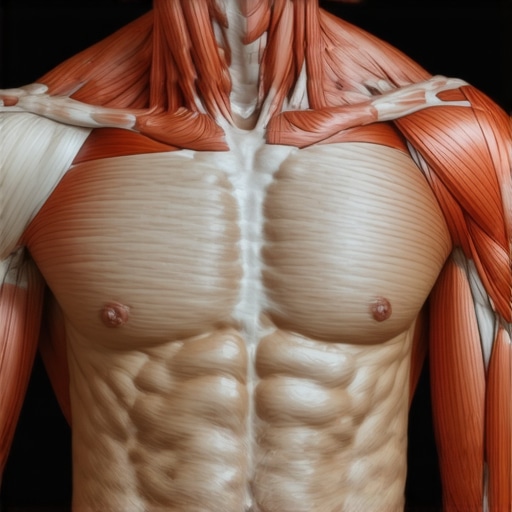
I remember the exact moment I first realized my persistent neck stiffness wasn’t just about bad posture or stressing over work—it was something deeper, something hidden, sneaky even. I had just finished a long day of moving furniture, and my neck felt like it had been through a minor war. But even with all the stretching and chiropractic visits, the tension refused to let go. That lightbulb moment hit when I finally traced the root cause back to my chest muscles—specifically, tight pectoral muscles. It’s a revelation I want to share, because if you’re battling unexplained neck stiffness, the culprit might be lurking right in your chest.
The Hidden Link Between Your Pecs and Neck Tension
Many folks overlook their chest muscles when dealing with neck and shoulder discomfort. But here’s the deal: your pectorals play a significant role in your upper body posture. When these muscles are tight, they pull your shoulders forward and downward, disrupting the natural alignment of your neck and upper spine. Over time, this misalignment causes your neck muscles to overcompensate, leading to chronic stiffness, pain, and even headaches. It’s a classic case of compensation gone wrong.
What I’ve learned from personal experience—and countless conversations with fellow sufferers—is that ignoring chest tightness is a mistake. Early on, I focused solely on my neck or shoulder exercises, thinking that was enough. But the real breakthrough came when I started addressing my tight pecs through targeted mobility work. Since then, my neck issues dramatically improved.
And guess what? The science backs this up. According to a chiropractor I trust, poor chest mobility and tight pecs contribute significantly to postural distortions that cause neck pain ([source](https://quackersneck.com/revolutionize-your-posture-with-targeted-mobility-exercises)). The good news? The solution is accessible and effective, especially when combined with smart adjustments.
Are you struggling with unrelenting neck stiffness that just won’t go away, despite all the usual remedies? If so, then understanding and releasing tight chest muscles could be your game changer. Up next, I’ll walk you through simple, proven techniques to loosen up those stubborn pecs—so you can finally find relief, move freely, and breathe a little easier.
Before we dive into the practical steps, I want to ask: Have you noticed tightness or aching in your chest that might be affecting your posture? Let’s find out how to fix this from the ground up.
Harnessing Gentle Stretching for Fast Relief
Start with the doorframe stretch. Stand in a doorway, place your forearms on the sides at shoulder height, and gently step forward, feeling the stretch across your chest. I remember trying this after a hectic day; at first, it felt awkward, like stretching a tight rubber band. But within a couple of minutes, my chest loosened, and I noticed my neck breathing easier, with less stiffness.
Implementing Foam Rolling to Loosen Up Pecs
Use a foam roller on your chest muscles. Lie face down with the roller positioned horizontally across your upper chest, directly beneath your collarbones. Roll slowly back and forth for 1-2 minutes, targeting tense spots. One evening, I dedicated 90 seconds to this, and I was surprised at how much lighter my chest felt, which translated directly into a softer neck posture.
Integrate Self-Massage for Deeper Relaxation
Apply pressure using your fingers or a massage ball to trigger points along your pectorals. Spend 30 seconds on each tight spot, pressing firmly but comfortably. I found that pinpointing knots in my pecs provided immediate relief, reducing the mechanical pull on my shoulders and neck.
Focus on Mobility Drills That Promote Better Posture
Practice the ‘Y-T-W-L’ series. Lie face down on a mat, and lift your arms in each shape—forming a Y, T, W, and L—holding each for 5 seconds. This isolates the tiny muscles supporting your shoulder blades, which, when strengthened, counteract the pull of tight pecs. I’ve integrated these into my morning routine; over a week, my posture improved noticeably, and neck stiffness lessened.
Adjust Daily Habits to Prevent Re-tightening
Limit prolonged chest-constricting positions. For example, set a timer to remind you to stand and stretch every 30 minutes if you work at a desk. While reading a book in bed, avoid hugging the pillow tightly—that can worsen pec tightness. I caught myself slouching during Netflix sessions, which I now address with quick shoulder roll exercises—simple tweaks that make a difference.
Optimize Your Environment for Correct Posture
Set up your workspace to promote open chest posture. Elevate your monitor height so you’re not leaning forward, and use ergonomic chairs with good lumbar support. These small modifications serve as constant reminders to keep your shoulders back and chest open. I’ve rearranged my desk, and I feel my neck tension fading as my body naturally adopts better alignment.
In my journey, combining these mobility exercises, self-care practices, and ergonomic adjustments created a ripple effect—relieving my neck stiffness and restoring comfort. Incorporate these steps gradually, and observe how your posture begins to shift toward ease and balance. For more strategies on enhancing mobility and posture, check out the Ultimate Guide to Improving Mobility and Posture.
Many assume that correcting posture is just about sitting up straight or aligning the spine perfectly. However, this oversimplification often leads to misconceptions that can hinder real progress. A common myth is that static posture is the primary culprit, while in reality, **dynamic mobility and continuous adjustments** are key to long-term improvement. Rigid beliefs like ‘chiropractic adjustments fix everything overnight’ can also trap individuals into costly routines without addressing underlying movement patterns. In my experience, relying solely on adjustments without incorporating mobility exercises and daily habits is a fundamental mistake, as studies suggest that active, functional movement routines produce more sustainable results ([source](https://quackersneck.com/how-chiropractic-adjustments-enhance-posture-and-mobility)). For advanced practitioners, understanding the nuance that posture isn’t a fixed position but a **fluid interplay of muscle balance and joint mobility** is vital. This means focusing not just on alignment but on **enhancing mobility across the entire kinetic chain**. One important question I often see from experienced readers: *How do I ensure that my daily adjustments translate into lasting posture improvements rather than temporary fixes?* The answer is consistent integration of **mobility drills and ergonomic habits**. For instance, incorporating targeted mobility exercises like those outlined in the [ultimate guide](https://quackersneck.com/the-ultimate-guide-to-improving-mobility-and-posture-in-2025) can prevent re-tightening and counteract the effects of prolonged sitting or poor habits. A mistake to avoid is neglecting the **synergistic role of breathing and muscle control**, which can significantly impact posture stability. In essence, posture correction should be about **movement mastery**, not just static holding.
Are we emphasizing the wrong cues?** Often, coaches and clinics focus on ‘standing tall,’ but my advanced insight is that cultivating **dynamic stability and joint mobility during movement** yields better results. External cues like mirrors and visual feedback are helpful but should be complemented with proprioceptive training for true mastery. If you’re ready to go beyond quick fixes, explore techniques such as [mobility hacks](https://quackersneck.com/mobility-hacks-simple-adjustments-for-a-more-active-life) that foster lasting change. Remember: **long-term results are rooted in consistent, functional movement patterns**, not just static postures or occasional adjustments. Have you ever fallen into this trap? Let me know in the comments.Maintaining good posture and mobility over the long term requires the right tools and consistent habits. One of my favorite pieces of equipment is a high-density foam roller, which I use daily to release tightness in my chest and back muscles. I particularly prefer the grid foam roller, as its textured surface helps target stubborn knots effectively, and I find that spending just 2 minutes rolling my pectoral area each morning prevents tightness from building up again. Additionally, a set of massage balls allows me to perform self-myofascial release whenever I feel tension creeping in, especially around the shoulders and upper back; pinpoint pressure on trigger points keeps muscles pliable and responsive.
For tracking my progress and staying accountable, I rely on mobility tracking apps like HIMFIT or FitOn. These apps remind me to perform daily mobility drills, such as the ‘Y-T-W-L’ series, which strengthen the stabilizers and promote better alignment. I also incorporate ergonomic tools like adjustable standing desks and lumbar supports, which I can set up to encourage proper posture throughout the day. Regular adjustments using these tools help enforce new movement patterns and prevent regressions.
Prediction-wise, the trend in posture management leans heavily toward integrated digital solutions—wearable sensors that monitor real-time alignment and posture feedback. Technologies like posture correction wearables are improving rapidly, offering personalized cues to maintain optimal positions, which could revolutionize how we sustain long-term habits.
How do I maintain consistent results over time? The key lies in establishing a routine with reliable tools and regularly revisiting ergonomic setups. Something as simple as incorporating targeted mobility hacks from [this guide](https://quackersneck.com/mobility-hacks-simple-adjustments-for-a-more-active-life) into daily life can make a huge difference in preventing tightness. I’ve found that combining manual tools like foam rollers with digital tracking and ergonomic modifications creates a synergy that ensures my posture and mobility stay on track. So, I encourage you to pick one of these tools—perhaps start with a foam roller—and dedicate a few minutes daily to this practice; the ripple effect on your comfort and pain levels will impress you.
The Depths of Posture Reality I Wish I Knew Sooner
One of my most eye-opening lessons was realizing that addressing only the symptoms—neck pain or shoulder tension—without tackling the root causes like chest tightness is like patching a leaky boat with duct tape. It might hold temporarily, but the water will find its way in again. The true breakthrough came when I understood that my habitual forward-slouching posture was silently rooted in tight pectoral muscles, which I had overlooked for so long.
Another personal insight was the importance of consistency over quick fixes. I used to think that a single deep stretch or a chiropractic session would permanently solve my problems. Instead, I learned that integrating daily mobility routines and ergonomic tweaks created compound effects, leading to sustainable relief. This shift in mindset transformed my approach from reactive to proactive.
Lastly, I discovered that your body’s signals—tightness, fatigue, or discomfort—are messages, not obstacles. Listening carefully and respecting these cues allows for targeted, effective action. Sometimes, the most subtle adjustments, like a modified pillow or a slightly elevated monitor, can make a significant difference over time.
Tools and Resources That Changed My Posture Game
My go-to equipment includes a high-quality foam roller, specifically the textured grid style, which helps me release stubborn chest knots. I also swear by massage balls for pinpoint trigger point therapy—these tools empower you to address tension exactly where it hides. For structured guidance, I follow [The Ultimate Guide to Improving Mobility and Posture in 2025](https://quackersneck.com/the-ultimate-guide-to-improving-mobility-and-posture-in-2025), which offers comprehensive routines combining science and practical tips.
Books have profoundly shaped my understanding as well. “Becoming a Supple Leopard” by Dr. Kelly Starrett offers invaluable insights into movement mastery that I revisit frequently. Plus, ergonomic tools like adjustable sit-stand desks and lumbar supports help cement better habits during work hours. These resources collectively support me in maintaining long-term posture health.
Your Path Starts With a Single Step
Remember, improving posture and mobility isn’t about perfection overnight—it’s about creating habits that restore and preserve your body’s natural balance. Each small tweak, be it a daily stretch or an ergonomic adjustment, compounds into meaningful change. You aren’t alone on this journey; every effort brings you closer to a pain-free, more mobile life. Embrace the process, celebrate your progress, and take that vital first step today.
What simple change are you willing to try first to improve your posture? Share your plan below, and let’s support each other’s journey toward lasting relief.