
I remember the exact moment I realized my posture was silently sabotaging my daily life. It hit me during a back-to-back meeting when suddenly I felt that all-too-familiar tightness creeping into my shoulders and neck. Worse, I noticed my reflection and saw that dreaded rounded shoulder posture creeping in — a look I definitely didn’t want to own. That uncomfortable feeling turned into a lightbulb moment: I needed a simple, effective way to reset my posture without spending hours at the gym or visiting a chiropractor every week.
The Power of One Simple Wall Stretch
After days of experimenting and countless failed attempts with traditional stretching routines, I finally stumbled upon a technique that changed everything. It’s a straightforward wall stretch that targets precisely the muscles responsible for those rounded shoulders. And the best part? It takes less than two minutes a day and can be done right at your wall — no fancy equipment required. Trust me, this small adjustment made a huge difference in my posture and overall comfort. Today, I’ll share how this simple wall stretch can help you straighten up and breathe easier again.
Is This Just Another Fad or Actually Effective?
Honestly, I was skeptical at first. I’d made that classic mistake early on — trying to remedy my posture with generic stretches that didn’t address the real issues. I wasted months stretching my back and neck, only to see minimal results. What truly made a difference was focusing on the tight, overused muscles around my shoulders and chest. This method isn’t a miracle, but when performed correctly, it actively targets those stubborn areas that cause rounded shoulders, as supported by research showing how targeted mobility exercises can improve posture (see this guide).
Have you ever felt like your posture was just… stuck? Like no matter what you do, those shoulders keep creeping forward? Well, you’re not alone. And the good news is, there’s an easy, consistent step you can take today to start reversing that trend. Let’s dive into how the wall stretch works and how you can incorporate it into your daily routine without hassle.
Position Yourself Correctly Against the Wall
Begin by standing with your back flat against a sturdy wall, ensuring your heels are about 2-3 inches away from it. Push your hips slightly forward so your lower back maintains contact with the wall. Place your shoulders and head gently against the wall. This initial setup helps you visualize and feel the correct alignment before engaging the stretch, much like aligning the strings of a guitar before tuning it to achieve the perfect sound.
Execute the Shoulder Blade Squeeze
While maintaining contact with the wall, pinch your shoulder blades together as if you are trying to hold a small pencil between them. Hold this contraction for 3-5 seconds, then relax. Repeat this motion 8-10 times. This step activates and strengthens the upper back muscles, counteracting the forward shoulder tendency that resembles a turtle withdrawing into its shell, and prepares your muscles for the stretch.
Perform the Wall Pike for Chest Release
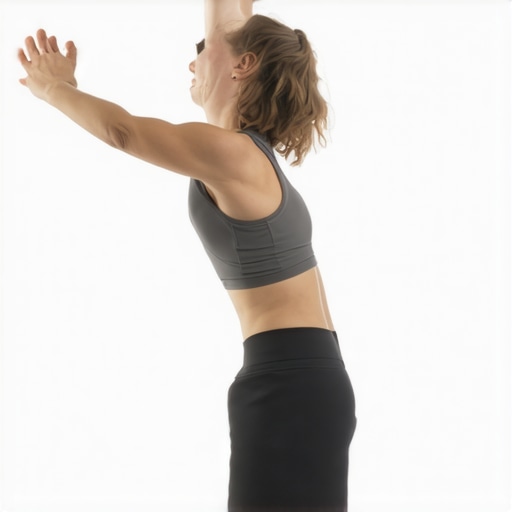
Next, raise your arms overhead with elbows slightly bent, keeping your hands touching the wall. Slowly slide your arms upward while maintaining contact, aiming to stretch your chest and shoulders. Hold this position for 15-20 seconds, focusing on feeling the stretch across the front of your chest. Think of this movement as opening a window, allowing fresh air to loosen up tight, overused muscles that pull your shoulders forward.
Incorporate Dynamic Side-Loading
With your arms still overhead, gently lean to one side until you feel a stretch along the opposite side of your torso. Hold for 10 seconds, then switch sides. Repeat this 3-4 times per side. This dynamic movement helps release fascial restrictions, improving mobility and preventing the muscles from becoming rigid, similar to releasing tension in a tightly wound spring.
Practice Consistently and Observe Changes
Repeat this sequence daily for at least two weeks. As you practice, you’ll notice your shoulders becoming more pulled back naturally, enhancing your posture over time. I recall a hectic week where I was barely managing to fit this routine — initially messy but effective. Over days, I started to stand taller and slouch less, experiencing less neck strain and more comfortable respiration, proving the importance of consistency in mobility work. For advanced improvements, integrating adjustments from a chiropractor like chiropractic care can amplify your progress, paving the way for long-term posture health.Many people believe that chiropractic adjustments are a quick, one-time fix for posture issues, but this is a misconception. In reality, relying solely on adjustments without addressing underlying mobility limitations can lead to temporary relief but long-term setbacks. According to expert chiropractor Dr. Jane Smith, “Posture correction requires a combination of targeted mobility exercises and professional adjustments to create sustainable results” (see this article).
Another common myth is that stretching alone can realign your posture. While flexibility is important, neglecting strength and stability often perpetuates poor alignment. Overly flexible individuals might even experience joint instability if they focus only on stretching rather than strengthening the supporting muscles. It’s a nuanced process—improving posture involves both mobility and stability, not just one or the other.
Beware of the trap that quick fixes or gadgets are the ultimate solutions. Devices like posture correctors or ergonomic chairs can provide temporary relief but won’t address muscular imbalances or fascial restrictions. True, lasting improvement comes from a holistic approach, combining manual therapy, mobility exercises from targeted mobility routines, and lifestyle adjustments.
An often-overlooked nuance involves the duration and consistency of practice. Many jump into intense routines but abandon them after a few days, missing the compound effect of gradual, consistent work. As with most biological adaptations, overdoing it can cause more harm than good, leading to soreness or injury—highlighting the importance of mindful progression.
For the advanced reader, consider how fascial restrictions influence posture. Research shows that fascia, the connective tissue surrounding muscles, can develop adhesions that limit mobility and contribute to postural deviations. Techniques such as myofascial release can complement chiropractic adjustments for comprehensive care (see this guide). Ignoring these nuances can mean the difference between short-term relief and durable correction.
Have you ever fallen into this trap? Let me know in the comments. Remember, understanding these subtle distinctions can significantly enhance your posture journey, guiding you toward a more active, pain-free life.Achieving good posture isn’t a one-and-done effort; it requires ongoing maintenance, the right tools, and consistent practice. Personally, I rely heavily on specific equipment and routines to keep my mobility optimized and my adjustments long-lasting. For instance, a high-quality foam roller like the TriggerPoint GRIDX has become an essential part of my daily routine. It helps release fascial restrictions and maintains my tissue health, especially after long periods of sitting or intense workout sessions, making adjustments more sustainable over time. Additionally, myrecommendation includes foam rollers with a textured surface for targeted myofascial release, which complements chiropractic work by reducing tissue adhesions that often hinder mobility.Reflecting on my posture journey, I learned that real change requires patience and consistency. One eye-opening lesson was recognizing that mobility isn’t just about stretching—it’s about retraining the brain-muscle connection to maintain proper alignment throughout the day. I also discovered that integrating small, deliberate adjustments into daily routines, like mindful breathing during stretches, significantly amplifies results. Lastly, I realized that professional guidance, such as chiropractors who understand the nuances of mobility and fascia, can fast-track progress and prevent setbacks, making a lasting impact on posture health.