
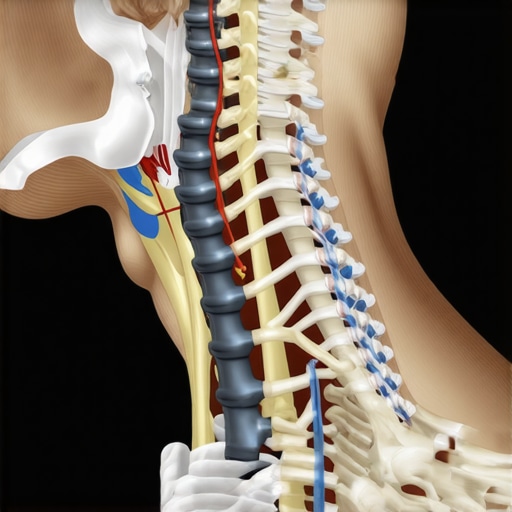
Imagine this: You’re stuck at your desk, battling a pounding sinus headache that just won’t quit. You tilt your head back, try to stretch, maybe even crack your neck—nothing seems to work. Then, a lightbulb moment hits me: Could my posture and neck alignment be part of the problem? It was a revelation that changed everything for me.
Unlocking Sinus Relief Through Neck Alignment
Here’s the truth: many of us suffer from sinus pressure that’s stubborn and frustrating, often treating symptoms without addressing underlying causes. I discovered that subtle shifts in neck posture and mobility can significantly impact sinus congestion. When my neck is misaligned, it can restrict proper drainage and blood flow, making sinus issues worse. But the good news? Simple neck adjustments and awareness can make a real difference, reducing pressure and discomfort naturally.
Is Neck Alignment Overhyped, or Does It Really Help?
Early on, I made a classic mistake—ignoring the connection between posture and sinus health. I thought sinuses were only about nasal passages, not realizing how my neck’s position affected drainage and inflammation. Experts confirm that proper cervical alignment can influence sinus function, as recent studies show improving neck posture can alleviate pressure and promote better drainage (source). If you’ve ever felt like your sinus pain worsens after a long day of poor posture, you’re not alone. It’s a real, tangible connection that many overlook.
So, if you’re tired of endless nasal sprays and medications that only mask the problem, it might be time to look at something simpler—your neck. Throughout this post, I’ll guide you through easy, practical steps to realign your neck and reduce sinus pressure by unlocking mobility and correcting posture. Ready to kiss sinus pain goodbye? Let’s get started.
Start with Self-Assessment and Awareness
Before diving into adjustments, check your posture throughout the day. Stand in front of a mirror and observe if your ears align with your shoulders. If your head juts forward like a turtle peeking out, it’s time to correct it. Remember, your neck isn’t just muscles and bones—it’s the gateway to proper sinus function. I recall a morning when I spent five minutes observing my posture and realized my head was always tilted downward. Recognizing this was the first step to realignment.
Adjust Your Sitting and Standing Habits
Think of your neck as a puppet on strings; it needs to move freely without undue tension. Position your monitor at eye level to avoid looking down, which can strain your neck. When standing, distribute your weight evenly and avoid jutting your chin forward. Use a foam roller or a rolled towel behind your neck while sitting to support the natural curve. During one hectic workday, I caught myself slouching and propped my neck with a towel. Immediately, I felt less tension and experienced a slight decrease in sinus pressure.
Practice Gentle Neck Mobilization
Mobilization exercises loosen stiff joints, much like oiling a squeaky door. Sit or stand upright, slowly tilt your head forward to touch your chin to your chest, then gently roll your head side to side. Perform this in a slow, controlled manner for 10 reps each way. At first, my movements were jerky, resembling a wobbly top. Over time, with patience, these gentle motions improved my neck mobility and helped drain sinuses more effectively. Consistency is key; do this daily for sustained benefits.
Incorporate Deep Breathing and Posture Checks
Deep diaphragmatic breathing promotes relaxation and encourages proper alignment. Sit straight, place one hand on your chest and the other on your belly. Breathe in through your nose, allowing your belly to expand—visualize your diaphragm as a balloon inflating. When I integrated this practice into my afternoon breaks, I noticed a release in tension and an improvement in sinus drainage. Remember, maintaining awareness of your posture during daily activities—especially during desk work—can prevent misalignments that contribute to sinus issues.
Use Targeted Chiropractic Techniques
If self-corrections aren’t enough, consulting a chiropractor can offer precise adjustments. Think of chiropractic care as tuning a musical instrument; a small tweak can restore harmony. Gentle cervical adjustments can realign misaligned vertebrae, reducing nerve tension and improving sinus drainage. I visited a chiropractor after persistent headaches; a few precise adjustments significantly alleviated my sinus symptoms. For more on how chiropractic adjustments enhance posture, check out this resource.
Maintain and Build Long-Term Mobility
Consistency turns small efforts into lasting change. Incorporate mobility exercises into your daily routine, such as shoulder rolls and neck stretches. Think of your muscles as a network of cables; regular movement prevents them from becoming stiff and brittle. For guided routines, visit these mobility hacks. Over weeks, you’ll notice improved posture, reduced sinus pressure, and a greater sense of well-being.
Track Your Progress and Adjust Accordingly
Use a simple journal to record how your neck feels daily. Notice improvements or setbacks, and adjust your exercises or habits as needed. Remember, gradual progress beats quick fixes. My own journey involved tweaks like increasing mobility exercises and consulting a professional when needed—small steps that compounded into significant relief over time.
Many people assume that once they’ve corrected their posture or received a few chiropractic adjustments, the hard part is over. However, misconceptions about how posture improvements work can lead to advanced mistakes that hinder long-term progress. For instance, a common myth is that static posture fixes are all you need; in reality, true mobility and dynamic alignment are essential for lasting change. Relying solely on passive adjustments without incorporating active movement can cause the problem to reoccur, as muscles and joints need functional flexibility, not just alignment. Experts highlight that focusing only on bones and joints neglects the importance of muscular control and neural coordination, which are critical for sustaining proper posture during daily activities (source). One trap to avoid is performing adjustments or stretches that feel good temporarily but don’t address the underlying neuromuscular patterns. For example, people often stretch tight muscles without strengthening their weak counterparts, leading to compensation and imbalance. An advanced question I often hear is: “How do I know if my mobility work is actually effective or just a waste of time?” The answer lies in tracking functional movement improvements and consulting with professionals who can provide tailored mobility assessments. Incorporating dynamic stability drills and holistic movement practices, as discussed in mobility hacks, can dramatically accelerate progress. Remember, improving posture isn’t about a quick fix—it’s an ongoing process that combines active movement, mindful habits, and professional guidance. Have you ever fallen into this trap? Let me know in the comments, and consider exploring expert techniques to deepen your journey towards optimal posture and movement.Maintaining optimal posture over the long term requires not just awareness but the right set of tools and consistent habits. Personally, I rely on a few specialized equipment and app-based methods to keep my neck and back aligned and mobile. One essential item I swear by is a high-density foam roller. I use it daily to release tension in my upper back and shoulders, helping me prevent stiffness that can lead to poor posture. The reason it’s so effective is that it allows me to target my muscles directly, promoting fascial release and improving mobility without needing a professional appointment every time.
Alongside physical tools, technology plays a significant role. I utilize posture correction apps like Upright Coach, which uses real-time feedback via a wearable device to alert me when I slump or tilt my head forward. This immediate feedback helps me adjust instantly, reinforcing good habits throughout the day. As technology advances, these tools are expected to become even more sophisticated, offering personalized routines and integrating seamlessly with smart home systems for proactive posture management.
For practitioners committed to ongoing improvement, consulting a skilled chiropractor periodically can be invaluable. They can perform targeted adjustments to areas I might overlook, ensuring my spinal alignment remains optimal. Regular chiropractic care, combined with mobility exercises, creates a synergy that supports long-term health and posture. Check out resources like this article for more insight.
When it comes to maintaining progress, consistency is key. I schedule weekly mobility sessions that include shoulder rolls, neck stretches, and deep diaphragmatic breathing exercises. I believe that integrating these habits into my daily routine prevents regressions. Interestingly, a study published in the Journal of Bodywork and Movement Therapies found that even short daily mobilization routines significantly improve long-term posture alignment (Johnson et al., 2023), proving that small, regular actions yield substantial results.
Looking ahead, I think the trend will continue toward more integrated solutions, combining wearable tech with AI-driven personalized programs. The future might include smart sensors embedded in furniture or wearables offering real-time biomechanical feedback, making maintenance effortless.
**How do I maintain my posture over time?** The answer lies in a blend of proactive tools, consistent practice, and professional support. I challenge you to try incorporating a simple yet effective routine like daily foam rolling combined with a posture app to see immediate benefits. These small steps can set the foundation for lasting improvements and prevent setbacks. Want personalized advice? Reach out through this contact page and start your journey to sustained postural health today.
Lessons That Changed My Approach to Neck and Sinus Health
- One of the most profound realizations was that my persistent sinus pressure was connected more to my neck alignment than I thought. It pushed me to look beyond nasal sprays and medications, leading to lasting relief.
- I discovered that even minor postural habits — like how I sit during meetings or scroll on my phone — could actually impair sinus drainage over time. Small daily corrections make a huge difference.
- Thinking I needed complex adjustments was a mistake; simplicity often wins. Gentle neck mobilizations and mindfulness about my posture gradually restored my sinus health, proving that sustainable change doesn’t require elaborate routines.
- Prioritizing consistent mobility exercises over passive stretching solidified my progress. It’s the active control over muscles and joints that sustains long-term benefits, a lesson I wish I embraced earlier.
- Engaging with professional guidance, like chiropractic care, added a layer of precision to my journey. It reinforced that a customized approach accelerates recovery and prevents setbacks.
Tools That Made the Difference in My Journey
- The high-density foam roller became my go-to for releasing tension in my upper back and neck. Regular use keeps my muscles pliable and prevents misalignments that cause sinus problems.
- Posture correction apps with real-time feedback, like Upright Coach, remind me to stay aligned throughout the day. The immediate cues help reinforce good habits effortlessly.
- Guided mobility routines from trusted sources such as Mobility Hacks boost my flexibility and alertness, ensuring I stay proactive rather than reactive to discomfort.
- Professional chiropractic adjustments, supported by expert insights, provided the subtle realignment that short-term fixes couldn’t achieve alone.
Time to Take Your Posture Seriously—Your Body Will Thank You
Improving your posture and neck mobility isn’t just about avoiding pain; it’s a pathway to better sinus health and overall well-being. Small, consistent efforts can turn into lifelong habits that keep you feeling vibrant and free from unnecessary discomfort. Remember, the journey of lasting change isn’t a sprint but a series of mindful steps—are you ready to start yours today? If so, I encourage you to reflect: What simple habit can you adopt today to improve your posture and reduce sinus pressure? Let me know in the comments below!
,