
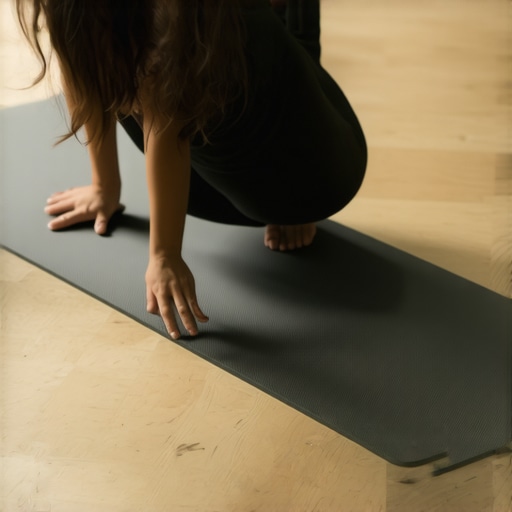
It was a day like any other, but suddenly a sharp twinge shot through my lower back as I tried to pick up my grocery bag. That moment of pain was a eye-opener — I realized I was ignoring my core, thinking heavy lifting or endless sit-ups were enough. Instead, what I needed was a smarter, safer approach to strengthening my core without risking my fragile lower back. If you’ve ever experienced a similar jolt or worry about back safety during workouts, you’re not alone. Over the years, I’ve learned that not all core exercises are created equal, and some can do more harm than good if you’re not careful. Today, I want to share a game-changing method that kept me pain-free and actually improved my posture.
The Importance of Choosing the Right Core Exercise for Your Lower Back
In my journey back to mobility, I’ve discovered that understanding how to safely activate your core is crucial. Many folks assume that the more intense the exercise, the better, but in reality, choosing the right movements can be the difference between pain and progress. Frankly, I wasted years doing traditional crunches and sit-ups, only to realize they were aggravating my lower back instead of supporting it. That’s a common mistake I see too often — overlooking the need for spinal-friendly core strengthening. According to research, engaging in exercises that support spinal stability, like controlled anti-extension movements, can reduce back pain and prevent injury (source: [Quackersneck](https://quackersneck.com/why-chiropractic-care-is-your-secret-weapon-for-better-posture)).
Is Your Core Workout Really Safe for Your Back?
It’s a question worth asking. I used to think that core exercises had to be intense, involving lots of repetition and weight. But early on, I made the mistake of rushing into complex routines without proper form, which only led to more discomfort. The truth is, many popular exercises can compromise your lower back if performed incorrectly or prematurely. The key is focusing on controlled, mindful movements that activate your deep core muscles without forcing your spine into unsafe positions. I’ll guide you through the simple yet effective exercise that transformed my approach and kept my back healthy and strong.
Start with Mindful Engagement
Begin by lying on your back with knees bent, feet flat on the floor, and arms resting by your sides. As I practiced this, I focused on slowly drawing my belly button toward my spine, imagining tightening a corset around my midsection. This mental cue helped me connect with my deep core muscles rather than just relying on superficial abs. To enhance this awareness, avoid holding your breath—inhale deeply, then exhale slowly as you brace your core. This controlled breathing prevents unnecessary intra-abdominal pressure that could strain your back. Tip: Think of your core like a stabilizing team of muscles, not just your six-pack. Engagement should be subtle yet firm—like tightening a seatbelt—you don’t need to flex intensely. This approach prevented my previous overexertion and created a solid foundation for safe core training.
Progress with Controlled Movements
Master the Pelvic Tilt
Lie on your back and gently flatten your lower back against the floor by tilting your pelvis upward. In my early days, I skeptically tried this during a quick session; at first, it felt awkward, like trying to whisper in a shouting match. But focusing on slow, deliberate movement allowed me to activate my transversus abdominis effectively. Imagine your pelvis as the steering wheel—small adjustments go a long way. Aim for slow, controlled tilts, holding briefly to reinforce muscle memory. This micro-movement is like fine-tuning an engine—precision beats power. Regular practice improved my core stability without risking my lumbar health.
Practice Dead Bug Movements
While lying flat, extend your arms toward the ceiling and knees over hips. Then, slowly lower one arm and the opposite leg toward the floor simultaneously, keeping your back pressed into the ground. Think of this as carefully balancing a tray with fragile glasses—you move slowly to prevent spills. During my first attempt, I wobbled and lost control, but as I slowed down, I felt my deep abdominals work in harmony. The key is to move with intent, not speed. This exercise trains your core to stabilize your spine during movement, reducing strain during daily activities or heavier lifts.
Incorporate Functional Mobility
Adding gentle spinal rotations and pelvic tilts in your routine increases flexibility while reinforcing stability. For instance, I incorporated controlled cat-cow stretches, visualizing my spine as a flexible wire that should move smoothly. Move slowly, inhale to arch, exhale to round, and avoid forcing into pain. This fluid motion oils your joints and promotes neural activation of stabilizers. Over time, integrating these movements eased my stiffness and improved my control over spinal muscles, making everyday actions less risky.
Key Tips for Sustained Success
Always prioritize quality over quantity—doing a few reps with proper form beats dozens hurriedly. Pay close attention to your body’s signals, like discomfort or unnatural tension, and adjust accordingly. Keep practicing these micro-movements regularly, like tuning an instrument. My progress was noticeable when I committed to daily short sessions, integrating these core activation techniques into my routine. Remember, consistency is the secret to long-term back health and mobility enhancement—it’s not about pushing hard but moving smart.
For more in-depth strategies, consider exploring how chiropractic techniques complement core training. Check out this guide on chiropractic adjustments for a holistic approach.
Many people assume that chiropractic adjustments are a quick fix or that once your pain is gone, your issues are resolved. However, this oversimplification ignores some critical nuances. For instance, a common myth is that adjustments alone can permanently improve mobility or fix poor posture. In my experience, adjustments are most effective when combined with targeted mobility exercises and posture awareness training. Relying solely on a quick crack can lead to recurrence or even dependency, where patients believe they can’t maintain their health without frequent visits.
Why do many believe adjustments alone are enough, and what could be the hidden risks?
This misconception often stems from marketing hype or a lack of understanding about the body’s complex neuromuscular networks. The truth is, adjustments are an essential piece of the puzzle—they unlock nerve pathways and restore joint function—but they’re not a standalone cure. Over-reliance without proper movement habits can allow poor postural patterns to reemerge, undoing the benefits. Studies show that integrating chiropractic care with mobility improvements yields better long-term results ([Quackersneck](https://quackersneck.com/enhance-your-posture-with-expert-chiropractic-techniques-in-2025)).