
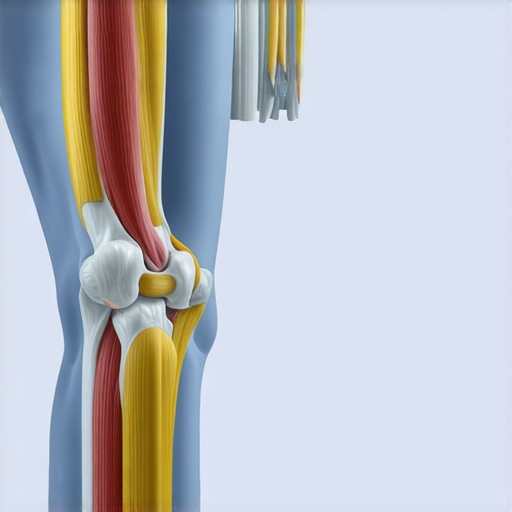
It hit me one morning, as I struggled to get out of bed after another restless night. My hips felt stiff, achy, and almost hopelessly locked up. But what I didn’t realize then was that the root of my pain wasn’t just in my hips—it was lurking lower, hiding in my ankles. That lightbulb moment changed everything, and today I want to share how this often-overlooked link can make all the difference in your journey to relief.
Why Your Ankles Might Be the Game Changer in Hip Pain
For years, I dismissed my ankle mobility as irrelevant, focusing only on stretching and strengthening my hips. But early on, I made a critical mistake: I overlooked how interconnected our joints truly are. When your ankles are stiff or immobile, they can throw off your entire alignment, forcing your hips to compensate and eventually become painful. Think of it like a domino effect—a small misstep down below can create chaos higher up.
Recent research emphasizes this connection, revealing that limited ankle movement can alter gait patterns and increase stress on the hips. An article from the American Chiropractic Association highlights how improving ankle mobility can dramatically reduce chronic hip discomfort. So, if you’re tired of endless stretching and pain pills, understanding and addressing this link might be your breakthrough.
If you’re wondering whether your ankle stiffness could be messing with your hips, I encourage you to examine your mobility. Do your ankles feel stiff after long periods of sitting? Do you struggle with balance when walking or standing on uneven surfaces? If so, you’re not alone—and there’s proven hope.
What prompted me most early on was a simple realization: I was neglecting the foundational elements of mobility. I used to think chiropractic adjustments alone would fix everything, but I learned that without proper ankle movement, my efforts wouldn’t last. To explore more about how joint mobility affects overall posture and pain management, check out [this comprehensive guide](https://quackersneck.com/the-ultimate-guide-to-improving-mobility-and-posture-in-2025).
Now, let’s delve into exactly how you can start reconnecting those ankle joints and easing your hip pain once and for all.
Start With Self-Assessment
Before diving into exercises, determine if ankle stiffness is affecting your hips. Stand barefoot, lift one foot, and try to move your ankle naturally in all directions. Feel resistance? That’s a sign you need to work on mobility. Recall a time when I noticed my ankles felt rigid after sitting all day—I couldn’t comfortably squat or walk on uneven ground. Recognizing this early helped me focus on specific mobility drills.
Use Foam Rolling to Loosen Soft Tissues
Begin by foam rolling your calves and Achilles tendons. Think of this as clearing debris from a pathway—so your joints can move freely. Lie face down, place a foam roller under your calves, and gently roll from the ankles up towards your knees for 1-2 minutes each side. This reduces tension, just as a gardener clears weeds to allow healthy growth. I did this after noticing my heels felt tight, and soon I was able to squat deeper without discomfort.
Apply Dynamic Ankle Mobilization Techniques
Next, incorporate movement-based drills. For example, kneel on one knee, place your front foot flat, and gently rock forward over your toes, then back. Imagine your ankle as a hinge—a well-lubricated one moves smoothly in all directions. Perform 10 repetitions on each side. I initially struggled with balance, wobbling like a newbie, but persistence improved my ankle flexibility significantly over a week.
Implement Targeted Stretching for Achilles and Calves
Stretch tight muscles to enhance joint range. One effective stretch is the Runner’s Calf Stretch: stand facing a wall, place your hands on the wall, and step one foot back, keeping it straight. Bend the front knee and press the heel of the back foot into the ground. Hold for 30 seconds per side. Envision this as oiling a stiff hinge—less friction means easier movement. When I started this stretch, I felt tightness release, which translated into less hip compensation during movement.
Practice Ankle Strengthening Exercises
Strengthen your ankles with balance drills. Stand on one foot, with your eyes open for 30 seconds, then switch. To challenge yourself, close your eyes or stand on an unstable surface like a pillow. Picture your ankle as a stabilizer—stronger joints support your entire posture. Reinforcing ankle stability helped me walk more confidently, reducing the strain on my hips and lower back.
Integrate Mobility into Daily Routine
Consistency is key. Incorporate these drills into your daily habits, such as during breaks or while watching TV. Think of your ankles as the foundation of a house—regular maintenance prevents issues from escalating upstairs. I committed to 5-minute sessions every morning, and within weeks, my hips felt more flexible, and pain diminished significantly.
Progressively Challenge Your Joints
As mobility improves, increase the complexity. Try bridging exercises, or add resistance bands during ankle dorsiflexion. Imagine tightening a spring—gradual tension builds strength without snapping. Be patient; such gradual progression ensures sustainable gains. Over time, these steps create a resilient mobility framework that supports your hips and overall posture.
Many individuals believe that chiropractic adjustments alone will resolve their posture issues or mobility limitations. However, this common misconception overlooks a critical nuance: addressing joint stiffness without considering the interconnectedness of the body’s musculature and movement patterns can lead to incomplete or short-lived results. In fact, relying solely on adjustments might create a false sense of security, causing some to neglect the foundational aspects of mobility and movement quality.
A frequent myth is that a single adjustment can permanently correct postural misalignments. In reality, chiropractic adjustments should be viewed as part of a comprehensive strategy that includes mobility exercises, strengthening, and ergonomic considerations. Without integrating these elements, any correction is often temporary, as the underlying movement dysfunction persists.
Another trap to watch for is the belief that stiffness in one area can be addressed in isolation. For example, treating only the hips for mobility issues while ignoring ankle or thoracic spine function can result in compensatory patterns that keep the problem alive. This oversight stems from isolating symptoms rather than recognizing the body’s kinetic chain. To truly improve, a nuanced understanding of how each joint and muscle contributes to overall posture is essential. For more insights, check out this guide on targeted mobility exercises.
The danger lies in overemphasizing passive interventions—like adjustments or massage—without emphasizing active participation through mobility drills and functional movement training. This balance is crucial: adjustments can create structural changes, but maintaining and improving mobility requires consistent, active effort.
Now, a question for the advanced practitioner: how do you identify when persistent postural issues are rooted in neuro-motor control rather than joint or soft tissue restrictions? This nuance often involves assessing movement patterns, reflexes, and muscular activation sequences, beyond just joint range of motion. Experts like Dr. Stuart McGill suggest that integrating neuromuscular training can elevate outcomes significantly, especially in stubborn cases. Read more about this here.
Remember, the path to lasting improvement isn’t just about cracking joints or stretching muscles—it’s about understanding and optimizing the intricate connections within your movement system. Are you falling into any of these traps? Let me know in the comments and share your experiences. Taking a holistic approach is the best way to move, posture, and feel better daily.
Maintaining your mobility and posture isn’t a one-and-done effort; it requires consistent effort and the right tools to support your journey. Over the years, I’ve refined my approach by integrating specific equipment and software that keep my movement patterns optimal and my posture solid. One of the key devices I rely on is a set of resistance bands, which allow me to perform targeted mobility drills that strengthen my stabilizer muscles and improve joint range of motion. I particularly favor the loop bands for hip and ankle mobility exercises, as they provide variable resistance and are portable enough to use anywhere.
Another indispensable tool is a foam roller, especially for my calves, quads, and thoracic spine. Foam rolling not only releases soft tissue restrictions but also enhances blood flow, making subsequent stretches and mobilizations more effective. I personally use a dense, high-quality foam roller because it withstands frequent use and provides the right amount of pressure without losing its shape. Incorporating foam rolling into my daily routine helps prevent stiffness and keeps my joints responsive, which is crucial for long-term mobility retention.
For tracking progress and ensuring consistency, I employ mobility tracking apps like “MobilityWOD” on my smartphone. These apps provide guided routines and remind me to stay on track, turning mobility work into a sustainable habit. I find that visual progress charts and reminders motivate me to push through plateaus, which are common in long-term mobility training. Consistent tracking supports fine-tuning exercises and helps me notice subtle improvements that might otherwise go unseen.
Physical therapists and chiropractors increasingly recommend ergonomic tools to complement mobility routines. An adjustable sit-stand desk, for example, encourages frequent posture shifts during work hours, reducing strain and promoting dynamic movement. This adjustment not only relieves pressure on the lower back but also encourages active engagement of core muscles, which are fundamental to maintaining good posture. In my practice, I integrate ergonomic assessments with mobility work, and I’ve seen firsthand how small adjustments can lead to significant improvements over time.
Looking ahead, I predict that wearable devices equipped with biofeedback will become more mainstream. Imagine smart insoles or posture-tracking wearables that alert you when you fall into poor movement patterns. These tools will personalize mobility strategies with real-time data, making long-term maintenance more manageable and less reliant on guesswork.
How do I keep mobility and posture lasting through the years?
The key is establishing a dedicated routine that incorporates effective tools into your daily life. Start small: use resistance bands for 5–10 minutes daily, integrate foam rolling after workouts, and utilize apps for tracking your progress. Regular ergonomic adjustments at your workspace also make a difference. Remember, consistency outweighs intensity—small, daily actions compound into lasting results. For a practical implementation, consider trying a targeted mobility drill with resistance bands today—it’s a simple yet powerful step toward long-term health. For detailed strategies, explore this guide on mobility and posture maintenance.
Lessons I Wish I Embraced Earlier About Mobility and Alignment
- Realizing that joint interconnections are more than just theoretical; they are the foundation of lasting posture improvements was a lightbulb moment. Addressing ankle stiffness transformed my approach from reactive to proactive, saving me years of discomfort.
- Ignoring the soft tissue component—like calves and Achilles—was a costly mistake. Incorporating foam rolling early on accelerated my progress and made every mobility exercise more effective, proving that soft tissue work is just as crucial as joint mobilization.
- Believing that adjustments alone could fix everything was a comforting myth. Combining chiropractic care with active mobility drills created a synergy that produced durable results, emphasizing the importance of owning my movement health.
- Underestimating daily habits’ impact—such as prolonged sitting—delayed my recovery. Small, consistent mobility practices embedded into my routine built resilience against stiffness and pain, illustrating the power of consistency over intensity.
Tools That Became My Non-Negotiables in Mobility and Posture Maintenance
- Resistance bands, especially loop bands, became a game-changer for targeted strength training and joint stability. I trust them because they are versatile, portable, and allow for progressive overload, essential for long-term gains.
- High-quality foam rollers helped me release tension and improve tissue quality. Their durability and perfect density made recovery sessions satisfying and effective, making routine self-myofascial release a habit I swear by.
- Mobility tracking apps like “MobilityWOD” provided accountability and guided routines that kept my efforts structured. The visual feedback motivated me to stay consistent, and I recommend them for anyone serious about progress.
- Ergonomic accessories, from adjustable desks to supportive chairs, subtly but significantly influenced my posture. They remind me that environment and daily surroundings are integral to mobility health, not just exercises alone.