
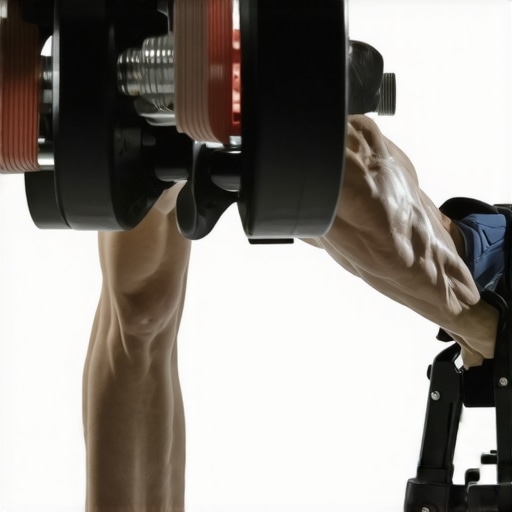
I remember the moment vividly—trying to smash out a deep squat during my workout, only to feel an embarrassing halt. My heels refused to stay grounded, and I couldn’t get below parallel no matter how hard I tried. It was frustrating, humbling, and honestly, a wake-up call. Turns out, that stubborn limitation was my ankle locking up, and it was quietly sabotaging my efforts.
Why Your Ankle Mobility Might Be Holding You Back
Many of us hit a plateau in our squat depth, and often, the culprit is something subtle yet powerful: ankle restriction. When your ankle joint isn’t moving freely, your body adapts—compensating elsewhere, like your knees or hips, which can lead to improper form and increased injury risk. In my case, I ignored the ankle issue for too long, pushing through discomfort until I finally sought help from a professional. That decision made all the difference.
Understanding how ankle mobility impacts your squat isn’t just academic; it’s a game changer for your progress. Limited dorsiflexion—where your foot moves toward your shin—can prevent you from reaching depth comfortably, leading to compromised technique and even pain. The good news? Many mobility issues are fixable with targeted adjustments and exercises.
Have you ever felt your heels lift or your heels flatten during a squat? If so, you’re not alone. Addressing ankle restrictions can unlock new levels in your training, improving form, power, and resilience.*
Is Improving Ankle Mobility Actually Worth the Effort?
Early in my journey, I made the mistake of assuming that ankle flexibility wasn’t a big deal—after all, I could squat, right? But over time, I watched my progress stall, and discomfort creeping in. Once I took the time to work on my mobility with the right techniques, everything changed. Not only did my depth improve, but I also felt stronger and more balanced. For more insights, check out [this expert guide](https://quackersneck.com/why-chiropractic-care-is-your-secret-weapon-for-better-posture), which highlights how proper mobility is essential for optimal movement.
So, if you’re tired of hitting a wall during your squats, or if those stubborn heels keep popping up, it’s worth investigating your ankle health. Addressing these issues can be the difference between stagnation and progress. Up next, I’m excited to walk you through practical steps to test, improve, and maintain ankle mobility—your secret weapon for a deeper, safer squat. Ready to take that next step?
Test Your Ankle Mobility
Start by assessing your dorsiflexion range. Get into a lunge position with your front foot flat and gently push your knee forward past your toes. Use a ruler or measuring tape to see how close your knee gets to your toes without lifting your heel. This simple test reveals if your ankles are limiting your squat depth. I did this during my first mobility session, and my knee only moved a few centimeters over my toes, confirming the restriction I felt during workouts.
Prioritize Soft Tissue Work
Release tight calves and Achilles tendons through foam rolling and targeted stretching. Spend 1-2 minutes rolling each calf, focusing on tender spots. Then, perform seated stretches by pulling your toes toward your shin to improve flexibility. This resembles a chiropractic technique where soft tissue release helps restore joint mobility, making the joint more receptive to movement. I added daily calf rolls, and over a week, I noticed my ankle’s dorsiflexion improved, allowing me to squat deeper comfortably.
Incorporate Specific Mobility Exercises
Perform controlled exercises like ankle rocks, where you kneel, keep your heel on the ground, and gently shift your weight forward and backward. Do 2 sets of 10 reps each side. These mimic the articulations chiropractors aim to improve during adjustments, promoting joint harmony. I integrated ankle rocks into my warm-up, and within days, I felt a marked increase in ankle flexibility, which translated into better squat depth.
Adjust Your Movement Pattern
Use wall-assisted squats to reinforce proper ankle technique. Stand a few inches from the wall, place your toes close, and bend your knees without heels lifting off the ground. Focus on pushing knees forward while keeping your heels down. Think of it as a postural correction—aligning your entire chain for optimal function. During practice, I noticed my heels stayed firmly on the ground whenever I consciously maintained this form, boosting my confidence in performing free-standing squats.
Add Mobility to Your Daily Routine
Consistency is key. Incorporate ankle mobilization exercises daily or before workouts. Even short, 5-minute sessions can make a difference over time. This routine resembles ongoing chiropractic adjustments—small, frequent tweaks lead to sustained improvements. After just a week of daily work, I experienced less heel lift and greater squat depth, confirming that persistent effort yields results.
Seek Professional Help When Needed
If mobility issues persist despite your efforts, consider consulting a chiropractor who specializes in joint function. They can perform targeted adjustments to restore ankle alignment, much like fine-tuning a machine for optimal operation. Their expertise accelerates progress and prevents compensatory issues elsewhere in your body. I visited for an assessment, and a few precise adjustments unlocked new movement ranges I couldn’t achieve on my own.
Many assume that Chiropractic care is just about cracking bones or quick fixes, but in reality, there’s a profound depth that many overlook. A common misconception is that chiropractic adjustments are only effective for acute pain, whereas, in truth, they can be instrumental in long-term postural correction and mobility improvement when integrated with proper movement habits. Relying solely on adjustments without addressing soft tissue restrictions or daily habits often leads to temporary relief rather than lasting change. It’s a trap I encountered early in my practice—believing that a quick adjustment was the silver bullet, only to realize that true progress stems from understanding the nuanced interplay between joint mobility, soft tissue health, and posture mechanics.
Are Chiropractic Adjustments a Shortcut to Better Posture or Just a Quick Fix?
Many people think that adjustments provide an instant solution, but research highlights that sustainable improvements require a comprehensive approach. A study published in the Journal of Manipulative and Physiological Therapeutics emphasizes that combined therapies—like targeted mobility exercises and soft tissue work—produce better, more durable results than adjustments alone. This underscores that adjustments set the stage for optimal movement but aren’t the whole story.
A critical trap to avoid is assuming that adjustments are purely passive. Some practitioners promote the idea that once adjusted, postural habits and muscle imbalances will resolve on their own. However, this mindset neglects active engagement from the patient—incorporating mobility drills and ergonomic awareness is essential for long-lasting change. For example, integrating mobility routines from resources like [this comprehensive guide](https://quackersneck.com/the-ultimate-guide-to-improving-mobility-and-posture-in-2025) ensures that adjustments work synergistically with movement training.
Another nuanced misconception is the age-old myth that chiropractic care is only for back or neck pain. In reality, chiropractic’s scope extends to enhancing overall mobility and posture, which can combat the increasingly sedentary lifestyles leading to stiffness and degenerative issues. It’s a point I emphasize when discussing how soft tissue management and daily habits amplify adjustments’ benefits.
One common mistake I see in practice is practitioners over-relying on spinal mobilizations without evaluating soft tissues. Neglecting fascia, muscles, and joint capsules can limit the effectiveness of adjustments. Proper soft tissue work—like targeted stretching or myofascial release—not only prepares joints for movement but also sustains the gains achieved.
For those interested in elevating their understanding, exploring topics like how chiropractic adjustments can be personalized to address specific movement patterns is enlightening. For instance, techniques that focus on restoring joint harmony, much like fine-tuning a machine, significantly improve posture and mobility over time. Check out [how adjustments enhance mobility](https://quackersneck.com/how-chiropractic-adjustments-enhance-posture-and-mobility) to learn more.
Finally, I want to remind you that progress in mobility and posture isn’t just about periodic visits; it’s about daily habits and awareness. Incorporate consistent mobility exercises, ergonomic adjustments, and soft tissue care—these are the real keys for sustainable change. Have you ever fallen into this trap? Let me know in the comments.Maintaining your mobility and posture improvements over the long term requires effective tools and habits. Personally, I rely on a combination of targeted soft tissue devices and dedicated mobility routines to ensure consistent progress. Foam rollers are my go-to for releasing tight calves and hip flexors, helping to maintain ankle and hip mobility that supports proper posture. I prefer the Rumble Roller, which is dense and textured, providing deep tissue massage that mimics some chiropractic soft tissue techniques—more effective than standard foam rollers for my needs. Additionally, using a resistance band for neurodynamic nerve glides, like thoracic or sciatic nerve mobilizations, keeps my nervous system responsive and reduces stiffness. These simple, affordable tools are essential in my daily routine, especially after long periods of sitting or intense workouts. Software-wise, I recommend apps like ‘MobilityWOD’ or ‘ROMWOD’ to guide structured routines tailored to your specific needs. These platforms provide video tutorials and progress tracking, making consistency easier and more engaging. In the future, I predict that wearable sensors and AI-powered feedback will become standard, helping us optimize movement even more precisely. Once you’ve integrated these tools, the key question becomes: how do I maintain this mobility over time? The answer is creating a sustainable habit loop—dedicate a few minutes daily or post-exercise for soft tissue work and targeted exercises. Combining manual therapy tools with digital guidance ensures you stay on track without relying solely on periodic chiropractic adjustments. For instance, I set a daily reminder to roll and stretch, which has profoundly impacted my long-term posture stability and squat depth. If you’re serious about sustaining your movement improvements, I encourage you to try the resistance band nerve glides mentioned earlier—they’re simple but highly effective at maintaining nerve mobility, which is often overlooked in long-term care. Remember, ongoing soft tissue maintenance and mobility work are the foundations of a pain-free, active lifestyle. To learn more about integrating these strategies, explore our comprehensive guide to improving mobility and posture in 2025. Keep consistent, stay diligent with your tools, and your body will thank you for it.
One of the most profound insights I’ve gained on my mobility journey is how small, often overlooked adjustments can lead to significant improvements. I used to believe that stiffness or limited movement was just part of aging or intense workouts, but understanding the intricacies of ankle mobility revealed a different story. The greatest lesson was realizing that persistent soft tissue work and consistent practice could undo years of compensation, preventing injuries before they start.
Another eye-opener was discovering how ingrained habits—like sitting poorly or wearing unsupportive shoes—could silently sabotage even the best mobility efforts. Recognizing this allowed me to implement daily routines that reinforce healthy movement, transforming my posture and confidence. It’s empowering to know that proactive, mindful choices create a ripple effect, maintaining the gains achieved through chiropractic and mobility exercises.
Finally, I’ve learned that patience is key. Improvement in mobility isn’t an overnight fix; it’s a ongoing process of tuning into your body, adjusting routines, and seeking professional guidance when necessary. This mindset shift has made the journey enjoyable and sustainable, ensuring that better posture and pain-free movement become lifelong habits rather than fleeting trends.
My Essential Tools for Posture and Mobility
To keep my progress on track, I rely on trusted resources like The Ultimate Guide to Improving Mobility and Posture in 2025. It provides comprehensive strategies that complement chiropractic care effectively. Foam rollers like the Rumble Roller help me release tight calves and fascia, which directly influence ankle and hip mobility—crucial for sustainable posture. I also use resistance bands for nerve glides, which prevent stiffness and numbness, ensuring nerves stay healthy and responsive.
Additionally, digital platforms like Mobility Hacks apps motivate me with personalized routines, making daily maintenance straightforward and engaging. These tools empower me to take control of my mobility, integrating soft tissue work seamlessly into my routine, much like regular chiropractic adjustments that keep my body aligned and pain-free.
Keep Moving Forward with Confidence
The path to better posture and mobility is a personal voyage, full of learning and adjustments. Embrace every small win, and don’t hesitate to seek expert advice if you hit a plateau. Every effort you make builds resilience and ease, transforming how you move, feel, and live. Your future self will thank you for taking consistent action today—because active, pain-free movement is the foundation of a vibrant life. Are you ready to redefine what your body can do? Share your journey with me below, and let’s keep each other motivated to improve every day.