
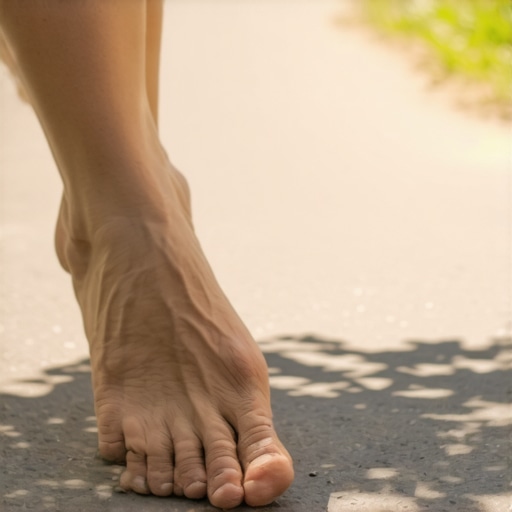
Have you ever felt that unsettling sense of imbalance after standing up from a long period of sitting, only to realize that your gait feels off somehow? Maybe you’ve noticed a slight limp, or your foot feels unusually stiff, and you brush it off as just tired muscles. I used to dismiss these signs until I experienced it firsthand—when my own big toe became painfully stiff, and suddenly, every step I took felt different, awkward, almost wrong. That was my revelation: a stiff big toe wasn’t just a minor annoyance; it was subtly rewiring the way I moved, impacting my entire posture and causing discomfort I couldn’t ignore.
The Hidden Impact of a Stiff Big Toe on Your Walk
Our feet are fundamental to how we move, yet we rarely pay close attention to them—until something goes awry. The big toe, in particular, plays a crucial role in pushing off during walking and maintaining stability. When it becomes rigid or immobile, it throws off the natural biomechanics, causing shifts elsewhere in your body. I noticed that after my toe stiffened, my ankle started to wobble, my knee would sometimes ache, and my lower back began to feel tense. It’s as if a small change in one part of the chain can trigger a cascade of discomforts throughout your gait and posture.
Research shows that altered toe mobility can reduce walking efficiency and increase strain on other joints, leading to pain and potential injury down the line. This makes sense—if one link in the chain is compromised, the entire system bears the burden. Understanding this connection was eye-opening for me and can be for you too.
In this post, I want to share my personal experience and guide you through simple, effective strategies to restore mobility in your big toe. Trust me, addressing this tiny yet vital joint can dramatically improve how you walk, stand, and feel daily. Are you ready to discover how to get your toes moving freely again? Let’s dive in!
Could This Be Why You Feel So Stiff? Addressing Doubts and My Early Mistake
Initially, I thought the problem was just a minor stiffness that would resolve on its own. I made the mistake of ignoring it, assuming it was nothing serious. That delay only worsened my gait and amplified discomfort elsewhere. It’s common to overlook small issues—trust me, I’ve been there. The truth is, small mobility restrictions can have outsized effects. If you’re skeptical, I get it. But I urge you to consider how many of your aches and pains might have an unassuming root in your toes. If you’ve faced persistent foot or joint discomfort, or noticed your stride feels altered, it’s worth exploring further. I recommend consulting a professional who specializes in mobility and posture, such as a chiropractor, who can assess and help restore your toe’s function. You can reach out through this contact page: [https://quackersneck.com/contact-us-2](https://quackersneck.com/contact-us-2). Understanding and treating these minor yet impactful issues can truly change your daily experience—something I discovered through personal trial and error.
Start with Gentle Toe Mobility Exercises
One of the most straightforward methods I used was daily toe circles. Sit comfortably, lift your foot off the ground, and slowly rotate your big toe clockwise for 10 repetitions, then counterclockwise. Think of your toe as a hinge that needs lubrication. I made this a morning habit, and after just a week, I noticed my toe felt more flexible, making my stride smoother. Consistency is key—don’t skip days, even if it feels minor.
Incorporate Stretching to Release Tension
Next, I focused on stretching the plantar fascia and the surrounding tissues. A simple stretch involves kneeling and pulling your toes back toward your shin, holding for 30 seconds. This loosened tight tissues under my foot that contributed to stiffness. Remember, stretch gently—never force beyond comfort. Over time, this improved toe extension, directly enhancing push-off during walking.
Use Myofascial Release Techniques
To target deeper fascial restrictions, I used a tennis ball under my foot, gently rolling it around the arch. This self-myofascial release helped break up adhesions, much like loosening a sticky door hinge. Apply moderate pressure and focus on tender spots. This step significantly reduced persistent tightness, restoring more natural toe movement and better gait mechanics.
Adjust Your Footwear for Support and Mobility
Shoes matter. I transitioned from stiff soles to more flexible footwear that allowed my toes to move freely. Wide toe boxes are ideal—they prevent compression and encourage natural splay. During this period, I avoided high heels and narrow shoes, which tend to restrict toe mobility and can aggravate stiffness. Remember, supportive, yet flexible footwear supports the improvements you’re making physically.
Practice Balance and Strengthening Drills
Maintaining balance enhances toe mobility. I incorporated simple exercises like standing on one foot for 30 seconds, gradually increasing duration. I also practiced toe raises—the kind that mimic standing on your tiptoes—repeating 15 times. These strengthen the intrinsic muscles of the foot, which support the big toe’s movement. Regular practice leads to more intuitive control over your toe’s range of motion.
Get Professional Assessment and Adjustments
Despite my self-directed efforts, I realized expert guidance accelerates progress. A chiropractor can evaluate the entire kinetic chain and perform targeted adjustments, often improving joint mobility that you can’t resolve alone. During my visits, specific adjustments to my foot and ankle joints noticeably increased my toe flexibility. Consulting a professional ensures that any underlying structural issues are addressed, preventing future stiffening.
Utilize Targeted Mobility Drills Daily
For ongoing maintenance, I adopted daily mobility routines recommended by experts. One example is the toe-tap exercise: while seated, tap your big toe on the ground repeatedly, aiming for a quick, controlled motion. This helps reinforce the new mobility gained through exercises and daily stretches. Consistent repetition integrates improved mobility into your gait naturally.
Remember, Unlocking Your Toe’s Potential Benefits Your Entire Body
Beyond walking comfortably, restoring big toe mobility aligns with better posture and less tension in your ankles, knees, and lower back. Regularly practicing these steps can prevent compensatory patterns that lead to pain. Take it step-by-step—small daily actions build lasting change, turning your stiff toe from a limiting obstacle into a source of strength.Many people assume that improving mobility and posture is simply a matter of doing the right stretches or relying solely on chiropractic adjustments. However, there’s a common misconception that these solutions are one-size-fits-all and quick fixes. In reality, the nuances lie in understanding the complexity of the body’s interconnected systems. For instance, many believe that a single adjustment will permanently correct posture, but research indicates that without addressing underlying movement patterns and lifestyle habits, improvements may be temporary. As Dr. Todd Hargrove emphasizes in his work on neuroplasticity and movement, lasting change requires engaging the nervous system holistically, not just manipulating joints. Furthermore, a prevalent myth is that pain or stiffness always signals a structural problem needing correction. Still, in many cases, the root may involve impaired motor control or faulty movement habits that chiropractor and mobility experts can help reprogram. An important trap to avoid is over-reliance on passive treatments, like adjustments or foam rolling, without active engagement in strengthening and movement retraining. This can lead to dependency and missed opportunities to build resilient, efficient movement patterns. For advanced readers, a pertinent question arises: How does the brain’s neuroplasticity influence long-term postural correction? Studies like those by Robert Sapolsky suggest that consistent movement and targeted interventions can rewire neural pathways, making improvements more sustainable. This underscores the importance of proactive, conscious movement practices alongside chiropractic care. To truly harness these techniques, integrating daily mobility exercises that emphasize control and stability is vital. Check out methods detailed in [this guide](https://quackersneck.com/revolutionize-your-posture-with-targeted-mobility-exercises) for practical tips. Remember, real progress often involves breaking out of passive treatment cycles and committing to active, one percent improvements each day. Don’t fall into the trap of viewing adjustments as the sole solution; instead, see them as part of a comprehensive approach that includes understanding your body’s unique dynamics. If you’re curious about amplifying your efforts or want personalized guidance, consider reaching out through [this contact page](https://quackersneck.com/contact-us-2). Improving your mobility and posture isn’t a quick fix—it’s a continuous process of awareness, action, and adaptation. Have you ever fallen into this trap? Let me know in the comments.
Investing in the Right Equipment Makes a Difference
From my experience, having specialized tools at your disposal transforms mobility routines from mundane to effective. I swear by the use of quality foam rollers like the TriggerPoint GRID, which are designed with multidirectional ridges to target fascial restrictions precisely. I personally prefer using a textured roller over smooth ones because it helps break up adhesions more effectively, especially in stubborn areas around the calves and hips. Incorporating such equipment ensures deep tissue work can be performed efficiently at home, saving time and money while maintaining progress. A good foam roller is a staple for my daily routine, especially after long sitting periods or intensive workouts, as it prevents the formation of trigger points that can compromise mobility.
Leverage Technology to Track Progress and Stay Consistent
In the digital age, using apps like MobilityWOD or the Kinomap platform allows me to monitor improvements in flexibility and control over time. These apps offer guided routines tailored for posture and joint health, along with progress tracking features that provide motivation. I particularly value the video demonstrations, as they ensure I perform each movement correctly, avoiding self-inflicted setbacks. By reviewing my data weekly, I can adapt my exercises to target weak spots, maintaining a strategic approach to long-term health. As expert Dr. Kelly Starrett emphasizes in his work, continuous movement tracking promotes accountability and sustains mobility gains—an approach I highly recommend for anyone serious about conservation.
Prioritize Consistent Movement Over Quick Fixes
One recurring lesson I’ve learned is that consistency trumps intensity or frequency. Incorporating small, deliberate mobility drills into my daily schedule, like the simple ankle circles or deep breathing combined with gentle spine twists, helps maintain elasticity and muscle tone. These routines are quick but impactful, especially when performed in the morning or during breaks at work. My advice? Find a set of go-to exercises that you enjoy and stick to them—over time, these habits forge resilient movement patterns that scale with your lifestyle. Remember, the future of mobility is leaning towards smart, integrated approaches—think wearables that provide real-time feedback on posture and joint activity. The trend is heading in this direction, making it easier than ever to maintain your progress with minimal effort. Chiropractic care can complement your routine by ensuring structural alignment, further prolonging your mobility gains.
How do I keep my mobility routine sustainable over time?
Maintaining flexibility and postural health requires ongoing effort. Incorporate your chosen tools—be it foam rollers, resistance bands, or digital apps—into a daily rhythm. Regular check-ins with a professional, like a chiropractor, can help refine your approach and address emerging issues early. What’s crucial is listening to your body’s signals and adjusting your regimen accordingly. Additionally, staying educated about biomechanical principles helps you understand why certain movements work. For instance, understanding how neuroplasticity influences muscle memory can motivate you to perform targeted exercises consistently. For comprehensive guidance tailored to your needs, I recommend consulting a mobility expert or visiting specialized resources like this detailed guide. Try integrating one advanced tip today—perhaps a focused myofascial release technique combined with mindful movement—and observe the difference it makes.
The Unexpected Lessons From My Toe Troubles
Through my journey diagnosing and addressing my stiff big toe, I discovered that tiny joints often hold the key to our overall mobility and posture—lessons many overlook. The hardest lesson was realizing how neglecting something as simple as toe movement could cascade into pain, imbalance, and even affect my confidence in daily activities. Embracing patience and consistent care transformed my outlook; I learned that lasting change resides in paying attention to the smallest details that make up your entire kinetic chain.
Tools That Transformed My Mobility Journey
My essential toolkit evolved to include a high-quality foam roller, like the TriggerPoint GRID, which provided deep fascia release in stubborn areas. I also relied on guided app routines such as those from MobilityWOD, which helped me stay accountable and progress methodically. Finally, consulting professionals through [this contact page](https://quackersneck.com/contact-us-2) became invaluable, illustrating that combining self-care with expert guidance supercharges results. Trust in specialized tools and support is vital for tangible, sustainable improvements.
Remember, Your Next Posture Break Could Be Your Biggest Win
If you’re ready to move beyond passive fixes and embrace active, strategic changes, know that your body responds best to deliberate daily actions. Small exercises like toe circles and arch rolls aren’t just habits—they’re investments in your future mobility and pain-free living. Prioritize consistency over intensity, and don’t underestimate how dedicated effort in small doses can lead to profound, lasting change. Your big toe might be just a tiny joint, but its influence on your entire body is tremendous—start giving it the attention it deserves today! Think about a single mobility tweak you can incorporate now, and notice how it transforms your walk, posture, and well-being over time.