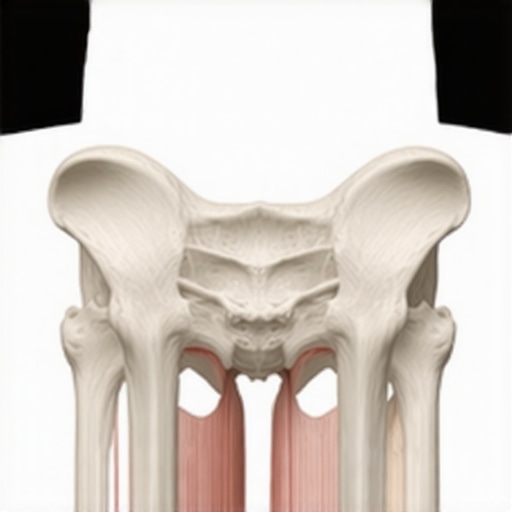
I remember one morning, I stepped out of bed and immediately felt that familiar, nagging tightness in my right hip. It was subtle at first, almost easy to ignore, but as the day went on, that tightness grew into a stiffness that made every movement feel awkward. It’s a frustrating thing—feeling perfectly fine on one side but noticing the discomfort on the other, especially when everything else seems balanced. I’ve been there, and I want to share what I learned from that lightbulb moment.
The Real Reason Your Hip Feels Tighter Than the Other
Many people assume uneven hips are just a matter of genetics or postural habits, but often, the root cause is more nuanced. In my case, I discovered that even a slight misalignment or stiffness in my posture could lead to one hip compensating in ways I hadn’t realized. It’s like a subtle tug-of-war happening inside your body—you might not notice it at first, but over time, it creates imbalance and discomfort.
What’s astonishing is how interconnected our body’s systems really are. That tightness isn’t isolated; it’s often linked to your overall mobility and spinal health. For instance, limited mobility in the thoracic region—your upper back—can put extra strain on your hips as your body tries to compensate. This is why I recommend exploring comprehensive guides like this detailed mobility and posture guide.
But here’s a personal mistake I made early on: I thought stretching alone would fix my hip tightness. It didn’t. Instead, I learned that addressing the core of the issue—like improving spinal alignment and correcting posture—made all the difference. When you get your body properly balanced, that stubborn tightness often improves significantly.
Do you often notice one hip feeling tighter or more restricted than the other? If so, you’re not alone. And the good news is, with a few targeted adjustments and awareness, you can restore balance and move comfortably again. Let’s dive into the practical steps that helped me—and can help you too.
Assess Your Posture and Mobility
Start by observing how your hips feel in different positions—stand in front of a mirror and note if one side appears higher or tighter. Then, perform a simple mobility test, like lifting your knees or rotating your hips, to identify restrictions. Use a mirror or record yourself to see subtle imbalances, and consider consulting a professional for a thorough assessment. Recognizing the specific areas of tightness creates a clear action plan and helps target your efforts effectively.
Implement Targeted Stretching and Strengthening Routinesthis guide can be a game-changer. Pair stretching with strength exercises like glute bridges or clamshells to reinforce balanced muscle activation. A personal experience: I incorporated these routines into my morning and noticed improved mobility within days, although initial sessions felt awkward as my muscles adapted.Use the analogy of tuning a guitar
Think of your hips as guitar strings—when one is out of tune, the entire instrument sounds off. Regularly adjusting tension through targeted exercises helps restore harmony to your pelvis and lumbar spine, eliminating compensatory tightness and pain.
Prioritize consistency over intensity. Even 10-minute daily routines can lead to significant improvements over time. To deepen your understanding, explore this comprehensive mobility guide for a structured approach. Remember, small but sustained actions are key to long-term progress and balanced hips.Many assume that frequent chiropractic adjustments alone can fix postural issues or chronic discomfort, but this oversimplification often leads us astray. In my experience working with mobility and posture correction, most people overlook nuanced factors such as muscle memory, neural pathways, and the body’s adaptive responses. Contrary to popular belief, adjustments aren’t a one-time fix; they are part of a comprehensive process involving targeted exercises and behavioral changes. One common myth is that cracking or popping sounds during adjustments indicate a ‘successful’ treatment—however, these sounds are just gas bubbles in the synovial fluid and don’t correlate directly with effectiveness.
Are Adjustments Enough to Rewire Your Posture?
Advanced practitioners understand that while chiropractic adjustments can immediately improve joint mobility, long-term posture correction relies heavily on retraining muscles and neural pathways—a process detailed in this comprehensive mobility guide. Relying solely on adjustments without incorporating specific strengthening and neuromuscular reeducation may lead to a cycle of temporary relief rather than lasting change. Moreover, many underestimate how ingrained faulty movement patterns become over time, reinforcing misalignments despite ongoing adjustments. This highlights the importance of a holistic approach, combining chiropractic techniques with movement education.
The Trap of Misinterpreting Mobility Gains
Another advanced nuance involves the misconception that increased joint range of motion automatically translates to better function. It’s crucial to distinguish between passive mobility (what adjustable joints can do) and active stability (what muscles can control). An overly aggressive focus on stretching or passive mobilizations can sometimes weaken proprioception and lead to instability, increasing injury risk—especially when the underlying muscle activation patterns haven’t been addressed. As explored in this article, integrating strength with mobility work provides a more sustainable route to healthy posture.