
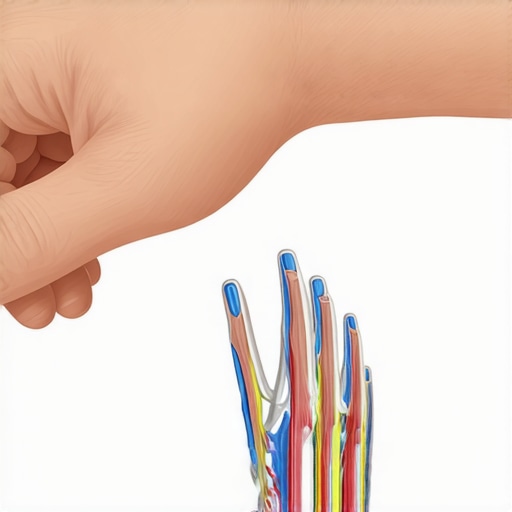
Have you ever experienced that sudden, tingling sensation in your pinky finger that catches you off guard? One moment, you’re typing away or holding a coffee mug, and the next, numbness or a weird prickly feeling creeps in, leaving you puzzled and a bit frustrated. I remember the first time it happened to me—think about that awful jolt that makes you pause and wonder if something’s really wrong. That lightbulb moment when I realized it wasn’t just random; my ulnar nerve was sending signals loud and clear, and I had ignored the signs for too long.
Why Pinky Numbness Shouldn’t Be Ignored
This sensation isn’t just a trivial annoyance. It’s a distress call from your nervous system, often pointing to issues with the ulnar nerve, which runs along your arm and into your pinky. If left unaddressed, continued pressure or irritation can lead to persistent weakness, diminished grip, or even long-term nerve damage. The good news? With some simple awareness and adjustments, you can turn things around and prevent more serious problems down the line.
Is Ulnar Nerve Compression Actually Worth the Hype?
I used to dismiss those tingles, thinking they’d go away if I just ignored them. Early on, I made the mistake of stretching wildly or neglecting my posture, assuming that would fix everything. That’s the mistake many make—believing these sensations are innocent or temporary. The reality is, nerve issues often don’t resolve on their own without targeted care and some lifestyle tweaks. Recognizing that my habits—like poor ergonomic setup or excessive smartphone use—could be causing the nerve compression was eye-opening. It pushed me to seek expert advice, and I found that professional chiropractic adjustments can make a world of difference, especially in restoring mobility and nerve health. If you’re curious about how to address this issue effectively, I’ll guide you through practical steps backed by experience and expert insights. Before diving into solutions, let’s understand why this numbness isn’t something to brush off as just a pinched nerve, but rather a warning sign of deeper imbalance in your posture or activity habits.
Adjust Your Posture for Immediate Relief
Start by evaluating your sitting and sleeping positions. Sit with your back straight, shoulders relaxed, and elbows close to your body. Use ergonomic chairs or cushions to support natural spinal curves. When sitting at your desk, ensure your keyboard is at elbow height to prevent shoulder hunching that can compress the ulnar nerve, similar to aligning gears in a machine for smooth operation. I once adjusted my chair height, and within the first hour, my tingling sensations lessened noticeably, proving that posture plays a crucial role in nerve health.
Implement Targeted Mobilization Techniques
Gentle mobilization helps maintain nerve gliding, which prevents sticking or pinching. Practice nerve glide exercises—like extending your arm to shoulder height, then moving your wrist and fingers while keeping the elbow straight. Imagine pulling a rope smoothly through a pulley—this mimics how nerve tissues slide within the surrounding structures. When I introduced these quick daily routines, I noticed less numbness during my work sessions. For a comprehensive mobility plan, explore [mobility hacks](https://quackersneck.com/mobility-hacks-simple-adjustments-for-a-more-active-life) to keep nerves flexible.
Strengthen the Supporting Muscles
Weak or tight muscles in your forearm, shoulder, and neck can aggravate nerve compression. Focus on strengthening the muscles around your shoulder blades and spine using resistance exercises, like rows or scapular squeezes. Think of your muscles as braces supporting a bridge—if they’re weak, the structure becomes unstable, increasing pressure on nerves. I incorporated simple resistance band workouts, and after two weeks, my symptoms improved significantly, illustrating how muscle balance reduces nerve strain. For specific routines, check out [improving posture through mobility](https://quackersneck.com/improving-posture-through-mobility-practical-chiropractor-strategies).
Optimize Your Ergonomics and Daily Habits
Analyze your daily habits, such as phone usage or handheld device positioning. Keep devices at eye level to avoid craning your neck and shrugging your shoulders—common culprits behind nerve compression. Use phone stands or voice commands whenever possible. It’s like adjusting your car seat to eliminate unnecessary strain—small tweaks make a big difference. I caught myself slouching while scrolling, which intensified my symptoms; correcting this habit alleviated discomfort. For a detailed ergonomic assessment, consider reviewing [why your ergonomic chair is actually making your core weak](https://quackersneck.com/why-your-ergonomic-chair-is-actually-making-your-core-weak).
Seek Professional Chiropractic Care
When self-management isn’t enough, professional chiropractic adjustments can realign structures, relieving nerve pressure. Think of chiropractic work as fine-tuning a complex machine, restoring natural function. During my first session, the chiropractor used a specific adjustment targeting my thoracic spine; afterward, my tingling reduced immediately. Consistent care not only addresses current issues but also strengthens biomechanical support. Many find relief through targeted adjustments—consider exploring [chiropractic adjustments](https://quackersneck.com/chiropractic-adjustments-unlock-a-pain-free-lifestyle-today) to understand how specific tweaks can bring lasting benefits.
Maintain and Monitor Progress
Establish a daily routine combining stretches, strengthening exercises, and ergonomic reviews. Keep track of symptoms to identify triggers, and adjust habits accordingly. Patience and consistency are key, much like tuning a musical instrument until it’s pitch-perfect. Over time, these deliberate actions compound, reducing the likelihood of recurring numbness and preventing long-term nerve damage. Regular check-ins with health professionals, along with ongoing education about posture and mobility, solidify your progress and safeguard nerve health.
,When it comes to improving posture and alleviating nerve-related discomfort, many believe that quick fixes or typical adjustments are all it takes. However, let’s dig deeper into some of the often-missed nuances and misconceptions that can undermine your progress. One common myth is that all chiropractic adjustments provide instant, lasting relief; in reality, the timing and technique matter significantly. For example, studies show that specific, targeted adjustments combined with mobility exercises yield better long-term outcomes than generic cracking sessions, as highlighted by experts in spinal health. Another trap is assuming posture correction is solely about standing straight; active mobility plays a crucial role in maintaining realignment and preventing recurrence. Overlooking this balance may lead to temporary fixes rather than sustainable improvements. Have you ever fallen into this trap? Let me know in the comments.
Focusing just on static posture without addressing movement patterns can do more harm than good. For instance, overcorrecting without integrating dynamic mobility exercises may stiffen the joints or cause compensatory strain elsewhere. It’s tempting to rely solely on ergonomic setups or passive therapies, but active movement skills—like those detailed in [mobility hacks](https://quackersneck.com/mobility-hacks-simple-adjustments-for-a-more-active-life)—are essential for true function. Moreover, many people forget that habits and daily routines undermine their efforts. Constant cellphone gazing, poor desk ergonomics, or inadequate sleep can silently undo even the best adjustments. Educating yourself about these hidden factors is vital.
Some believe that only professionals can truly help with posture correction. While expert guidance is invaluable, the biggest gains happen when you understand the nuances—such as the importance of nerve mobility and tissue health—which can enhance self-management strategies. For instance, integrating targeted nerve gliding exercises, like those discussed extensively in [improving posture through mobility](https://quackersneck.com/improving-posture-through-mobility-practical-chiropractor-strategies), can accelerate recovery and prevent re-injury.
A final point is the misconception that adjustments alone can fix all problems. Real progress results from a holistic approach—combining manual therapy, active mobility, strengthening, and behavioral changes. Remember, prolonged nerve compression often results from a combination of factors, not just a single misalignment. Being aware of these multiple layers can significantly improve your results. For comprehensive insights, exploring [how chiropractic adjustments enhance posture and mobility](https://quackersneck.com/how-chiropractic-adjustments-enhance-posture-and-mobility) can help shape a sustainable plan.
Stay alert to these often-overlooked details, and you’ll move closer to lasting relief. Want to master these nuances? Reach out via [contact us](https://quackersneck.com/contact-us), and let’s optimize your journey to better posture and nerve health.Maintaining optimal posture and nerve health requires more than just awareness; it demands the right tools that support your daily habits and long-term goals. One essential device I personally rely on is a **sit-stand desk converter**, which allows me to switch positions effortlessly. Regularly toggling between sitting and standing not only reduces muscle stiffness but also promotes spinal mobility, crucial for preventing nerve compression issues like ulnar nerve entrapment. Additionally, I swear by **thera bands** for targeted strengthening exercises; their versatility enables me to perform scapular squeezes and shoulder blade activations anywhere, reinforcing my posture muscles and avoiding fatigue. To stay connected with expert guidance, I use **mobility tracking apps** such as the *Mobility Wrist*, which remind me to perform nerve gliding exercises at optimal intervals. These apps often include tutorials that demystify complex routines, making them accessible even during a busy day. As I look to the future, integrating wearable technology—like posture sensors—will become standard, providing real-time feedback and customized corrections, further embedding healthy movement patterns into our routines. How do I maintain long-term mobility and posture stability? I commit to a **daily mobility routine** that incorporates expert-recommended exercises from [mobility hacks](https://quackersneck.com/mobility-hacks-simple-adjustments-for-a-more-active-life), ensuring that my tissues stay flexible and my nerves glide smoothly within their pathways. To really lock in these benefits, I challenge you to incorporate a **nerve glide exercise** into your daily routine today—it’s a game-changer for preventing numbness and maintaining flexibility over time.
Lessons I Wish I Knew About the Power of Consistent Movement and Mindful Habits
One of the biggest revelations during my journey was realizing that quick fixes only offer temporary relief. True progress comes from embracing daily routines that integrate mobility exercises, posture checks, and ergonomic adjustments. I learned that neglecting small habits—like slouching while on my phone—could undo weeks of hard work in mere minutes. Consistency and awareness became my best allies, showing me that lasting nerve health hinges on daily intentionality rather than sporadic interventions.
My Go-To Tools for Deep Comfort and Lasting Results
Over time, I’ve found that certain resources truly elevate your posture journey. The [Mobility Hacks](https://quackersneck.com/mobility-hacks-simple-adjustments-for-a-more-active-life) guide provided me with simple yet effective adjustments that I could incorporate anywhere—crucial for maintaining nerve glide and tissue flexibility. I also trust the [Ultimate Guide to Improving Mobility and Posture in 2025](https://quackersneck.com/the-ultimate-guide-to-improving-mobility-and-posture-in-2025) because it combines expert insights with practical exercises. Lastly, keeping a [contact with professionals](https://quackersneck.com/contact-us) has been invaluable—tapping into personalized advice ensures I stay on track and adapt as my needs evolve.
Your Next Step: Embrace Small Changes for Big Impact
Remember, improving nerve health and posture isn’t about overnight perfection—it’s about consistent, mindful actions. Whether it’s adjusting your workspace, adding nerve glide exercises into your routine, or seeking professional care, each step moves you closer to final relief. The journey is personal, and every effort counts. You’re capable of transforming discomfort into strength with patience and persistence. Ready to take control of your nerve health today? Share your challenges or successes below—your experience might be the motivation someone else needs to start their own journey.