
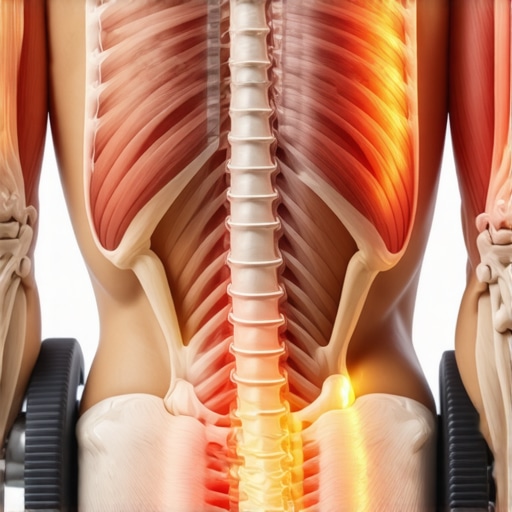
I remember the exact moment I hurt my lower back and reached for the foam roller, convinced it was the miracle fix I needed. Instead of relief, I felt a sharp twinge that made me reconsider everything I thought I knew about self-care. It was a lightbulb moment that changed my approach to mobility and injury prevention.
If you’ve ever tried to alleviate lower back pain with a foam roller and felt worse afterward, you’re not alone. Today, we’re going to explore why using a foam roller on your lower back is usually a mistake, and what you can do instead to actually improve your posture and reduce pain.
The Shortcomings of Foam Rolling the Lower Back
Is It Really Worth All the Hype?
Many people, myself included at first, believe that foam rolling is a quick fix for any muscle tightness or soreness. But here’s the thing: your lower back isn’t like your hamstrings or calves. It’s a complex structure with delicate bones, discs, nerves, and muscles working together to keep you upright and mobile. Applying pressure with a foam roller directly on this area can sometimes do more harm than good.
In my early days of self-massage, I made the mistake of thinking that more was better. I rolled intensely on my lower back almost daily, thinking I was unlocking some secret into better mobility. What I didn’t realize was that this repetitive compressive force could irritate the tissues and disturb the natural alignment. According to recent research, improper self-massage techniques can increase strain rather than alleviate it, especially when applied to sensitive areas like the lower back (source: https://quackersneck.com/why-deep-tissue-massages-often-fail-to-fix-your-persistent-lower-back-aches).
This realization led me to seek advice from professionals who explained that targeted adjustments and strength-based mobility work are more effective and safer for the lower back. This shift in understanding transformed how I approach my daily routines.
So, if you’ve been relying on your foam roller to fix lower back discomfort, it’s worth reconsidering whether you’re possibly causing more harm than healing. The good news? There are better strategies that actually support your spine’s health and improve your posture.
Now, let’s dive into how you can avoid these pitfalls and start making meaningful progress toward a pain-free back.
Master Your Spinal Mobility
Start by incorporating gentle spinal rotations to loosen tight areas. Sit upright, place your hands behind your head, and gently rotate your torso side to side, aiming for smooth, controlled movements. A specific story: I once struggled with morning stiffness, but after performing these rotations for five minutes each morning, I noticed a significant reduction in pain and increased flexibility, especially when I combined them with targeted stretches.
Focus on Hip Flexibility to Support Your Spine
Stiff hips can transfer stress to your lower back. Incorporate hip-opening exercises like the figure-four stretch: lie on your back, cross one ankle over the opposite knee, and gently pull the uncrossed leg toward your chest. Consistent practice over a week helped me relieve ongoing tension, making my back feel more supported and less strained during daily activities. For more effective mobility strategies, check this guide.
Strengthen Your Core for Better Support
A weak core allows lower back muscles to overcompensate, leading to pain. Engage in controlled planks: hold your body in a straight line from head to heels, supporting yourself on forearms and toes. I added a 30-second plank each morning; initially shaky, but within two weeks, I experienced a palpable difference in stability and reduced discomfort. Remember, the goal isn’t to hold the longest but to maintain proper form. Find more core-building tips at this resource.
Apply Gentle Spinal Adjustments
Seek professional help for precise spinal adjustments that can restore proper alignment. Chiropractors use specific techniques to target misalignments that cause pain and postural imbalances. During my visit, the chiropractor demonstrated a quick correction that relieved nerve tension immediately. Regular adjustments work best when combined with mobility routines, which you can learn more about at this article.
Practice Daily Posture Habits
Be mindful of your posture during everyday tasks. When working at a desk, ensure your monitor is at eye level, and your feet are flat on the ground. Use reminders or apps to check your posture every 30 minutes. I set a timer that prompted me to straighten my back and engage my core, leading to less fatigue and fewer aches. Small, consistent adjustments over time yield significant improvements.
Stay Consistent and Patient
Progress may be slow, but consistency is crucial. Incorporate these moves into your daily routine, gradually increasing intensity as your flexibility and strength improve. Tracking your progress helps maintain motivation. Remember, changing habits takes time, but these focused steps create sustainable improvements in back health and posture.
Many believe that chiropractic adjustments are a magic bullet for perfect posture and pain relief, but the truth is more complex. A common myth is that a single adjustment can permanently fix alignment issues, yet research shows that consistent mobility work and behavioral habits are crucial for sustained results (source: https://quackersneck.com/how-chiropractic-adjustments-enhance-posture-and-mobility). Relying solely on adjustments without addressing underlying movement patterns can lead to temporary relief at best, and even long-term setbacks at worst. The real secret lies in integrating adjustments with targeted mobility exercises, like those discussed earlier, to rebuild dynamic stability rather than just static alignment.
A trap many fall into is thinking adjustments alone will fix the root cause of postural problems. For instance, ignoring the importance of functional movement could mean your spine gets realigned, but your habits refix the problem over time. This oversight often results in a frustrating cycle of temporary improvements and recurring discomfort. Remember, adjustments are most effective when used as a tool within a broader strategy that includes mobility, strengthening, and mindful habits.
Getting into the weeds, advanced practitioners know that neural pathways and muscle memory play a significant role in posture. To truly benefit from chiropractic care, you need to support your nervous system with consistent, appropriate movement patterns, which can be guided by professional advice. For example, a chiropractor or mobility expert might suggest specific drills to reinforce proper neural pathways, improving the longevity of initial adjustments. Curious about how to develop these habits? Check out more detailed techniques in this guide on improving posture through mobility.
Have you ever fallen into this trap? Let me know in the comments. The key takeaway is that postural health is a dynamic process—adjustments are just one piece of the puzzle. To truly thrive, focus on cultivating daily mobility and posture-awareness habits that empower your body to maintain alignment naturally over time.Maintaining your mobility, posture, and back health over time requires the right tools and a strategic approach. Personally, I rely on a combination of proven equipment, software, and methods that keep me progressing and prevent setbacks. One essential tool I use daily is a high-density foam roller, but not just any—mine is specifically designed for gentle, controlled pressure that targets trigger points without overloading delicate back tissues. I prefer models with smooth surfaces and moderate firmness, which allow me to perform my mobility drills safely and effectively. For example, I incorporate foam roller myofascial release to keep muscles supple and support spinal alignment.
How do I maintain these improvements over time?
Consistency is key, and using tracking apps like an occasional manual journal or digital platform helps me stay accountable. I also leverage online resources such as targeted mobility exercises routines to adapt my regimen as I advance. Don’t overlook simple tools like resistance bands—my favorite for strengthening the core and stabilizers, which are crucial for long-term posture support. They’re versatile, affordable, and easy to pack into a bag for travel. I use bands for shoulder stabilization exercises, which complement my chiropractic adjustments and help reinforce proper movement patterns. For software, I recommend apps that provide guided mobility flows, making your routine more engaging and tailored to your progress. This blend of physical tools and digital guidance creates a sustainable habit that evolves with your needs.
The Hardest Lesson I Learned About Back Care
One of the most profound realizations I had was that quick fixes like foam rolling the lower back often mask deeper issues instead of resolving them. I used to believe that more pressure meant faster relief, but soon I discovered that aggressive rolling could aggravate inflammation and disrupt spinal harmony. Listening to my body’s responses was a turning point—I learned to prioritize gentle mobility and proper alignment over brute-force techniques.
Tools That Transformed My Approach to Posture
Over time, I curated a toolkit that truly supports spinal health. My favorite resource is a high-quality foam roller designed for safe myofascial release, which helps maintain muscle flexibility without overloading sensitive tissues. Resistance bands became invaluable for strengthening core stabilizers, diminishing reliance on passive fixes. Additionally, guided mobility apps keep my routines consistent and adapt them as I progress, making self-care sustainable and effective.
Your Next Step in Reclaiming back vitality
Remember, developing a healthy back is a journey of small, consistent actions. Incorporate gentle spinal rotations, prioritize hip mobility, and fortify your core regularly. Regular chiropractic adjustments, combined with mindful movement habits, create a resilient foundation that prevents setbacks. Take action today—your back’s future depends on the habits you cultivate now. What mobility routine will you try first to support your back health? Share your plan below, and let’s grow stronger together.
,
Comments are closed.