
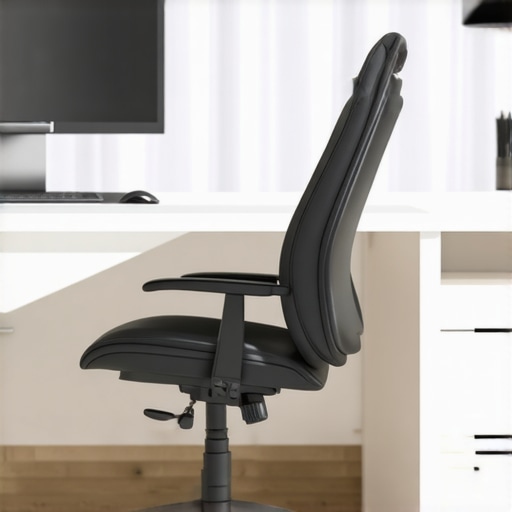
Ever felt that nagging discomfort creeping into your shoulders after a long day at the desk, only to realize that your armrests seem oddly too low? That happened to me just a few months ago. I was working late, feeling the tension building, then suddenly flinched as a sharp pain shot through my neck and shoulders. It hit me—my chair’s armrests weren’t supporting me the way I thought they did. It was a lightbulb moment. I finally understood how something as simple as armrest height could wreak havoc on my posture and overall comfort. And if you’ve ever suffered from persistent discomfort or wondered why your posture feels off even after generous stretching, you are not alone. Today, I want to share a revelation that transformed my workspace—and could do the same for you.
Why Your Armrest Setup Might Be Sabotaging Your Posture
Many overlook the importance of proper armrest height, assuming it’s just a minor detail. But in reality, it’s a cornerstone of ergonomic sitting. When your armrests are too low, your shoulders tend to hunch up or drift forward in an attempt to find support. Over time, this attracts strain to your neck, shoulders, and upper back—areas already vulnerable to tension from hours of screen time. Adjusting your armrest height isn’t simply about comfort; it’s about preventing long-term musculoskeletal issues. I’ve bottlenecked my own progress by ignoring this simple adjustment, leading to recurring neck stiffness and headaches.
Is Adjusting Your Armrests Actually Worth the Effort?
I used to think small tweaks like this wouldn’t make a difference. But early on, I made the mistake of neglecting my armrest position altogether. It seemed trivial—until I noticed how much my posture improved once I actually set them at the right height. Properly aligned armrests allow your shoulders to relax, distributing weight evenly and reducing tension. To find out more about how such minor changes can dramatically impact your well-being, check out this guide on improving your posture with expert chiropractic techniques. Trust me, small adjustments can yield big results, especially when supported by evidence from licensed professionals.
If you’re tired of feeling stiff after work or worried that poor ergonomics might be silently sabotaging your health, don’t despair. The good news is that addressing your chair setup—especially armrest height—is a straightforward step that anyone can take. Next, I’ll walk you through how to find the perfect armrest position and how to optimize your entire workspace for lasting comfort.
Ready to transform your workspace and banish discomfort?
Let’s dive into practical solutions that will make a difference on day one. Your shoulders and neck will thank you for it.
Assess Your Current Armrest Position
Begin by sitting comfortably at your desk with your arms resting naturally. Observe whether your shoulders are elevated, hunched, or relaxed. A quick test is to gently lift your shoulders; if they stay tight and raised, your armrests might be too low. In my own experience, during a frantic morning, I noticed my shoulders creeping up, leading to discomfort. I immediately adjusted my armrests to match my elbows at a 90-degree angle, and the difference was noticeable within minutes.
Find the Ideal Height for Your Armrests
Adjust in Small Increments
Many chairs allow fine-tuning. Start by raising or lowering the armrests in small steps. Think of your armrests as the fulcrum of a lever—when positioned correctly, they balance your shoulders. I once experimented with tiny adjustments, gradually bringing my armrests level with my desk surface. The goal is to keep your forearms parallel to the ground, reducing strain. Too high, and your shoulders might hunch; too low, and your elbows hang unsupported. Consider doing this during different tasks—typing, watching, or resting—to find what feels natural.
Use a Visual Guide or Measurement
If your chair lacks precise adjustments, use a measuring tape or a level to ensure consistency. Measure from the floor to your elbow when your arms are relaxed. The proper ergonomics suggest aiming for your elbows to be slightly above the desk surface, supporting neutral shoulders. I set my armrests to this height, which drastically cut down my neck tension. Remember, a correct setup isn’t static; revisit the adjustments periodically as your posture or workspace setup changes.
Test and Fine-Tune Your Setup
Ensure your shoulders stay relaxed and your wrists aren’t bent unnaturally when typing. Sit for a few minutes and pay attention to your comfort. If you notice tension creeping in, re-adjust accordingly. I held a mirror to observe my upper body and fine-tuned my armrests until my shoulders remained down and relaxed. Small tweaks can make a significant impact, especially when combined with mobility exercises like targeted mobility drills. Remember, your goal is to create a support system for your arms that encourages good posture without fatigue.
Incorporate Dynamic Movements Throughout the Day
Adjusting your armrest height is just one part of maintaining spinal health. Periodically shift your position and perform simple stretches—think of your body as a machine that needs periodic lubrication. By integrating small mobility exercises, such as shoulder rolls or chest openers, you can prevent stiffness and promote flow. For specific mobility techniques, visit this resource. During my busy workdays, I set reminders to stretch, which kept my muscles supple and reduced postural breakdowns.
Remember, the key is consistency. Regularly revisit your setup and mobility habits to sustain benefits and prevent discomfort from creeping back. Proper armrest alignment paired with strategic movements creates a foundation for lasting posture health, making your workspace an ally rather than an adversary in combating tension and pain.Many people assume that maintaining good posture is simply about standing tall or doing basic stretches. However, this oversimplification overlooks crucial nuances that can hinder progress and even cause harm. Contrary to popular belief, rigid adherence to textbook postures can sometimes be detrimental if it ignores individual biomechanics and subtle body signals. For example, the obsession with ‘perfect’ posture often leads to tense, unnatural positions, which can increase stress on joints and muscles rather than alleviate it. An advanced mistake I’ve seen is neglecting the importance of mobility integration—focusing solely on static alignment without considering dynamic movement. Incorporating mobility exercises into daily routines enhances tissue flexibility and neural function, as supported by recent studies from Harvard Health. Moreover, many believe that chiropractic adjustments alone are the key to lasting relief—yet, they often overlook the importance of consistent movement patterns and lifestyle habits that maintain spinal health. Relying solely on adjustments without addressing foundational mobility and ergonomics often results in temporary fixes, not long-term solutions.
Why do some individuals respond better to mobility routines than adjustments alone?
This question highlights the complexity of musculoskeletal health. Evidence suggests that combining chiropractic care with targeted mobility work yields superior outcomes, as detailed in a comprehensive guide on improving posture through mobility strategies. The key is an integrated approach that treats the body as a system rather than isolated parts, emphasizing dynamic stability over static correction. Avoid falling into the trap of seeking quick fixes—true, lasting improvements come from understanding and respecting your body’s unique needs. This holistic perspective ensures that adjustments are supported by movement diversity, strengthening tissues, and preventing recurrent issues. Remember, posture health isn’t about perfection but about functional resilience. For a deeper dive into these advanced strategies, check out [this resource on mobility and posture](https://quackersneck.com/the-link-between-mobility-and-posture-a-chiropractors-guide). Have you ever fallen into the trap of believing posture is only about standing correctly? Let me know in the comments.
Maintaining good posture and spinal health over time requires more than just initial adjustments or ergonomic setups. It demands a strategic approach involving reliable tools, consistent routines, and an understanding of what works best for your body. My personal toolkit has evolved over years of practice and experience, and I’m eager to share the essentials I rely on to keep my body in check and ready for daily challenges.
The Power of Precision with a Quality Foam Roller
One indispensable tool in my regimen is a high-density foam roller. It helps target my fascia and muscles to improve mobility and reduce tension. Unlike cheaper options, I opt for a dense, firm roller that provides enough resistance to deeply release my thoracic and lumbar muscles. Regular use—especially after long desk hours—not only prevents stiffness but also enhances my range of motion, making subsequent chiropractic adjustments more effective. For a detailed guide on proper foam rolling techniques, I recommend checking out mobility hacks for daily adjustments.
Investing in an Adjustable Sit-Stand Desk
Static sitting for prolonged hours is now widely recognized as a posture culprit. Transitioning to a sit-stand desk allows me to change positions seamlessly, reducing strain and fatigue. The key is choosing an ergonomic model that suits my height, with easy-to-adjust controls. This setup encourages movement and helps me avoid the typical slump or forward head posture that can develop from static sitting. When used consistently, my sit-stand desk has dramatically decreased my neck and shoulder discomfort. For insights into optimizing your workspace, consider exploring best setups for upper back health.
Utilizing Posture-Tracking Software
I also incorporate technology through posture-tracking apps that monitor my alignment during work. These programs utilize the webcam or sensor data to provide real-time feedback, prompting me to adjust when I start to slouch or tilt forward. This immediate feedback loop speeds up the correction process and ingrains healthier habits. As technology advances, I predict more sophisticated AI-powered systems will personalize recommendations further, making compliance easier and more effective. The trend is toward making posture mindfulness a daily, automated routine rather than a sporadic effort.
How do I maintain posture health over time?
The answer is consistency. Regularly revisiting and adjusting your tools and routines ensures long-term success. My advice is to integrate mobility exercises using targeted mobility drills into your daily schedule and pair them with ergonomic tools that promote active postures. This layered approach creates a resilient system that adapts to your evolving needs and prevents setbacks. Remember, the goal is not only immediate relief but sustainable, pain-free movement that supports your lifestyle and work habits. Over time, I believe this holistic, tool-driven strategy will shape the future of posture care, leaning heavily on personalized tech solutions and functional movement integrations.
As a practical next step, I urge you to try a specific advanced tip: integrate a foam roller into your post-work routine, focusing on your thoracic region to unlock mobility and relieve stiffness. With consistency, these seemingly simple tools can transform your posture maintenance journey from reactive to proactive.
Feel inspired? Dive into more detailed strategies with this comprehensive guide on mobility and posture and start building your personalized toolkit today.
What I Wish I Knew When Starting my Posture Transformation
One of the biggest lessons I learned is that perfect posture isn’t a static goal but a dynamic process. Initially, I obsessed over holding textbook-perfect alignments, but I soon realized that tuning into my body’s signals and embracing movement was more effective. The moment I stopped chasing rigidity and started integrating mobility exercises, my discomfort diminished significantly.
Another insight was the crucial role of consistent, small adjustments in my workspace setup. Even minor changes, like adjusting my armrest height or using a foam roller daily, accumulated into long-term relief. It taught me that patience with gradual improvements pays off more than quick fixes.
Lastly, I discovered that technology can be a powerful ally. Using posture-tracking apps and timers to remind me to move kept me accountable and fostered awareness that became second nature. Embracing these tools made my posture journey sustainable and encouraging.
Tools That Became My Posture Allies
My essential toolkit now includes a high-density foam roller, which I trust for deep tissue release. Unlike cheaper options, a durable foam roller helps me target my thoracic and lumbar muscles effectively, preventing stiffness and enhancing mobility. For techniques, I turn to mobility hacks for daily adjustments.
An adjustable sit-stand desk changed everything by allowing me to shift positions easily and break prolonged static sitting. I personally recommend models with smooth height adjustments to encourage movement and reduce strain. Exploring best setups for upper back health has helped me optimize my workspace further.
Another invaluable resource is posture-tracking software that provides real-time feedback. It keeps me mindful of my alignment during work, ensuring I stay relaxed and avoid slouching. Tech like this makes habit formation effortless, especially when paired with mobility routines from targeted mobility drills.
Finally, I prioritize regular mobility exercises and strategic stretching, which complement adjustments perfectly. Incorporating these into my daily routine has been a game-changer, making my posture resilient and adaptable over time.
Feeling Empowered to Take Action
Your posture journey is uniquely yours, and with the right mindset and tools, you can create lasting change. Remember, small consistent efforts—like fine-tuning your workspace or committing to mobility routines—compound into significant relief and health benefits. Start today by embracing the idea that effective posture care is about ongoing optimization rather than perfection. Your future self will thank you for every mindful adjustment and movement.
What is the first small change you feel ready to make in your workspace or routine? Share below and let’s support each other in building better posture habits!
,