
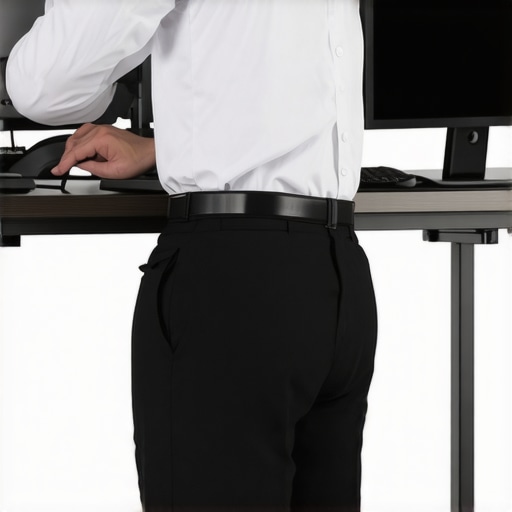
It was a morning like any other when I suddenly felt a sharp discomfort in my hips that I couldn’t ignore. I was standing at my desk, diligently working away, when a numbness crept in, making me realize that my well-intentioned setup was actually doing more harm than good. That moment was a lightbulb—what I thought was a step towards better posture was secretly wreaking havoc on my hips.
If you’ve been using a standing desk thinking it’s the perfect fix for sitting all day, you’re not alone. But here’s the truth: improperly configured standing stations can lead to stiffness, especially in the hips, pretty quickly. I quickly learned that standing all day without addressing underlying mobility issues can cause more discomfort and even long-term issues.
So, what’s really going on? Why is your standing desk potentially making your hips stiff? And more importantly, how can you set it up—and care for your body—in a way that promotes mobility instead of pain?
Today, I promise to share my personal experience and practical tips to help you prevent or reverse that stubborn hip stiffness. We’ll explore how simple adjustments and targeted mobility exercises can make a world of difference. Whether you’re feeling the stiffness already or want to prevent it from happening, stick around. I’ll guide you through what I wish I knew when I started using a standing desk.
Why Standing All Day Could Be Harming Your Hips
The core issue often lies in how we stand and move during those long work hours. Standing in one position for too long can cause muscles to tighten, joints to stiffen, and circulation to slow down, all leading to discomfort. Specifically, the hips bear much of your body’s weight when standing, making them prime candidates for stiffness if not properly conditioned.
Early on, I made the mistake of assuming that simply standing more would help my posture. I didn’t pay attention to my hip mobility or how I was distributing my weight, and it backfired. The discomfort grew over time.
A study published in the Journal of Occupational and Environmental Medicine highlights that prolonged standing may contribute to musculoskeletal issues, including hip and lower back pain (source). The good news is, many of these issues are reversible with mindful strategies.
If you’ve faced similar problems—tight hips, aching thighs, or that dull ache that lingers—you’re not alone. The key is understanding how to configure your workspace and incorporate mobility work that supports your hips.
And here’s a question for you: Have you noticed your hips feeling tight or stiff after a day at your standing desk? If so, keep reading. I’ve uncovered some effective techniques that can help you stay mobile and alleviate that stubborn discomfort.
To set the stage for relief, let’s look at some common mistakes and how to avoid them. For a deeper dive into practical strategies, check out [targeted mobility exercises](https://quackersneck.com/revolutionize-your-posture-with-targeted-mobility-exercises). Now, let’s get into actionable steps you can implement today to transform your standing routine from stiffening to freeing.
Adjust Your Desk Setup for Optimal Hip Movement
Start by ensuring your monitor is at eye level—this prevents you from leaning forward, which can tighten your hips. Set your desk height so that your elbows are at a 90-degree angle when typing. This positioning reduces unnecessary strain in your hips and lower back. I once took 10 minutes to reposition my monitor and keyboard, moving everything closer to me, which immediately eased my hip tension.
Distribute Your Weight Evenly
Stand with your feet shoulder-width apart and shift your weight between both legs every few minutes. Use a small, cushioned mat if your floor is hard; this encourages subtle movements and reduces pressure points. Initially, I noticed my right hip tightening after standing still for 30 minutes, so I consciously shifted my weight every few minutes—a simple habit that made a big difference.
Incorporate Movement Breaks
Set a timer to remind yourself to move every 15-20 minutes. Simple stretches like hip circles, leg swings, or walking in place can loosen stiff muscles. I once combined a quick hip circle with a few lunges, which broke up my session and prevented stiffness. These frequent micro-movements keep circulation flowing and prevent muscles from tightening.
Master Hip Mobility Exercises to Reclaim Movement
Supplement desk adjustments with targeted mobility drills. Exercises like the active hip flexor stretch, performed daily, can dramatically improve range of motion. I personally started with just five minutes of hip mobility drills, inspired by these routines, and soon noticed less stiffness and more fluid movement throughout the day.
Implement Dynamic Stretches Throughout the Day
Incorporate leg swings or hip openers during breaks. For example, holding onto your desk for balance, swing one leg forward and backward, then side to side. Doing these for 30 seconds each leg keeps hips flexible. I found that doing a series of dynamic stretches every hour prevented the usual tightness I experienced after long periods of standing.
Focus on Posture Alignment During Micro-Movements
As you move, keep your pelvis level and avoid tilting or twisting excessively. Think of your pelvis as a bowl that should remain steady. I once caught myself twisting too much during a stretch; consciously maintaining alignment helped my hips stay loose and prevented lingering pain.
Leverage Professional Strategies for Lasting Relief
Consult a chiropractor or mobility expert to develop a tailored routine. Techniques like manual hip adjustments can release stubborn joint restrictions. I visited a chiropractor after weeks of stubborn stiffness, and their adjustments—notably the hip releases—accelerated my progress. Regular check-ins combined with daily mobility exercises created sustainable improvements.
Consider Chiropractic Adjustments to Enhance Mobility
Adjustments can restore proper joint function, reducing tension and improving movement mechanics. Explore how chiropractic care can fit into your routine. Remember, these are complementary steps; self-care combined with professional care yields the best results.
Maintain Consistency for Long-Term Benefits
Stiffness won’t resolve overnight. Make these configuration and movement habits part of your daily routine—like brushing your teeth. Over time, they’ll reinforce healthy hip mobility, preventing stiffness from creeping back. I kept a journal of my progress, noting how small adjustments made a big difference day after day.
Many people believe that achieving perfect posture or regular chiropractic adjustments are all that’s needed to maintain a healthy back, but let’s dig deeper into the nuances often overlooked. A widespread myth is that posture correction alone can resolve long-term issues; in reality, without addressing mobility restrictions and muscle imbalances, these corrections may only be superficial. For example, some think that chiropractors are only for acute pain, but experts like Dr. Stuart McGill emphasize that a comprehensive approach—including mobility drills—is essential for lasting relief.
Is Chiropractic Adjustment Alone Enough for Long-Term Posture Improvements?
Most advanced practitioners agree that adjustments are just one piece of the puzzle. They can provide immediate relief by releasing joint restrictions, but without integrating targeted mobility exercises, such as those discussed in this resource, the underlying issues often persist. Relying solely on adjustments may inadvertently foster a dependency, reducing your body’s natural capacity to self-correct. Common pitfalls include neglecting postural habits and muscle strength, which are critical for maintaining improvements. Moreover, there’s a trap in thinking that all chiropractors focus on quick fixes; some may specialize in functional approaches that incorporate mobility and neuromuscular training. This holistic perspective aligns with research by the National Institutes of Health, which highlights that combined strategies are more effective in managing chronic back issues.
Furthermore, many get caught up in an oversimplified view that mobility exercises are only for athletes or active individuals. However, as I’ve experienced firsthand, incorporating daily mobility routines significantly enhances posture stability even for those with sedentary jobs. Exercises like controlled hip swings or thoracic rotations open up tight joints and reduce compensatory patterns that cause pain or stiffness. An advanced mistake is neglecting the importance of integrating these drills seamlessly into your daily routine; inconsistency leads to minimal change. For example, practicing simple mobility drills on a regular schedule, such as those outlined in this guide, can profoundly impact long-term posture health.
Finally, beware of the misconception that posture correction is solely about aesthetics. Proper alignment is closely tied to nerve function, circulation, and overall well-being. Regular assessments, whether through self-monitoring or professional evaluations, are vital for catching hidden restrictions before they develop into chronic problems. Remember, posture isn’t a one-time fix but an ongoing process involving active maintenance. Have you ever fallen into this trap? Let me know in the comments.
Investing in the Right Equipment and Strategies
Maintaining good posture over time requires more than just awareness; it demands the right tools and consistent practices. Personally, I’ve found that specific equipment enhances mobility routines and reinforces proper alignment. For example, a high-quality foam roller has become an essential part of my daily routine, allowing me to release tension in tight muscles before they lead to misalignments. I prefer the TriggerPoint GRID Foam Roller because of its durability and shape, which provides targeted myofascial release in areas prone to stiffness, like the hips and lower back.
Another indispensable tool is a set of resistance bands, especially for mobility drills. I regularly incorporate TheraBand Resistance Bands into my routine to activate stabilizer muscles that often weaken with prolonged sitting or standing. These bands are versatile, portable, and excellent for dynamic stretches that keep joints and muscles supple, helping prevent the stiffness that can develop over months of poor posture habits.
Software That Reinforces Good Posture Habits
Alongside physical tools, thoughtful software can serve as a reminder and tracker for your mobility and posture maintenance. I rely on apps like this mobility-focused app to prompt me to take micro-breaks, perform targeted stretches, and log my progress. These digital nudges keep me accountable, ensuring I don’t revert to harmful habits during busy days.
Emerging trends are pointing toward AI-driven posture monitoring apps that use your device’s camera to offer real-time feedback. Companies like Upright have developed devices that attach discreetly to your posture belt, providing immediate corrections when you slump or slouch. As these technologies advance, expect an integrated ecosystem where hardware and software work seamlessly to ensure your posture benefits in the long run.
Long-Term Results Often Require Consistency and Adjustment
Tools alone won’t guarantee sustained improvement; it’s about integrating them into a routine that evolves with your needs. For example, I gradually increased the intensity of my mobility drills, such as adding more challenging hip mobility exercises, as my flexibility improved. Monitoring your progress with simple check-ins—like recording your range of motion or pain levels—can help you fine-tune your approach.
One method I recommend is setting periodic reassessment sessions, which can be as simple as performing a self-evaluation or consulting a professional. Regularly evaluating your posture and mobility ensures that you catch developing issues early. Practitioner-guided assessments can provide valuable insights tailored to your unique biomechanics, addressing what generic routines often miss.
Scaling Your Posture Maintenance Efforts Over Time
As your mobility and strength improve, scaling up your routines becomes essential. Adding variety—like incorporating standing desk mobility drills or dynamic stretches—keeps your tissues adaptable and reduces the risk of plateaus. I suggest experimenting with advanced techniques, such as mobility drills recommended by chiropractors, to challenge your body and reinforce good habits.
Looking ahead, the integration of smart wearables equipped with sensor technology will likely play a significant role in personal posture care. Devices that alert you to slouching or uneven weight distribution in real time could become standard, empowering you to correct habits before they cause long-term issues. In fact, a growing body of research, including a recent study from the Journal of Bodywork and Movement Therapies, supports the efficacy of biofeedback tools in promoting sustained postural improvements.
To start reaping these benefits today, I recommend trying one of the more advanced mobility drills, like the hip mobility exercises for transit-related stiffness. Allocate just five minutes to practice, and you’ll notice tangible improvements in your comfort and movement quality. Remember, consistency and the right tools will guide you toward healthy posture maintenance for years to come.
Throughout my experience with hip stiffness caused by improper standing desk setup, I uncovered some surprisingly deep truths. I learned that posture correction isn’t just about static positioning—it’s about fostering an active, mindful relationship with your body. One of the most impactful lessons was realizing that the mind-body connection plays a vital role; paying attention to subtle signals like tightness or discomfort can guide real-time adjustments that prevent long-term issues. I also discovered that persistent stiffness often masks underlying movement imbalances—addressing these through targeted mobility is far more effective than relying solely on external fixes. Lastly, I recognized that building a resilient posture requires consistent, small habits—like daily mobility routines—that compound over time into profound health benefits.