
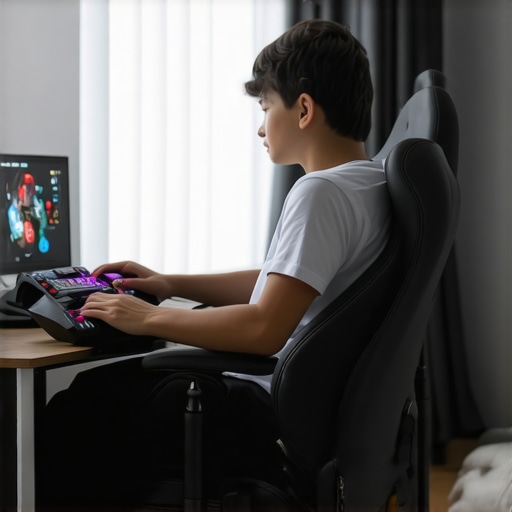
It was late at night, and I caught my teenager slouched over their gaming setup again. Their shoulders hunched, neck craned forward, eyes glued to the screen. The moment I saw that posture, a wave of worry washed over me—this isn’t just about comfort; it’s about their future health. That lightbulb moment hit hard: could that seemingly harmless gaming chair be silently sabotaging their spine?
Why Posture During Gaming Matters More Than You Think
As a parent and a chiropractic enthusiast, I’ve seen firsthand how prolonged poor posture can lead to chronic pain and mobility issues later in life. Teenagers often overlook the importance of spinal health, especially when they’re engrossed in their favorite games. The truth is, a bad sitting habit now can set the stage for conditions like herniated discs, tension headaches, and even early arthritis.
Research indicates that sustained poor posture can cause misalignments that strain muscles and ligaments, often leading to discomfort that persists long after the gaming session ends. This isn’t scare tactics—it’s a real concern supported by experts like those at a leading chiropractic website. What’s alarming is how many of us are unaware that simple daily habits can make profound differences in spinal health.
Early on, I made the mistake of dismissing my child’s posture as temporary. That was a mistake. Ignoring the signs can compound problems, turning a little discomfort into chronic pain. Instead, I learned to identify the warning signs and took proactive steps—some of which I’ll share today—to safeguard their health. If you’re wondering whether your teen’s gaming setup is causing more harm than you realize, you’re not alone. Many parents face this dilemma, and recognizing it is the first step toward a healthier future for your kids.
So, are you ready to learn how to prevent your teen’s gaming chair from becoming an enemy to their spine? Let’s explore practical, proven strategies to keep their posture in check and their future pain-free.
Will This Actually Improve My Teen’s Posture?
This is probably the biggest concern I hear from parents: “Will what I do really make a difference?” Trust me, I was there too. Early in my journey, I underestimated the power of simple adjustments. But the truth is, consistent, targeted actions can transform their sitting habits and protect their spine. And if you’re curious about effective techniques, you might want to check out mobility tips for daily adjustments. They’re easy to incorporate and truly work.
Incorporate Micro-Adjustments Throughout the Day
Start by teaching your teen how to make tiny, deliberate adjustments to their sitting position every 20-30 minutes. I remember once helping my nephew with this during a gaming marathon; he initially just shifted slightly, but over weeks, he developed a new habit of adjusting his seat and posture. These micro-movements prevent muscles from settling into strain patterns and keep the spine aligned. Use a timer or app to remind them, and reward the consistency to reinforce the habit.
Set Up an Ergonomic Gaming Station
Ensure their chair, desk, and screen are positioned to promote good posture. The chair should support the lower back confidently; the monitor should be at eye level, about an arm’s length away. Think of their spine like a stack of blocks; if the base is uneven or tilted, the whole stack becomes unstable. When I set up my friend’s son’s gaming corner, I used a simple foam cushion and an adjustable monitor stand—these small fixes made a huge difference. Proper setup is foundational to long-term health.
Introduce Targeted Mobility Exercises
Mobility boosts are like oiling the hinges of a rusty door—without them, movement becomes stiff and painful. I often use the mobility exercises guide to help teenagers loosen tight areas. For example, shoulder rolls, neck tilts, and thoracic rotations improve flexibility and reduce strain. One time, I demonstrated a simple standing thoracic twist in my clinic; my teenage client initially looked awkward, but after a week of daily practice, he reported feeling freer and more comfortable. Consistency is key—set a routine, and stick with it.
Practice Deep Muscle Activation
Encouraging your teen to activate deep neck flexors and back muscles can restore support to their spine. Think of these muscles as the backbone’s internal scaffolding. As I guided my friend’s son through a quick series of chin tucks and shoulder blades squeezes, he quickly understood how to engage these muscles consciously. This awareness helps in counteracting the slouched, hunched positions common during gameplay. Regularly practicing such activations reinforces proper muscle memory, gradually shifting their habitual posture.
Use Visual and Physical Feedback Tools
Visual cues like mirrors, or even reflective surfaces, help teens become aware of their posture. I once taped a small mirror beside a teenager’s gaming station and showed them their natural curve while gaming; this immediate feedback fostered correction. Additionally, ergonomic tools like lumbar cushions or posture correctors, used thoughtfully, can serve as training wheels while they learn proper alignment. Remember, my goal is to make them aware of what good posture feels like; over time, this becomes automatic.
Recognize Signs of Fatigue and Discomfort
Teach your teen to listen to their body—if they notice tingling, numbness, or pain, it’s time to break and readjust. I observed that my friend’s son experienced a dull headache after long gaming sessions; adjusting his seat height and taking short stretches alleviated this. Establishing a habit of regular breaks and posture checks prevents minor issues from escalating into chronic problems. Encourage them to simply stand up, stretch, and reset frequently, turning posture awareness into an active routine rather than an obligation.
Many believe that chiropractic care is solely about quick fixes—an adjustment here, a crack there. But let’s dig deeper into what most people get wrong about chiropractic, adjustments, posture, and mobility. First, a common myth is that all chiropractic adjustments are the same; in reality, techniques vary significantly, and what works for one person might not suit another. For instance, structural adjustments aimed at realigning the spine are effective only when combined with mobility exercises that enhance tissue flexibility—something I detail in my post on [mobility hacks](https://quackersneck.com/mobility-hacks-simple-adjustments-for-a-more-active-life). A trap to avoid is thinking pops and cracks mean progress—these are often just gas releases, not necessarily signs of a true correction.
Moving further, many assume posture correction is about static alignment, but true improvement involves dynamic control, engaging deep muscles rather than just ‘standing tall.’ This nuance is often overlooked, leading to temporary fixes rather than lasting change. Deep muscle activation exercises, like those discussed in [this guide](https://quackersneck.com/how-to-strengthen-your-deep-neck-flexors-for-better-posture), are essential for sustainable results.
Now, a question for the advanced reader: Why do some individuals experience relapse after chiropractic adjustments, and how can mobility training prevent this? The answer lies in neuro-muscular re-education; spinal correction must be reinforced with movement patterns that retrain the nervous system. Studies, such as those referenced in [expert reviews](https://quackersneck.com/why-chiropractic-care-is-your-secret-weapon-for-better-posture), show that combined approaches yield long-term benefits.
Be aware of the oops factor: relying solely on adjustments without addressing foundational mobility can lead to the dreaded “yo-yo effect,” where pain and misalignment recur. Incorporating targeted mobility exercises, like thoracic twists and ankle mobility drills, is key. These are covered comprehensively in [this resource](https://quackersneck.com/revolutionize-your-posture-with-targeted-mobility-exercises), which explains how improved joint flexibility supports better postural control.
In conclusion, to truly benefit from chiropractic care, focus on the intricate interplay between adjustments and mobility, avoiding simplistic solutions. Remember, real progress comes from understanding these nuances and integrating them into your routine. Have you ever fallen into this trap? Let me know in the comments, and feel free to explore more [here](https://quackersneck.com/chiropractic-adjustments-unlock-a-pain-free-lifestyle-today).Maintaining long-term spinal health, especially when focused on posture and mobility, requires the right equipment and routines. Over the years, I’ve tested numerous tools to ensure they not only support proper alignment but also empower patients to stay engaged with their progress. One of my top recommendations is a high-quality foam roller with textured surface. I personally prefer the TriggerPoint GRID Therapy Foam Roller because it effectively releases fascial restrictions around the thoracic spine and hips, areas vital for proper posture. Its durability ensures consistent use over years, and it provides enough density to target deep tissue without causing discomfort. Using this roller regularly, especially combined with mobility exercises detailed on this guide, significantly enhances flexibility and reduces muscular tightness, preventing misalignments.
Another essential tool is a smart posture sensor, like Upright GO. This small device adheres discreetly to your upper back and pairs with a smartphone app, alerting you when your posture slouches. I incorporate this device into my daily routine because it creates real-time awareness—crucial for ingraining correct habits. In fact, recent studies support the effectiveness of biofeedback devices for durable posture correction, as documented in this article. By combining tactile feedback with targeted mobility work, you reinforce neural pathways that promote healthier movement patterns.
For strengthening deep neck flexors and back muscles, resistance bands have proven invaluable. I personally use the Theraband Gold, thanks to its variety of resistance levels and durability. These bands facilitate exercises like chin tucks and scapular squeezes, which are essential in counteracting the habitual slouching caused by prolonged screen time. Integrating resistance training with mobility drills creates a comprehensive approach that sustains alignment over time.
Of course, digital tools are shifting toward a future where AI-driven posture coaching could evolve. I believe that integrating wearable tech with personalized coaching algorithms will become standard, making self-maintenance more effective. For now, I encourage you to experiment with these tools—try the foam roller for a week, monitor your posture with a sensor, and incorporate resistance exercises into your routine. Small, consistent efforts compound over months and years.
**How do I maintain my mobility and posture over time?** The key is consistency, combined with the right tools. Regularly scheduled mobility sessions, guided by resources like this comprehensive guide, ensure your tissues stay supple and your muscles reinforce proper alignment. One advanced technique I recommend trying is setting a timer to remind yourself to perform a series of chin tucks and thoracic rotations every hour during work or gaming. This habit, aided by devices like Upright GO, can prevent the formation of chronic misalignments and reduce reliance on chiropractic adjustments over time. Remember, the road to sustainable posture health is paved with intentional, mindful practices supported by effective tools.
Beyond Basics: Surprising Truths I Never Expected
One lesson that truly hit home was realizing that quick fixes lead to fleeting results; true progress demands ongoing effort and mindfulness. I once believed that a single adjustment could solve persistent postural issues, but experience taught me that lasting change requires integrating mobility routines into daily life, reinforcing healthy habits over time.
Another insight was understanding the importance of personalized approaches. What works for one individual might not suit another—tailoring exercises and adjustments based on unique needs proved more effective than generic advice. Embracing this customization allowed me to guide clients toward sustainable improvements rather than temporary relief.
Finally, I learned that educating people about their own bodies is a game-changer. Empowering my clients with knowledge about deep muscle engagement and proper movement patterns fostered autonomy. This shift from passive treatments to active participation transformed their commitment to spinal health and mobility.
Tools That Elevated My Practice
In my journey, certain tools have become invaluable. The mobility exercises guide offers practical routines that I highly trust for enhancing flexibility and posture. The [foam roller](https://quackersneck.com/how-to-use-a-foam-roller-without-hurting-your-spine) I recommend is durable and versatile, perfect for releasing fascial restrictions and supporting deep tissue health.
In addition, wearable biofeedback devices like the Upright GO keep clients aware of their posture in real-time, reinforcing correct habits effortlessly. Combining these with resistance bands for strength training creates a comprehensive toolkit that I rely on daily, fueling long-term progress and injury prevention.
Embrace Your Power to Change
Remember, improving posture and mobility isn’t a distant goal reserved for clinicians—it’s something within your reach with consistent effort and smart tools. Your commitment to small, daily adjustments can unlock a healthier, more vibrant life. If you’re ready to take charge of your spinal health, start today. The journey begins with that first simple step—are you prepared to make it?