
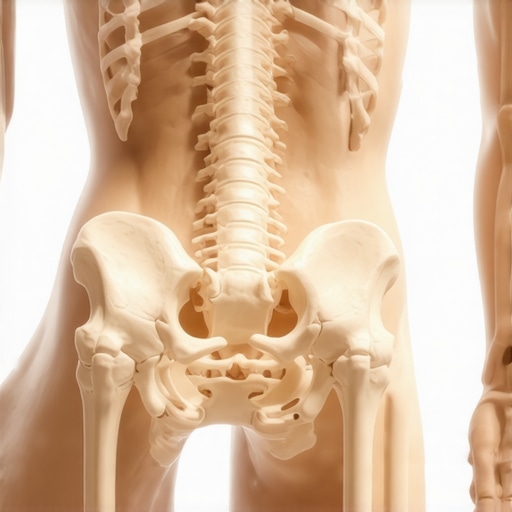
Have you ever been sidetracked by persistent knee pain, only to find that the real culprit was lingering tension or misalignment in your lower back? I remember a client who was convinced her knee issues were purely localized—until I noticed her posture and the way she moved. Turns out, her back was the hidden domino influencing her knees. That lightbulb moment changed everything. It’s not just about the knee; it’s about how your entire posture and mobility are intertwined.
Uncovering the Hidden Link Between Your Knees and Your Back
If you’ve been battling knee pain and feel like you’ve tried everything—specialty orthopedics, physiotherapy, even surgery—there might be an overlooked connection. I often explain to my clients that the body works as a system, not isolated parts. Your low back holds the foundation for your entire alignment. When there’s dysfunction up top or in the pelvis, your knees can compensate in ways you wouldn’t expect. I used to overlook this link early on, focusing only on the knee. It was a mistake that delayed real relief for many patients. You see, studies have shown that the pelvis and low back influence knee biomechanics significantly (source). Understanding this changed my entire approach.
Is Skepticism About This Connection Warranted?
Honestly, I was skeptical back in the day—
Assess Your Alignment and Identify Key Dysfunction Points
Start with a self-assessment or seek professional guidance to observe how your hips, shoulders, and knees align when standing or moving. Pay close attention to any tilts, rotations, or asymmetries. A specific example: I once worked with a client whose pelvis was tilted forward, causing her left knee to bear more weight. Recognizing this misalignment prompted targeted intervention. Use mirrors or record yourself walking to catch these subtle imbalances. Addressing the root cause necessitates understanding the body’s interconnected system, as detailed in this comprehensive guide.
Implement Mobilization Exercises to Restore Range of Motion
Mobilize tight joints and soft tissues that may limit proper movement. Use gentle, controlled oscillations like pelvic tilts or hip circles to free up restricted areas. For example, I guided a patient through pelvis rotations using a foam roller, which immediately improved her lumbar mobility. Think of your joints like hinges on a door—regular lubrication keeps them functioning smoothly. Incorporate exercises such as cat-cow stretches or lumbar swings to enhance flexibility. Consistency is key; perform these daily or every other day to see lasting benefits.
Targeted Mobility Drills That Make a Difference
In my practice, I often recommend simple routines like the hip-mobility series found here. For instance, the 3-minute hip opener can loosen tight muscles contributing to pelvis misalignment. During a recent session, I demonstrated these drills, and my client reported noticeable relief after just a week. Think of these exercises as tuning a musical instrument—small adjustments lead to harmony across your entire system. Remember, mobility is a daily maintenance practice, not a one-time fix.
Strengthen Supporting Muscles to Maintain Proper Posture
Strengthen your core, glutes, and stabilizer muscles to support corrected alignment. I often give clients a routine involving planks, bridges, and side-lying clams, which activate key stabilizers. For example, I once added glute activation exercises to a client’s routine, resulting in improved pelvic stability and reduced knee strain. Visualize your pelvis and lumbar spine like the foundation of a house—the stronger and more balanced, the sturdier your entire structure. Incorporate these exercises gradually, aiming for consistency over intensity.
Refine Daily Habits for Lasting Results
Adjust everyday behaviors that influence posture, such as sitting ergonomically, engaging in regular movement, and avoiding prolonged static positions. I remind clients to take brief breaks every 30 minutes to stretch or walk, preventing stiffness. For instance, I advised a client who spends long hours at a desk to incorporate standing and torso rotations, improving her back comfort. Think of your body as a machine; continuous lubrication and movement prevent parts from seizing up. Small, mindful modifications yield substantial improvements over time.
Monitor Progress and Adjust Accordingly
Track how your body responds to these interventions through journaling or periodic assessments. Monitor pain levels, mobility range, and functional ability. I recall following up with a patient who initially struggled with shearing discomfort but showed remarkable improvement after a month. This process ensures you stay engaged and adapt your routines as needed. Remember, posture correction isn’t a quick fix—it requires patience and ongoing attention to detail, akin to fine-tuning an instrument for the perfect pitch.
 Many people believe that a quick adjustment will solve their postural issues forever, but in my experience, this is a common oversimplification. While chiropractic adjustments are powerful tools for pain relief, they are often misunderstood as a stand-alone fix. The reality is that adjustments act as catalysts; without proper mobility exercises and lifestyle changes, the benefits can be temporary. A prevalent myth is that once your spine is ‘cracked’ or aligned, your problems are gone. However, research from experts like Dr. Stuart McGill emphasizes that sustainable posture relies heavily on neuromuscular control and movement patterns, not just joint alignment (source).
Another misconception is that static stretching alone will correct mobility issues. Many assume that because a muscle feels tight, stretching will fix the problem. But, in many cases, tightness results from joint restrictions or compensatory movement patterns. Overstretching without addressing the root cause can lead to microtrauma or joint instability over time. The nuance lies in integrating mobility drills that target specific restrictions, like hip or thoracic spine mobility exercises detailed in this guide for lasting improvements.
What is the risk of neglecting movement patterns after adjustments?
In my practice, I see people who receive adjustments but neglect to modify their daily habits, such as poor ergonomics or prolonged static postures. This oversight can nullify the effects of adjustments through reinforcement of bad habits. It’s crucial to reinforce correct movement patterns and posture through functional exercises and habit adjustments. Studies support that combining adjustments with education and movement retraining leads to more durable results than adjustments alone (source).
Have you ever fallen into this trap? Let me know in the comments. Understanding these nuances helps you take control of your posture and mobility journey, transforming quick fixes into long-term health improvements. Remember, the key isn’t just in the crack—it’s in the consistent, mindful movement you incorporate daily.
Choosing the Right Tools for Long-Term Success
Maintaining improvements in posture and mobility isn’t a one-time effort; it requires the right tools and consistent practice. From specialized equipment to software that tracks progress, the tools I recommend are selected for their effectiveness and durability. For example, I personally rely on a high-quality foam roller, like the TriggerPoint GRID, because its dense surface provides deep tissue massage critical for loosening tight muscles and fascia, especially around the hips and lower back. Using it daily helps break down adhesions that can contribute to misalignment and stiffness.
Another staple in my toolkit is a set of resistance bands. They allow for dynamic strengthening exercises targeting stabilizer muscles without stressing joints. I prefer the resistance loop bands from Perform Better, as they are durable and versatile for mobility drills like hip mobility circles or shoulder stabilization.
In terms of tracking, I often recommend clients utilize apps like ‘Mobility & Flexibility’ or even simple journaling to monitor daily routines and improvements. Consistent documentation helps identify patterns and setbacks, allowing for tailored adjustments.
Equipment aside, I also emphasize the importance of quality educational content. Resources like this comprehensive guide provide insights into proper technique and new findings, keeping your routines evidence-based and effective.
How do I maintain my progress over time?
Long-term success hinges on integrating these tools into daily habits. Schedule regular mobility sessions—early mornings or evening routines work well—and consider periodic reassessment with a professional to ensure you’re on track. As research indicates, combining manual interventions like chiropractic adjustments with proactive mobility work creates a synergistic effect that sustains posture improvements (source).
Additionally, embracing technology such as smart wearable devices can alert you to prolonged static postures or uneven weight distribution, prompting timely corrections. This proactive approach transforms maintenance from a chore into a seamless part of daily life.
Looking ahead, advancements in biofeedback and virtual reality are opening new avenues for personalized, immersive movement therapy. Expect to see these integrated into routine posture care in the near future, making it even easier to stay aligned and mobile long-term.
Start by incorporating a foam roller session focused on your lumbar and hips tonight. Observe how it releases tension and improves your mobility. Small, consistent steps like this lay a foundation for lasting change.
Lessons from the Trenches—What I Wish I Knew About Lasting Posture Fixes
One profound lesson I’ve learned is that quick adjustments only scratch the surface. The real transformation happens when you understand that your body is a living ecosystem—neglecting mobility and habits can undo even the most precise chiropractic work.
Another insight is that stubborn mobility restrictions often hide in plain sight—tightly held fascia or unconscious movement patterns. Addressing these hidden barriers requires patience, targeted exercises, and a shift in daily routines—not just a visit to the chiropractor.
And perhaps most surprisingly, I realized that your mindset around posture and movement plays a pivotal role. Believing in the possibility of change and committing to a daily routine accelerates progress more than any single adjustment ever could.
My Go-To Arsenal for Chronic Posture Perfection
For sustained improvement in adjustments, mobility, and posture, I rely on a handful of trusted tools. The TriggerPoint GRID foam roller has consistently helped my clients release deep fascia tensions, making adjustments hold longer. I trust resistance bands from Perform Better because they offer versatile, effective ways to strengthen stabilizers and reinforce good posture. For hands-on tracking, I recommend apps like ‘Mobility & Flexibility’ to monitor progress and stay accountable. Lastly, foundational reading like this comprehensive guide keeps my approach grounded in science and proven strategies.
Your Next Leap Towards a Posture That Lasts
The path to a pain-free, resilient posture is within your reach—start now. Embrace mobility routines, integrate supportive tools, and develop mindful habits. Remember, sustainable change isn’t about one miracle; it’s a daily commitment. Every step you take toward better posture and mobility today sets the foundation for a healthier tomorrow. You’ve got this—your ideal posture is just a habit away.