
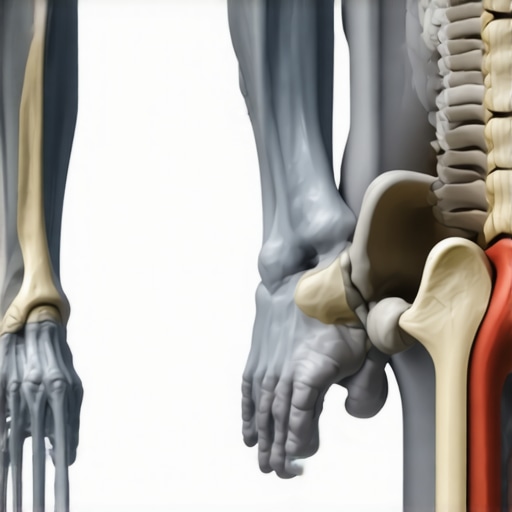
I remember the first time I truly understood how interconnected our body’s issues could be. I was cramped over my desk, feeling that dull ache creeping up my lower back, and I realized I couldn’t even flex my ankles properly. It was a lightbulb moment—something I had overlooked for years. That stiffness in my ankles wasn’t just a minor inconvenience; it was pulling me out of alignment and causing pain higher up in my spine. This realization changed everything for me—and it might do the same for you.
Why Your Ankles Could Be the Concealed Culprit of Back Discomfort
Have you ever wondered why back pain persists despite countless stretches and visits to specialists? Well, let me share a secret I learned early on: the mobility of your ankles plays a surprisingly significant role in your lower back health. When your ankles are stiff or limited in their movement, they can create a chain reaction, forcing your entire posture to compensate. This often leads to unnecessary strain and pain in your lower back, which many dismiss as isolated or unrelated issues.
This connection is backed by research showing that ankle mobility affects overall posture and gait, directly impacting the lower back. As I dug deeper, I discovered that addressing ankle stiffness can unlock relief in areas you might not expect. And the best part? You can often improve this with targeted mobility exercises. If you’re tired of endless back pain and want to tackle the root cause, understanding this hidden link could be a game changer for you.
Is the Buzz About Ankle Mobility Actually Worth It?
Early in my journey, I made the mistake of neglecting ankle health altogether, assuming it wasn’t relevant. I dismissed several simple exercises that could have made a difference. That oversight not only delayed my recovery but also reinforced my skepticism around the importance of ankle mobility. Now I know better. Addressing ankle stiffness isn’t just trendy; it’s backed by mainstream chiropractic practices and scientific evidence—like the work of Dr. Scott Bautch, who emphasizes the importance of foundational mobility for spine health.
So, if you’ve been shrugging off your ankle issues and focusing solely on your back, you might want to reconsider. We’ll explore practical solutions that can gradually restore ankle flexibility and, in turn, ease your lower back pain. It’s time to look beyond the symptoms and address the underappreciated link that could finally bring you relief.
Get Moving with Targeted Stretching and Mobilization
Start with simple ankle circles to loosen stiff joints. Sit on the floor, lift one foot, and rotate your ankle clockwise for 10 reps, then counterclockwise. I once spent a frustrating afternoon trying to stretch my calves without success, but after incorporating ankle circles, I noticed a difference in just a few days. This move helps break down adhesions and increases flexibility, making your ankles more receptive to further mobility exercises.
Implement Dynamic Warm-Ups Before Practice
Before engaging in any mobility routine, do 2-3 minutes of light cardio—like brisk walking or jumping jacks—to prep your muscles and joints. This warms up the soft tissues around your ankles, reducing resistance to movement. During one session, I swapped my static stretching for dynamic warm-ups, which enhanced my ankle range during exercises and contributed to less lower back strain throughout the day.
Adopt Strengthening Exercises for Stability
Strengthening the muscles around your ankle prevents re-stiffness. Try balancing on one foot for 30 seconds, then switch sides. Holding onto a chair for support initially, then progressing to no support, trains your stabilizers. I struggled with this at first, wobbling like a newborn deer, but over time, my ankle stability improved, translating into a more balanced gait and reduced back discomfort.
Use Resistance Bands to Enhance Mobility
Attach a resistance band around your foot and gently pull it toward you to stretch the ankle dorsiflexors. Neptune underwater, I once used a resistance band while sitting on my couch, which surprisingly improved my ankle’s dorsiflexion. This exercise helps stretch tight structures, encouraging full mobility and easing the chain reaction that can affect your lower back.
Establish Daily Micro-Adjustments
Incorporate small mobility tweaks throughout your day, like ankle rocks or strikes while standing at your desk. These micro-movements prevent stiffness from building up. I added ankle rolls into my routine during breaks, making it a habit. Over weeks, this daily discipline enhanced my ankle flexibility and kept my posture aligned, significantly alleviating lower back pain.
Seek Professional Guidance When Needed
If persistent stiffness or pain occurs, consulting a chiropractor can be invaluable. They can perform specific adjustments to restore joint congruence and recommend personalized mobility exercises. I personally visited a chiropractor who identified a restricted ankle joint restricting my gait, leading to chronic back pain. After adjustments and targeted therapy, my mobility improved dramatically.
Many assume that once they’ve received an adjustment or implemented basic mobility routines, the battle with poor posture and chronic aches is over. However, this oversimplification can lead to frustrating setbacks. For instance, a frequent misconception is that a chiropractor’s quick manipulation addresses underlying muscular imbalances. In reality, adjustments are most effective when combined with consistent mobility and strengthening exercises that target dysfunctional patterns behind the pain. Relying solely on passive treatments without active engagement is a common mistake. Its dangerous trap is believing quick fixes are enough, when sustainable posture correction requires ongoing effort and awareness. Have you ever fallen into this trap? Let me know in the comments. An advanced nuance often missed is how neural pathways adapt over time. Repeatedly holding poor postures or neglecting mobility can create ingrained motor patterns, making it harder for the body to correct itself even after an adjustment. Studies, such as those summarized by Dr. Stuart McGill, show that neuroplasticity influences how long-lasting our posture improvements are, emphasizing the importance of active retraining back into correct movement habits rather than just passive adjustments. Don’t be fooled into thinking that a single session can override years of ingrained habits; it’s an ongoing process.
Another myth is that flexibility exercises alone will fix postural issues. While mobility is vital, overly stretching tight muscles without addressing weakness or stability can destabilize joints or create new imbalances. For example, focusing solely on hamstring stretches without strengthening the glutes can exacerbate posterior chain weaknesses, undermining posture. For comprehensive results, integrating mobility work with targeted strengthening yields better, long-term outcomes. To explore more about effective routines, check out our guide on [mobility boosts for posture](https://quackersneck.com/mobility-boosts-for-posture-expert-tips-for-daily-adjustments).
Regarding adjustments, many think that a visit is a one-and-done fix. But adjustments temporarily realign the joints, and their true benefit depends on re-education of muscle control and movement patterns. This is why professional guidance, like that provided by chiropractors who incorporate functional rehab, is crucial. Relying solely on adjustments without enhancing movement habits risks relapse. For an in-depth look, see [how chiropractic adjustments enhance posture and mobility](https://quackersneck.com/how-chiropractic-adjustments-enhance-posture-and-mobility).
Finally, the broader misconception is that posture is static—something you fix once and forget. In reality, posture is dynamic and influenced by daily activities. Micro-movements and consistent self-corrections throughout the day are essential. Small adjustments, like micro-stretches or mindful sitting, can prevent the cycle from resetting to poor habits. Incorporate these with intentional mobility routines for optimal results. For practical tips, refer to [simple adjustments for a more active life](https://quackersneck.com/mobility-hacks-simple-adjustments-for-a-more-active-life).
By appreciating these nuances, you equip yourself with a deeper understanding that promotes healthier habits over time. Remember, lasting change isn’t about quick fixes but engaging with your body intelligently and consistently. If you’d like personalized guidance, don’t hesitate to [reach out](https://quackersneck.com/contact-us-2) or explore our signposts to better posture and mobility.
Invest in Quality Tools to Sustain Your Progress
Maintaining long-term mobility and posture improvements requires more than just dedication; the right tools can make all the difference. Personally, I swear by investing in a foam roller, like the TriggerPointGrid, which I use daily to release muscle tension in my back and hips. Its firm yet pliable surface helps break down adhesions and enhances blood flow, making my mobility sessions more effective and less time-consuming. Additionally, a set of resistance bands such as the TheraBand Resistance Bands has become my go-to for strength-building exercises that support joint stability. I appreciate their versatility—they’re perfect for dynamic mobility drills and can be easily stored in a drawer or travel bag.
Another essential—especially for those who spend hours at a desk—is an ergonomic chair like the Herman Miller Aeron. It’s not just about comfort but about supporting spinal alignment during prolonged sitting. Combining this with a sit-stand desk, like the Uplift V2, helps me switch positions regularly, preventing stiffness and fostering better posture throughout the day.
For tracking progress and staying motivated, I recommend using mobility apps such as MobilityWOD or StretchIt. These platforms guide you through tailored routines and keep you accountable, which is critical for long-term success.
How do I maintain my mobility and posture gains over time?
Consistency is key. Incorporate daily micro-movements, like ankle circles or gentle stretches, into your routines. Regularly update your toolkit—replacing worn-out bands or trying new foam rolling techniques—to keep your body challenged and prevent plateaus. This proactive approach ensures your improvements stick, reducing the risk of setbacks.
Looking ahead, the trend toward smart technology integration with mobility tools is promising. Devices like vibration plates or app-enabled stretch monitors will provide real-time feedback, making self-care more precise and personalized. Embracing these innovations early on can give you a competitive edge in maintaining optimal mobility and posture long-term.
Remember, it’s not just about the tools you choose but how you use them. For example, a high-quality foam roller won’t be effective if used improperly. I recommend following expert tutorials, like those found on Revolutionize Your Posture with Targeted Mobility Exercises, to maximize your benefits. Try incorporating one new tool into your routine this week—perhaps a resistance band or a new foam roller—and observe how it enhances your progress. Small, consistent enhancements make a significant difference over time.
Throughout this journey, I’ve learned that some lessons are best learned the hard way, but once understood, they can be truly transformative. One of the most profound realizations I had was how deeply interconnected our life’s daily habits are with our overall well-being. For instance, neglecting ankle mobility isn’t just about feeling stiff—it can be the silent culprit behind persistent back pain, a revelation that reshaped my approach to health.
What I Wish I Knew About Mobility Before It Changed My Perspective
- Small adjustments lead to massive shifts: Simple routines like ankle circles or micro-movements during meetings can prevent long-term issues. I used to overlook these tiny habits, but they’ve become keystones in maintaining my posture.
- Passive treatments are only part of the solution: While chiropractic adjustments offer immediate relief, I realized sustainable results come from active participation—mobility exercises and strength training—that reinforce lasting change.
- Research backs personal experience: Discovering studies and expert insights, such as those from Dr. Stuart McGill, validated my experiences and emphasized the importance of neuroplasticity in maintaining proper posture over time.
- Consistency triumphs over intensity: Implementing daily mobility routines, even for a few minutes, proved more effective than sporadic intensive sessions. It’s about building habits, not quick fixes.
- Tools matter—invest wisely: Quality foam rollers and resistance bands truly make a difference. My trusted items, like the TriggerPointGrid, are now essential for keeping my mobility routines effective and enjoyable.
The Gear I Trust for Lasting Mobility Gains
- TriggerPointGrid Foam Roller: Its design helps release muscle adhesions, which I found crucial for my back and hip health. It’s a small investment that yields big benefits.
- TheraBand Resistance Bands: Versatile and portable, these bands allow me to strengthen stabilizer muscles supporting my ankles and core, vital for posture.
- Ergonomic Office Setup: An adjustable sit-stand desk and a quality chair like Herman Miller’s Aeron have prevented the postural slump that used to plague me during long work hours.
- Mobility Apps: Platforms like StretchIt keep me accountable and provide structured routines tailored to my needs. Technology, when used wisely, enhances my consistency and progress.
Keep Moving, Keep Improving
Your journey toward better posture and mobility is uniquely yours, but it’s never too late to take that first step. Remember, real change demands patience, effort, and a willingness to explore what your body truly needs. With the right mindset, tools, and routine, you can unlock pain-free movement and newfound confidence. Trust me—your future self will thank you.