
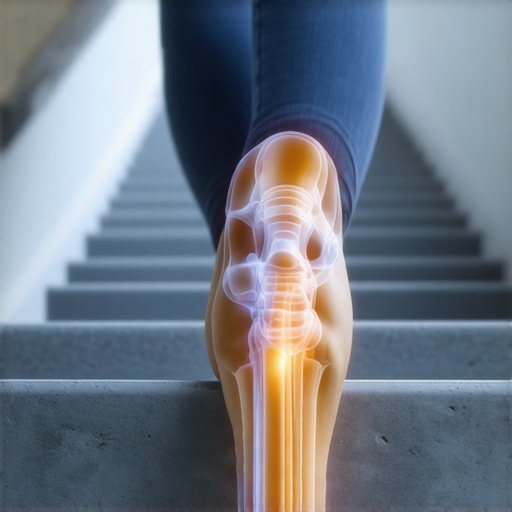
It hit me one morning—I was halfway down the stairs when an unexpected sharp ache shot through my knees, making me freeze in surprise. Not because I was clumsy, but because I had no idea that my posture and mobility habits were silently sabotaging my knees. That revelation was a game-changer. If you’ve ever felt that sudden knee discomfort when descending stairs, you’re not alone—and there might be a hidden reason lurking behind that pain.
Why Your Knees Are Sending You a Silent Alarm
Our knees are complex joints that take on a lot with every step, especially when walking downstairs. The real kicker? Often, the source of knee pain isn’t exactly where you think it is. Instead, issues in your hips, ankles, or even your posture can ripple down and result in knee discomfort. Early on, I made a mistake many newcomers do: focusing solely on the knee, trying to strengthen it directly, without addressing the root causes. This approach is like trying to patch a leak without finding where the water’s coming from.
What many don’t realize is that poor posture or restricted mobility can cause uneven pressure distribution on your knees. According to a study published in the Journal of Orthopaedic & Sports Physical Therapy, misalignment and movement dysfunction are common contributors to knee pain, especially in active adults.
If you’re tired of avoiding stairs, or worse, facing persistent knee pain that worsens over time, understanding this connection is your first step toward relief. And the good news? There are practical strategies to combat this. From targeted mobility exercises to chiropractic adjustments, you can address the underlying issues and get back to walking comfortably.
But before we dive into the solutions, I want to ask—have you ever experienced unexplained knee pain while just walking down your stairs? If so, don’t worry. You’re about to discover insights that could change how you approach your mobility and comfort.
Now, let’s explore why the connection between posture and knee health is more significant than most people realize—and what you can do about it.
Identify Your Postural Triggers
Begin by observing how you sit, stand, and move daily. I recall a morning when I noticed my forward head tilt while working at my desk, which I often ignored. To address this, I recorded myself performing typical activities to spot habitual misalignments. Focus on common habits like slouching on your phone or leaning forward during work. Recognizing these patterns is crucial to know where to begin improving your posture.
Implement Targeted Mobility Exercises
Next, incorporate specific mobility drills aimed at opening tight areas that influence your knee health. For example, a simple hip flexor stretch can release tension that pulls your pelvis into a misaligned position, stressing your knees during stair descent. A drill I use involves a kneeling hip flexor stretch; I hold each side for 30 seconds daily. These exercises are similar to tuning a gear before shifting; ensuring your joints move freely prevents undue pressure on your knees.
Adjust Your Daily Movements
Modify how you perform daily tasks to promote better alignment. For instance, when reaching for objects on high shelves, avoid overextending your back and instead use a step stool. I experimented with this when reaching for a high cabinet; using a small stool relieved back strain and preserved knee comfort. These micro-adjustments remind us that optimizing movement patterns reduces stress on vulnerable joints over time.
Seek Professional Guidance for Fine-Tuning
Consider consulting a chiropractor experienced in posture correction. They can perform precise assessments and apply adjustments that realign your spine and pelvis, which in turn alleviates knee pain. I once visited such a specialist after persistent stair discomfort; after a series of adjustments, I experienced noticeable relief. Effective chiropractic techniques act like recalibrating a machine—restoring smooth operation and decreasing strain on joints like the knees. You can learn more about how these adjustments work at this resource.
Incorporate Continuous Movement Practices
Finally, develop daily habits that promote ongoing mobility and posture awareness. Simple actions like shoulder rolls, neck stretches, and standing desks keep your joints active and aligned. I personally set reminders to stand and stretch every 30 minutes during work. These small, consistent steps build a resilient, balanced body—helping prevent future knee issues. For more strategies, explore mobility exercises that integrate seamlessly into daily routines.Many people believe that correcting posture is solely about holding certain positions or using quick fixes like fresh stretches. Contrary to popular belief, posture correction isn’t a one-size-fits-all solution; it’s a nuanced process that involves understanding your body’s unique biomechanics and habitual patterns. For example, many assume that switching to an ergonomic chair or adopting a ‘perfect’ sitting position will resolve chronic pain, but research suggests that active, targeted mobility exercises tailored to your specific needs can lead to longer-lasting improvements. This is supported by studies indicating that passive adjustments often ignore underlying muscle imbalances and movement restrictions, which are essential for sustainable change.
Another common myth is that chiropractic adjustments provide immediate, permanent relief. While adjustments are powerful tools to restore joint function, they are most effective when combined with personalized movement strategies and ongoing mobility work. Relying solely on adjustments without addressing mobility deficits can lead to reliance on chiropractic care in a cycle of temporary relief. To deepen your understanding, consider exploring how expert techniques can complement your mobility routines, as described in this resource.
A significant oversight many make is underestimating the importance of habitual movement patterns. Daily micro-movements and posture habits act as the foundation for long-term health; neglecting these can reinforce poor alignment despite corrective sessions. Incorporating continuous, mindful mobility practices as outlined at this link can empower you to build resilience against pain and joint issues.
Have you ever fallen into this trap? Let me know in the comments. Remember, effective posture and mobility improvements come from a balanced approach that combines correct techniques with a deep understanding of your body’s unique signals and habits.Maintaining your posture and mobility improvements over time requires more than just occasional exercises; it demands reliable tools and consistent practices. One device I rely on daily is a foam roller, specifically a dense, high-quality model like the TriggerPoint GRID. I use it every morning to release tension in my hip flexors and back muscles, which helps prevent the tightening that can undo progress. Regular foam rolling is backed by studies indicating it improves tissue quality and mobility, supporting long-term results.
How do I keep my mobility tools effective in the long run?
Invest in a set of resistance bands such as resistance loop bands, which I use to strengthen my glutes and stabilize my pelvis. They’re versatile and portable, making it easier to maintain mobility routines during travel or busy days. I incorporate different resistance levels to progressively challenge my muscles, fostering sustained improvements. Implementing a mobility-focused routine with these bands, along with a dedicated period of weekly chiropractic check-ups, forms a comprehensive approach to maintaining posture health.
Looking ahead, I predict the trend will shift toward smart, app-integrated devices that provide real-time feedback on posture and movement. Technologies like biofeedback wearables could alert you instantly when your alignment starts to slip, enabling proactive correction. This evolution will empower individuals to take control of their mobility without constant professional assistance.
To maximize your maintenance efforts, start by integrating a simple but effective tool like an ergonomic massage ball into your routine. Use it to target tight spots on your back or hips, especially after long periods of sitting. Also, exploring programs like the one detailed at this resource can teach you how to combine manual techniques with self-care tools for sustainable improvements.
Ready to elevate your routine? Try incorporating a quality foam roller or resistance bands today. Consistency with these tools, coupled with professional guidance from a chiropractor who can perform targeted adjustments, will ensure your efforts stand the test of time and activity. For detailed strategies, visit this comprehensive guide and start making lasting changes.Throughout my journey into understanding posture and mobility, I uncovered some truths that transformed my approach and results. One profound lesson was realizing that quick fixes and passive adjustments often mask underlying issues rather than resolve them. This taught me the importance of active, personalized strategies tailored to my body’s unique patterns, emphasizing consistent movement and mindful habits over temporary relief. Additionally, I learned that investing in quality tools like foam rollers and resistance bands amplifies progress, confirming that ongoing self-care is essential for long-term health. Perhaps most unexpectedly, I discovered that embracing a holistic view—acknowledging the interconnectedness of hips, ankles, and posture—yields more sustainable improvements than focusing solely on the knee. These insights collectively shifted my perspective from reactive to proactive, empowering me to maintain mobility and comfort well beyond symptom relief.