
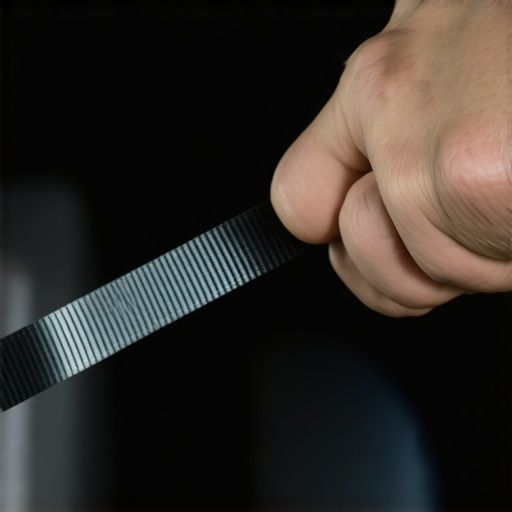
I was sitting in my driveway, late for a meeting, and reached back with my right arm to grab the seatbelt. *Pop. Click.* It wasn’t just a sound; it was a sensation like a thick rubber band snapping over a dry bone. For a second, I just sat there, arm frozen halfway, wondering if I’d finally broken something. It wasn’t a sharp pain—at least not yet—but it was that rhythmic ‘hitch’ in the joint that makes you feel twenty years older than you actually are. I’d been ignoring that sound for months, thinking it was just a quirk of my body, like a creaky floorboard in an old house. But when I realized I was starting to struggle to reach for the top shelf without tweaking my neck, I knew the ‘creak’ was actually a cry for help. Today, we are going to dive into exactly why that seatbelt reach is the ultimate ‘litmus test’ for your shoulder health and how to reclaim that smooth, silent range of motion.
That Annoying Click is Your Shoulder Screaming for Space
When you reach across your body and backward, you’re asking your shoulder to perform a complex dance. It is not just a simple ball-and-socket joint; it is a floating masterpiece held together by the rotator cuff. If your posture has slumped from too many hours at a desk, that ‘socket’ tilts forward and down. Now, when you reach for that seatbelt, there is no room left for the tendons to slide through. They snag. They click. They wear down. I made a massive mistake early on by thinking I just needed to stretch my shoulder out harder. I would pull my arm across my chest for minutes every morning, not realizing I was actually jamming the joint further into its restricted position. It was a classic ‘beginner’ move that ignored the real issue: my shoulder blade wasn’t moving. It wasn’t until I explored the ultimate guide to improving mobility and posture in 2025 that I realized my stretching was actually fueling the fire. Have you ever felt that sharp ‘catch’ in your shoulder while trying to put on a jacket or reaching into the backseat? Tell me if this sounds familiar in the comments, because you are definitely not alone.
Is this clicking sound actually dangerous or just annoying?
You might be tempted to just turn up the radio and ignore the noise, but that clicking is often a loud warning light on your physical dashboard. According to researchers at the Mayo Clinic, persistent clicking in the shoulder—technically known as crepitus—can be a precursor to subacromial impingement or even labral tears if the underlying mechanics aren’t addressed. The good news is that we can retrain these muscles to behave. By understanding how chiropractic adjustments enhance posture and mobility, we can create the physical space your joint needs to function without grinding. We aren’t just looking for a temporary fix; we are looking to stop that shoulder click during overhead movements for the long haul. Let’s get into the ‘why’ behind this mechanical traffic jam so you can stop cringing every time you get into the car.
Stop Treating the Symptom and Fix Your Foundation
To stop that click, you have to stop looking at the shoulder as an isolated island. Imagine your shoulder as a crane sitting on a barge. If the barge (your ribcage and mid-back) is tilted or unstable, the crane can’t lift a heavy load without grinding its gears. Most of us spend our days in a ‘keyboard hunch,’ which locks the ribcage in a downward position. When you reach for that seatbelt, the shoulder blade is forced to scrape against the ribs instead of gliding over them. This is why revolutionize your posture with targeted mobility exercises focuses so heavily on the upper back; without that foundation, your arm is essentially hitting a physical ceiling every time it moves.
Free Up Your Mid-Back Before You Reach
The first step to a silent shoulder is unlocking your thoracic spine. I remember a Tuesday last month when I tried to grab my laptop bag from the backseat after a two-hour drive. I felt that familiar sharp ‘zing’ because my mid-back was as stiff as a board. I had to stop, sit up tall, and perform three deep diaphragmatic breaths to ‘reset’ my ribcage before I could even move my arm safely. If you find that why your middle back stiffens up every time you drive over an hour resonates with you, then your shoulder click is likely a side effect of a stuck spine. Before you even touch the seatbelt, take a second to sit tall and pull your shoulder blades down and back—not by squeezing them together, but by imagining you are tucking them into your back pockets. 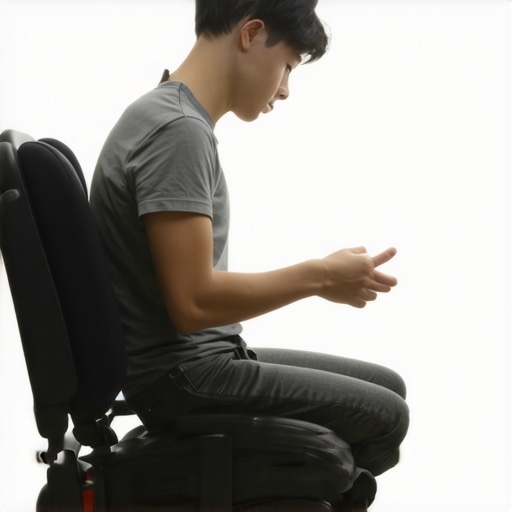
Open Up the Front Door of Your Torso
If your chest muscles are tight, they act like a pair of tight suspenders pulling your shoulders forward and into the ‘click zone.’ You need to create length in the pectorals to allow the humerus (your arm bone) to sit back where it belongs. A simple doorway stretch can be effective, but only if you keep your core engaged. I used to just lean into the doorway mindlessly, but I realized I was just arching my lower back rather than stretching my chest. Once I learned how to loosen your chest muscles after a day of hunching, the space in my shoulder joint opened up almost instantly. Think of it as clearing the debris off the tracks before the train tries to pass through.
Shift Your Seatbelt Strategy Today
Instead of reaching with a straight arm and a rounded back, try the ‘rotate and reach’ method. This is the one secret to pain-free car travel that most people overlook. As you reach for the belt with your right hand, slightly rotate your entire torso to the right. This turns a high-stress shoulder movement into a full-body mechanical shift. By spreading the work across your spine and hips, you take the ‘grind’ out of the shoulder socket. When the joint isn’t forced to do 100% of the work, the clicking stops because the tendons finally have the clearance they need to glide. If the click persists even with these changes, it might be time to see how chiropractic adjustments enhance posture and mobility by realigning the bones that provide the anchor for those clicking tendons.
Stop stretching into the click because you might be making it worse
We’ve been conditioned to think that if something feels tight, we should pull on it. But here is the hard truth: that ‘tight’ feeling in your shoulder is often your nervous system’s way of creating stability because the joint itself is loose or poorly supported. I fell into this trap for years. I thought if I just did more doorway stretches, my shoulder would finally ‘open up.’ In reality, I was just overstretching the front of my joint capsule while my rotator cuff remained weak and deactivated. This is the ‘Oops’ factor most people miss: you are stretching a tissue that is already screaming for help, not more length. Instead of mindless pulling, you need to focus on improving posture through mobility practical chiropractor strategies that emphasize control over raw flexibility. If you’ve been stretching for weeks with no change in that ‘pop,’ you’re likely addressing the wrong side of the joint. Have you ever felt like your stretching is actually making your shoulder feel more ‘vulnerable’ or unstable? Let me know in the comments, because this is the first sign you need to shift your strategy.
Why does my shoulder still click even after I’ve ‘fixed’ my posture?
You might be sitting up straighter, but if your internal mechanics haven’t changed, the noise won’t stop. A fascinating study published in the Journal of Orthopaedic & Sports Physical Therapy found that ‘scapular dyskinesis’—the fancy term for your shoulder blade not moving in sync with your arm—is present in a massive percentage of asymptomatic people but becomes a primary driver of pain once repetitive movements are added. You can have ‘perfect’ posture in a chair, but if your brain doesn’t know how to glide the shoulder blade when you reach back, the click remains. This is where the link between mobility and posture becomes vital; it’s about movement, not just a static pose.
The sneaky connection between your breath and your shoulder blade
Most people are shocked when I tell them their seatbelt reach is actually a breathing problem. Your diaphragm is physically attached to your lower ribs and indirectly influences the tension in your neck and shoulders. When you breathe shallowly into your upper chest, you’re constantly ‘shrugging’ on a microscopic level. This keeps the muscles at the top of your shoulder in a state of high alert. I realized that why your shoulder tightness is actually a diaphragm problem was the missing piece for me. When I started focusing on 360-degree rib expansion, my shoulder blades finally had a ‘soft’ surface to glide over. 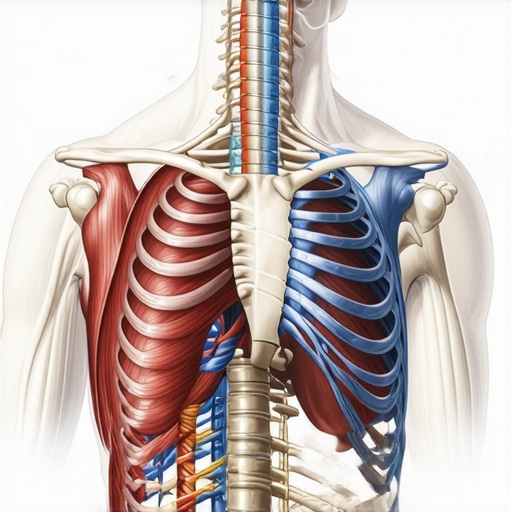
Don’t try to pop your way to a solution
Another massive mistake is the ‘self-adjustment’ habit. We’ve all seen it: someone feels a bit of tension and they forcefully whip their head or shoulder around to get that loud crack. While it might provide a five-minute hit of dopamine and a temporary release of gas from the joint, it’s not fixing the underlying restriction. In fact, you’re usually just ‘over-mobilizing’ the joints that are already moving too much, while the ‘stuck’ segments stay stuck. This is why you should never crack your own back while sitting or try to force your shoulder into a pop. To truly clear the path, you need enhance your posture with expert chiropractic techniques in 2025 that target the specific vertebrae or ribs that are refusing to budge. By focusing on the ‘stuck’ spots rather than the ‘noisy’ spots, you stop the cycle of constant clicking and start moving with the fluid ease your body was designed for.
The gear that actually lives in my gym bag
For years, I wasted money on vibrating foam rollers and expensive massage guns that gathered dust. Now, my ‘maintenance kit’ is embarrassingly simple: a standard lacrosse ball and a heavy-duty resistance band. I use the lacrosse ball because it doesn’t yield like a tennis ball does. When I pin it between a wall and the back of my shoulder blade, it provides that pinpoint pressure needed to release the infraspinatus—the muscle that often locks down and causes that seatbelt-reach ‘pop.’ If you’ve been struggling with mobility hacks simple adjustments for a more active life, this $5 tool is your best friend. I spend exactly two minutes on each side every evening while I’m watching TV. It’s not about intensity; it’s about the consistency of signaling your nervous system that it’s safe to let go of that tension. I’ve found that the daily move to keep your spine young works infinitely better when the soft tissue around the shoulders isn’t acting like a straightjacket.
How do I keep my shoulders silent for the long haul?
Maintenance isn’t about doing more; it’s about doing the right things when you feel ‘fine.’ A study published in the Journal of Bodywork and Movement Therapies highlights that self-myofascial release, when combined with active range-of-motion exercises, significantly improves joint mechanoreception. This means your brain gets better at knowing where your arm is in space, which prevents those clumsy, clicking reaches for the seatbelt. Once you’ve moved past the initial pain phase with chiropractic adjustments unlock a pain-free lifestyle today, your job is to reinforce that new alignment. I make it a point to schedule a ‘mobility check-in’ every morning before I even grab my coffee. It’s a simple series of shoulder circles and neck retractions to ensure I haven’t ‘reset’ into a hunch overnight. By incorporating mobility boosts for posture expert tips for daily adjustments into my existing routine, the silent range of motion becomes my new default setting rather than a lucky occurrence. 
The future of posture is more than just sitting up straight
I predict that in the next few years, we are going to see a massive shift toward ‘biofeedback wearables’ that don’t just tell you to sit up, but actually track the glide of your scapula. We are already seeing the beginnings of this in the ultimate guide to improving mobility and posture in 2025. The goal will be to move from reactive care—fixing the click once it hurts—to proactive ‘pre-hab’ that uses AI to detect when your shoulder mechanics are beginning to drift. Until that tech is in everyone’s pocket, you have to be your own biofeedback loop. If you want to take your shoulder health to the next level today, try this: the next time you reach for your seatbelt, keep your thumb pointing toward the ceiling throughout the entire movement. This small ‘external rotation’ tweak opens up the subacromial space and is the single best way to test if you’ve actually regained your mobility or if you’re still just ‘cheating’ the movement with your mid-back.
Why Chasing the Sound Was My Biggest Mobility Mistake
Reflecting on my own journey, the biggest breakthrough wasn’t a specific stretch; it was realizing that my shoulder was ‘loud’ because it was compensating for a lazy ribcage. I spent years trying to ‘fix’ the click in the joint when the real culprit was a stuck mid-back. Once I learned how to stop your shoulders from shrugging towards your ears, the clicking vanished within a week. I used to think I needed a major medical intervention, but I actually just needed physical space. Another hard truth I discovered is that your ‘bad’ shoulder is often just a mirror of your opposite hip. If your pelvis is rotated from sitting on a wallet, your shoulder has to work overtime to reach back. This is precisely why chiropractic care is your secret weapon for better posture—it addresses the entire kinetic chain rather than just the noisy link that is complaining. I also learned that consistency beats intensity every single time; a two-minute daily check-in is worth more than a two-hour gym session once a month.
My Non-Negotiable Tools for a Silent Shoulder
I’ve distilled my recovery down to a few essential items that actually work. First, a firm lacrosse ball is my go-to for pinpoint muscle release. It’s far more effective at reaching the deep rotator cuff muscles than a generic foam roller. I pair this with mobility hacks simple adjustments for a more active life, specifically focusing on resistance band ‘face pulls’ to keep my upper back engaged. For anyone who drives long distances, I also recommend a small lumbar support cushion to prevent the pelvic tilt that starts the whole shoulder-grinding process. These tools, combined with the insights from the the link between mobility and posture, provide the mechanical support your body needs to stay silent and fluid during every reach.
#IMAGE_PLACEHOLDER_E#
Reclaim Your Movement and Drive Pain-Free
You don’t have to accept a body that sounds like a bowl of Rice Krispies every time you put on your seatbelt. The clicking is not a permanent feature of aging; it is a signal that your alignment is off. By prioritizing enhance your posture with expert chiropractic techniques in 2025 and staying mindful of how you sit and breathe, you can turn that painful ‘pop’ into a smooth, silent glide. Your mobility is a long-term investment that pays dividends every time you move without hesitation. Have you ever noticed your shoulder click getting significantly worse after a long day of driving? Let me know in the comments below!