
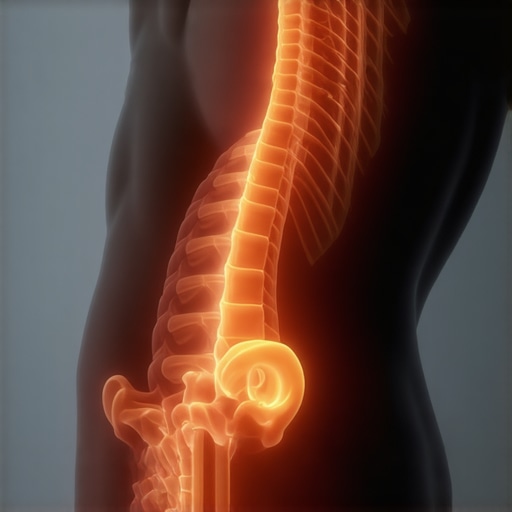
I used to blame my mid-afternoon energy crash and that persistent, uncomfortable bloating on my third cup of coffee or maybe a hidden gluten sensitivity. I tried every probiotic on the shelf. I cut out dairy. I even drank that celery juice everyone was raving about a few years back. Nothing worked. Then, one Tuesday afternoon, while I was hunched over my laptop, I realized I hadn’t taken a full breath in hours. My ribs were practically touching my hip bones. It hit me: I wasn’t just tired; I was physically crushing my internal organs. It sounds dramatic, but if you’ve ever felt like your stomach was tied in knots after a long day at the desk, you know exactly what I’m talking about. Today, I’m going to show you how to stop that ‘gut-squish’ for good by fixing the way you carry yourself. [image-placeholder]
Your Organs Need Room to Breathe
Think of your torso like a high-end accordion. When it’s stretched out and mobile, the music—or in this case, your digestion—flows perfectly. But when you collapse into that classic ‘computer hunch,’ you’re essentially folding the bellows shut. This isn’t just a hunch. Research indicates that slouching can significantly increase intra-abdominal pressure, which is a leading trigger for acid reflux and slow gastric emptying. According to a study published in the journal Digestive Diseases and Sciences, posture significantly influences the transit of intestinal gas; sitting upright helps things move, while slouching keeps them stuck. We often think of mobility as something for athletes, but it’s the foundation of how your body processes food. If you’ve been wondering why you should stop sucking in your stomach, it’s because that constant tension creates a physical barrier for your diaphragm. When your diaphragm can’t move, your gut suffers and your breathing habits create tightness that ripples through your whole body.
Can Sitting Up Straighter Really Fix My Bloating?
I know, it sounds too simple to be true. You’re probably thinking, ‘I’ve had digestive issues for years, surely a little slouching isn’t the culprit.’ I was a skeptic too. But then I looked at this chiropractor’s guide to mobility and posture and realized my ‘locked’ spine was the real bottleneck. I made the mistake early on of thinking my ‘tech neck’ was just an aesthetic problem or a source of occasional headaches. In reality, that forward lean was pulling on my entire fascial chain, right down to my mid-section. If you’ve ever felt a ‘pop’ or ‘crack’ when trying to stand up straight, you might be dealing with more than just tight muscles. Perhaps you’ve noticed why your neck crunches when you turn or felt like your lower ribs are constantly under tension. These aren’t isolated incidents. They are signals that your internal ‘plumbing’ is being squeezed by poor structural alignment. Have you ever noticed that your heartburn or bloating gets significantly worse after a three-hour stint at your desk or a long drive? I’d love to hear if you’ve made that connection yet.
Create Space for Your Stomach to Work
To stop the gut-squish, you have to treat your torso like a skyscraper rather than a flimsy tent. When a tent collapses, everything inside gets tangled and compressed; when a skyscraper stands tall, every floor has its own designated space for utilities and airflow. Start by finding your ‘neutral’ spine. Imagine a silver string attached to the very crown of your head, pulling you gently toward the ceiling. Your goal isn’t to stand stiffly like a soldier—which actually creates more tension—but to create physical, vertical distance between your hip bones and your lower ribs. This expansion allows your organs to sit where they were designed to. If you’ve struggled with this feeling of being ‘locked’ in place, you might need to check this chiropractor’s guide to mobility and posture to see if your joints are actually preventing you from standing tall. I remember one specific Monday at my old corporate job. I had a back-to-back schedule and by 3 PM, I felt like my stomach was a balloon about to pop—that classic, sharp bloating pain. I stood up, walked to the bathroom mirror, and was shocked. I wasn’t just tired; I was physically folded in half at the belly button, my upper body completely collapsed onto my midsection. I looked like I was trying to fold myself into a suitcase. I took three deep, expansive breaths into my sides, consciously lifted my chest away from my hips, and felt an immediate, audible ‘gurgle’ of relief as things started moving again. It wasn’t magic; it was just physics. #IMAGE_PLACE_HOLDER_B#
Relearn How to Breathe Without Gripping Your Abs
We are a generation of ‘stomach suckers.’ We want to look thin, so we pull our bellies in and hold our breath in our upper chests. This creates a pressure cooker in your abdomen. You need to learn how to use your breath to relax your pelvic floor and your gut. When you inhale, your belly should move out, not in. This diaphragmatic movement acts like a gentle massage for your intestines, helping to move waste and gas through the system. If you find your shoulders shrugging towards your ears every time you take a breath, you’re likely fighting yourself. You should also understand why you should stop sucking in your stomach if you ever want to see long-term digestive relief. Constant tension in the abdominal wall tells your nervous system you are in ‘fight or flight’ mode, which literally shuts down your digestion.
The Two-Minute Fix for Your Desk Slouch
Most of us do the most damage while staring at a screen. To combat this, you need a reset button you can hit every hour. Use the move that instantly relieves tension in your lower ribs by reaching one arm overhead and leaning slightly to the opposite side. This opens the lateral chain and gives your gallbladder and liver some breathing room. If you feel like your head is permanently drifting toward your monitor, take a moment to learn how to fix the computer hunch in under two minutes. It involves a simple chin tuck and shoulder blade squeeze that resets your internal alignment. These small, frequent movements prevent the fascia from hardening into a slumped position, which is the ultimate goal of improving posture through mobility. By refusing to let your spine ‘glue’ itself into a C-shape, you are keeping the metabolic pathways open and your energy levels stable throughout the afternoon.
The Trap of Trying to Look Like a Statue
Most people think the solution to the gut-squish is to simply pull their shoulders back and puff their chest out like a soldier on parade. Here is the contrarian truth: trying to maintain ‘perfect’ posture through sheer willpower is often worse than slouching. When you force your shoulders back, you often end up over-extending your mid-back, which leads to rib flaring and increased tension in your diaphragm. This is a classic ‘oops’ factor where you trade one form of compression for another. Instead of a squished gut, you now have a stretched and stressed one. If you’ve noticed that your breathing feels shallow or your neck feels strained even when you’re ‘sitting up straight,’ you are likely over-correcting. This tension often migrates upward, which is how your breathing habits are creating tightness in areas you wouldn’t expect. #IMAGE_PLACE_HOLDER_C#
Why does my back still hurt even when I’m sitting ‘perfectly’?
It’s because your body isn’t designed for static positions. Research in the Journal of Bodywork and Movement Therapies suggests that ‘postural variability’—the ability to shift and move through different positions—is far more important for spinal health than holding one ‘correct’ pose. When you try to lock yourself into a specific shape, you create ‘isostatic tension.’ Your muscles are working overtime to hold you still, which reduces blood flow and keeps your nervous system in a state of high alert. This is exactly why learning how to stop your ribs from flaring is a more advanced and effective goal than simply ‘sitting straight.’ You want a spine that is a spring, not a pillar.
Adjustments Work Best When You Actually Move
A common myth is that a single chiropractic adjustment will ‘fix’ your posture forever. In reality, how chiropractic adjustments enhance posture and mobility is by clearing the neurological and structural roadblocks so that movement becomes easier. The adjustment gives you a window of opportunity to relearn better patterns. If you get adjusted and then go right back to ‘bracing’ your core or cracking your own back while sitting to find temporary relief, you’re just resetting the same bad loop. This is why chiropractic care is your secret weapon; it’s not just about the ‘pop,’ it’s about restoring the communication between your brain and your midsection. When that communication is clear, you don’t have to think about your posture—your body just finds its natural, expanded center. Have you ever fallen into this trap of trying to hold a ‘perfect’ pose all day and ended up feeling more exhausted? Let me know in the comments.
I’ve spent a lot of money on gadgets that promised to fix my back, but most of them ended up in a junk drawer. The only things that stuck were the ones that changed my environment without me having to think about it. For example, I swear by a simple McKenzie lumbar roll. Most people use it wrong; they shove it too low. I place mine exactly at the curve of my low back to force that vertical expansion we talked about. It is the simple change to your desk chair that ends back pain because it prevents that ‘hinge’ at the belly button that traps gas and acid.
Dr. Stuart McGill, a world-renowned expert in spine biomechanics and author of Back Mechanic, emphasizes that the goal is to create ‘spinal hygiene’ rather than just doing a bunch of exercises once a week. This means treating every time you sit or stand as a small opportunity for maintenance. I also started using a monitor arm that sits about two inches higher than I think I need. This forces me to look slightly upward, which naturally prevents the computer hunch from forming in the first place.
#IMAGE_PLACE_HOLDER_D#
How can I make sure these changes actually stick?
The secret isn’t more willpower; it’s more mobility boosts for posture built into your existing routine. I use a ‘trigger’ habit: every time I take a sip of water, I do the daily move to keep your spine young, which is just a quick seated rotation to decompress the vertebrae. If you find yourself stuck in a deep work session, the best way to transition from a sitting to a standing desk is to do it incrementally. Don’t stand for 8 hours straight—that just leads to why your foot arches are collapsing. Switch every 30 minutes to keep the blood flowing and the internal pressure from building up.
The future of the way we sit and breathe
Looking ahead, I think we are going to see a massive shift toward biofeedback wearables that don’t just buzz when you slouch, but actually track your respiratory rate and ‘gut pressure.’ We are moving toward a world where enhancing your posture with expert chiropractic techniques in 2025 will involve a blend of manual adjustments and real-time data tracking. But for now, the best tool you have is your own awareness. Try this today: set a timer for 25 minutes. When it goes off, stand up and perform a mobility hack for a more active life like a wall slide or a chest opener. You’ll be amazed at how much clearer your head—and your stomach—feels by 5 PM.
Everything I Got Wrong About Digestive Pressure
The hardest lesson I learned was that my obsession with a ‘flat stomach’—constantly sucking it in while walking or sitting—was the primary driver of my mid-day digestive discomfort. I had to physically relearn how to let my abdominal wall expand with every breath. I also realized that improving mobility and posture in 2025 isn’t about looking like a rigid mannequin; it’s about being fluid and adaptable throughout the day. Another lightbulb moment was discovering that my bloating wasn’t just about what I ate, but how my physical structure was literally slowing down my intestinal transit time.
#IMAGE_PLACE_HOLDER_FINAL#
The Essentials That Keep My Spine Moving
I don’t believe in cluttering your home with gadgets, but a few resources are non-negotiable for my routine. First, the book Back Mechanic by Dr. Stuart McGill provided the foundational science I needed to trust that small movements matter. For daily maintenance, I swear by targeted mobility exercises that focus on the mid-back and diaphragm to prevent that internal ‘closing’ of the bellows. I also rely on a high-quality lumbar support roll that I take with me even during travel to ensure I never fall back into that ‘gut-squish’ hinge during long flights.
Start Reclaiming Your Internal Space Today
Making these changes won’t just save your back from future aches; it will fundamentally change how you feel after a meal and how much focus you have at the end of the day. When you use chiropractic adjustments to unlock a pain-free lifestyle, you’re giving your organs the physical environment they need to perform their best. If you’ve been feeling stuck in a cycle of tension and digestive issues, don’t hesitate to reach out to our team for guidance. Your body was designed to move and breathe without restriction—it’s time to let it. Have you noticed your digestion improves on days when you’re moving more and sitting less? Let me know in the comments below!