

I once hit a personal best on the leg press, feeling like I’d finally conquered the world, only to spend the rest of the evening in a dark room with a cool cloth draped over my eyes. I was convinced I was just dehydrated. I drank liters of water until I felt like a human water balloon, but that rhythmic thumping behind my temples wouldn’t budge. It took me a long time, and far too many wasted gym memberships, to realize that the problem wasn’t in my stomach or my hydration levels—it was in my neck. I was literally crushing my own nerves every time I strained for that last rep. If you have ever walked out of a killer spin class or a heavy lifting session only to feel that dull, rhythmic thumping start behind your ears, you are not alone, and it is likely not the water bottle’s fault.
Stop Chugging Electrolytes and Look at Your Neck Instead
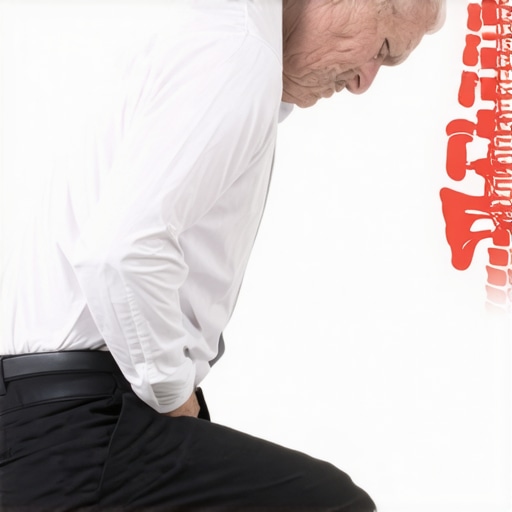
I spent years making the classic mistake of thinking every post-workout pain was chemical. I thought I needed more salt, more magnesium, or less caffeine. But the reality was much more structural. When we lift heavy or even run with poor form, we often subconsciously recruit the tiny muscles in our upper neck to help stabilize our entire body. This leads to a situation where your neck muscles are hard like a rock before you even leave the locker room. This tension doesn’t stay in the neck; it travels upward, creating a cervicogenic headache that feels like a vice grip on your skull. I used to ignore the way I’d crane my chin forward during rows, not realizing I was setting myself up for a night of misery. Learning how to stop your shoulders from shrugging towards your ears during your sets is often the first step toward a pain-free drive home. We are going to solve this today by looking at how you breathe, how you brace, and why your posture during a bicep curl might be the reason you’re reaching for the ibuprofen.
Is my gym habit actually doing permanent damage to my spine?
It is a scary thought, right? You go to the gym to get healthy, not to end up with a spine that feels like it’s being ground into dust. Many of my neighbors and friends worry that their love for the iron is causing long-term harm. The truth is, the damage usually isn’t from the weight itself, but from the lack of mobility in the upper back. When your mid-back is stiff, your neck takes the hit. You might notice why your neck crunches when you turn to look behind you after a workout; that is a major red flag that your mechanics are off. According to the American Migraine Foundation, exertion headaches can be triggered by the sudden increase in blood pressure during exercise, but they are frequently exacerbated by underlying cervical spine stiffness. This means that while the gym starts the fire, your stiff neck is the gasoline. Have you ever felt that sharp, localized pain right at the base of your skull after a set of overhead presses? Let’s talk about why that happens. Proper chiropractic adjustments unlock a pain-free lifestyle by ensuring those vertebrae aren’t locking up when you put them under pressure. It’s time to stop guessing and start fixing the structural root of those post-workout blues.
Fix Your Form to Stop the Thumping
I used to think that bracing meant pulling my belly button toward my spine as hard as possible. I had seen it in magazines and heard it from old-school coaches who insisted a thin waist was the key to a strong core. But every time I did it, I felt a strange, creeping tightness crawl up into my jaw. It turns out, that is exactly why you should stop sucking in your stomach for better posture and long-term spinal health. When you suck in, you lose your internal pressure, and your body searches for stability elsewhere—usually in the tiny scalene muscles of your neck. This is a primary reason how your breathing habits are creating tightness in your scalenes. I remember one specific Tuesday—leg day—where I tried to set a personal record on the back squat. I took a shallow chest breath, sucked in my gut, and descended. Halfway up, my vision blurred and my neck felt like it was being squeezed by a hydraulic press. I had to dump the bar and spend the next three days in a dark room. I wasn’t weak; I was just breathing like a panicked bird instead of a powerhouse. You need to breathe into your low back and sides, like you are filling a balloon inside your pelvis. This creates a solid foundation so your neck doesn’t have to act like a secondary stabilizer. 
Stop Your Shoulders from Creeping into Your Ears
If you find that your traps are screaming after a set of bicep curls or overhead presses, you are leaking energy and inviting a headache. When your shoulders shrug up toward your ears, they compress the nerves and blood vessels that lead directly to the base of your skull. I have noticed that why your shoulder clicks during overhead presses is often a flashing neon sign that your shoulder blade isn’t sitting flush against your rib cage. Think of your shoulder blades as the anchors for your arms. If the anchor is loose, the rope—your neck—has to take the strain. You must pack your shoulders down as if you are trying to slide your shoulder blades into your back pockets. This simple mechanical shift keeps the tension in your muscles where it belongs and out of your cervical spine.
Why Your Mid-Back is the Real Culprit
If your thoracic spine—the part of your back connected to your ribs—is as stiff as a frozen board, your neck has to overcompensate for every single movement you make. Imagine your spine is a chain; if the middle links are rusted shut, the top links have to do double the work to achieve the same range of motion. This is the fundamental link between mobility and posture. To fix this, you need mobility boosts for posture that specifically target extension and rotation in the upper back. I started using a foam roller on my mid-back every single morning, and the rhythmic ‘crunching’ sound in my neck finally started to fade. When that mid-back opens up, your neck finally gets a chance to relax and stop acting like a structural support beam for the rest of your torso.
Stop Stretching Your Guarding Muscles
I used to spend thirty minutes every morning stretching my hamstrings because they felt like piano wires. I thought I was being ‘mobile,’ but my back pain only got worse. This is the biggest lie in the fitness industry: the idea that ‘tight’ always means ‘needs stretching.’ Often, a muscle feels tight because it’s working overtime to protect a joint that lacks stability. If you keep stretching a muscle that is trying to hold your spine together, your brain will only tighten it further to compensate. This is exactly why your hamstring stretches are not fixing your tight legs. Real progress comes from improving posture through mobility that focuses on control and active range rather than just passive pulling.
Research from experts like Dr. Stuart McGill, a world-renowned spine biomechanist, suggests that excessive flexibility without the muscle ‘stiffness’ required to support the spine can actually lead to disc issues. It’s a nuance that many people miss—you need enough mobility to move, but enough stability to stay safe. This is where professional chiropractic adjustments unlock a pain-free lifestyle because they target the specific joints that are actually stuck, rather than just over-stretching the ones that are already too loose. Understanding why chiropractic care is your secret weapon for better posture involves recognizing that stability is just as important as flexibility.
Can a stiff ankle really cause a headache three days later?
It sounds like a stretch, but the kinetic chain is a real thing. If your ankle is restricted, you might change how you walk. That change shifts your pelvis, which forces your mid-back to stiffen, which eventually makes your neck work harder to keep your eyes level with the horizon. Eventually, your neck muscles are hard like a rock just from walking to the grocery store. This is the ‘secret’ to long-term health: looking at the body as a single unit. Finding mobility boosts for posture that address the whole chain—from your feet to your skull—is what separates a weekend warrior from a pro who stays injury-free.
The Trap of the Self-Adjusting Pop
One of the biggest ‘oops’ moments I see is the ‘self-crack.’ People feel a pinch and twist their own necks or backs until they hear a pop. It feels good for five minutes because of a temporary endorphin release, but you are likely just stressing the hyper-mobile joints above and below the one that is actually stuck. This is why you should never crack your own back while sitting. You’re essentially loosening the bolts on a machine that’s already vibrating too much. Furthermore, ignoring the deep stabilizers of the neck is a major oversight. We focus on the big traps, but the suboccipital muscles are the ones communicating with your vestibular system. If these are out of whack, leading to the real reason your balance gets worse as you age, no amount of hamstring stretching will save you. Have you ever fallen into this trap of constant self-cracking only to find the tension comes back worse an hour later? Let me know in the comments.
 Instead of that reckless self-cracking, I’ve moved toward tools that actually respect my anatomy and provide long-term relief. My first go-to is a standard lacrosse ball. I use it for pinpoint pressure on my glutes and the space between my shoulder blades—never on the spine itself. This is a crucial part of mobility hacks for a more active life because it addresses the soft tissue without jamming the joints. I also swear by a long foam roller for thoracic extensions to counter the hours I spend hunched over a keyboard. It’s about improving posture through mobility that feels sustainable, not like a chore. As Dr. Kelly Starrett, author of ‘Becoming a Supple Leopard,’ often emphasizes, we need to treat our bodies like high-performance machines that require daily maintenance rather than waiting for a total breakdown to seek help. This philosophy is exactly why I recommend the daily move to keep your spine young as a non-negotiable part of your morning routine.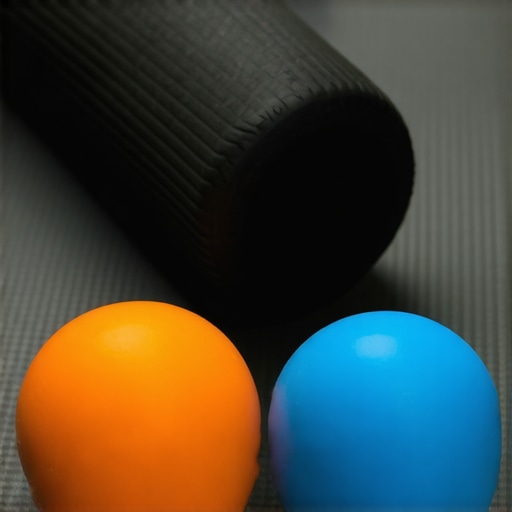
How do I keep my spine feeling this good for the long haul?
Maintenance isn’t about doing a grueling hour of stretching; it is about consistency in the small things. I’ve found that chiropractic adjustments enhance posture and mobility by resetting the baseline of my nervous system every few weeks. When my joints are aligned, the mobility work I do at home actually sticks. Without that alignment, I’m just stretching around a crooked frame. I also suggest using mobility boosts for posture throughout the day—like a quick wall slide or a chest opener—to break up the static load of sitting. It is much easier to maintain a healthy spine than it is to fix a broken one, so focusing on the ultimate guide to improving mobility and posture in 2025 will give you the roadmap you need to stay active well into your later years.
The future of posture is high-tech and personalized
I predict that within the next few years, we are going to see a massive shift toward AI-driven postural sensors that vibrate the moment your shoulders start to creep toward your ears. We are already seeing the early stages of this with wearable tech, but the next generation will likely integrate with your nervous system data to tell you exactly when your scalenes are tightening up before the headache even starts. Until then, you have to be your own sensor. I want you to try one specific advanced tip today: the next time you finish a heavy set, instead of scrolling on your phone, spend 60 seconds doing 360-degree diaphragmatic breathing. This simple act tells your brain that the ‘threat’ of the heavy weight is over, which prevents your neck from staying in that ‘rock hard’ protective state. Using expert chiropractic techniques in 2025 alongside these neurological resets is the secret to a body that doesn’t just survive the gym, but thrives because of it. If you’re ready to stop the thumping in your head and start lifting with confidence, check out our targeted mobility exercises to get started right now.
The Truth About Why My Headaches Always Came Back
After years of trial and error, I realized that chasing the pain was my biggest mistake. Here are the lightbulb moments that finally clicked for me: First, tightness is often your brain’s way of protecting a joint that feels unstable. If you keep stretching without strengthening, you are fighting a losing battle. Second, I learned that I was a ‘neck clencher.’ I would grit my teeth during heavy sets, which is why I now tell everyone to stop clenching your teeth to relieve your neck stress. Finally, real progress isn’t about one massive session; it’s about the little things you do between sets to stay neutral.
#IMAGE_PLACE_HOLDER_E#
Gear and Guides That Actually Saved My Back
I didn’t get here alone. If you want to dive deeper into the mechanics of why your body moves the way it does, I highly recommend ‘Becoming a Supple Leopard’ by Dr. Kelly Starrett; it changed my entire perspective on human maintenance. For daily work, I never travel without a simple lacrosse ball. It is the best tool for targeting those knots between your shoulder blades. I also suggest incorporating the daily move to keep your spine young to ensure your vertebrae stay hydrated and moving. Lastly, I keep a regular schedule for professional care because chiropractic adjustments enhance posture and mobility in ways a foam roller simply cannot reach.
Your Path to a Workout Without the Thumping
You don’t have to choose between getting strong and feeling great. The ‘thumping’ in your head isn’t a permanent tax you have to pay for your fitness goals. By understanding the link between mobility and posture, you can retrain your nervous system to support you rather than fight you. It takes patience and a bit of structural awareness, but the freedom of driving home from the gym without reaching for a bottle of pills is worth every second of effort. If you need specific help finding where your alignment is off, don’t hesitate to contact us for personalized guidance.
Have you ever noticed your jaw clenching up during a heavy set of squats or deadlifts? Let me know in the comments below!