
I remember the day I realized my office chair was my enemy. It wasn’t just a dull ache; it was a white-hot lightning bolt shooting down my leg every time I tried to be a productive employee. I had this image of myself sitting perfectly upright, shoulders back, chin tucked—basically a statue. But every minute spent in that perfect posture made my disc bulge scream. I was doing everything the brochures said, yet I couldn’t sit for ten minutes without reaching for the ice pack or wondering the truth about why your lower back spasms suddenly while I was just trying to answer an email.
The Myth of Sitting Like a Soldier
My biggest mistake early on was thinking that good posture meant being rigid. I spent hundreds on an ergonomic chair that promised the world, only to find out that the simple change to your desk chair that ends back pain isn’t always about the price tag. It’s about movement and pressure distribution. Sitting actually puts significantly more pressure on your lumbar discs than standing. Research by Alf Nachemson famously showed that intradiscal pressure increases by about 40% when moving from a standing to a sitting position. That is a lot of extra weight for a compromised disc to handle, especially if you are unknowingly doing things like keeping a thick leather wallet tucked away, which is how your wallet in your back pocket is twisting your spine and tilting your pelvis every single day. I had to unlearn everything I thought I knew about spine hygiene to finally find a way to sit that didn’t feel like a punishment.
Does a magic sitting position even exist?
You have probably seen a dozen YouTube videos claiming they have the secret pose that fixes everything. I tried them all. I even tried those kneeling chairs that make you look like you are in a medieval torture device. Most of them made things worse because I was forcing my spine into a shape it wasn’t ready for. I was desperate for relief, but I was looking for a static solution to a dynamic problem. Today, I am going to show you the specific, slightly supported way I finally found relief and how to avoid the common traps that keep your disc inflamed. Have you ever spent a fortune on a fancy chair only to find it made your back pain even worse?
Ditch the Rigid 90-Degree Angle
If you are still trying to sit with your knees and hips at perfect right angles, you are likely fighting a losing battle against gravity. When I was at my worst, I spent an entire week trying to mimic the ‘ergonomic’ diagram on my office HR portal. I looked like a robot, and my L5-S1 disc felt like it was being squeezed in a vice. The reality is that a slight recline—around 100 to 110 degrees—is actually much kinder to your lumbar discs because it shifts some of the load from your spine to the chair back. But even with a recline, you have to fix the foundation. I learned this the hard way during a three-hour flight where my lower back was on fire; I ended up using a rolled-up hoodie as a makeshift lumbar roll, and the instant relief was a wake-up call. You need to ensure you aren’t tucking your tailbone under, which is a classic move that leads to why your lower back hurts when you try to stand up straight after sitting.
Get Your Pelvis in the Right Neighborhood
The goal is a neutral pelvis. Think of your pelvis as a bowl of water; if you sit too far back on your pockets, the water spills out the back (slumping). If you arch too hard, it spills out the front. You want the bowl level. For most of us, this means performing the simple hip reset for people who sit for 8 hours before you even open your laptop. When your hips are positioned correctly, your spine naturally stacks without you having to ‘muscle’ it into place. 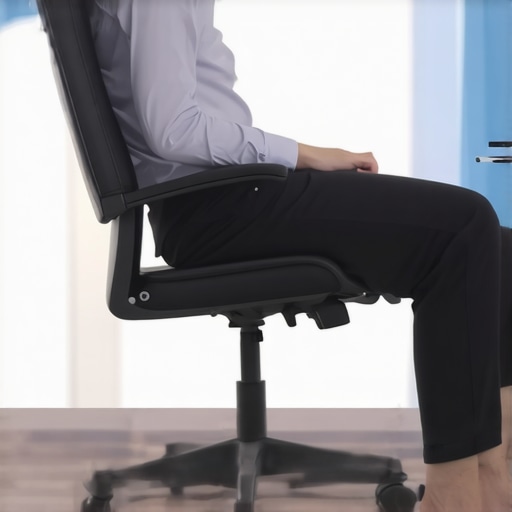
Brace Your Core Without Suffocating Your Spine
A lot of people hear ‘core stability’ and immediately start sucking their belly button to their spine. This is a mistake. There is a specific reason why you should stop sucking in your stomach for better posture immediately: it creates an artificial tension that actually prevents your diaphragm from stabilizing your lower back. Instead, think of a ‘360-degree expansion.’ When I sit, I focus on breathing into my sides and lower back. This creates an internal ‘air pressure’ that supports the disc from the inside out. It’s the same mechanism you should use to how to brace your spine before you sneeze. If you can master this internal pressure, you won’t need a thousand-dollar chair to hold you up.
The Five-Minute Mobility Rule
No matter how perfect your setup is, your body wasn’t designed to stay still. The most effective thing I did was stop trying to find the ‘perfect’ chair and started focusing on mobility hacks: simple adjustments for a more active life. Every 20 minutes, I perform a ‘micro-break.’ This isn’t a full gym session; it’s a quick standing reset to change the load on the discs. This is especially vital if you work on a portable device, as you need to know the specific way to sit at a laptop without creating a hump. If you find yourself stuck in a long meeting, even a simple weight shift from one sit-bone to the other can prevent the disc from ‘setting’ in a painful position. This prevents that localized inflammation that makes why your neck muscles are hard like a rock by the time 5:00 PM rolls around.But even with these mobility breaks, many people fall into a secondary trap: the obsession with ‘loosening up’ everything that feels tight. We’ve been conditioned to believe that if a muscle feels stiff, we should stretch it until it yields. However, this is one of the biggest mistakes you can make when dealing with disc-related pain. Often, that tightness is actually a protective ‘splinting’ response from your brain. If your spine lacks stability, your nervous system will lock down the surrounding muscles to prevent further injury. When you aggressively stretch these areas, you’re essentially ripping off the internal bandage your body just applied. This is exactly why your hamstring stretches are not fixing your tight legs; your brain is keeping them tight to protect your sciatic nerve.
Stop Stretching Your Way Into More Pain
In my own journey, I used to spend twenty minutes every morning touching my toes, thinking I was helping my back. In reality, I was just aggravating my L5-S1 disc by putting it into end-range flexion. Dr. Stuart McGill, a world-renowned spine biomechanist, has noted that the ‘stretch reflex’ can provide temporary relief while actually increasing the long-term instability of the joint. Instead of blindly stretching, we need to look at the link between mobility and posture through a different lens: stability. True mobility is the ability to move through a range of motion *with control*. If you can’t control the movement, you don’t have mobility; you have laxity, and laxity is a recipe for disaster.
Why does your body crave a slump after only five minutes of sitting upright?
It’s not because you are lazy; it’s because your postural muscles are fatigued and likely ‘disconnected’ from your neurological map. This is where most people get the role of a chiropractor wrong. It isn’t just about ‘cracking’ a joint to make it feel better in the moment. Advanced chiropractic strategies for improving posture focus on resetting the communication between your brain and your spine. 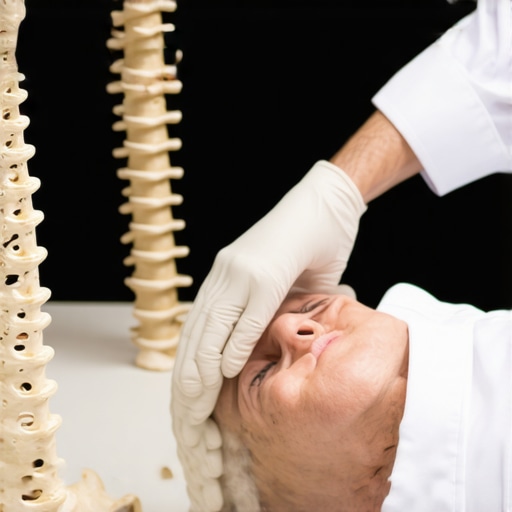 Research by Dr. Heidi Haavik has demonstrated that spinal adjustments can actually change the way the prefrontal cortex processes information, improving your body’s ‘proprioception’ or its internal GPS. When your brain knows exactly where your spine is, you don’t have to think about sitting up straight—your body just does it. Have you ever fallen into this trap of stretching a ‘tight’ muscle only to have it feel worse an hour later? Let me know in the comments.
The Hidden Role of Your Diaphragm
If you find your shoulders creeping up toward your ears no matter how much you try to relax, the problem might not be your neck at all. I discovered that why your shoulder tightness is actually a diaphragm problem comes down to how you breathe under stress. When you are a ‘chest breather,’ you use your secondary respiratory muscles (the ones in your neck) to lift your ribcage 20,000 times a day. No amount of massage will fix that. You have to combine chiropractic care for better posture with functional breathing to truly break the cycle. Integrating these mobility and posture improvements into your daily routine is the only way to move from temporary relief to a permanent solution.Once I stopped gasping for air and started breathing into my lower back, the real work began: maintenance. It is one thing to fix a crisis, but it is another thing entirely to stay out of the chiropractor’s office for the same injury every six months. I used to think I needed a high-tech exoskeleton to stay healthy, but I realized that mobility boosts for posture expert tips for daily adjustments are actually about simplicity and consistency rather than expensive gadgets. The most important tool in my arsenal isn’t even a chair—it’s a simple visual cue and a $10 lacrosse ball.
Stop Relying on Expensive Chairs to Save Your Spine
My biggest breakthrough came when I looked at the NASA Anthropometry and Biomechanics guidelines. They found that in microgravity, the human body naturally settles into a ‘neutral body posture’ that involves a 128-degree hip angle. This is far from the 90-degree ‘robotic’ sitting we are taught. To replicate this, I stopped using traditional lumbar pillows and started using a firm foam wedge that tilts my pelvis forward, allowing my spine to stack naturally. This is the foundation of the ultimate guide to improving mobility and posture in 2025. If you can’t get your hips above your knees, you are fighting a losing battle against your own anatomy. 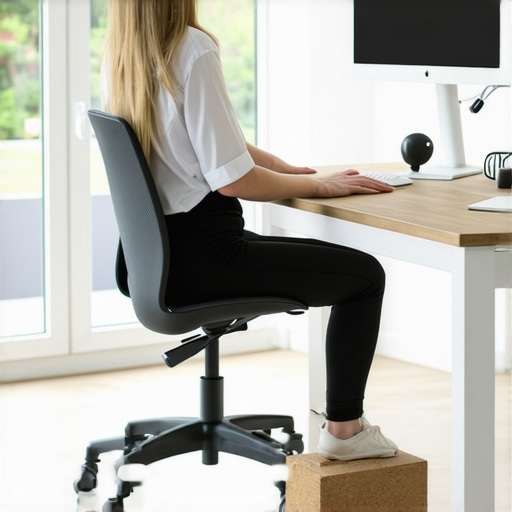
The NASA Secret to Lower Back Relief
Beyond the physical setup, I’m a huge advocate for ‘biofeedback’ tools. I don’t mean complicated sensors, but rather the internal awareness you develop when you revolutionize your posture with targeted mobility exercises. I use a simple standing desk converter, but the trick is the transition. You need to know the best way to transition from a sitting to a standing desk so you aren’t just swapping one static, painful position for another. Looking forward, I predict we will see a massive shift toward AI-integrated ‘haptic’ clothing that gives a gentle vibration when your shoulders begin to roll forward, taking the mental load off of ‘remembering’ to sit straight.
How can I maintain a healthy spine when life gets in the way?
Long-term success is about ‘greasing the groove.’ I keep a lacrosse ball under my desk to work out foot tension, which directly impacts how my pelvis sits. This is where chiropractic adjustments unlock a pain-free lifestyle today; they clear the path so these small daily habits actually stick. If your joints are ‘locked,’ no amount of fancy tools will help. You have to combine regular professional care with a home environment that rewards movement. Try this right now: Set a silent timer for 42 minutes. When it vibrates, don’t just stand up—perform three 360-degree breaths into your lower ribs and a 10-second glute squeeze. This simple ‘neurological reset’ tells your brain that you are safe to move, preventing the protective guarding that leads to chronic stiffness.
The Hard Truths About Spine Recovery I Had to Face
After years of trial and error, I realized that my body wasn’t trying to betray me with stiffness; it was trying to protect me. I had to stop viewing my bulging disc as a permanent broken part and start seeing it as a sensitive sensor that required better data. One of the biggest shifts was moving away from ‘fixing’ the pain and toward building capacity. I stopped asking ‘why does this hurt’ and started asking how I could revolutionize your posture with targeted mobility exercises that felt safe to my nervous system.
Another lightbulb moment was realizing that how chiropractic adjustments enhance posture and mobility isn’t just about the ‘pop’; it’s about refreshing the brain’s map of the body. When I felt stuck, it was usually because my brain had lost track of where ‘neutral’ was. Lastly, consistency beats intensity every single time. A three-minute hip reset is worth more than a two-hour yoga class if the yoga class leaves you flared up for a week.
Tools That Actually Earned a Permanent Spot in My Office
I’ve wasted thousands on gadgets, but only a few things truly moved the needle. First is a firm foam wedge. Most office chairs have a bucket seat that encourages slumping; a wedge fixes the pelvic tilt and makes mobility boosts for posture expert tips for daily adjustments much easier to maintain. Second, I keep a simple lacrosse ball nearby. #IMAGE_PLACEHOLDER_E# Using it for a two-minute glute release can stop a spasm before it starts.
I also highly recommend the work of Dr. Stuart McGill. His ‘Big Three’ exercises provided the stability I lacked. Finally, don’t underestimate the power of a simple timer. Setting a reminder to change positions is the most effective piece of technology I own. If you find yourself struggling to find the right balance, looking into enhance your posture with expert chiropractic techniques in 2025 can provide a tailored roadmap for your specific spinal needs.
Your Spine is Resilient Enough to Change
It’s easy to feel like you are destined for a lifetime of ‘careful’ movements, but your body is incredibly adaptable. Chronic pain often feels like a life sentence, but by combining smart ergonomics with regular chiropractic adjustments unlock a pain-free lifestyle today, you can reclaim your productivity. You don’t have to sit like a statue; you just have to give your spine the variety and support it craves. The path to relief isn’t found in a $2,000 chair, but in the small, daily decisions to move, breathe, and align. Have you ever found that a specific ‘ergonomic’ tool actually made your back pain worse? Let me know your experience in the comments below.