

I remember staring at the ceiling for twenty minutes, paralyzed by the thought of my bladder eventually winning the battle against my spine. My lower back wasn’t just tight; it had completely locked up. I made the classic rookie mistake—I tried to do a standard sit-up to get to the edge of the bed. That shot of lightning through my hips taught me a lesson I’ll never forget. If you’ve ever felt like your spine was made of glass and one wrong move would shatter it, you’re not alone. We’ve all been there, usually after a day of neglecting our targeted mobility exercises or sitting too long in a cramped car. Today, I am going to walk you through the exact, pain-free maneuver that saved me from being a permanent fixture on my mattress. Have you ever found yourself staring at the ceiling, wondering how on earth you’re going to make it to the bathroom without your back giving out?
Your morning sit-up is making the spasm worse
When your back is in a full-blown crisis, your muscles are essentially acting like a biological straightjacket. They are trying to protect the nerves, but they often overdo it. Early in my journey of managing back health, I thought I could just ‘power through’ the stiffness. I’d grab the headboard and yank myself upright. This is exactly why your lower back spasms suddenly even worse than before. You are essentially fighting your own body’s defense mechanism. Instead of a vertical lift, we need a horizontal rotation. This protects the integrity of your discs and prevents that horrible shearing force that makes you want to yell for help. It’s about working with your anatomy rather than against it, much like how you would brace your spine before you sneeze to avoid a tweak.
Will these tiny movements actually get me on my feet?
I know what you’re thinking because I thought it too: ‘I can’t even move an inch, how am I supposed to roll?’ It seems impossible when you are in the thick of it. However, the ‘log roll’ isn’t about flexibility; it’s about physics. According to experts at Harvard Health, keeping the ears, shoulders, and hips in a straight line during the transition from bed to floor minimizes spinal torsion significantly. This isn’t just a ‘hack’—it’s a clinical necessity for anyone dealing with an acute flare-up. When you understand why your lower back hurts when you try to stand up straight, you realize that the vertical transition is the most dangerous part of your morning. By the time we’re done, you’ll have a reliable exit strategy that doesn’t involve a trip to the emergency room.
Master the log roll to protect your discs
The secret to the log roll is pretending your spine is a frozen piece of rebar. You cannot bend it, and you certainly cannot twist it. Before you even think about shifting an inch, you need to address the internal pressure that is locking you down. I spent years ignoring the hidden link between your breathing pattern and lower back stability until a specialist pointed out that I was holding my breath every time I tried to sit up. This reflexive ‘bracing’ actually increases the intra-abdominal pressure in a way that jams your vertebrae together. Instead, we want to create a stable, pressurized cylinder that protects the nerves while we rotate.
Wake up your deep stabilizers with breath
Before you move your limbs, you need to ‘set’ your core. This isn’t about sucking in your stomach; it’s about expanding your ribcage. Take a slow breath into your belly and imagine pushing your breath toward your hips. This acts as a biological air-bag for your lumbar spine. I remember one Tuesday morning when I was stuck in a hotel room in Des Moines. The bed was a soft, sagging nightmare, and I knew the truth about soft mattresses and spinal integrity was working against me because my pelvis was sinking three inches deeper than my head. I spent ten minutes just breathing, trying to find that ‘neutral’ spot. When I finally initiated the roll, I moved so slowly that my spouse thought I was still asleep. But by moving as one solid piece, I bypassed the typical lightning bolts in my L5-S1. 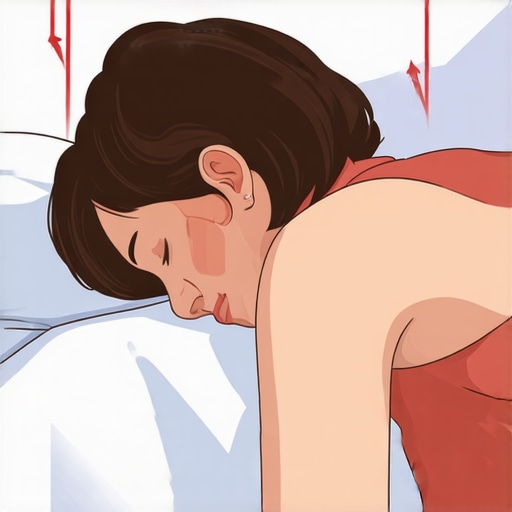
Move your torso as one solid unit
Once your core is set, you need to move your shoulders and your hips at the exact same time. If your shoulders turn and your hips stay flat, you’ve just created a ‘wringing’ motion on your discs—exactly what leads to a crisis. Bend the knee furthest from the edge of the bed and use that foot to gently push yourself over. Think of your body like a heavy piece of timber rolling across a floor. This is the daily move to keep your spine young even when you aren’t in pain. By avoiding the twist, you are sparing the outer layers of your spinal discs from micro-tears.
Use your legs as a counterweight to sit up
Now that you are on your side, you’re halfway there. Do not try to lift your head yet. Instead, slowly scoot your knees toward the edge of the bed until your feet hang off the side. This is where physics becomes your best friend. As your feet drop toward the floor, their weight will naturally pull your torso upward. It’s a seesaw effect. If you try to ‘muscle’ it with your back, you’ll trigger a protective spasm. This transition is usually why your lower back hurts when you try to stand up straight; the muscles aren’t ready for the vertical load.
Why your arms are your new best friends
As your feet drop, use your bottom elbow and your top hand to push your torso away from the mattress. Your arms are doing 90% of the work here. You are essentially doing a side-lying push-up. By the time your feet hit the floor, your torso should be upright without your lower back ever having to ‘pull’ you into position. This is one of those mobility boosts for posture expert tips for daily adjustments that separates a quick recovery from a week-long stay on the couch. You’ll find that when you move with the mechanics of a lever rather than a spring, the pain remains manageable.Once you’ve mastered the log roll, you might think the battle is won, but this is where most people hit a plateau. We’ve been told for decades that ‘core strength’ is the holy grail of back health, but I’ve seen athletes with six-packs who can’t pick up a pencil without a spasm. The biggest mistake is the ‘abdominal hollowing’ technique—the idea that you should pull your navel to your spine. Research by Dr. Stuart McGill, a world-renowned expert in spine mechanics at the University of Waterloo, has shown that hollowing actually reduces the stability of the spine compared to a ‘bracing’ technique. This is why you should stop sucking in your stomach for better posture immediately. You’re essentially turning off your natural stabilizers when you need them most. 
The myth of the permanent brace
While bracing is essential during movement, many people stay in a state of constant tension. This ‘high-tone’ state prevents the spine from absorbing shock naturally. I’ve found that true health lies in the ability to switch between tension and relaxation. If you’re always tight, your joints eventually stop sliding smoothly. This is where chiropractic adjustments unlock a pain-free lifestyle today by restoring that lost segmental motion. Without it, you’re just a stiff board waiting to crack under the slightest pressure.
Can you be too stable for your own good?
It sounds like a paradox, but yes. Excessive rigidity often masks a lack of segmental control. In the link between mobility and posture a chiropractors guide, we see that people often use their big global muscles to do the job of the tiny, deep stabilizers. This creates a ‘bruised’ feeling in the bones even if the muscles feel strong. Have you ever fallen into this trap of over-bracing? Let me know in the comments. When you combine why chiropractic care is your secret weapon for better posture with the right breathing mechanics, you stop fighting your own body. You start moving with the fluid grace of a person who actually trusts their spine to support them.
Maintaining that elusive ‘neutral spine’ isn’t a one-time achievement; it’s a daily negotiation. I used to think a weekly adjustment was my hall pass to sit like a pretzel for the other six days. I was wrong. True scaling of your spinal health happens in the micro-moments between your big movements. I eventually started using a dedicated psoas release tool—the Pso-Rite—because manual thumb pressure from a friend just doesn’t reach the depth needed to unstick the deep hip flexors that pull on your lumbar vertebrae. If you’ve ever wondered how to stretch your psoas without hurting your lower back, you know that leverage and mechanical advantage are everything. You cannot out-stretch a muscle that is fundamentally locked in a protective state.
Beyond gadgets, the ’90/90 hip switch’ has become my non-negotiable morning ritual. It’s one of those mobility hacks simple adjustments for a more active life that actually resets the pelvis before the day’s stress accumulates. I notice a massive difference on the days I skip it—my gait feels shorter, and my lower back feels ‘shallow,’ as if it’s bearing the weight of my entire ribcage without the support of my legs. This is the difference between surviving your day and actually owning your movement. When you combine these self-care tools with how chiropractic adjustments enhance posture and mobility, you create a feedback loop of health rather than a cycle of injury.

How do I keep my spine from relapsing into old habits?
Consistency beats intensity every single time. I’ve found that the best way to maintain progress is to integrate ‘movement snacks’ throughout the day rather than one long, grueling session. For example, instead of a marathon stretching session on Sunday, I perform a 30-second wall squeeze to fix forward shoulder roll every time I finish a phone call or close a browser tab. This keeps the neuromuscular pathways for ‘good posture’ active and prevents the tissues from setting into a ‘computer hunch’ mold. According to the Journal of Manipulative and Physiological Therapeutics, patients who combine improving posture through mobility practical chiropractor strategies with specific home exercises show a 40% higher retention of spinal curvature improvements compared to those who only receive passive care.
Looking toward the future, I predict we are going to see a massive shift toward biofeedback wearables that go beyond step counting. In the ultimate guide to improving mobility and posture in 2025, I discuss how haptic feedback will eventually replace our own faulty internal sensors, vibrating the moment we lose our core brace. Until then, we have to rely on external cues and habit stacking. Try this advanced tip right now: Find a doorway and perform the single best way to stretch your chest at your desk. Don’t wait for the ache to start. If you want to dive deeper into long-term strategies, our guide on how to enhance your posture with expert chiropractic techniques in 2025 has the latest protocols for staying ahead of the aging process.
The Hard Truth About Why Healing Takes So Long
I’ve worked with hundreds of clients who wanted a quick fix, but the most profound shift always happens when they stop looking for a magic pill and start respecting their biology. One of the biggest lessons I’ve learned is that rest isn’t just lying down; it’s providing an environment where your nerves don’t feel threatened. If you’ve been struggling, remember that your body wants to heal. It just needs you to stop picking at the metaphorical scab by using incorrect movement patterns that trigger those lower back spasms. One of the hardest things to accept is that your brain has a ‘memory’ for pain, and it takes consistent, gentle movement to prove to your nervous system that you are safe again.
- Your core is a 360-degree cylinder, not just your abdominal muscles.
- Fear of movement often causes more stiffness than the actual tissue injury itself.
- The log roll is more than a crisis move; it’s the daily move to keep your spine young even when you feel great.
- True recovery is about stacking small wins, like learning how to brace your spine before you sneeze without hesitation.
#IMAGE_PLACEHOLDER_E#
What I Keep in My Professional Back Care Kit
I don’t believe in cluttering your home with gadgets, but there are a few essentials that make targeted mobility far more effective. First, I always recommend the Back Mechanic by Dr. Stuart McGill. It is the gold standard for understanding spinal hygiene. Second, a simple firm lumbar roll for your office chair can prevent the mid-day slump that leads to morning stiffness. Lastly, I advocate for professional oversight. Understanding the link between mobility and posture a chiropractors guide can help you identify blind spots in your movement that you simply cannot see in the mirror. These tools aren’t just for ‘fixing’ problems; they are for optimizing your longevity.
Your Journey to a Resilient Spine Starts Tomorrow
Waking up without the fear of a back attack is a freedom you might have forgotten exists. By mastering the log roll and integrating these small, intentional shifts into your routine, you are rewriting your body’s safety manual. You don’t have to be an elite athlete to have a resilient spine; you just have to be consistent with your mechanics. Remember, why chiropractic care is your secret weapon for better posture often comes down to how well you support those professional adjustments with your daily habits. Go slow, breathe deep, and trust the process. Have you ever felt that lightning bolt sensation when trying to sit up too fast in the morning? Let me know your experience in the comments below!