
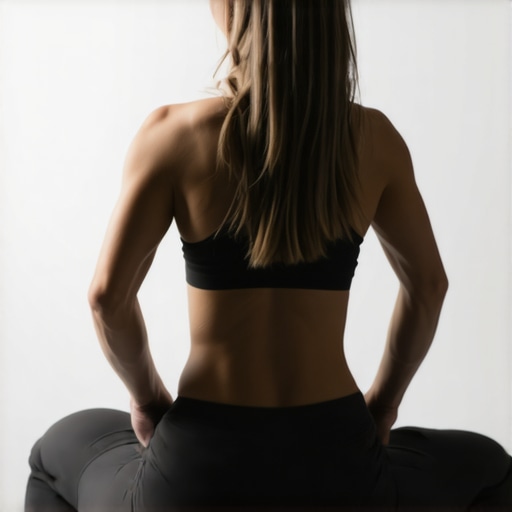
I spent three years trying to touch my toes every single morning because I thought it was the magic cure for my nagging lower back ache. I would lean over, feel that familiar burning pull, and tell myself that if I could just get my fingers an inch lower, the pain would finally vanish. But it never did. In fact, most days, I felt like an old rusty gate afterward. If you have ever wondered why your lower back hurts when you try to stand up straight even after a good yoga session, you are definitely not alone. Today, I want to peel back the curtain on why pulling on those muscles is likely backfiring and show you a better path toward real, lasting relief.
The Day I Realized My Hamstrings Weren’t the Enemy
For the longest time, I treated my body like a collection of separate pulleys and ropes. My back hurt and my hamstrings felt tight, so I figured I just needed to stretch the ropes until they gave in. It is a common mistake, and honestly, it is one I made for far too long. I was actually irritating my sciatic nerve rather than lengthening my muscles. Research by experts like Dr. Stuart McGill has shown that excessive spinal flexion—the exact kind you do when reaching for your toes—can actually increase disc pressure rather than relieve it. You might think you are helping, but you are often just creating more instability in the very area you are trying to protect. Have you ever felt more locked up or stiff after a long stretching session? Drop a comment and let me know, because that was my daily reality for years.
Is all that reaching actually doing more harm than good?
Many of us have been taught that flexibility is the ultimate goal, but the link between mobility and posture is far more nuanced than just being able to fold yourself in half like a piece of paper. When your hamstrings feel like steel cables, your brain might be keeping them tight on purpose to protect a vulnerable lower back. If you force them to let go without addressing the underlying issue, you lose that emergency brake, and your spine takes the full hit. This is why your hamstring stretches are not fixing your tight legs. We need to stop fighting our anatomy and start working with it. By the time we are done here, you will see why that tightness you feel is often a signal for stability, not a request for a stretch.
Forget the Floor and Find Your Neutral Ground
The first thing I had to unlearn was the idea that loose equals good. If your lower back is constantly screaming, it is often because it is doing too much work to keep you upright. Instead of stretching, we need to find your neutral spine. Think of your spine like a mast on a ship. If the guy-wires are uneven, the mast leans. Most of us are leaning because our pelvis is tilted too far forward or back. To find neutral, stand with your feet shoulder-width apart and gently rock your pelvis like a bowl of water, trying not to let any water spill out the front or back. This is where chiropractic adjustments can be a game-changer, as they help reset those joint receptors so your brain actually knows where center is. When I first tried this, I realized I had been standing with a massive arch in my back for years, essentially crushing my own facet joints every time I took a step.
Stop Sucking in Your Stomach and Start Bracing
I used to spend my entire day sucking it in because I thought it made my core look tighter and my back feel supported. I was wrong. Why you should stop sucking in your stomach becomes clear when you realize it actually shuts down your diaphragm. This leads to a shallow breathing pattern that creates more tension in your neck and less stability in your spine. Instead, try bracing. Imagine someone is about to poke you in the ribs; you naturally stiffen your midsection in all directions. This 360-degree expansion is what actually protects your discs. I practiced this while waiting in the checkout line, and eventually, it became second nature. It is also a vital skill to learn how to brace your spine before you sneeze, which is a surprisingly common way people throw their backs out. Bracing creates a natural weight belt of muscle that keeps your spine from buckling under pressure.
Master the Hip Hinge Instead of the Fold
The meat of the movement is the hip hinge. This is the secret to improving mobility and posture in 2025. Most people bend at the waist, which rounds the spine and puts massive pressure on the lower discs. A hinge means your spine stays like a straight, rigid rod, and the movement happens entirely at the hip socket. Think of your hips as the heavy-duty hinges on a door; they are designed to handle the load, whereas your spine is more like a delicate instrument. I remember the first time I applied this while lifting grocery bags. I felt a bit silly sticking my hips back so far, but the relief was instant. My hamstrings finally felt like they were doing their job as powerful movers rather than just being overstretched tethers. By shifting the load to your glutes, you give your lower back the break it desperately needs. This isn’t just about exercise; it is about simple adjustments for a more active life that stop the cycle of micro-injuries every time you pick up a sock off the floor. When you hinge, you use the biggest muscles in your body to do the heavy lifting, protecting the sensitive nerves in your back.
The biggest mistake I see—and one I fell for—is the idea that if a little movement is good, a lot of movement must be better. We have been sold a lie that ‘more’ mobility is always the answer. In reality, your brain often creates tightness as a protective mechanism. If your core is weak or your spine is unstable, your brain will lock down your hips and lower back to prevent you from injury. This is why mobility boosts for posture are not just about getting flexible; they are about teaching your body it is safe to move. When you force a stretch on a muscle that the brain is trying to keep tight for safety, you are essentially fighting your own nervous system. It is a battle you will always lose. Have you ever fallen into this trap where you stretch and stretch only to feel tighter an hour later? Let me know in the comments, because this ‘protective tension’ is the most misunderstood part of recovery.
Your Brain is Using Tightness as a Safety Harness
In my early journey, I treated my body like a car that just needed its alignment checked, but I forgot about the onboard computer. Expert movement coach Gray Cook popularized the ‘Joint-by-Joint’ approach, which suggests that certain joints need stability while others need mobility. When you lose stability in your lumbar spine, your brain ‘borrows’ it from your hips, making them feel like stone. If you just hammer away at those hips without addressing the lack of support in your back, you are effectively cutting the safety harness. This is where why chiropractic care is your secret weapon; it is not just about moving bones, but about communicating with the nervous system to let it know the ‘threat’ is gone. Understanding the difference between muscle soreness and joint inflammation is vital here, as pushing through the wrong kind of pain will only make your brain tighten the harness further.
Why does stretching provide instant relief that disappears in ten minutes?
This is the ‘trap’ that keeps people in a cycle of pain for years. When you stretch, you are stimulating the Golgi tendon organs, which provides a temporary analgesic effect—essentially a natural hit of painkillers. But if the underlying structural issue persists, the brain will re-tighten that muscle the moment you start walking again. This is why expert chiropractic techniques in 2025 focus so heavily on the neurological reset. You also need to be careful with ‘self-adjusting.’ If you are the person who constantly cracks their own back to find relief, you might be creating hypermobility in segments that are already moving too much. You should stop rolling your neck to get rid of cracks because you are likely irritating the nerves further. Instead of chasing the ‘pop,’ focus on targeted mobility exercises that strengthen the end-range of your movement. True progress comes from building stability exactly where you used to feel the most ‘stiff.’
Stop Chasing the Perfect Static Pose
Another nuance people miss is that posture is not a static position you ‘hold.’ The idea of standing perfectly still like a statue is actually incredibly taxing on the body. Real, healthy posture is dynamic. It is the ability to return to a neutral state after movement. If you find yourself constantly checking the mirror, you might notice your hips feel uneven in the mirror. This often is not a bone length issue, but a functional shift because your body is compensating for a lack of mid-back mobility. By utilizing practical chiropractor strategies, you can address these imbalances without the frustration of trying to ‘force’ a straight line. If you are ready to stop the endless stretching and start moving with intent, you can contact us to find a plan that actually sticks.
Pack These Tools to Save Your Back Every Single Day
Once you stop the endless, fruitless stretching, you need a way to maintain those hard-won gains. I don’t go anywhere without a standard lacrosse ball. While foam rollers are great for broad areas, they are often too blunt to reach the specific ‘knots’ that create protective tension. I use a lacrosse ball specifically to pin down tissues in my glutes that might be pulling on my pelvis. Knowing the proper way to use a tennis ball for glute pain (or a lacrosse ball if you are brave) can act as a quick reset when you have been sitting too long. I also recommend a simple resistance band. Dr. Kelly Starrett, author of Becoming a Supple Leopard, emphasizes that creating torque in your joints is the key to stability. By using a band to provide external resistance, you teach your shoulders and hips to ‘screw’ into their sockets, which provides the stability your brain needs to let go of that tightness. This is one of the most effective simple adjustments for a more active life because you can do it while watching TV or even at your desk.
How do I keep these results for the long haul?
Maintenance isn’t about hour-long gym sessions; it’s about the micro-habits that stop the ‘rust’ from setting in. I’ve integrated the daily move to keep your spine young into my morning coffee routine. It takes less than two minutes but signals to my nervous system that I have full range of motion. Consistency is where most people fail because they wait for the pain to return before they do their exercises. Think of it like brushing your teeth for your joints. You should also consider that chiropractic adjustments unlock a pain-free lifestyle not by fixing a one-time injury, but by providing regular check-ins to ensure your ‘onboard computer’—the nervous system—isn’t overreacting to daily stress. When I combine these professional resets with targeted mobility exercises, the results actually stick. You start to notice that you no longer need to ‘hunt’ for that perfect sitting position because your body naturally gravitates toward neutral.
Wearable Tech is Changing the Game for Your Spine
Looking ahead, I see the trend of ‘passive correction’ taking over. We are moving toward a world where improving mobility and posture in 2025 will involve wearable biofeedback sensors that gently vibrate when your shoulders start to creep toward your ears. This takes the cognitive load off you. I’ve experimented with early versions of these, and they are incredibly eye-opening for showing you just how often you slip into ‘tech neck.’ However, tech is only a tool, not a cure. You still need the underlying structural integrity that comes from expert tips for daily adjustments. If you really want to jumpstart this process today, I challenge you to try the 30-second wall squeeze right now. It is the single fastest way I’ve found to reset your upper body after a long day of hunching. Don’t wait for the stiffness to become a spasm; give your body the input it needs before it starts screaming for help.
The Truth I Had to Face About My ‘Steel’ Hamstrings
After years of frustration, I finally had a few ‘lightbulb’ moments that changed everything. First, I realized that my body wasn’t broken; it was just trying to protect me. That ‘tight’ feeling was actually a survival mechanism. If I had known the link between mobility and posture earlier, I would have stopped pulling on my muscles and started building support. Second, I learned that ‘loose’ is useless if you aren’t strong. Creating a stable foundation through mobility boosts for posture is what actually convinces the brain to let go of the emergency brake. Finally, I stopped chasing the ‘pop’ and started chasing quality movement. True relief isn’t about a temporary crack; it’s about practical chiropractor strategies that address how you move every single hour of the day.
My Essential Kit for a Spine That Moves
If you want to move beyond the floor stretch, these are the tools I personally swear by. I always keep a high-density lacrosse ball in my bag because it allows for precision when I need to address glute pain that locks up my pelvis. I also recommend ‘Back Mechanic’ by Dr. Stuart McGill; it is the definitive guide to understanding why your spine behaves the way it does. For daily movement, a set of heavy-duty resistance bands is non-negotiable. They are the best way to practice targeted mobility exercises by teaching your joints how to stay centered under tension. These aren’t just gadgets; they are the bridge between feeling fragile and feeling athletic again.
Your Path to a Back That Doesn’t Control Your Life
It is easy to feel defeated when your body feels like an old, creaky house, but you have more control than you think. You don’t need to be a gymnast to have a healthy spine; you just need to stop fighting your own anatomy. By prioritizing stability and seeking out chiropractic adjustments when your system needs a reset, you can break the cycle of chronic stiffness. Your future self—the one who can pick up a bag of groceries or chase the kids without fear—is waiting for you to make these simple adjustments for a more active life. If you are ready for a plan tailored to your specific needs, feel free to contact us and let’s get you moving again. Have you ever noticed that your back feels tighter right after a long stretching session? Let me know in the comments!