
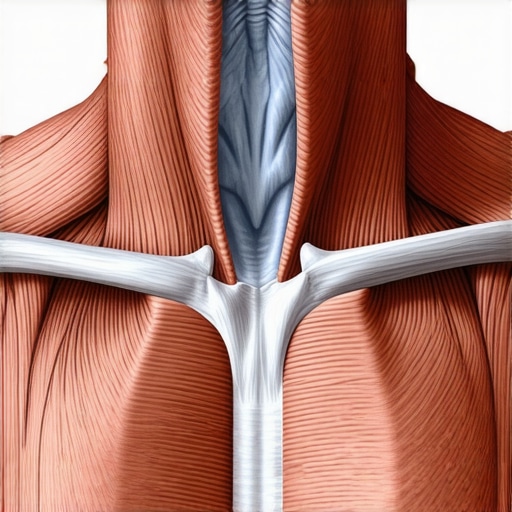
I remember the moment clearly. I was sitting cross-legged on my couch, feeling that strange, persistent tightness in my neck that refused to go away. It wasn’t just tension; it was a dull ache that seemed to tighten its grip every time I took a deep breath. That lightbulb moment hit me hard — my breathing habits weren’t just about oxygen; they were quietly sculpting my neck muscles, especially my scalenes, into knots.
The Connection Between Breathing and Neck Tightness
As someone who’s delved into the nuances of posture and mobility, I realize now how sneaky this issue can be. Our breathing patterns, often unnoticed, directly influence the muscles in our neck and shoulders. When I started paying attention, I noticed I was shallow breathing, relying heavily on my upper chest rather than deep diaphragmatic breaths. Over time, this habit created a cycle where my scalenes — those tiny yet powerful muscles on the sides of my neck — became tight, tense, and often painful.
It’s a common mistake many of us make early on: dismissing breathing as an automatic function. But, as I learned, poor breath habits can significantly contribute to neck tightness and even headaches. Incorporating proper breathing techniques can lead to immediate relief and long-term pain reduction. Curious about how to break this cycle and breathe better? Stick around — I’ll walk you through it.
Is Breathing Really That Important for Neck Health?
Initially, I thought my tense neck muscles were just stress or poor posture. But after a mistake I made early in my journey — ignoring my breathing entirely — I realized I needed to look deeper. A study published in the Journal of Bodywork and Movement Therapies highlights how dysfunctional breathing can exacerbate neck and shoulder tension (source: the link between mobility and posture). Small adjustments in my breathing pattern made a big difference, alleviating that stubborn tightness.
If you’ve felt that nagging tightness in your neck, especially when resting or after long hours at the desk, you’re not alone. This is a common yet often overlooked issue, stemming from habits we develop without realizing it. My own experience taught me that understanding and optimizing breathing is a crucial step towards pain relief and better mobility.
Ready to explore how simple changes to your breathing habits can unlock relief from neck tightness? Let’s dive into practical strategies that I swear by, which you can start implementing today. And if you’ve ever wondered whether your breathing is contributing to your discomfort, check if you’ve been unknowingly holding your breath or shallow breathing — these habits might be the root of your problem.
Start with Conscious Breathing
Begin by sitting comfortably, with your back straight but relaxed. Place one hand on your chest and the other on your belly. Take a deep breath through your nose, focusing on expanding your diaphragm rather than your chest. Feel your belly rise as you inhale. This is diaphragmatic breathing, which calms the nervous system and reduces tension in the neck muscles. I practiced this after a hectic morning; at first, it was awkward, but within a few minutes, I felt a noticeable loosening of my neck tightness.
Practice Slow, Controlled Exhales
Exhale slowly through pursed lips, aiming for twice the duration of your inhale. This slows your heart rate and encourages muscle relaxation. For instance, inhale for four seconds, then exhale for eight seconds. During one busy afternoon, I paused between meetings to do this; the longer exhale eased my ongoing neck ache and helped me return to work with a clearer mind.
Incorporate Breathing Breaks into Your Routine
Set reminders every 30 minutes to take intentional breaths. Even a quick one-minute session can reset muscle tension. Think of it as rebooting your body’s tension system, much like restarting a computer. I kept a sticky note on my monitor; each break prevented my neck from tightening during long hours at the desk. Over time, this habit reduced my dependence on painkillers for neck discomfort.
Use Visual Cues to Reinforce Good Habits
Place a small mirror near your workspace or on your phone to remind you to keep your head aligned. When you catch yourself slouching or tensing your neck, take a deep breath and realign. I found that catching my posture early and correcting it with mindful breathing significantly decreased my neck stiffness.
Engage in Targeted Mobility Movements Post-Breathing
After breathing exercises, add gentle neck and shoulder stretches to release residual tension. Movements like slow head turns and shoulder rolls complement your breathing practice. I combined these after work, noticing a more profound, lasting relaxation in my neck muscles. Try this sequence daily, and you’ll find your muscular tension dissolving faster.
Integrate Breathing into Movement and Meditation
Use mindful movement routines—like yoga or tai chi—that emphasize breath control. These practices teach your body to associate deep breathing with relaxation, reinforcing the calming effect. I dedicating 10 minutes daily; over a few weeks, my neck tightness diminished, and my posture improved naturally. Check out mobility exercises that support postural health alongside breathing techniques.
Many people believe that chiropractic adjustments are a quick fix for all posture and mobility issues, but the truth is far more nuanced. A common misconception is that a single adjustment can reset your entire body, resolving longstanding problems instantly. In reality, adjustments are a part of a larger, integrated approach that includes movement, awareness, and consistent habits. This myth can lead to disappointment and a false sense of security, making individuals overlook the importance of ongoing care and self-managed mobility routines. For example, relying solely on adjustments without addressing underlying movement patterns often results in short-term relief but long-term recurrence of issues. To truly optimize posture and mobility, it’s essential to view adjustments as a catalyst—not a cure-all—integrated with targeted mobility exercises and lifestyle changes, such as those discussed in mobility exercises.
Maintaining the gains you make through posture correction and mobility exercises requires deliberate effort and the right tools. Over the years, I’ve curated specific equipment and adopted methods that ensure my progress doesn’t just plateau but continues to evolve. One game-changer for me has been investing in a high-quality foam roller, specifically the TriggerPoint GRID Foam Roller. Its textured surface allows for deeper myofascial release, particularly targeting stubborn tension in areas like the thoracic spine and hips, which are crucial for long-term posture health.
Complementing physical tools, I lean heavily on digital resources to stay on track. I use MobilityWOD, a comprehensive app offering tailored routines that incorporate evidence-based stretches and strengthening exercises. This platform not only keeps my routine fresh but also ensures I’m progressing safely, especially when addressing long-term mobility concerns. The app’s guided sessions are built upon current research, like the insights from the targeted mobility exercises guide, which emphasizes personalized approaches for sustainable improvement.
To monitor my progress and identify areas needing more focus, I track my mobility sessions with a simple wearable device — the WHOOP Strap. Its detailed analytics on strain, recovery, and sleep help me understand how my daily habits influence my posture and overall mobility. For example, noticing a dip in recovery metrics prompts me to incorporate more restorative practices, like breathing exercises and gentle stretching.
When it comes to routine maintenance, consistency trumps intensity. Incorporating short mobility drills into my daily schedule—such as the 2-minute wall squeeze exercises—keeps my muscles active and prevents chronic tightness. I’ve found that setting reminders through my smartphone ensures these habits stick, even during busy days.
Looking ahead, I believe technology will play an ever-increasing role in personal mobility management. Advances in biofeedback devices may soon offer real-time correction cues, making self-maintenance more intuitive and less guesswork-based. The integration of virtual reality in mobility training is also on the cusp of transforming how we engage with corrective routines, making sessions more interactive and enjoyable.
How do I maintain my mobility and posture improvements over time?
The key lies in habit evolution. Regularly updating your toolkit—whether it’s new tech like smart wearables or novel exercises—prevents stagnation. I suggest trying a challenging mobility hack, such as the simple adjustments for a more active life. For instance, integrating a daily 5-minute deep diaphragmatic breathing sequence combined with targeted stretches can boost long-term resilience against tension buildup. Don’t hesitate to experiment with new techniques; maintaining awareness and adaptability is essential for lasting progress in posture and mobility. Remember, consistency with a few key tools and a mindset geared toward proactive maintenance will ensure your efforts stand the test of time.
Lessons Only the Inner Circle Knows About Posture
One revelation I had is that focusing solely on external exercises without addressing the root cause—your breathing habits—misses a vital piece of the puzzle. It’s tempting to chase after the latest mobility gadget, but without cultivating awareness of how you breathe throughout the day, progress stalls. My breakthrough came when I realized that sustained neck tightness often stems from subconscious shallow breathing, which tightens my scalenes over time.
Another insight: consistency trumps intensity. Small, mindful breathing adjustments daily can compound into significant posture improvements. I used to think ‘more is better,’ but I learned that deliberate, calm breaths during regular breaks reshaped my muscle memory more effectively than sporadic strenuous workouts.
Third, don’t underestimate the power of simple cues. Adding visual reminders—like a mirror or a sticky note—kept me conscious of my head position and breathing. This small shift created an ongoing feedback loop, gently retraining my habits without overwhelming myself.
Finally, integrating targeted mobility exercises post-breathing routines amplified my results. Movements like gentle neck stretches or shoulder rolls, performed after deep diaphragmatic breathing, helped dissolve residual tension, leading to lasting relief. This combo transformed my approach from reactive to proactive management of neck and posture health.
My Toolbox for Lasting Posture Improvements
For anyone committed to real change, I recommend exploring targeted mobility exercises that complement breathwork and posture alignment. Using tools like a high-quality foam roller such as the TriggerPoint GRID has been instrumental in releasing fascia and preventing re-tension.
Digital apps like MobilityWOD offer guided routines that keep me engaged and progressing safely. Tracking my recovery with devices like the WHOOP Strap helps me optimize my schedule around active days and rest days, ensuring I sustain improvements over time.
In addition, experimenting with quick, daily hacks—like the wall squeeze—ensures mobility maintenance becomes effortless and integrated into my routine.
Embrace the Movement to Transform Your Future
If you’re tired of neck tension and poor posture controlling your day, remember that small, mindful habits hold the power to rewrite your body’s story. Your journey toward mobility and pain-free living starts with that first conscious breath. Every exhale is a step closer to releasing old patterns and building resilience.
Are you ready to incorporate breathing into your posture routine and experience the freedom of a more aligned, relaxed body? Start today, experiment with new techniques, and watch how your posture transforms from the inside out. Your best self is just a deep breath away.