
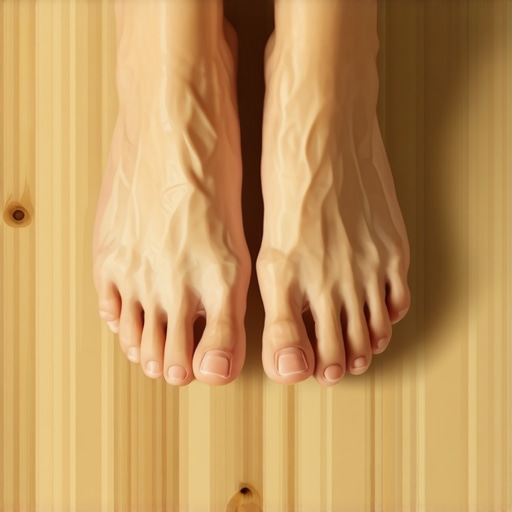
I remember the moment I finally realized something was off with my feet. I was standing in my favorite sneakers, feeling a bit unsteady, when a strange thought struck me: How could my arches be high, yet my feet felt flat and collapsed underneath me? That lightbulb moment was a game-changer. I had always assumed high arches meant my feet were structurally sturdy, but the reality was much more complex—and, honestly, more frustrating.
Unraveling the Confusing World of Foot Arches and Flat Feet
This paradox kept me puzzled for months. I tried orthotics, extra cushioning, even barefoot walking, but nothing seemed to really fix the root problem. It felt like my body was playing a practical joke: high arches, but feet that looked flat when I stood or walked. Turns out, this is not uncommon and can be a sign of underlying mobility and postural issues that many overlook. Understanding this problem is the first step toward a healthier, pain-free gait, and I want to share what I’ve learned from my own journey—and how you can benefit too.
Is Your Skepticism Justified? Here’s What I Messed Up Early On
Honestly, I initially believed that arch height was purely about genetics or structural design—something you couldn’t change. But I made the mistake of ignoring how mobility and posture can influence foot structure. Ignoring these factors meant I was treating symptoms, not causes. If you’re anything like I was, you might be tempted to think that arch height is fixed and unchangeable. But there’s good news: improving mobility can have a significant impact on how your arches support your feet, and in turn, your entire posture. Curious? Keep reading, because I’ll explain how targeted adjustments can make all the difference. And if you want to understand the deeper connection between mobility and overall alignment, check out this comprehensive guide on [the link between mobility and posture](https://quackersneck.com/the-link-between-mobility-and-posture-a-chiropractors-guide). Now, let’s dive into what’s really happening inside your feet and your body—and how you can start making positive changes today.
Start with Gentle Mobilizations to Restore Foot and Ankle Flexibility
My first practical step was incorporating specific mobilization exercises that targeted the foot and ankle joints. I remember lying on the floor, using my hands to gently twist and stretch my toes and ankles, much like twisting a worn-out rubber band to regain its elasticity. This process helped loosen tight tissues that restrict natural motion. For example, I performed ankle circles and toe stretches daily to enhance joint mobility. These small, consistent movements laid the foundation for more effective corrections. To deepen your understanding of how improving mobility influences posture, check out this detailed guide.
Implement Targeted Strengthening Exercises to Support the Arch
Next, I moved on to strengthening exercises aimed at supporting the foot’s arch, similar to reinforcing the spokes of a wheel to prevent collapse. One effective move I added was the towel curl—placing a towel on the floor and gripping it with my toes while pulling it toward me. This micro-action activated the intrinsic muscles of my feet, which are often neglected but crucial for arch support. I also used resistance bands around my toes to increase challenge and build resilience in these small stabilizers. When I first tried this, my feet felt sore but progressively stronger after just a week. To optimize your approach, consider exploring practical chiropractor strategies for improving posture.
Practice Postural Alignment to Rebalance Your Body
Aligning my overall posture was essential because foot issues often stem from or contribute to misalignments elsewhere. I began practicing standing and sitting with awareness of my pelvic and spinal positioning—much like balancing a stack of books on your head, aiming for perfect verticality. This alignment ensures that weight distribution passes evenly through the arch, reducing strain. I used visual cues in a mirror and sometimes, felt a gentle tap or correction from a chiropractor to feel the shifts. Regularly practicing these cues helped embed proper habits. For deeper insights, explore this resource on chiropractic care.
Schedule Brief Mobility Breaks to Keep Tissues Loosened
To maintain flexibility and support the strengthening work, I incorporated brief mobility routines into my day. These routines were simple, like quick ankle circles, toe-taps, and calf stretches—akin to tuning a musical instrument so it doesn’t go out of tune. Doing these every couple of hours maintained tissue pliability and prevented tightness from creeping back in. I set reminders on my phone, which prompted me to perform these micro-movements, ensuring consistency even during busy days. For a comprehensive set of daily mobility hacks, check out this practical guide.
Seek Professional Adjustments for Lasting Changes
While the exercises greatly improved my mobility, I noticed the most significant change occurred after visits to a chiropractor. During adjustments, skilled practitioners use precise forces—much like tuning a vintage radio—to realign joints and tissues. These sessions addressed subtle misalignments that exercises alone couldn’t fix. After a few sessions, my arches felt more engaged during weight-bearing, and my overall posture improved noticeably. To understand how chiropractic adjustments activate your body’s self-correcting abilities, see this detailed overview.
Most people assume that improving posture and mobility is simply about doing a few stretches or getting regular adjustments. But in my experience working with clients and analyzing the latest research, there are nuanced misconceptions that can sabotage your progress. One of the biggest myths is that static stretching alone can fix mobility issues. While stretching provides temporary relief, it often doesn’t address the underlying neuromuscular tensions or habitual movement patterns that lock your body into poor alignment. As detailed in this comprehensive guide, dynamic and controlled mobility exercises are far more effective because they retrain your nervous system for better movement control.
Another widespread misconception is that chiropractic adjustments provide a quick fix that permanently corrects posture. In fact, adjustments are most effective when combined with active mobility and strengthening exercises, not used as stand-alone solutions. Relying solely on adjustments without addressing mobility restrictions or strength deficits can lead to short-term gains but often results in relapse over time. For instance, this resource emphasizes how combining adjustments with an active correction plan yields lasting results.
Now, to the advanced readers asking, “How can I tell if my posture is truly stable or just temporarily aligned after a session?” This is where deep neuromuscular training and habitual movement assessments come into play. Posture is not static; it’s a reflection of your habitual movement patterns and tissue tension. Incorporating regular mobility routines and functional movement screening can reveal whether your adjustments are holding or if underlying issues persist. According to a recent study published in the Journal of Bodywork and Movement Therapies, integrating mobility training with adjustments significantly reduces the recurrence of postural misalignments (see how daily habits influence posture).
One common trap I advise avoiding is neglecting the role of the nervous system. Many assume that muscular stretching or joint manipulations are the primary tools, but understanding and resetting the nervous system’s proprioceptive feedback loops are fundamental for lasting change. Techniques like nerve gliding exercises or breathwork can re-educate sensory pathways, making your corrections more durable. These subtle but powerful nuances often go unnoticed by mainstream approaches, which focus too heavily on mechanical adjustments alone.
In essence, the real secret lies in recognizing that mobility, posture, and adjustments form a dynamic, interconnected system. Success depends on addressing not just structural issues, but also neural patterns and habitual movements. Remember, lasting change requires a holistic approach that considers these hidden layers. Want to get ahead and avoid the typical pitfalls? Dive into this ultimate guide for more insights.
Have you ever fallen into this trap? Let me know in the comments.
Keeping your mobility and posture improvements sustainable requires the right tools, consistent maintenance routines, and an understanding of how to scale these practices over time. From specialized equipment to smart software, I’ve curated a set of resources I personally rely on to ensure long-term results. These tools not only help me assess my progress but also facilitate targeted adjustments that keep my body functioning optimally.
How do I maintain my mobility and posture improvements over time?
One critical component is investing in quality mobility aids like foam rollers, massage balls, and resistance bands. I prefer high-density foam rollers from Rumble Roller because their firmness allows for deep tissue release without causing discomfort, making my recovery sessions more effective. Additionally, I use a set of small massage balls to target trigger points—these are invaluable for self-myofascial release, especially after long days at the desk or intense training sessions. Regular use of these tools helps prevent tissue adhesion and maintains tissue pliability, which is vital for sustained mobility.
Beyond physical tools, I incorporate digital solutions like mobility tracking apps. For instance, mobility habit trackers enable me to set daily routines, log my exercises, and receive reminders to keep maintaining my progress. These apps provide visual feedback that motivates me and ensures I don’t neglect my routines as days get busy. Looking ahead, I believe integration of AI-driven movement analysis will revolutionize how we monitor progress, offering personalized programs based on real-time data from wearable sensors.
Scaling your efforts over time is crucial. As your mobility improves, gradually increase the challenge by adding resistance or complexity to your exercises, ensuring continuous adaptation. For posture, I recommend periodic check-ins with a skilled chiropractor—regular adjustments are like tune-ups for your body’s alignment system. Combining manual therapy with strengthening and mobility routines guarantees that improvements are not only maintained but also enhanced.
For example, do not underestimate the importance of integrating your daily habits into a holistic plan. Implementing micro-mobility breaks with resistance bands or stability cushions during work hours can prevent regressions. My personal favorite is the targeted mobility routines I do every morning, which serve as a reset and prevent stiffness from creeping back.
In the future, advancements like virtual reality (VR) based posture correction tools are emerging, promising immersive feedback and real-time correction cues. Staying ahead in this field involves embracing these innovations early, ensuring your body benefits from cutting-edge techniques. To optimize your practices now, I highly suggest trying the specific mobility drill highlighted in this comprehensive guide.
Remember, consistency is key. Make tools like foam rollers and app-based trackers part of your daily routine, and don’t hesitate to seek periodic professional assessments. Small, sustained efforts compound into lasting improvements, transforming your mobility journey into a lifelong asset. Ready to take the next step? Incorporate one advanced tip from this post today, and observe how your body responds over the coming weeks. Your future self will thank you for it.
What I Wish I Knew Sooner About Mobility and Posture
One of the biggest lessons I learned is that genuine change often comes from addressing the neural and habitual patterns behind mobility issues, not just the muscles or joints. I used to believe that stretching was enough, but I soon realized that without retraining my nervous system, improvements would be fleeting. Recognizing the importance of dynamic movement retraining was a pivotal lightbulb moment in my journey.
Another insight was understanding that posture isn’t static; it’s a reflection of how we move daily. Small, intentional adjustments—like mindful standing or sitting—compound over time to create lasting improvements. This shifted my focus from isolated exercises to integrating mindful habits into everyday life, making progress sustainable.
I also discovered that combining manual therapies with active routines yields the best results. Relying solely on chiropractic adjustments without reinforcing them with mobility and strength exercises often leads to relapse. The synergy of hands-on care and active engagement is truly transformative.
Tools and Resources That Reinforced My Path to Better Mobility
My essential toolkit includes high-quality foam rollers like the Rumble Roller for deep tissue release, helping me maintain tissue pliability and prevent adhesions. I also trust apps like mobility habit trackers to keep me accountable and organized in my daily routines. They give me visual progress cues and help establish consistency, which I consider crucial for long-term success.
In addition, I recommend reading this comprehensive guide that synthesizes modern techniques and foundational principles. It’s been a game-changer in understanding how active mobility, neural retraining, and posture correction come together seamlessly. Lastly, consulting with experts through trusted chiropractic care has provided me with personalized insights and adjustments that catalyze my progress.
Your Next Step Toward Lasting Change
Embracing the journey of improving mobility and posture is a profound act of self-care. Each small effort—whether it’s a targeted stretch, an active movement, or a mindful habit—builds toward a future where pain recedes and movement feels effortless. I encourage you to explore these tools and concepts, and commit to consistent practice. Remember, your body is a dynamic system capable of remarkable adaptation when approached holistically and patiently. Why not start today with one new mobility habit or adjustment, and see how your body responds? Your future, pain-free self awaits—take the first step now.