

I remember landing in London after an eight-hour red-eye, feeling like someone had driven a railroad spike directly into my tailbone. I couldn’t even stand up straight to get my carry-on. It wasn’t just typical plane stiffness; it was a deep, throbbing ache that made every step through Heathrow feel like a marathon. For years, I just assumed this was the tax we paid for travel. I was wrong. The good news? You don’t have to spend your first day of vacation hobbling or searching for a pharmacy. Today, we’re going to look at why that tiny bone at the base of your spine causes such massive trouble and how a few simple shifts in your movement can save your trip.
Why Modern Airplane Seats Hate Your Butt
Let’s be honest: economy seats aren’t designed for humans; they’re designed for cargo that breathes. When you’re wedged into that C-shaped bucket, your pelvis naturally tilts backward, putting direct, relentless pressure on your coccyx. I made a huge mistake early on by trying to hold ‘perfect’ upright posture for six hours straight, but why your perfect posture is actually causing muscle fatigue became painfully clear the moment I tried to stand up. My muscles were so locked from ‘trying’ to be straight that they actually pulled my tailbone into a worse position. According to the Cleveland Clinic, coccydynia—that’s the fancy medical term for tailbone pain—is almost always aggravated by prolonged sitting on hard or poorly designed surfaces. It is a structural nightmare. Much like learning the specific way to sit in a car for long commutes to avoid sciatica, airplane survival requires a strategy that goes beyond just ‘grinning and bearing it.’ Have you ever found yourself dreading the descent not because of the turbulence, but because you knew you’d have to actually stand up and walk to baggage claim?
Is a pain-free flight actually realistic?
You might be skeptical. You’ve tried the neck pillows, the aisle seats, and maybe even those weird inflatable footrests that never quite fit. But the secret isn’t in the gadgets; it’s in how you prep your joints and how you move while in the air. By following the ultimate guide to improving mobility and posture in 2025, you can prime your body for the physical stress of a long haul. If you don’t use the best stretching order to prepare for a long flight, you’re basically walking into a trap. We are going to fix that today by looking at the specific adjustments that take the weight off your spine.
Stop Sitting Directly on Your Pain Point
The biggest mistake I see travelers make is trying to ‘sit soft.’ They lean back into the cushion, thinking the padding will save them. In reality, that soft foam collapses, and the hard plastic frame of the seat becomes a hammer hitting your tailbone with every bit of turbulence. You need to create an ‘air gap.’ By intentionally using the pelvic tilt move for instant pregnancy back relief, you rotate your pelvis forward. This shifts the weight onto your hamstrings and sit-bones, effectively taking the coccyx out of the line of fire. It feels like you are sitting on your thighs more than your glutes, which is exactly the point. This adjustment prevents the seat from acting like a nutcracker on the base of your spine.
The DIY Seat Wedge That Saves Your Spine
Since you cannot exactly bring a full-sized office chair on the plane, you have to improvise. I always travel with a thick hoodie or a firm travel pillow. Do not put it behind your lower back like a lumbar roll—at least not yet. Instead, fold it into a firm square and place it toward the front of the seat pan. When you sit on the front half of your sit-bones, your tailbone hangs off the back of the wedge. This mimics the best sitting position for lower back disc bulges by maintaining a neutral curve in your lumbar spine and keeping the tailbone floating in space.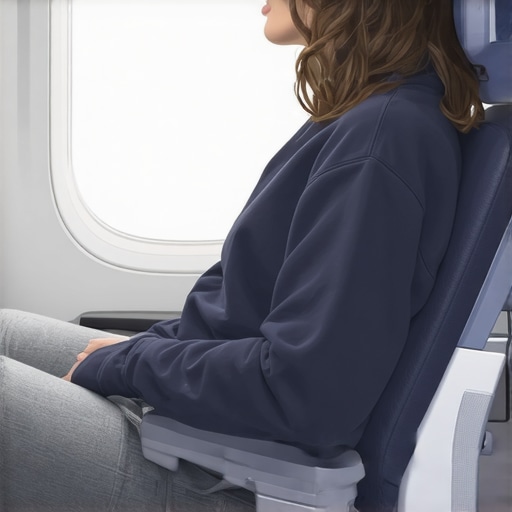 On a flight to Tokyo last year, I was three hours in when the familiar ‘spike’ started. I looked ridiculous folding and refolding my sweatshirt until I got the height right. But once I hit that sweet spot where my tailbone was not touching the seat, the throbbing stopped within twenty minutes. This is one of those mobility hacks simple adjustments for a more active life that sounds like a simple trick but is actually grounded in basic biomechanics. If the bone is not compressed against a hard surface, the inflammatory cycle cannot trigger.
Move Your Hips While the Fasten Seatbelt Sign is Off
Static loading is the enemy of a happy spine. Even with a perfect wedge, your tissues will eventually complain if they do not see movement. You need to get up. I am not talking about a quick dash to the restroom; I am talking about a purposeful movement break. Find a spot in the galley and go through a modified version of the 15-minute flow to open up sticky hips. Focus on your hip flexors. When your hip flexors get tight from sitting, they pull on your pelvis, which in turn yanks on the muscles surrounding your tailbone. You should also learn how to use your breath to relax your pelvic floor while you are standing there. Most of us ‘grip’ our glutes when we are stressed, which creates a vice-grip on the coccyx. Deep belly breaths help release that tension. Once you land, performing the side-lying stretch that resets your si joint can help realign the pelvis after hours of vibration and compression.
Most people assume that if their tailbone hurts, the solution is to stretch the muscles around it as hard as possible. You’ll see travelers in the terminal trying to touch their toes or pulling their knees to their chest. But here is the nuance: why stretching your hamstrings might actually make your back pain worse is a concept many miss. When you yank on those hamstrings, you are often just creating more tension on the sacrotuberous ligament, which connects directly to your tailbone. Instead of fixing the tightness, you are effectively playing tug-of-war with a bone that is already inflamed.
I used to be the traveler who thought I could just adjust my way out of it by cracking my own back in the seat. This is a huge trap. In reality, the truth about cracking your own knuckles and neck at home applies to your lower spine too—you’re likely just moving the joints that are already hyper-mobile while the stuck ones stay stuck. This is where learning how chiropractic adjustments enhance posture and mobility makes the difference. A professional looks for the specific stuck segment rather than just chasing the sound of a pop.
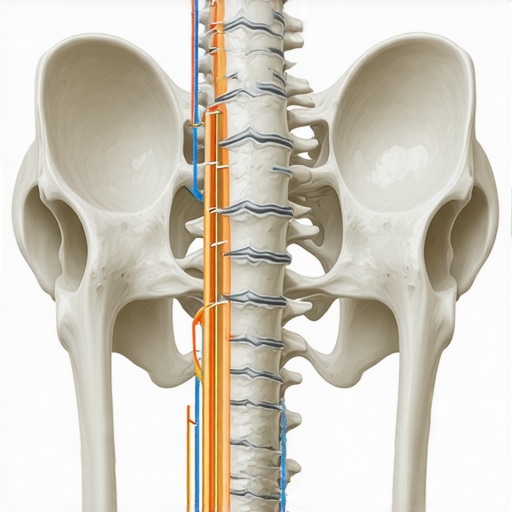
Can a stiff mid-back really cause pain at the very bottom of your spine?
It sounds counterintuitive, but your body is a closed kinetic chain. A 2021 study published in the Journal of Manual & Manipulative Therapy highlights how regional interdependence—the idea that one area affects another—means your thoracic stiffness dictates your pelvic tilt. If your ribs are locked up from holding a tablet, your lower back has to overcompensate. This is similar to why your wrist hurting might be a mid-back problem; the pain is just the end of the fuse, not the spark. If you don’t address the whole system using the ultimate guide to improving mobility and posture in 2025, you’re just putting a band-aid on a structural leak.
One common oops factor I see constantly is over-bracing. People hear about core stability and spend the whole flight sucking in their gut. This creates massive intra-abdominal pressure that pushes down on the pelvic floor. Think of it like a balloon: if you squeeze the middle, the pressure goes to the ends. You need to understand the link between mobility and posture a chiropractors guide to find that balance between support and relaxation. These mobility hacks simple adjustments for a more active life aren’t about being rigid; they’re about being adaptable. Have you ever fallen into the trap of trying to sit perfectly straight only to end up in more pain than when you started? Let me know in the comments. I’d love to hear which travel hacks actually failed you so we can debunk them together.
How can I keep my tailbone happy for the long haul?
Consistency is the only way to survive a life of frequent travel without becoming a permanent resident of your local clinic. I used to think of travel recovery as something I did *after* the trip, but now I view it as a continuous cycle. You need to focus on mobility boosts for posture expert tips for daily adjustments to keep your pelvis from locking into that dreaded C-shape permanently. If you only care about your spine when it hurts, you’re already behind. My personal maintenance routine involves a weekly check-in with my body to see if my sit-bones feel balanced or if I am favoring one side—a common habit that leads to the the hidden reason your hips feel uneven in the mirror. By keeping the joints fluid through revolutionize your posture with targeted mobility exercises, you ensure that when you finally do hit that airplane seat, your tissues have the resilience to handle the compression.
The three travel tools that actually live in my carry-on
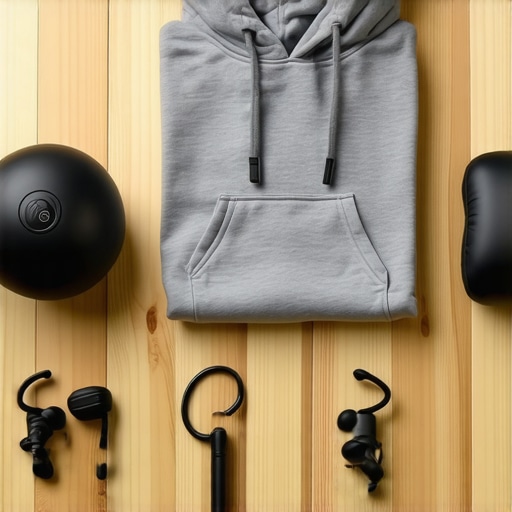
I’ve tried the $100 specialized ‘orthopedic’ travel cushions, and most of them are too bulky to be practical. Personally, I swear by a simple, high-density EVA foam lacrosse ball. It’s small enough to fit in a jacket pocket and is the ultimate tool for at-gate maintenance. I use it to release my gluteus medius while standing at the boarding gate. This prevents the muscles from pulling on the sacrum during the flight. I also avoid certain ‘popular’ fixes; for instance, the truth about foam rolling your lower back is that it can actually cause more inflammation in the tailbone area if you’re too aggressive. Instead, I focus on the the single most effective stretch for people who sit all day to keep my hip flexors from becoming guitar strings. A 2022 report in the Journal of Chiropractic Medicine notes that seat vibration in aircraft significantly increases the rate of disc height loss, which is why I also use a thin, inflatable seat pad set to about 25% capacity—just enough to dampen the engine’s micro-vibrations without adding height that messes with my legroom.
Looking ahead, I predict we’re going to see a massive shift toward ‘smart’ travel wear. We are already seeing the prototype stages of leggings and trousers with built-in haptic sensors that vibrate when your pelvic tilt exceeds a certain threshold. Until that becomes mainstream, you have to be your own sensor. This is why chiropractic care is your secret weapon for better posture; it recalibrates your internal ‘level,’ so you actually know when you’re sitting crookedly. Once you land, don’t just head for the hotel bed. Take ten minutes to perform the correct way to stretch your neck after a long flight alongside some deep lunges. This resets the entire kinetic chain from your skull to your coccyx. I challenge you on your next flight to try the ’10-second glute squeeze’ every 30 minutes. Simply squeeze your glutes as hard as you can for ten seconds, then release. It forces blood flow into the compressed tissues and resets your pelvic position instantly. If you find your back clicking during these movements, check out the morning routine that stops your back from clicking to smooth out those transitions.
The Brutal Reality of ‘Perfect’ Airplane Posture
The most humbling lesson I ever learned was that ‘trying’ to have good posture is a recipe for disaster. When you force your spine into what you think is a straight line, you’re often just trading one type of strain for another. I spent years gripping my core like a shield, only to realize that why your perfect posture is actually causing muscle fatigue is the exact reason my tailbone throbbed by hour three. Real mobility isn’t about being a statue; it’s about being fluid enough to adapt to that cramped economy seat.
Another ‘lightbulb moment’ came when I stopped looking at my tailbone as an isolated island of pain. It is deeply connected to everything above it. If you’ve noticed why your middle back stiffens up every time you drive over an hour, you’re seeing the top-down effect on your pelvis. Your spine works as a single unit, and a stiff ribcage will eventually force your tailbone to take the brunt of the load. Understanding the link between mobility and posture a chiropractors guide helped me see that the tailbone is just the victim of what’s happening in the mid-back.
The Three Items That Always Make My Carry-On
I don’t leave the ground without my high-density lacrosse ball. It’s the ultimate tool for gate-side maintenance, allowing you to release the gluteal tension that pulls on your sacrum. This is one of those mobility hacks simple adjustments for a more active life that takes up zero space but saves your entire first day of vacation. I also swear by a firm, foldable hoodie—not for warmth, but to create that essential ‘air gap’ for your coccyx.
Finally, I always keep a digital copy of the ultimate guide to improving mobility and posture in 2025 on my phone. Having a set of go-to moves for the hotel room helps me decompress the second I check-in. If you want to take it a step further, learning to enhance your posture with expert chiropractic techniques in 2025 can help you identify if your travel pain is a simple muscle strain or a deeper alignment issue.
#IMAGE_PLACEHOLDER_E#
Your First Step Toward a Pain-Free Landing
Travel is supposed to be about the destination, not the recovery time. By shifting your focus from ‘sitting still’ to ‘moving smart,’ you can finally break the cycle of post-flight hobbling. Remember that your body is resilient, but it needs a strategy to handle the unnatural environment of a modern airplane. Use these adjustments, breathe through the tension, and keep your spine moving. You have the tools now to make your next trip about the sights you see, not the pain you feel. Have you ever tried one of those expensive donut pillows only to find it made your tailbone feel worse? Let me know in the comments—I’d love to hear your travel wins and fails!