
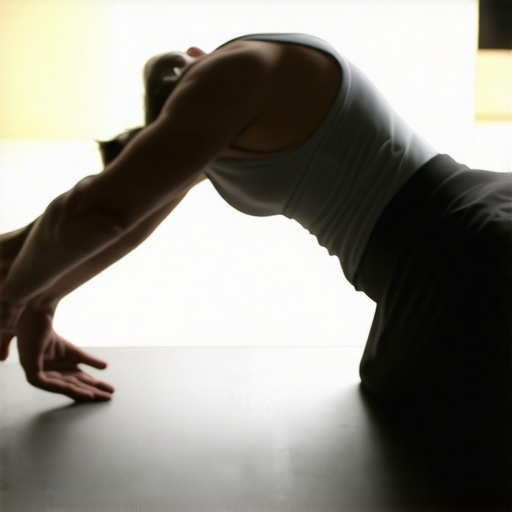
I remember trying to peel myself out of my desk chair after a deadline-heavy Tuesday and feeling like my hip sockets were filled with sun-baked clay. I was thirty-four, not eighty, but I was hobbling toward the kitchen like I’d just finished a marathon in lead boots. It’s a frustrating, invisible prison. You want to be active, but your body says ‘no’ before you even get your shoes on. This is exactly why your hip feels stuck when you try to cross your legs or why simply bending over to tie your laces feels like an Olympic event. I spent years thinking I just had ‘bad genetics.’ I tried everything—pounding my glutes with massage guns and doing the classic toe-touch stretch for hours. Big mistake. I eventually learned why stretching your hamstrings might actually make your back pain worse when the real culprit is a shortened, angry psoas. Today, I’m sharing the exact sequence that changed everything for me. It’s a 15-minute flow designed to melt that ‘stuck’ feeling and restore your natural stride. [image_placeholder_1]
Stop Letting Tight Joints Dictate Your Daily Routine
We often treat our hips like they are static hinges, but they are complex, three-dimensional ball-and-socket joints that crave variety. When we sit for eight hours, those sockets practically fuse in one position. According to a study published by Harvard Health, prolonged sitting causes the hip flexors to remain in a shortened state, leading to a cascade of postural issues and chronic lower back tightness. It is a domino effect of discomfort that eventually impacts how you walk, stand, and even sleep. I want to show you that you don’t need a 90-minute yoga class or an expensive gym membership to fix this. You need 15 minutes and a tiny bit of floor space. We are going to focus on active mobility—moving the joint through its full range of motion while maintaining control—rather than just ‘hanging out’ in a passive, lazy stretch. This is essentially the simple hip reset for people who sit for 8 hours that I wish I had discovered a decade ago. Have you ever felt that weird ‘click’ or catch in your hip just from standing up too fast?
Does this 15-minute routine actually live up to the hype?
I get it. You’ve heard ‘just stretch more’ a million times. I was the biggest skeptic on the block. I thought if an hour of stretching didn’t work, how could 15 minutes make a dent? The difference lies in how you move, not how long you do it. Most people make the mistake I did: focusing on the wrong muscles or using too much force. If your hips are tight, your spine is likely overcompensating, which is the link between mobility and posture many people overlook. We are going to solve that today by re-educating your nervous system to let go of that protective tension. It’s time to stop fighting your body and start working with it. Let’s dive into the first movement of the flow.
Stop Fighting Your Muscles and Start Retraining Your Brain
The reason your hips feel like they are made of concrete isn’t just about the muscle length; it is about your nervous system keeping them in a protective lockdown. To break this cycle, we need to stop the aggressive yanking and start using precise, neurological cues. Think of your hip joint like a rusted bolt on an old car. If you just pull as hard as you can, you’ll snap the head off. You have to wiggle it, apply some oil, and move it back and forth to break the seal. This is exactly what we are doing with the following movements. This sequence isn’t just a list of stretches; it is a way of improving posture through mobility by resetting the baseline tension in your pelvis.
Ditch the Passive Lunge for the Half-Kneeling Pelvic Tuck
Most people do a hip flexor stretch by lunging forward as far as possible, which actually just arches the lower back and pinches the spine. Instead, drop to one knee and focus entirely on your pelvis. Imagine your pelvis is a bucket of water. Right now, it is tilted forward, spilling water out the front. I want you to ‘tuck your tail’ to level that bucket. Squeeze the glute of the trailing leg until you feel a deep, intense stretch in the front of the hip. This is the single most effective stretch for people who sit all day because it actually targets the psoas rather than just straining the hip capsule. When I first tried this, I couldn’t move more than an inch before my hip started shaking. It was a wake-up call for how much I was faking my range of motion.
Move Your Joints Like a Spoon in Honey
Once we’ve created some space, we need to explore it. Enter Controlled Articular Rotations (CARs). While standing or on all fours, move your hip through its entire range of motion—lift the knee, rotate it out to the side, kick it back, and bring it back down. The key is to keep the rest of your body perfectly still. Don’t let your back arch or your torso lean. Move slowly, as if you are moving your leg through thick honey. This provides the ‘oil’ for the rusted bolt, helping you how to fix the feeling of a locked SI joint by teaching the joint to glide instead of grind. It is one of those mobility hacks that yields immediate results in how light your legs feel when you walk. 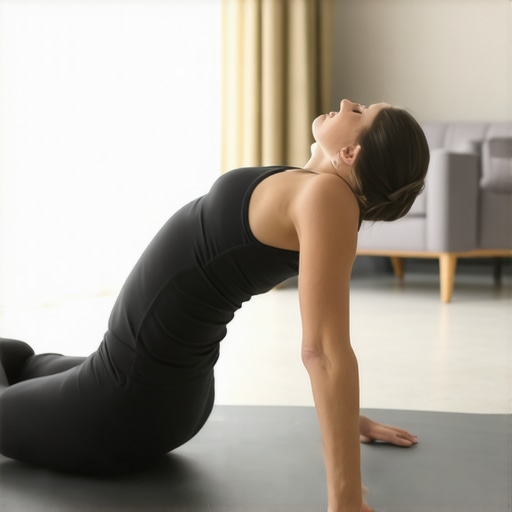
Master the 90/90 Reset Without the Awkward Lean
The 90/90 position is the gold standard for hip health, but it is also where most people realize how ‘stuck’ they truly are. Sit on the floor with your front leg bent at 90 degrees and your back leg bent at 90 degrees. I remember the first time I tried this during a lunch break; I literally fell over sideways because my internal rotation was so non-existent. I had to use a yoga block just to stay upright. The goal is to sit tall without using your hands for support. This position helps identify the hidden reason your hips feel uneven in the mirror. If you can’t sit upright, your body is likely compensating by twisting your spine. Spend three minutes here, slowly rotating your torso over the front shin, and you’ll feel the deep architecture of the hip joint finally beginning to let go.
Your ‘Perfect’ Posture Is Exhausting Your Muscles
Most people assume that ‘good posture’ is a fixed destination, like a military-straight spine that you must defend at all costs. In my years of clinical observation, I’ve seen this obsession do more harm than good. When you force yourself into a rigid upright position, you are essentially asking your stabilizing muscles to perform a grueling marathon of isometric contraction. This is exactly why your perfect posture is actually causing muscle fatigue. Research published in the Journal of Bodywork and Movement Therapies highlights that postural variability—the ability to shift and move frequently—is far more protective than any single static pose. Your body craves the next position, not the ‘best’ one. When you stay locked in one spot, even if it looks ‘correct’ in a mirror, you are starving your joints of the movement-based lubrication they need to stay supple. This is a primary reason why improving posture through mobility is about movement quality, not just sitting up straight. 
The Danger of Playing Your Own Chiropractor
We’ve all been there: your neck feels tight, you give it a quick twist, and ‘pop’—instant relief. Or so it seems. This is one of the most common traps I warn my clients about. When you ‘crack’ your own neck or back, you are usually hitting the segments that are already hypermobile (too loose) rather than the ones that are actually stuck. You are essentially scratching an itch without fixing the wound. Over time, this self-manipulation can lead to ligament laxity and even more instability, which is the truth about cracking your own knuckles and neck at home that most people ignore. Real relief comes from targeted adjustments that address the specific restriction. A professional knows what a chiropractor actually looks for during your first exam to ensure they aren’t just moving bones, but actually resetting the neurological feedback loop.
Why does my back still ache even when I sit correctly?
It is incredibly frustrating to invest in a fancy chair and still feel like a crumpled piece of paper at 5 PM. The hidden nuance here is that ‘correct’ sitting often ignores the relationship between your pelvis and your breath. If you are ‘bracing’ your core to sit straight, you might be creating excessive intra-abdominal pressure that actually stresses your lumbar discs. This is where how chiropractic adjustments enhance posture and mobility by clearing the path for better nervous system communication. We need to stop treating the body like a series of individual parts and start seeing it as a connected system. Have you ever fallen into the trap of trying to ‘force’ a straight spine only to feel more tired? Let me know in the comments. By understanding the link between mobility and posture as a dynamic process rather than a static goal, you can finally break free from the cycle of chronic stiffness.
Ditch the Foam Roller for Precision Tools
I didn’t start seeing real, permanent shifts until I stopped relying on my own hands and started using the right gear. A standard foam roller is fine for the quads, but it is often too blunt for the specific knots around the scapula or the deep gluteals. I switched to a high-density lacrosse ball for pinpoint tissue work, and it fundamentally changed why your traps are always tight even after a massage. If you are working from home, you need to be surgical about your support. I swear by the original McKenzie Lumbar Roll. Unlike the generic ‘lumbar support’ in most office chairs that just pushes your whole spine forward, this specific roll fits the natural inward curve of your lower back. It is the difference between leaning against a flat wall and being held up by a tailored brace. This is the proper way to use a lumbar roll in your office chair to prevent that soul-crushing end-of-day slump. 
How do I stay this mobile for the next decade?
Consistency beats intensity every single time. I used to do one massive ‘mega-mobility’ session on Saturdays and wonder why I was stiff as a board by Monday morning. Now, I use ‘movement snacks’—three minutes of Controlled Articular Rotations (CARs) every time I boil the kettle or wait for a Zoom call to start. This is the core of mobility boosts for posture. We often think of maintenance as a chore, but it is really just about reducing mechanical friction. In his foundational book, Becoming a Supple Leopard, Dr. Kelly Starrett notes that ‘all human beings should be able to perform basic maintenance on themselves.’ I have taken that to heart by integrating mobility into the mundane moments of my day.
The Future of Postural Biofeedback
Looking ahead, I predict we are heading toward a future where AI-powered wearables will do far more than track your daily steps. We are already seeing the early stages of haptic feedback clothing—shirts with built-in sensors that vibrate the moment your shoulders roll forward or your chin drifts toward your chest. Soon, we will have real-time data telling us which specific vertebrae are losing their mobility before the physical pain even starts. This is part of how chiropractic adjustments enhance posture and mobility; they provide the manual reset and neurological clarity that technology cannot yet replicate. By combining professional care with tech-driven feedback, we are entering the era of the ultimate guide to improving mobility and posture in 2025. My challenge to you is to try the ‘Wall Slide’ tonight for just two minutes before dinner—stand with your back flat against a wall, arms making a ‘W’ shape, and slide them upward without letting your back arch. You will feel exactly where your restrictions are hiding.
The Hardest Lesson I Learned About My Hips
I spent years assuming my hips were ‘tight’ because the muscles were physically too short. The truth was much more complex: my nervous system was keeping them in a state of high tension because it didn’t feel stable. Once I started revolutionizing my posture with targeted mobility exercises, I realized that strength without control is just another way to get injured. My biggest lightbulb moment was discovering that the move that instantly relieves tension in your lower ribs often does more for hip comfort than twenty minutes of aggressive lunging. I also learned that chiropractic care is a secret weapon for better posture because it clears the ‘noise’ in your nervous system, allowing those protective muscles to finally let go.
The Movement Books That Rewired My Brain
If you want to go deeper than a simple daily routine, I highly recommend picking up ‘Becoming a Supple Leopard’ by Dr. Kelly Starrett. It is the definitive guide to human maintenance and helped me understand the link between mobility and posture from a mechanical perspective. For those looking for a lifestyle-based approach, ‘Move Your DNA’ by Katy Bowman explains why we need varied movement throughout the day, not just at the gym. Finally, I never travel without a high-density lacrosse ball; it is the most cost-effective tool for DIY soft tissue work to maintain the progress I get from chiropractic adjustments that unlock a pain-free lifestyle. These resources shifted my focus from ‘fixing a problem’ to ‘building a resilient system.’
Take the First Step Out of the Sitting Trap
You do not have to live in a body that feels like it is constantly fighting against itself. Whether you start with a 15-minute flow tonight or investigate natural ways to manage tension headaches that often stem from a stiff lower back and hips, the goal is simple: just keep moving. By prioritizing your movement quality today, you are ensuring a more capable, active version of yourself in the decades to come. Improving posture through mobility is not a one-time fix; it is a lifelong conversation with your body. Have you ever noticed your hips ‘locking up’ during a particularly stressful week at the office? Let me know in the comments below.