

I was only three hours into a cross-country haul when it hit me. A dull, burning ache right at the base of my skull that made every highway curve feel like a chore. My eyes strained. My grip on the steering wheel tightened. Out of sheer desperation, I pulled over at a dusty rest stop, gripped the back of my head, and tried to aggressively yank my neck to the side. It was a massive mistake that left me with a sharp, stabbing spasm for the next four hundred miles. That moment of frustration taught me a harsh lesson: forced, aggressive self-adjustments are never the answer. In fact, why you should stop cracking your own neck for relief is something I now advocate for passionately to anyone who spends their life behind the wheel.
The Highway Trap That Locks Up Your Cervical Spine
When you drive, you are not just sitting. Your body is actively fighting subtle road vibrations while your head is pushed slightly forward to keep your eyes locked on the horizon. This micro-posture slowly starves your neck muscles of oxygen and blood flow. Before you know it, you are suffering from a stiff, frozen neck. I used to think the only solution was to push through the agony or schedule expensive pit stops, but the real secret lies in a gentle, targeted release that takes less time than a red light. By learning how to perform a precise, ten-second muscle reset, you can instantly interrupt the spasm cycle, restore healthy blood flow, and protect your cervical alignment without dangerous twisting.
Is a quick cabin stretch actually worth the hype?
You might be highly skeptical that ten seconds of gentle pressure can undo hours of highway fatigue. I certainly was. Early in my driving days, I assumed that unless I heard a loud, satisfying pop, my posture was doomed to fail. That misconception actually caused more joint inflammation and set my recovery back by months. Real, lasting relief does not require high-velocity cracking. A study published in the Journal of Manipulative and Physiological Therapeutics highlights that targeted isometric contraction and gentle mobilization are highly effective at reducing acute muscle tension and restoring cervical range of motion without the risks associated with self-manipulation. Have you ever experienced that blinding, tense headache midway through a long road trip? Let me know in the comments below, because you do not have to suffer through your next drive. By understanding how to adjust your steering wheel to save your shoulders and pairing it with this rapid reset, you will completely transform your long-distance driving experience.
Think of your cervical spine as a precision-calibrated mechanical crane. When you drive, your skull, which weighs about as much as a bowling ball, sits precariously on top of this crane. If you continuously tilt that crane forward, the supporting cables—your posterior neck muscles—must work triple-time to keep your head from dropping into your lap. When these muscles reach their absolute limit, they lock up like a seized engine. The default reaction for most drivers is to violently twist their head to force a pop. But that high-velocity twist is just tearing at already inflamed ligaments. What you actually need is to gently release the tension by utilizing reciprocal inhibition, a physiological trick where contracting one muscle forces the opposing, spasming muscle to relax.
The Ten Second Pressure Release Protocol
I learned this exact method the hard way during a grueling ten-hour drive through the Appalachian mountains. My upper back felt like it was on fire, and my usual bad habit of grabbing my chin to twist my neck was only making me dizzy. I pulled into a weigh station, sat up straight, and decided to try a subtle, resisting muscle contraction instead of force. Within three repetitions, the localized burning sensation dissolved. It felt like releasing a parking brake that had been jammed on for hours. You can easily do this during a long red light or while parked at a rest stop.
How to apply targeted resistance safely
First, sit up as straight as your car seat allows. Place the palm of your right hand flat against your right temple. Without actually moving your head, try to tilt your right ear down toward your right shoulder while simultaneously resisting that movement with your hand. You are essentially creating an immovable wall with your arm. Press with about twenty percent of your maximum strength. Hold this static contraction for five seconds while taking a deep, diaphragmatic breath, then slowly release. Repeat this on the left side, and then finish by placing both hands on your forehead to resist a forward nod. This safe, isometric reset activates your stabilizing muscles, which instantly signals your overactive, spasming neck muscles to let go.

Why micro movements beat violent cracking every time
When you aggressively pop your neck, you are likely only moving the hypermobile joints above or below the actual restriction. This creates a temporary neurological high but leaves the main problem area completely locked up. Over time, this dangerous habit leads to hypermobility and chronic instability. By focusing instead on targeted tension release, you actively build stability. To truly protect your spine from the wear and tear of long trips, you should combine this quick cabin reset with a broader routine of improving mobility and posture in 2025. Keeping your joints moving through their natural, controlled ranges of motion ensures that you do not arrive at your destination feeling like a folded piece of cardboard.
Adjusting your posture on the go
Even the best rescue stretch will fail if you immediately return to slouching over the steering wheel. Your driving environment must support your body. Make sure your seat is upright enough that your shoulder blades can easily rest against the backrest. If you have to reach forward to grab the wheel, you are constantly pulling your shoulder blades out of their pocket. This persistent strain is a major reason why your shoulder pain flares up when you use a computer mouse or hold a steering wheel for extended periods. Keep your elbows bent at a comfortable ninety-degree angle, rest your forearms on the armrests if possible, and let your seat do the heavy lifting of holding your torso upright.
We have all been there. You feel a deep, nagging restriction in your upper back or neck, so you instinctively pull your head to the side, holding a deep stretch for a minute or longer hoping for a release. But here is the contrarian truth about managing spinal tension: static stretching is often the absolute worst thing you can do for a hypermobile or chronically fatigued muscle. When a joint is already slightly misaligned or unstable, the surrounding muscles lock up as a protective splinting mechanism. If you force those guarding muscles to stretch, your nervous system panics, causing them to contract even tighter once you let go. It is a vicious loop that explains why your gentle stretching is actually causing more inflammation instead of giving you lasting relief.
Why does stretching feel so good if it is actually keeping my joints locked up?
This is the ultimate paradox of self-care. When you stretch a tight muscle to its absolute limit, you temporarily suppress the pain signals sent to your brain. This creates a mild, transient analgesic effect. However, a landmark study published in the European Journal of Applied Physiology demonstrated that prolonged static stretching can temporarily reduce muscle force production and joint stability. If your joint is already craving stabilization, stretching simply weakens the protective muscular cage around it. Have you ever fallen into this trap of stretching a sore spot only to have it feel twice as stiff an hour later? Let me know in the comments below, because recognizing this cycle is the first step toward true recovery.

Rather than continually stretching a joint that is screaming for stability, you must address the underlying mechanical alignment. This is precisely how chiropractic adjustments enhance posture and mobility. An experienced practitioner does not just stretch the tissue; they apply a precise, quick impulse to restore movement to the specific vertebrae that are genuinely locked. This instantly calms the overactive nervous system, allowing the protective muscle spasms to melt away naturally. If you want to stop chasing temporary relief and finally build a body that moves fluidly, focus on building stability through targeted, active movement. Take control of your daily habits and start improving mobility and posture in 2025 with exercises that challenge your control, rather than endlessly pulling on muscles that are already crying out for help.
We often treat our spine like a broken appliance—only paying attention to it when it completely stops working. But real physical freedom isn’t about managing crisis after crisis on the road or at your desk. It is about building a proactive, daily ritual of maintenance. Over the years, I have tested countless gadgets, rollers, and straps, and I have learned that the simplest, highest-quality tools always yield the best long-term results. When you commit to a structured approach, you stop reacting to pain and start engineering real, lasting durability.
My Essential Toolbox for Daily Spinal Maintenance
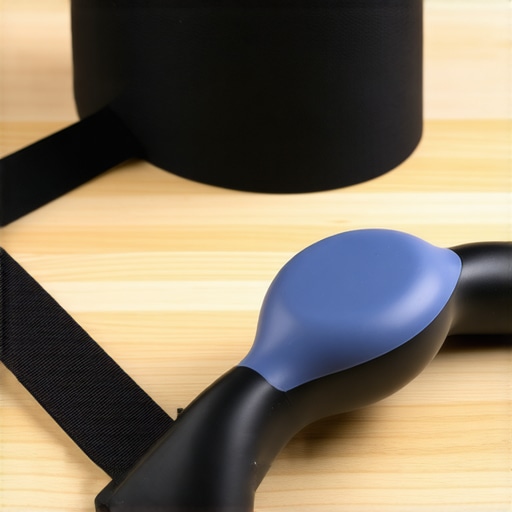
I don’t believe in cluttered gear closets, but there are three non-negotiable tools I pack for every long trip and keep beside my desk. First is a high-density, sub-occipital release tool—specifically, a firm silicone pressure block shaped to cradle the base of the skull. Unlike a tennis ball which slips and slides, this tool stays anchored, allowing you to safely mimic a manual therapist’s trigger-point release. Second, I rely on a standard lumbar roll. This simple cylinder of dense foam keeps your lower back from flattening out, which indirectly prevents your head from shearing forward. Finally, I use a heavy-duty loop resistance band for active shoulder blade retraction exercises. This combination ensures that my thoracic spine stays mobile and my cervical spine remains supported.
How do I maintain my mobility progress over time?
Consistency beats intensity every single time. You cannot undo ten hours of driving with a single twenty-minute stretch session on Sunday night. The secret to maintaining your progress is integrating tiny, automatic habits into your existing routine. For example, every time you stop to refuel your car, perform three repetitions of the isometric neck reset. When you sit at your computer, ensure you know how to adjust your monitor to stop reaching with your chin to eliminate daily micro-strain. Over time, these small adjustments accumulate, shifting your baseline from chronic stiffness to effortless flexibility. I also highly recommend looking into professional guidance to keep your structure aligned; understanding how chiropractic adjustments enhance posture and mobility can help you establish a solid foundation so your daily maintenance actually sticks.
Looking ahead, I predict we are going to see a massive shift toward wearable, real-time posture feedback technology. Niche experts like Dr. Kelly Starrett have long advocated for movement mechanics over passive treatments, and new haptic-feedback devices are beginning to make this accessible. Soon, smart shirts and neck-worn sensors will gently vibrate the moment your shoulders round forward, training your nervous system in real-time. But until those technologies are perfected, your best defense is active self-awareness and implementing targeted movement patterns. If you are ready to take action today, stop waiting for the next spasm to strike. I challenge you to try the ten-second isometric pressure release protocol the very next time you find yourself stuck at a long red light or sitting at your desk. Your spine will thank you for it.
I spent years believing that a louder pop meant a more successful recovery. But the real shift in my physical health occurred when I stopped chasing the temporary high of self-manipulation and began focusing on deep, structural stabilization.
The Hardest Lessons I Learned About Restoring My Spine
Reflecting on my long journey toward a pain-free life, I realized that true recovery requires unlearning some of the most common physical habits we take for granted:
- The relief loop is a trap: Cracking your own neck for a quick release feels amazing for about ten minutes, but you are actually worsening joint laxity and forcing your muscles to seize up even tighter.
- Stretching an angry muscle backfires: When your body undergoes protective splinting, aggressively pulling on that area is like pulling a knot tighter. Restoring natural joint alignment must happen before flexibility can improve.
- Posture is active, not passive: Slouching in your car or at your desk and expecting a weekly treatment to fix it is like eating fast food daily and hoping a vitamin saves your health. You have to build daily habits to keep your system balanced.
My Essential Toolkit for Lasting Mobility
I do not advocate for expensive fitness gimmicks or bulky equipment. Instead, I rely on a small, highly effective set of physical tools to keep my posture locked in:
- A Dense Silicon Sub-Occipital Block: This simple tool mimics the hands-on trigger point release of a professional therapist, helping to melt away tension at the base of the skull after long drives.
- A Firm Lumbar Roll: I never sit in an office chair or car seat without learning how to use a lumbar roll correctly in an office chair to preserve the natural curve of my lower back.
- High-Quality Loop Resistance Bands: Essential for waking up the dormant muscles between my shoulder blades and keeping my upper back from rounding forward.
The Future of Your Movement Starts Today
Your spine is the foundational pillar of your health and vitality. Real physical freedom is not about constantly reacting to acute pain flares; it is about building a proactive, mindful relationship with how you move every single day. Taking charge of your body by incorporating simple exercises and understanding how chiropractic adjustments enhance posture and mobility can completely revolutionize how you feel. Do not wait for the next painful muscle spasm to seize up your entire week before you decide to prioritize your physical alignment.
Have you ever fallen into the frustrating trap of stretching a tight spot only to have it feel twice as stiff an hour later? Let me know your experience in the comments below!