

I still remember the crisp autumn morning I decided to get back into running. I laced up my brand-new sneakers, stepped outside, and felt incredibly motivated. My lungs were ready, and my legs felt strong. But exactly five minutes in, a familiar, agonizing sensation crept across my lumbar spine. It wasn’t a dull muscle ache; it was a deep, hot burn that forced me to double over and limp back home. It felt incredibly defeating. I used to think I just had a weak back, but my early mistake was ignoring how my hips and spine actually move when my feet hit the pavement.
The Real Culprit Behind the Five-Minute Burn
Many runners assume a burning lower back means they need to do more planks. In reality, that fire is usually your spine screaming for help because your pelvis has lost its neutral positioning. When you run with restricted joints, your body forces your lower back muscles to work triple-time just to keep you upright. This often ties directly to why your pelvis tilts forward when you run, creating an unnatural arch that pinches your lumbar spine with every single stride.
Think about it: if your hips cannot extend properly behind you, your lower back has to arch excessively to compensate. According to the American Chiropractic Association, millions of people experience premature spinal fatigue simply due to poor mechanical alignment and restricted joint mobility. When you couple stiff joints with the high-impact nature of running, five minutes is all it takes to trigger a major inflammatory response.
Is this burning sensation actually a sign of permanent damage?
It is incredibly easy to panic and think you have a herniated disc the moment that heat flares up. While you should always listen to your body, most of the time this burn is simply acute muscle fatigue caused by joint restriction and poor shock absorption. If your ankles or hips are locked up, your lower back absorbs all the road impact. I spent years trying to stretch my way out of this issue, not realizing that the hidden link between your ankle mobility and your lower back was the real reason my running form was so compromised.
Have you ever had to cut a run short because of this exact same burning sensation? Today, we are going to dive into how targeted spinal alignment and simple structural adjustments can put out the fire for good, letting you log those miles pain-free.
Restore Your Pelvic Alignment Before You Hit the Pavement
To stop the lower back burn, you have to treat your pelvis like a bucket filled with water. If that bucket tilts forward, the water spills out the front, and your lumbar spine is forced to arch aggressively to keep you from falling over. This is exactly why your pelvis tilts forward when you run, leaving your lower back muscles to bear the brunt of every stride. I used to think I could just run through the pain, but after a mile, my back felt like it was on fire because my pelvis was permanently tilted.
To fix this, you must actively tuck your tailbone slightly under your hips before you start your timer. This structural adjustment immediately takes the mechanical pressure off your lumbar joints. Engaging in consistent improving posture through mobility practical chiropractor strategies ensures your pelvis stays in a neutral position, allowing your glutes and core to absorb the impact of running instead of your lower back.

Wake Up Your Glutes with a Targeted Muscle Reset
When you sit at a desk all day, your hip flexors tighten up like overwound springs, which essentially turns off your glute muscles. When you run, your body still needs to extend your leg behind you. If your glutes are asleep, your lower back muscles have to contract violently to pull your leg back. I remember a specific Tuesday afternoon when I rushed from my office chair straight to the track. Two minutes in, the burning started. I stopped, dropped to the grass, and performed a quick, targeted three-minute active hip flexor stretch coupled with glute bridges.
By waking up those sleeping giant muscles, my very next mile was completely pain-free. If you struggle with this daily transition, integrating the 30 second move that opens up tight hips in seconds before you lace up your shoes can prevent your lower back from taking over the workload of your hips.
Unlock Your Ankles to Save Your Spine
If your ankles are stiff, your body cannot naturally disperse the ground reaction forces when your heel or midfoot strikes the ground. That shock wave travels straight up your leg, bypasses your knee, and rattles your lower back. Your body compensates by shortening your stride and arching your spine even more to clear the ground. Achieving better running mechanics relies heavily on the link between mobility and posture a chiropractors guide which emphasizes that free-moving joints at the bottom of the chain protect the delicate joints at the top.
Make it a habit to perform ankle mobility drills, like knee-to-wall touches, before every run. When your ankles flex dynamically, your back does not have to bend to compensate for the stiff pavement impact.
The Dead Bug Progression for True Lumbar Stability
Planks are great, but they are static. Running is highly dynamic. You need a core exercise that teaches your limbs to move while your lower back remains perfectly still and protected. I started doing a specific abdominal progression that radically transformed my structural endurance on the road. By practicing the dead bug variation that actually protects your spine, you train your deep core stabilizers to hold your pelvis level while your legs and arms move. This builds the exact coordination you need when running at high speeds, keeping that burning sensation away permanently.
When that familiar burning sensation flares up during a run, most people immediately drop to the floor and pull their knees to their chest. We have been conditioned to believe that if a muscle feels tight, we must stretch it immediately. However, this is one of the most common and damaging myths in running bio-mechanics. When you constantly pull on your lower back muscles, you are actually destabilizing your spine and making your movement patterns worse.
In my practice, I constantly see runners who have spent years trying to stretch their way out of stiffness. The contrarian truth is that your lower back does not need more flexibility; it desperately needs stability. The stiffness you feel is not a cry for a stretch—it is a protective spasm. Your nervous system is deliberately locking down those muscles because your pelvis and hips are unstable. If you force those protective muscles to loosen up without fixing the underlying structural alignment, your body will find stability elsewhere, usually by jamming your facet joints together.
Why does stretching your hamstrings make your lower back feel tighter?
This is the ultimate trap for runners. You feel a pull in your rear thighs, so you bend over to touch your toes. But as research published in the Journal of Orthopaedic & Sports Physical Therapy demonstrates, chronic hamstring tightness is frequently a secondary symptom of an anterior pelvic tilt, not a primary muscle issue. When your pelvis tilts forward, it pulls your hamstrings into a state of constant, passive tension. Stretching them further only destabilizes your pelvis more, forcing your lower back to spasm even harder to keep you upright. Instead of mindless stretching, you should focus on why stretching your hamstrings won’t fix your tight back to address the real root cause.
To break this vicious cycle, you need to transition your focus toward active joint mobilization and targeted spinal care. Utilizing mobility boosts for posture expert tips for daily adjustments can help reset your neural pathways, teaching your hips to move freely while your lumbar spine remains safe and quiet. When your joints are properly aligned, the protective tension in your muscles naturally melts away without you ever having to pull a hamstring again.
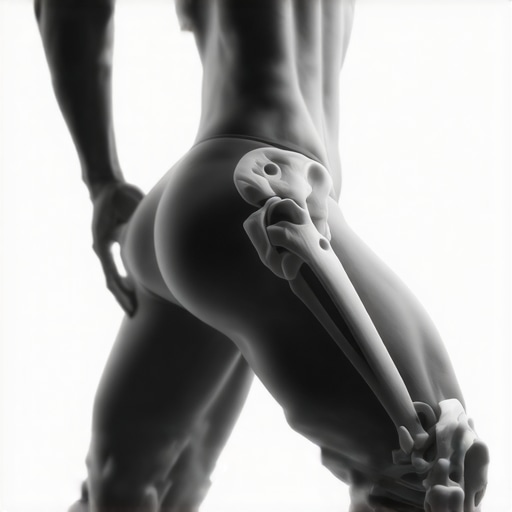
Another massive mistake is attempting to self-adjust. We have all done it: twisting our torso until we hear a loud pop, hoping for instant relief. But this self-manipulation only targets the joints that are already hypermobile, leaving the truly stuck segments completely frozen. Professional care is designed to target only the locked joints, which is why chiropractic care is your secret weapon for better posture and fluid, pain-free running mechanics.
Have you ever fallen into this trap of stretching your back only to feel tighter an hour later? Let me know in the comments below, and let’s get your joints moving the right way.
Once you stop making the classic mistake of static stretching, you need a long-term plan to keep your spine operating like a finely tuned machine. For me, maintaining joint health is not about occasional damage control; it is about establishing daily habits and using the right tools. If you only pay attention to your biomechanics when you are hurting, you are already playing catch-up. Over the years, I have refined a minimalist maintenance routine that keeps my pelvis level, my ankles mobile, and my runs completely free of that agonizing lower back burn.
How do I maintain structural mobility and spinal alignment over time?
Consistency beats intensity every single time. To keep your joints moving freely, you must commit to daily, micro-dose mobility movements rather than one-hour weekend sessions. I personally rely on a simple three-step daily routine. First, I use a firm lacrosse ball under my feet to release plantar fascia tension, which directly influences my ankle flexibility. Second, I perform a standing pelvic tilt check throughout the day to ensure I am not defaulting into an anterior posture. Finally, incorporating the daily habit that prevents recurring lower back stiffness 2 into your morning routine guarantees your facet joints stay lubricated and ready for impact before you ever put stress on them.

Beyond bodyweight movements, I am highly specific about the gear I use. I do not recommend generic foam rollers for the lower back because they can force your lumbar spine into hyper-extension. Instead, I use a peanut massage tool—essentially two lacrosse balls taped together—to target the thoracic spine while avoiding direct pressure on the lumbar vertebrae. Additionally, according to Dr. Kelly Starrett, author of Becoming a Supple Leopard, maintaining joint torque through stable bracing is the single most important factor in athletic longevity. This is why I also utilize a simple slant board for active calf and ankle stretching to ensure my feet hit the pavement with perfect force distribution.
The Future of Running Biomechanics and Alignment
Looking ahead, the fitness world is moving away from generic cushioning and heading toward active movement correction. I predict we will soon see smart running insoles with built-in pressure sensors that sync to your phone, giving you real-time feedback when your pelvis begins to tilt or your stride shortens due to fatigue. Until that technology is mainstream, we must rely on manual awareness and proactive care. Investing in professional assessments remains the ultimate shortcut to structural balance, which is how chiropractic adjustments enhance posture and mobility for runners who want to push their mileage boundaries safely.
To transition these concepts into your daily lifestyle, I want you to try one specific action today: before your next run, spend exactly two minutes performing the dead bug progression to lock in your core, and see how much lighter your stride feels. For more comprehensive structural upgrades, integrating mobility hacks simple adjustments for a more active life will keep your body functioning smoothly through every mile.
I still remember the crisp autumn morning I decided to get back into running. I laced up my brand-new sneakers, stepped outside, and felt incredibly motivated. My lungs were ready, and my legs felt strong. But exactly five minutes in, a familiar, agonizing sensation crept across my lumbar spine. It wasn’t a dull muscle ache; it was a deep, hot burn that forced me to double over and limp back home. It felt incredibly defeating. I used to think I just had a weak back, but my early mistake was ignoring how my hips and spine actually move when my feet hit the pavement.
The Real Culprit Behind the Five-Minute Burn
Many runners assume a burning lower back means they need to do more planks. In reality, that fire is usually your spine screaming for help because your pelvis has lost its neutral positioning. When you run with restricted joints, your body forces your lower back muscles to work triple-time just to keep you upright. This often ties directly to why your pelvis tilts forward when you run, creating an unnatural arch that pinches your lumbar spine with every single stride.
Think about it: if your hips cannot extend properly behind you, your lower back has to arch excessively to compensate. According to the American Chiropractic Association, millions of people experience premature spinal fatigue simply due to poor mechanical alignment and restricted joint mobility. When you couple stiff joints with the high-impact nature of running, five minutes is all it takes to trigger a major inflammatory response.
Is this burning sensation actually a sign of permanent damage?
It is incredibly easy to panic and think you have a herniated disc the moment that heat flares up. While you should always listen to your body, most of the time this burn is simply acute muscle fatigue caused by joint restriction and poor shock absorption. If your ankles or hips are locked up, your lower back absorbs all the road impact. I spent years trying to stretch my way out of this issue, not realizing that the hidden link between your ankle mobility and your lower back was the real reason my running form was so compromised.
Have you ever had to cut a run short because of this exact same burning sensation? Today, we are going to dive into how targeted spinal alignment and simple structural adjustments can put out the fire for good, letting you log those miles pain-free.
Restore Your Pelvic Alignment Before You Hit the Pavement
To stop the lower back burn, you have to treat your pelvis like a bucket filled with water. If that bucket tilts forward, the water spills out the front, and your lumbar spine is forced to arch aggressively to keep you from falling over. This is exactly why your pelvis tilts forward when you run, leaving your lower back muscles to bear the brunt of every stride. I used to think I could just run through the pain, but after a mile, my back felt like it was on fire because my pelvis was permanently tilted.
To fix this, you must actively tuck your tailbone slightly under your hips before you start your timer. This structural adjustment immediately takes the mechanical pressure off your lumbar joints. Engaging in consistent improving posture through mobility practical chiropractor strategies ensures your pelvis stays in a neutral position, allowing your glutes and core to absorb the impact of running instead of your lower back.
Wake Up Your Glutes with a Targeted Muscle Reset
When you sit at a desk all day, your hip flexors tighten up like overwound springs, which essentially turns off your glute muscles. When you run, your body still needs to extend your leg behind you. If your glutes are asleep, your lower back muscles have to contract violently to pull your leg back. I remember a specific Tuesday afternoon when I rushed from my office chair straight to the track. Two minutes in, the burning started. I stopped, dropped to the grass, and performed a quick, targeted three-minute active hip flexor stretch coupled with glute bridges.
By waking up those sleeping giant muscles, my very next mile was completely pain-free. If you struggle with this daily transition, integrating the 30 second move that opens up tight hips in seconds before you lace up your shoes can prevent your lower back from taking over the workload of your hips.
Unlock Your Ankles to Save Your Spine
If your ankles are stiff, your body cannot naturally disperse the ground reaction forces when your heel or midfoot strikes the ground. That shock wave travels straight up your leg, bypasses your knee, and rattles your lower back. Your body compensates by shortening your stride and arching your spine even more to clear the ground. Achieving better running mechanics relies heavily on the link between mobility and posture a chiropractors guide which emphasizes that free-moving joints at the bottom of the chain protect the delicate joints at the top.
Make it a habit to perform ankle mobility drills, like knee-to-wall touches, before every run. When your ankles flex dynamically, your back does not have to bend to compensate for the stiff pavement impact.
The Dead Bug Progression for True Lumbar Stability
Planks are great, but they are static. Running is highly dynamic. You need a core exercise that teaches your limbs to move while your lower back remains perfectly still and protected. I started doing a specific abdominal progression that radically transformed my structural endurance on the road. By practicing the dead bug variation that actually protects your spine, you train your deep core stabilizers to hold your pelvis level while your legs and arms move. This builds the exact coordination you need when running at high speeds, keeping that burning sensation away permanently.
When that familiar burning sensation flares up during a run, most people immediately drop to the floor and pull their knees to their chest. We have been conditioned to believe that if a muscle feels tight, we must stretch it immediately. However, this is one of the most common and damaging myths in running bio-mechanics. When you constantly pull on your lower back muscles, you are actually destabilizing your spine and making your movement patterns worse.
In my practice, I constantly see runners who have spent years trying to stretch their way out of stiffness. The contrarian truth is that your lower back does not need more flexibility; it desperately needs stability. The stiffness you feel is not a cry for a stretch—it is a protective spasm. Your nervous system is deliberately locking down those muscles because your pelvis and hips are unstable. If you force those protective muscles to loosen up without fixing the underlying structural alignment, your body will find stability elsewhere, usually by jamming your facet joints together.
Why does stretching your hamstrings make your lower back feel tighter?
This is the ultimate trap for runners. You feel a pull in your rear thighs, so you bend over to touch your toes. But as research published in the Journal of Orthopaedic & Sports Physical Therapy demonstrates, chronic hamstring tightness is frequently a secondary symptom of an anterior pelvic tilt, not a primary muscle issue. When your pelvis tilts forward, it pulls your hamstrings into a state of constant, passive tension. Stretching them further only destabilizes your pelvis more, forcing your lower back to spasm even harder to keep you upright. Instead of mindless stretching, you should focus on why stretching your hamstrings won’t fix your tight back to address the real root cause.
To break this vicious cycle, you need to transition your focus toward active joint mobilization and targeted spinal care. Utilizing mobility boosts for posture expert tips for daily adjustments can help reset your neural pathways, teaching your hips to move freely while your lumbar spine remains safe and quiet. When your joints are properly aligned, the protective tension in your muscles naturally melts away without you ever having to pull a hamstring again.
Another massive mistake is attempting to self-adjust. We have all done it: twisting our torso until we hear a loud pop, hoping for instant relief. But this self-manipulation only targets the joints that are already hypermobile, leaving the truly stuck segments completely frozen. Professional care is designed to target only the locked joints, which is why chiropractic care is your secret weapon for better posture and fluid, pain-free running mechanics.
Have you ever fallen into this trap of stretching your back only to feel tighter an hour later? Let me know in the comments below, and let’s get your joints moving the right way.
Once you stop making the classic mistake of static stretching, you need a long-term plan to keep your spine operating like a finely tuned machine. For me, maintaining joint health is not about occasional damage control; it is about establishing daily habits and using the right tools. If you only pay attention to your biomechanics when you are hurting, you are already playing catch-up. Over the years, I have refined a minimalist maintenance routine that keeps my pelvis level, my ankles mobile, and my runs completely free of that agonizing lower back burn.
How do I maintain structural mobility and spinal alignment over time?
Consistency beats intensity every single time. To keep your joints moving freely, you must commit to daily, micro-dose mobility movements rather than one-hour weekend sessions. I personally rely on a simple three-step daily routine. First, I use a firm lacrosse ball under my feet to release plantar fascia tension, which directly influences my ankle flexibility. Second, I perform a standing pelvic tilt check throughout the day to ensure I am not defaulting into an anterior posture. Finally, incorporating the daily habit that prevents recurring lower back stiffness 2 into your morning routine guarantees your facet joints stay lubricated and ready for impact before you ever put stress on them.
Beyond bodyweight movements, I am highly specific about the gear I use. I do not recommend generic foam rollers for the lower back because they can force your lumbar spine into hyper-extension. Instead, I use a peanut massage tool—essentially two lacrosse balls taped together—to target the thoracic spine while avoiding direct pressure on the lumbar vertebrae. Additionally, according to Dr. Kelly Starrett, author of Becoming a Supple Leopard, maintaining joint torque through stable bracing is the single most important factor in athletic longevity. This is why I also utilize a simple slant board for active calf and ankle stretching to ensure my feet hit the pavement with perfect force distribution.
The Future of Running Biomechanics and Alignment
Looking ahead, the fitness world is moving away from generic cushioning and heading toward active movement correction. I predict we will soon see smart running insoles with built-in pressure sensors that sync to your phone, giving you real-time feedback when your pelvis begins to tilt or your stride shortens due to fatigue. Until that technology is mainstream, we must rely on manual awareness and proactive care. Investing in professional assessments remains the ultimate shortcut to structural balance, which is how chiropractic adjustments enhance posture and mobility for runners who want to push their mileage boundaries safely.
To transition these concepts into your daily lifestyle, I want you to try one specific action today: before your next run, spend exactly two minutes performing the dead bug progression to lock in your core, and see how much lighter your stride feels. For more comprehensive structural upgrades, integrating mobility hacks simple adjustments for a more active life will keep your body functioning smoothly through every mile.
Three Biomechanical Hard Truths I Had to Learn the Hard Way
My journey from limping home after five minutes to running half-marathons without a hint of a burn taught me a few counterintuitive lessons. Here is the insider wisdom that changed everything for me:
- Soreness is often a symptom, not the source: Rolling out your lower back feels great temporarily, but it does absolutely nothing if your stiff hips are the real reason those lower back muscles are overworked in the first place.
- Stretching can actually destabilize your stride: Yelping through deep hamstring stretches before a run actually compromises your pelvic stability, making you run with a much more unstable, swayback posture.
- True structural endurance is quiet: When your body is properly aligned, your running feels light, quiet, and bouncy. If you can hear your feet slapping the pavement loudly, your joints are not properly absorbing the force.
My Personal Toolkit for Running Longevity
You do not need an entire gym of expensive gadgets to keep your spine healthy. These are the highly specific, low-tech tools that I personally use and recommend to keep everything aligned:
- The Lacrosse Ball Doublet (Peanut Tool): Excellent for mobilizing the thoracic spine without compressing the lower lumbar discs. It helps keep the upper body loose so the lower back does not have to twist excessively.
- A Basic Wooden Slant Board: Essential for targeting deep calf tightness. Freeing up your lower legs directly relieves the upward mechanical pressure on your pelvis.
- A Small Resistance Loop Band: Perfect for activating your gluteus medius during warm-ups. Waking up these outer hip muscles keeps your knees from collapsing inward and pulling your pelvis out of alignment.
Take Control of Your Stride One Joint at a Time
Running is supposed to feel like freedom, not a structural battle against your own skeletal system. By shifting your focus from mindless stretching to active joint mobilization, you can permanently protect your spine and restore your natural stride. Do not wait for the next flare-up to start prioritizing your structural balance. Your body is incredibly adaptive, and with the right mobility habits, you can run far and pain-free for years to come. By restoring proper alignment, you can finally experience chiropractic adjustments unlock a pain-free lifestyle today and take back control of your athletic potential.
Have you ever noticed that your lower back pain gets much worse when running on concrete compared to grass or a treadmill? Let me know your experience in the comments below!