
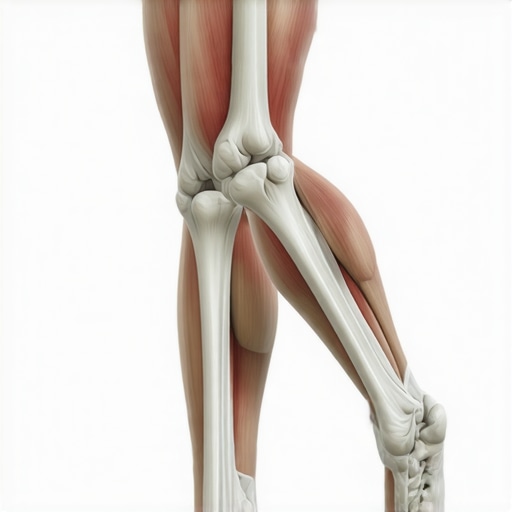
I used to spend fifteen minutes every single morning standing on a calf stretch wedge, pushing my heels down until my tendons practically screamed for mercy. I did it before runs, after walks, and right before bed. Yet, the moment I took my first steps the next morning, my lower legs felt like solid blocks of concrete. It was incredibly frustrating. I made the classic mistake of thinking that because a muscle feels tight, it simply needs more aggressive stretching. In reality, I was ignoring how my entire kinetic chain, my foot structure, and my nervous system were actually interacting.
If you are tired of pulling on your legs every day with absolutely zero long-term relief, you are in the right place. Today, we are going to get to the bottom of why those calf muscles refuse to let go and how to actually solve this stubborn tightness for good.
Is stretching your calves actually making them tighter?
It sounds completely backward, but constantly pulling on a muscle that is already overtaxed can trigger a protective stretch reflex, causing the muscle tissue to clamp down even harder to protect itself from tearing. When I was dealing with this, I didn’t realize that my limited ankle mobility was forcing my calf muscles to work overtime just to keep me upright.
Your body is incredibly smart. If you have a stiff joint, your brain will recruit nearby muscles to act as stabilizers. This concept is closely tied to how the hidden link between your ankle mobility and your lower back dictates your entire movement patterns. My ankles were stiff, so my calves stayed locked in a state of constant contraction to keep me from falling forward. According to research from the Journal of Foot and Ankle Research, poor ankle dorsiflexion is directly correlated with altered biomechanics up the entire leg, which means your tight calves might actually be a symptom of a completely different issue. Have you spent months stretching your calves only to find they feel exactly the same the next day? If so, you are definitely not alone, and it is time to stop wasting your energy on static stretches that do not address the root cause.
Step away from the calf stretch wedge and try this instead
To release a muscle that is permanently locked, you have to stop pulling on it and start addressing the joints that control its length. Think of your tight calf muscles like a tightly wound guitar string. If you keep pulling on the string from both ends without adjusting the tuning peg, eventually, something is going to snap or simply wear out. In your lower body, the tuning peg is your ankle joint. We need to restore joint play and teach the brain that it is safe to let go of that protective tension.
My breakthrough came when I stopped doing static wall stretches and started utilizing active mobilization techniques. My left calf was so tight that I developed a deep ache in my foot during my morning runs, a classic sign of compensation that many runners ignore. I realized my ankle simply wasn’t pivoting properly, which is a common issue when your footwear restricts natural movement. If you have noticed similar issues during your daily walks, you might want to explore why your lower back aches after a long walk in sneakers to see how footwear impacts your entire alignment.
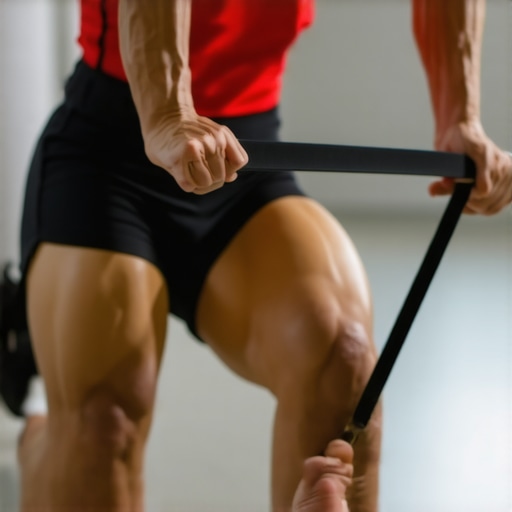
Active ankle mobilization with a resistance band
Instead of holding a passive stretch, grab a heavy-duty resistance band and anchor it to something sturdy behind you. Loop the other end around your ankle joint, right at the crease where your foot meets your leg. Step forward until you feel a strong pull pulling backward on your ankle. From here, actively push your knee forward over your toes while keeping your heel firmly planted on the ground. Hold for two seconds, then return to the starting position. Repeat this for twenty repetitions.
By using the band, you are performing a self-mobilization that helps glide the talus bone backward within the ankle joint. This immediately clears the physical block that restricts your ankle dorsiflexion, allowing the calf muscle to naturally lengthen without triggering that protective, painful spasm reflex. When I first tried this, my ankle made a tiny popping sound, and suddenly I could bend my ankle two inches further than before without any tightness in my calf.
Build strength in the opposite muscle group
The second part of the equation is reciprocal inhibition. This is a neurological rule stating that when one muscle contracts, the opposing muscle must relax. If your calves are perpetually tight, your anterior tibialis (the muscle on the front of your shin) is likely weak and dormant. If the front of your leg cannot pull your foot upward, your brain will keep the back of your leg locked tight to maintain stability.
To fix this balance, lean your back against a wall, walk your feet about twelve inches away from the wall, and lift your toes toward your shins as high as possible. Hold for a second at the top, then lower your toes back to the floor. Do three sets of twenty repetitions. You will feel an intense burn in the front of your shins, but the moment you stand up and walk, you will feel an immediate release of tension in your calves because your brain has finally allowed those posterior muscles to turn off.
Fix your landing mechanics to protect your joints
If you only address the mobility but keep walking or running with poor mechanics, the tightness will return by tomorrow morning. Your body adapts to the demands you place on it. If you land heavily on your heels with a completely locked knee, the impact forces travel straight up your leg, forcing the calf muscles to seize up to absorb the shock. Practicing proper foot placement is essential to keep these tissues healthy over time. This concept of alignment is highly relevant to other daily activities too, such as understanding why your sit to stand desk transition is causing foot pain when your body weight is distributed incorrectly.
Is a hypermobile joint the secret reason your calves feel like concrete?
Most mobility advice on the internet follows a simple, flawed formula: if something feels stiff, stretch it; if it feels weak, strengthen it. But in my years of studying movement patterns, I have found that the human body rarely operates in such simple terms. A common contrarian truth is that your tight calves might actually be a protective reaction to joint hypermobility elsewhere in your foot or ankle. If your midfoot is too loose and collapses inward every time you step, your nervous system will actively lock down your calf muscles to act as emergency brake cables. In this scenario, stretching is the absolute worst thing you can do because you are trying to strip away the only stability your lower leg has left.
This protective phenomenon is why understanding the difference between a sore muscle and a misaligned joint is absolutely critical. When a joint is misaligned or hypermobile, the surrounding muscles will spasm to splint the area. A study published in the Journal of Orthopaedic & Sports Physical Therapy highlights that regional interdependence—how one joint affects another—means addressing local muscle tightness without checking adjacent joint stability is a recipe for chronic, recurring issues.
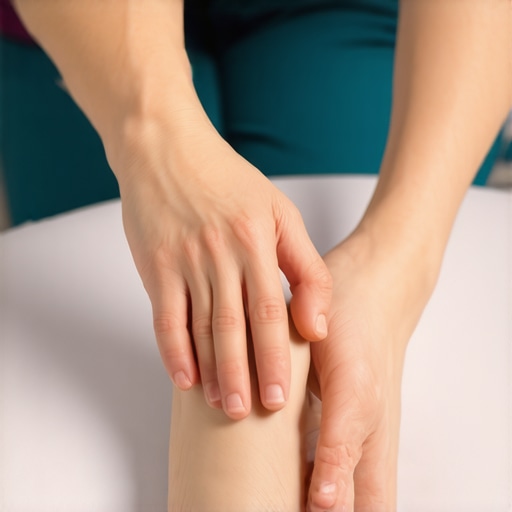
The dangerous trap of aggressive self-adjustments
When your calves and ankles feel locked up, it is incredibly tempting to twist, turn, and force your joints to pop. We have all done it—seeking that quick release of pressure. However, self-cracking your joints is a dangerous trap that actually perpetuates your stiffness. When you force an adjustment on yourself, you are almost always cavitating the joints that are already hypermobile, completely bypassing the stiff, restricted joints that actually need mobilization. This temporary relief releases endorphins, but it leaves the real problem untouched while making your hypermobile joints even looser, forcing your calves to tighten up even more to compensate.Instead of risky self-manipulation, the solution lies in professional, targeted structural alignment. Learning how chiropractic adjustments enhance posture and mobility can help you understand how a practitioner isolates the specific, stuck segments of your ankle and spine without destabilizing the rest of your body. When you restore proper motion to a locked talus or a restricted lumbar facet, the nervous system instantly dials down the tone of your calf muscles, giving you a deep, lasting release that no foam roller could ever achieve.
We need to stop looking at our bodies as a collection of isolated parts and start viewing them as an integrated system where structure dictates function. Have you ever fallen into this trap of constant stretching and self-cracking only to feel tighter a few hours later? Let me know in the comments below, and let’s discuss how to restore your natural movement patterns.
How do I maintain my calf and ankle mobility over time?
Achieving initial relief from tight, concrete-like calves is a massive victory, but keeping them supple and functional requires a structured maintenance routine. In my experience, you cannot simply perform an exercise once and expect permanent changes. The nervous system relies on consistent feedback to maintain new ranges of motion. To prevent your lower legs from reverting to their old, locked state, I recommend a combination of daily active movement and strategic tissue maintenance. If you want to keep your joints functioning smoothly, adopting mobility hacks simple adjustments for a more active life will ensure that you are continually reinforcing your alignment without needing hours of extra gym time.
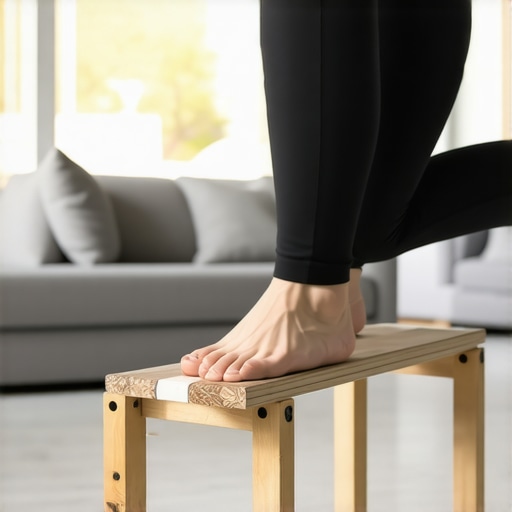
For daily maintenance, I personally use and highly recommend a slant board set at a moderate 20-degree angle. Unlike the aggressive, passive stretching of a wedge, I use the slant board for active, loaded mobility. Standing on the board, I perform slow, controlled calf raises, focusing on a deep, active stretch at the bottom and a powerful contraction at the top. This teaches the brain that the newly acquired ankle range is both safe and strong. According to Dr. Kelly Starrett, a renowned physical therapist and author of Becoming a Supple Leopard, loading a joint at its end-range of motion is the fastest way to signal the nervous system to retain that mobility permanently.
As we look to the future of physical therapy and chiropractic care, I predict we will see a major shift away from isolated muscle stretching and toward integrated neuromuscular training. Emerging biofeedback technology will soon allow us to measure real-time muscle tone in our calves and shins while we walk, helping us instantly correct imbalances before they cause pain. However, even with advanced technology, the fundamentals of structural alignment remain unchanged. If you want to keep your entire system moving beautifully, you must prioritize your spine and pelvis. Incorporating improving posture through mobility practical chiropractor strategies into your weekly routine will prevent compensation patterns from traveling down your kinetic chain and locking up your ankles all over again.
I strongly encourage you to try the active ankle mobilization with a resistance band today. It takes less than two minutes, and the physical release is immediate. By pairing this targeted mobilization with professional spinal alignment, you will stop fighting your body and finally start moving the way you were designed to.
What I Wish I Knew Before I Spent Years Pulling on My Calf Muscles
Looking back at my journey toward fluid movement, I realize how much time I wasted on traditional, rigid protocols. Here are the core insights that completely shifted my perspective and saved my lower legs:
- The tight feeling is often an alarm, not a physical restriction: When your calf muscles feel like solid rock, your brain is usually screaming for stability. Stretching a muscle that is actively guarding a unstable joint only makes the nervous system clamp down harder.
- My footwear was actively sabotaging my progress: I used to wear highly cushioned running shoes with a massive heel-to-toe drop. This kept my ankles in a constant state of plantarflexion, meaning my calves never had to stretch naturally during daily movement. Addressing how your footwear choices are affecting your neck alignment and lower body mechanics is vital for systemic release.
- Symptom chasing is a dead end: Pain or stiffness in the lower leg is almost always a compensation for a pelvic misalignment or a lack of hip mobility. If you only look at the ankle, you will be stretching your calves for the rest of your life.
The Lower Body Mobility Toolkit I Use Daily
To keep my lower legs moving freely without reverting to painful spasms, I rely on a few carefully curated tools and resources rather than standard stretching wedges:
- A Heavy-Duty Loop Resistance Band: This is my absolute favorite tool for joint distraction. Using a thick band allows you to perform joint-mobilization techniques that physically glide the ankle bones back into place, which is far more effective than just pulling on the muscle fibers.
- A 20-Degree Slant Board: I use this not for passive holding, but for loaded, active range-of-motion work. Performing slow calf raises on a slant board strengthens the tissue at its absolute end-range, signaling to the brain that this new length is completely safe.
- Professional Chiropractic Care: When my ankles refuse to release, I know it is time to check the alignment of my pelvis and lumbar spine. Utilizing targeted chiropractic adjustments ensures that my nervous system is not sending constant, hyper-tonic signals down to my lower legs. For those seeking long-term structural balance, exploring the ultimate guide to improving mobility and posture in 2025 will give you a comprehensive roadmap.
Take Your First Step Toward Fluid Movement Today
You do not have to live with the daily frustration of stiff, concrete-like lower legs that hold you back from running, walking, or simply getting out of bed without pain. By moving away from aggressive, static stretching and focusing on joint mobility, reciprocal muscle strength, and proper structural alignment, you give your body the exact feedback it needs to release chronic tension. Your nervous system is incredibly adaptive; when you change the input you give it, the physical output changes almost instantly. It is time to stop fighting your body and finally start moving with the effortless ease you deserve.
Have you ever noticed that your calves feel tight again just hours after a deep stretching session? Let me know in the comments below, and let’s troubleshoot your alignment together!