
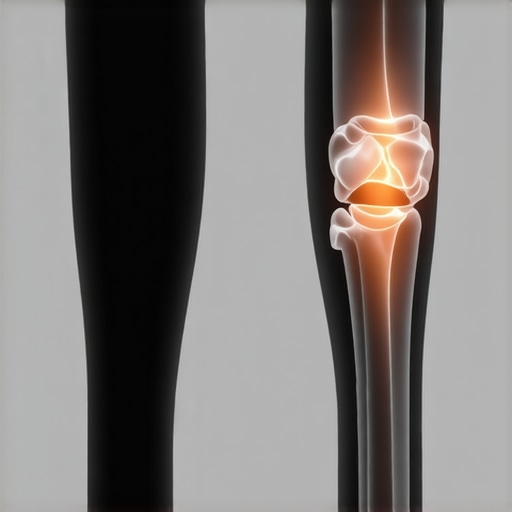
I’ll never forget the Tuesday morning I convinced myself I’d just ‘pulled a muscle’ while reaching for a bag of flour. For a week, I was the king of the heating pad. I rubbed every cream, used every vibrating massage gun, and even tried foam rolling my lower back until I was bruised. But the pain didn’t budge. It felt like a deep, stubborn toothache in my hip, not a typical post-workout burn. It wasn’t until I finally hobbled into a clinic that I realized I was treating a software problem with hardware tools. My joint was physically out of whack, and no amount of stretching was going to ‘relax’ a bone that was sitting in the wrong neighborhood.
[IMAGE_HERE]
The Frustrating Trap of the Fake Muscle Pull
We’ve all been there. You wake up stiff, assume you slept funny, and spend the rest of the day stretching a neck that only gets tighter. I made the massive mistake of thinking that if it hurts, I should stretch it. But here is the cold, hard truth: you cannot stretch your way out of a mechanical misalignment. In fact, stretching a neck that is actually misaligned can trigger more inflammation and muscle guarding. Today, I’m going to show you exactly how to distinguish between a muscle that needs a rest and a joint that needs a reset so you stop wasting weeks on the wrong recovery routine.
Is a chiropractor actually worth the visit for a dull ache?
I get it. You’re skeptical. You think, ‘I can just pop an ibuprofen and it’ll go away.’ But pain is a messenger, not the enemy. According to the Journal of Evidence-Based Complementary & Alternative Medicine, spinal manipulation and structural adjustments are often significantly more effective for acute mechanical pain than simple rest or medication. If you keep ignoring the root cause, you’re just turning down the volume on a fire alarm while the kitchen is still burning. When you finally learn the difference between nerve pain and muscle soreness, you regain control over your own body’s signals.
Why Your Gym Recovery Routine Might Be Failing You
If you’ve noticed that your neck hurts after a session at the gym despite having what you thought was perfect form, it’s likely not your muscles complaining. It’s your structure. Muscles are reactive; they tighten up to protect a joint that feels unstable or misaligned. I spent years trying to ‘loosen’ my hamstrings, only to find out my pelvis was tilted so far forward that the muscles were permanently overstretched. I was literally pulling on a rope that was already at its limit. By shifting focus toward chiropractic adjustments that unlock your lifestyle, you stop fighting your own anatomy and start working with it.
Have you ever spent days treating a ‘sore muscle’ only to realize it wasn’t a muscle issue at all? Have you ever felt that deep, ‘stuck’ sensation that no amount of massage could reach? Drop a comment or reach out—I’d love to hear if you’ve been stuck in that same loop of endless stretching with zero results.
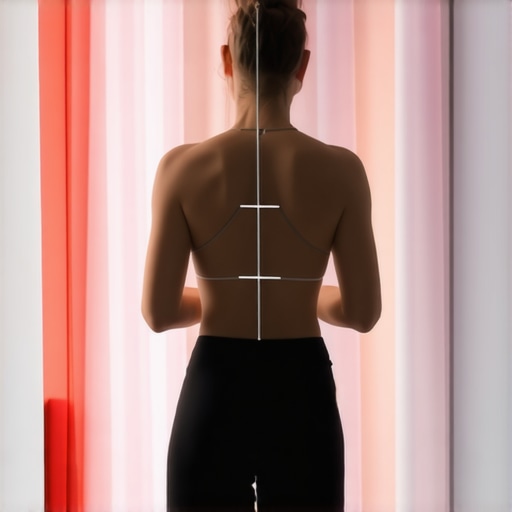
To stop the guessing game, you first need to objectively look at your frame. Stand in front of a full-length mirror in your underwear. Don’t try to ‘fix’ your posture; just stand how you normally do when you’re tired. Put your hands on the bony points of your hips. Is the right hand higher than the left? If so, you’ve just learned how to spot a pelvic tilt in the mirror. This tilt is the silent culprit behind that ‘tight’ hamstring feeling. When your pelvis rotates forward or up, it pulls the muscle taut like a guitar string. Plucking that string with more stretching won’t make it longer; it just makes it more likely to snap.
Put Your Body to the Mirror Test
Before you dive into any corrective work, you have to find where the architecture is failing. A simple way to do this is to check your range of motion without forcing it. You can learn how to test your own spinal rotation at home by sitting on a backless chair, crossing your arms, and turning as far as you can to each side. If you can see the wall behind you on the left but barely reach the corner on the right, you aren’t just stiff—your vertebrae are physically restricted in one direction. I remember one specific month where my right lower back was constantly on fire. I assumed it was a weak core and did planks until I was blue in the face. It wasn’t until I checked my daily habits that I realized how your wallet in your back pocket destroys your hips. I was essentially sitting on a small brick for eight hours a day, forcing my spine to curve laterally just to keep my head level.
Stop Pulling on a Rope That Is Already Taut
Think of your muscles and bones like a sailboat. The bones are the mast, and the muscles are the rigging. If the mast is leaning ten degrees to the left, the ropes on the right are going to be incredibly tight. If you keep stretching those right-side ropes, the mast will eventually lose stability. This is exactly why stretching your hamstrings won’t fix your tight back. You are trying to lengthen a muscle that is actually just holding on for dear life because your pelvis is out of alignment. The reason this happens comes down to mechanoreceptors. These are tiny sensors in your joints that tell your brain where your body is in space. When a joint is stuck, those sensors send ‘danger’ signals, and your brain responds by tightening the surrounding muscles to create a biological splint. You can rub that ‘knot’ all day, but until the joint moves freely, the brain will never release that tension.
Ditch the Stretching and Try These Resets Instead
Instead of passive stretching, focus on active stabilization. The goal is to signal to the brain that the joint is safe so the muscles can finally let go. I start every morning with the dead bug variation that actually protects your spine. By keeping your lower back pressed into the floor while moving your limbs, you force the deep stabilizers to wake up. This ‘resets’ the neuromuscular tension. Pair this with the hip hinge fix for chronic lower back aches to ensure you are moving from your hips and not your lumbar spine. When I switched from aggressive stretching to these focused hinges and resets, my recurring back spasms stopped within a week. I finally stopped shearing my own vertebrae every time I picked up a grocery bag and started moving the way my body was designed to.
I’ll never forget the Tuesday morning I convinced myself I’d just ‘pulled a muscle’ while reaching for a bag of flour. For a week, I was the king of the heating pad. I rubbed every cream, used every vibrating massage gun, and even tried foam rolling my lower back until I was bruised. But the pain didn’t budge. It felt like a deep, stubborn toothache in my hip, not a typical post-workout burn. It wasn’t until I finally hobbled into a clinic that I realized I was treating a software problem with hardware tools. My joint was physically out of whack, and no amount of stretching was going to ‘relax’ a bone that was sitting in the wrong neighborhood.
The Frustrating Trap of the Fake Muscle Pull
We’ve all been there. You wake up stiff, assume you slept funny, and spend the rest of the day stretching a neck that only gets tighter. I made the massive mistake of thinking that if it hurts, I should stretch it. But here is the cold, hard truth: you cannot stretch your way out of a mechanical misalignment. In fact, stretching a neck that is actually misaligned can trigger more inflammation and muscle guarding. Today, I’m going to show you exactly how to distinguish between a muscle that needs a rest and a joint that needs a reset so you stop wasting weeks on the wrong recovery routine.
Is a chiropractor actually worth the visit for a dull ache?
I get it. You’re skeptical. You think, ‘I can just pop an ibuprofen and it’ll go away.’ But pain is a messenger, not the enemy. According to the Journal of Evidence-Based Complementary & Alternative Medicine, spinal manipulation and structural adjustments are often significantly more effective for acute mechanical pain than simple rest or medication. If you keep ignoring the root cause, you’re just turning down the volume on a fire alarm while the kitchen is still burning. When you finally learn the difference between nerve pain and muscle soreness, you regain control over your own body’s signals.
Why Your Gym Recovery Routine Might Be Failing You
If you’ve noticed that your neck hurts after a session at the gym despite having what you thought was perfect form, it’s likely not your muscles complaining. It’s your structure. Muscles are reactive; they tighten up to protect a joint that feels unstable or misaligned. I spent years trying to ‘loosen’ my hamstrings, only to find out my pelvis was tilted so far forward that the muscles were permanently overstretched. I was literally pulling on a rope that was already at its limit. By shifting focus toward chiropractic adjustments that unlock your lifestyle, you stop fighting your own anatomy and start working with it.
Have you ever spent days treating a ‘sore muscle’ only to realize it wasn’t a muscle issue at all? Have you ever felt that deep, ‘stuck’ sensation that no amount of massage could reach? Drop a comment or reach out—I’d love to hear if you’ve been stuck in that same loop of endless stretching with zero results.
To stop the guessing game, you first need to objectively look at your frame. Stand in front of a full-length mirror in your underwear. Don’t try to ‘fix’ your posture; just stand how you normally do when you’re tired. Put your hands on the bony points of your hips. Is the right hand higher than the left? If so, you’ve just learned how to spot a pelvic tilt in the mirror. This tilt is the silent culprit behind that ‘tight’ hamstring feeling. When your pelvis rotates forward or up, it pulls the muscle taut like a guitar string. Plucking that string with more stretching won’t make it longer; it just makes it more likely to snap.
Put Your Body to the Mirror Test
Before you dive into any corrective work, you have to find where the architecture is failing. A simple way to do this is to check your range of motion without forcing it. You can learn how to test your own spinal rotation at home by sitting on a backless chair, crossing your arms, and turning as far as you can to each side. If you can see the wall behind you on the left but barely reach the corner on the right, you aren’t just stiff—your vertebrae are physically restricted in one direction. I remember one specific month where my right lower back was constantly on fire. I assumed it was a weak core and did planks until I was blue in the face. It wasn’t until I checked my daily habits that I realized how your wallet in your back pocket destroys your hips. I was essentially sitting on a small brick for eight hours a day, forcing my spine to curve laterally just to keep my head level.
Stop Pulling on a Rope That Is Already Taut
Think of your muscles and bones like a sailboat. The bones are the mast, and the muscles are the rigging. If the mast is leaning ten degrees to the left, the ropes on the right are going to be incredibly tight. If you keep stretching those right-side ropes, the mast will eventually lose stability. This is exactly why stretching your hamstrings won’t fix your tight back. You are trying to lengthen a muscle that is actually just holding on for dear life because your pelvis is out of alignment. The reason this happens comes down to mechanoreceptors. These are tiny sensors in your joints that tell your brain where your body is in space. When a joint is stuck, those sensors send ‘danger’ signals, and your brain responds by tightening the surrounding muscles to create a biological splint. You can rub that ‘knot’ all day, but until the joint moves freely, the brain will never release that tension.
Ditch the Stretching and Try These Resets Instead
Instead of passive stretching, focus on active stabilization. The goal is to signal to the brain that the joint is safe so the muscles can finally let go. I start every morning with the dead bug variation that actually protects your spine. By keeping your lower back pressed into the floor while moving your limbs, you force the deep stabilizers to wake up. This ‘resets’ the neuromuscular tension. Pair this with the hip hinge fix for chronic lower back aches to ensure you are moving from your hips and not your lumbar spine. When I switched from aggressive stretching to these focused hinges and resets, my recurring back spasms stopped within a week. I finally stopped shearing my own vertebrae every time I picked up a grocery bag and started moving the way my body was designed to.
Most people think the goal of a mobility routine is to reach some ‘perfect’ static position. I’m here to tell you that the truth about perfect posture and why it doesn’t exist is one of the most liberating things you’ll ever learn. Your body wasn’t designed to be a statue. In fact, a study published in the Journal of Bodywork and Movement Therapies suggests that ‘postural variability’—the ability to shift and move efficiently—is a much better indicator of musculoskeletal health than a rigid, ‘ideal’ alignment. When you focus solely on looking like a textbook diagram, you actually lose the fluid mobility your joints crave.
Stop trying to look like a mannequin
The ‘oops’ factor I see most often is the over-correction trap. People hear their posture is bad, so they pull their shoulders back and puff their chest out like they’re on parade. You aren’t fixing your alignment; you’re just creating a different kind of tension. This forced position often leads to ‘rib flaring,’ which shuts down your core and puts massive pressure on your mid-back. Have you ever fallen into this trap? You try so hard to sit straight that your mid-back starts screaming after only ten minutes? Let me know in the comments, because I spent years doing exactly that before I realized I was just trading one pain for another.
The high cost of forcing a ‘straight’ back
The hidden nuance that most people miss is that posture is an output of your nervous system, not a conscious choice of your muscles. If your brain perceives a lack of stability, it will ‘lock’ you into a slouch to protect your center of gravity. This is where the link between mobility and posture becomes undeniable. You can’t just ‘will’ a muscle to relax if the brain thinks the joint it’s protecting is about to give way. This is why chiropractic care is your secret weapon for better posture; it clears the ‘noise’ in the nervous system so your brain can finally find a relaxed baseline. When the communication between your spine and your brain is clear, ‘good’ posture happens automatically without you having to think about it.

Can you actually retrain a nervous system that has been stuck for a decade?
Many of my readers ask if they’ve ‘waited too long’ to fix their frame. The short answer is no, but you can’t get there through brute force. One of the biggest mistakes is trying to ‘grind’ through the pain with aggressive stretching. I’ve seen patients who think that more intensity equals faster results, but why your gentle stretching is actually causing more inflammation is often down to a lack of ‘neurological safety.’ If you push too hard, your brain enters a protective loop, and the very thing you’re trying to fix becomes more entrenched. You have to convince the brain it’s safe to let go before the muscles will ever comply.
Finally, keep in mind that sometimes ‘stiffness’ is a survival mechanism. If you have a weak core or unstable hips, your brain will tighten your lower back muscles to act as a secondary stabilizer. If you keep stretching that ‘tightness’ without building the underlying strength, you are literally removing the only thing keeping your spine stable. It’s a dangerous game that leads to chronic injury. This is why it’s critical to address the architecture of the spine first. If you’re tired of the ‘one step forward, two steps back’ routine, you can always contact us to get a professional assessment that looks at your nervous system and your structure as one single, connected unit.
But once you’ve stopped the immediate fire, how do you prevent the kitchen from catching light again? Long-term spinal health isn’t about massive overhauls; it’s about the small, repetitive equipment choices you make in your daily environment. I spent years buying every ‘ergonomic’ gadget on the market, only to realize that most of them were just expensive band-aids for a broken system. The real shift happened when I stopped looking for comfort and started looking for structural support. If you want to keep your results, you have to audit your environment with the same intensity you used to audit your workout routine.
The only two pieces of gear that actually saved my neck
I don’t believe in cluttered home gyms, but there are two tools I use every single day. The first is a simple, high-density Lacrosse ball. Unlike a foam roller, which is often too broad to target the specific attachments of the hip flexors or the suboccipital muscles, a Lacrosse ball allows for pinpoint myofascial release. I use it to tackle the ‘stuck’ spots that lead to why your dominant side always feels tighter than the other. The second is a manual lumbar roll. Most office chairs have ‘built-in’ support that is either too low or too soft. By learning how to use a lumbar roll correctly in an office chair, you maintain the natural lordotic curve of your spine, preventing the disc compression that leads to mid-day fatigue.

How can I maintain these mobility gains while working a 9-to-5?
Maintenance is a game of micro-habits, not marathon sessions. Dr. Stuart McGill, a leading expert in spine biomechanics and author of Back Mechanic, emphasizes that the ‘cumulative load’ on your tissues is what causes the most damage. This means that sitting for eight hours and then trying to ‘fix’ it with a twenty-minute stretch doesn’t work; the math simply doesn’t add up. Instead, you need to break the cycle of static loading. I recommend setting a silent timer for every 45 minutes to perform the 10-second move to reset your shoulders at work. This tiny interruption stops the nervous system from ‘locking in’ a slumped position and keeps the blood flowing to your spinal discs.
Why your dual monitor setup is probably a trap
If you work at a desk, your screen height is the single biggest predictor of your future neck health. I see so many people with beautiful dual-screen setups who are constantly rotating their heads 30 degrees to the left or right. Over time, this creates a massive imbalance in the sternocleidomastoid muscles. You can read about why your dual monitor setup is twisting your neck and how to fix it by centering your primary task and using the second screen only for reference. It sounds like a small detail, but it’s the difference between waking up with a clear head or a tension headache.
The future of spinal health is in your pocket
I predict that in the next five years, we will see a massive shift toward wearable biofeedback sensors that track spinal shear in real-time. We already have watches that count our steps; soon, we’ll have devices that vibrate when our lumbar spine enters a high-risk posture during a lift or a long drive. Until then, you have to be your own sensor. You need to develop the internal awareness to know how to tell if your headache is coming from your neck before the pain becomes debilitating. If you really want to jumpstart this process, try the 30-second move that opens up tight hips in seconds every evening before bed. It’s the highest ROI movement I know for counteracting a day of sitting.
The painful truths I had to accept before my back finally felt human again
I used to think that a ‘good’ workout meant leaving the gym exhausted, but I learned that the best workout for my spine is the one that leaves it stable. If your joints are screaming, it doesn’t mean you’re working hard; it means your structure is crying for help. I also realized that mobility hacks and simple adjustments are far more powerful than any hour-long yoga session when applied consistently. Lastly, your body is incredibly forgiving if you just stop repeating the same mechanical errors every single day. Your nervous system is always trying to heal; you just have to stop getting in its way.
Gear that actually earned a permanent spot in my recovery bag
You don’t need a garage full of equipment to maintain a healthy frame. I personally swear by a high-density Lacrosse ball for targeting deep hip tension. It’s the only way I’ve found to effectively handle mobility boosts for posture without needing a professional therapist on speed dial every Tuesday. I also keep a manual lumbar roll in my car to keep my discs happy during long drives. Finally, I highly recommend regular professional assessments; understanding how chiropractic adjustments enhance posture and mobility has completely shifted my quality of life by addressing the root mechanical causes before they turn into chronic issues.
#IMAGE_PLACEHOLDER_E#
The version of you that doesn’t wake up in pain is closer than you think
Don’t let a decade of bad habits convince you that stiffness is just ‘part of getting older.’ Your body is a dynamic system capable of incredible change if you provide it with the right environment and structural support. By following the ultimate guide to improving mobility and posture, you aren’t just fixing a symptom; you are reclaiming your ability to move through the world with ease. It’s time to stop fighting your anatomy and start supporting it. When you align your spine, you unlock your lifestyle. Have you ever tried a mobility reset that felt like it finally ‘clicked’ for your lower back? Let me know in the comments below!