

I remember it like it was yesterday. It was a drizzly Tuesday afternoon, and I was stopped at a red light, humming along to the radio. Out of nowhere—BAM. A distracted driver tapped my rear bumper. It wasn’t even a high-speed crash, barely a fender bender. Yet, the next morning, I woke up feeling like my neck had been put through a meat grinder. I couldn’t turn my head to look at my side mirror without a sharp, stabbing pain. It was a classic case of whiplash, and it baffled me. How could such a minor bump cause so much agony? When I finally crawled into my car to investigate, the culprit was staring me right in the face: my headrest was pushed all the way down, acting more like a neck-snapping pivot point than a safety device. I had made a rookie mistake that thousands of drivers make every single day.
The Dangerous Gap in Your Daily Commute
Most of us treat our car headrests as comfort pillows. We lean them back, slide them down, or ignore them entirely. But these aren’t actually “headrests” at all—insurance and safety regulators formally call them head restraints. Their primary job is to stop your head from violently whipping backward in a rear-end collision. When your headrest is too low, your head can actually roll over the top of it, severely hyperextending your neck. If you are already dealing with issues like why your sciatica feels worse when you drive, poor neck positioning only compounds the physical stress of your daily commute. Today, we are going to fix this. I am going to show you exactly how to adjust your headrest to create a protective shield for your spine, ensuring you never have to experience that lingering, miserable neck pain.
Is adjusting your headrest actually worth the effort for minor driving?
You might think, “I only drive ten minutes to work, do I really need to worry about this?” Absolutely. According to research by the Insurance Institute for Highway Safety (IIHS), neck injuries are the most common shape of claim filed under auto insurance, and they frequently occur at speeds under 20 mph. A properly adjusted head restraint reduces the risk of whiplash injuries by up to 11%. It is a tiny, two-second adjustment that offers massive protection. In my early days of trying to optimize my driving posture, I mistakenly thought that leaning the seat far back was better for spinal pressure. I was wrong. That gap between my head and the restraint was huge. For a truly healthy commute, you have to look at the whole picture, from how you sit to how to adjust your steering wheel to save your shoulders. Have you ever walked away from a minor traffic halt with a stiff, aching neck that lasted for weeks?
How to Stop Whiplash Before It Starts
Getting your head restraint in the right position is not about luxury; it is about basic physics. When another vehicle hits you from behind, your seat pushes violently forward into your torso. Your head, however, stays temporarily suspended in space until the seatback forces it to catch up. If there is a massive gap, or if the restraint is too low, your neck acts like a cracked whip. To prevent this, we need to focus on two distinct adjustments: height and distance. When you align these correctly, you create a supportive cradle that absorbs the impact energy rather than letting your cervical spine take the blow.
Align the Top with your Ears
First, grasp the headrest and click it upward. You want the very top of the head restraint to sit at least level with the top of your ears, though ideally, it should align with the very top of your head. I remember helping my brother adjust his brand-new sedan a few years back. He is six-foot-three and had the headrest clicked down to the lowest peg because he thought it looked sportier. We raised it to its maximum height, and though he complained it looked odd, he admitted his chronic upper back tension disappeared within a week of daily driving. If your head restraint is too low, it acts as a pivot point, allowing your head to bend backward over the top. Getting the height right is the absolute foundation of spinal safety.
Close the Gap Between Your Head and the Restraint
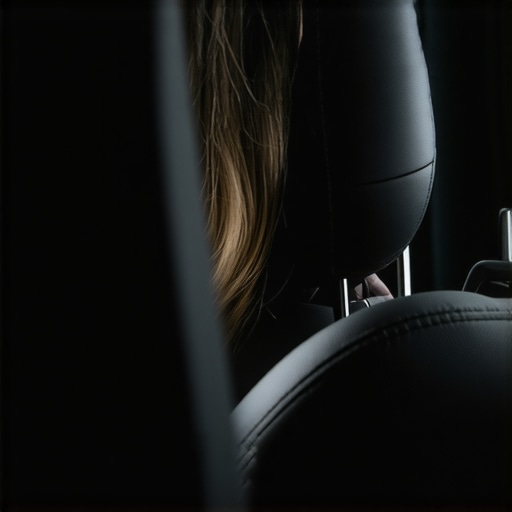
Once the height is set, look at the horizontal distance. The back of your head should be no more than two inches away from the restraint while you are in your normal driving posture. If you can fit your entire fist between your head and the cushion, you are in the danger zone. Adjust your seatback angle so you are sitting relatively upright, rather than lounging back. Keeping this gap small is essential because it limits how far your head can travel backward during a sudden stop. If you find your neck feels persistently stiff despite these changes, you may need a deeper recovery plan. Many drivers find that integrating chiropractic adjustments unlock a pain-free lifestyle today by correcting the long-term misalignments caused by years of poor driving posture.
Use Your Mirrors as a Posture Check
Here is a messy but highly effective trick I started using during my morning commute. Once you have adjusted your seat, your steering wheel, and your headrest into the perfect safety alignment, adjust your rearview mirror. Set it so you can see perfectly out the back window only when you are sitting up straight with your head close to the restraint. The moment you start to slouch, slump forward, or lean too far to one side, your view out the back window will be cut off. This serves as an instant, passive reminder to sit back and correct your alignment. This simple habit works wonders for your spine, much like how mobility boosts for posture expert tips for daily adjustments can keep your joints moving freely throughout the rest of your busy workday.
We often talk about ergonomic chairs and standing desks, but we rarely apply that same level of scrutiny to our cars, despite spending hundreds of hours behind the wheel every year. While raising your head restraint to the correct height is a fantastic first step, there is a much deeper layer to this conversation that most drivers completely miss. When we talk about optimizing your posture on the road, many well-meaning commuters actually fall into a dangerous trap: they try to force static, rigid symmetry. They believe that if they sit perfectly straight, locked in like a mannequin, they are safe from harm. But your spine is designed for dynamic movement, not rigid confinement.
The Core Myth of Rigid Driving Posture
Everyone tells you to sit at a perfect ninety-degree angle and lock your joints in place to protect your back. In my experience, however, trying to hold a rigid, militaristic posture while driving actually backfires. When you tense up your muscles to maintain an artificial shape, you create a massive amount of isometric tension. If you hit a pothole or get bumped from behind while your muscles are already clamped down, that force transfers directly into your joints. It is much better to focus on fluid mobility and relaxed support rather than stiff alignment. If you struggle with keeping your joints loose and functional, understanding how chiropractic adjustments enhance posture and mobility can help retrain your body to find a relaxed, natural neutral instead of a forced, painful position.
Why does stretching your neck at stoplights sometimes make the pain worse?
It is incredibly common to feel a sudden wave of stiffness during a long drive and respond by grabbing your head to pull your ear down to your shoulder, or worse, aggressively rolling your neck in circles. This is a classic “trap” to avoid. When your neck muscles are already fatigued and overstretched from holding your head up against the vibrations of the road, aggressive static stretching actually triggers the stretch reflex. This causes the muscles to contract even harder to protect themselves, leading to more severe spasms. According to a study published in the Journal of Manipulative and Physiological Therapeutics, targeted active mobilization is far superior to passive static stretching for reducing neck strain. Instead of pulling on your head, try gentle shoulder rolls and slow, controlled chin tucks to keep the blood flowing without aggravating the nerves.

When you start to look at your driving comfort as a dynamic puzzle, everything changes. Your head restraint, your steering wheel, and even your seat tilt work together. If you find that your lower body is also suffering during long commutes, you might be dealing with the physical strain of poorly distributed weight. Many drivers discover that their hips and lower back are fighting the seat design, which is why learning why your sciatica feels worse when you drive is so critical for creating a comprehensive pain-management strategy on the road. Have you ever fallen into this trap of trying to force a stiff, perfectly straight posture while driving, only to walk away feeling worse? Let me know in the comments below.
When you start looking at your daily commute as an athletic event for your spine, you realize that passive resting is actually an active challenge. It is not enough to just set your headrest once and forget about it. Over time, your car seat foam compresses, your suspension wears down, and your body adapts to old, slouched patterns. To keep your spine safe over years of daily driving, you need a structured maintenance plan and the right tools in your vehicle’s cabin.
The Best Tools to Keep Your Spine Neutral on the Road
I do not believe in buying expensive, gimmicky car gadgets, but there are two specific tools I personally keep in my driver’s side door. The first is a high-density, small-diameter lumbar roll. Most built-in car lumbar supports are placed too high or push too aggressively into the wrong part of the lower back. I use a slim, cylindrical roll placed exactly at the waistband of my trousers. This maintains the natural forward curve of my lower spine, which automatically prevents my neck from shearing forward. If you have ever wondered about the mechanics of this, learning how to use a lumbar roll correctly in an office chair or car seat can save you from chronic mid-back spasms.
My second tool is a simple lacrosse ball. When I am stuck in standstill traffic, I place the ball between my upper back muscles and the seatback. By gently pressing into the ball, I can release trigger points in my rhomboids and trapezius muscles. This active release technique keeps my shoulder girdle mobile and prevents that tight, forward-rounded shoulder posture that so many commuters develop.
How do I maintain my driving posture over a long road trip?
To keep your spinal alignment intact over hundreds of miles, you need to implement the ’10-Second Reset’ every time you hit a toll booth or stoplight. Instead of just sitting there, tuck your chin straight back, as if you are trying to make a double chin, and press the back of your head firmly into the properly adjusted head restraint for five seconds. This activates the deep cervical flexors that hold your head up. I also recommend checking your rear-view mirror alignment every hour. If you find yourself slouching so much that you can no longer see the road behind you, it is your cue to sit up, engage your core, and reset. For long-term joint health, coupling these road habits with mobility boosts for posture expert tips for daily adjustments ensures that your body does not lock into a stiff, seated shape.
The Future of Ergonomic Driving and Adaptive Seats
The automotive industry is beginning to catch up to spinal biomechanics. We are already seeing the introduction of active head restraints that automatically spring forward to catch the head during a rear-end collision. In the near future, I predict we will see smart seats equipped with pressure-sensitive sensors that detect when a driver begins to slouch, automatically inflating localized air chambers to gently nudge the spine back into a neutral position. Until those smart cars become the standard, however, the responsibility of spinal safety rests entirely on your shoulders. If your joints have already suffered from years of long commutes, seeking professional help like how chiropractic adjustments enhance posture and mobility can help undo the structural damage of the past. My challenge to you today is simple: go out to your car right now, check your headrest height against the top of your ears, and adjust your rear-view mirror to enforce your posture. Do not wait for a minor fender bender to teach you this lesson the hard way.
I remember it like it was yesterday. It was a drizzly Tuesday afternoon, and I was stopped at a red light, humming along to the radio. Out of nowhere—BAM. A distracted driver tapped my rear bumper. It wasn’t even a high-speed crash, barely a fender bender. Yet, the next morning, I woke up feeling like my neck had been put through a meat grinder. I couldn’t turn my head to look at my side mirror without a sharp, stabbing pain. It was a classic case of whiplash, and it baffled me. How could such a minor bump cause so much agony? When I finally crawled into my car to investigate, the culprit was staring me right in the face: my headrest was pushed all the way down, acting more like a neck-snapping pivot point than a safety device. I had made a rookie mistake that thousands of drivers make every single day.
The Dangerous Gap in Your Daily Commute
Most of us treat our car headrests as comfort pillows. We lean them back, slide them down, or ignore them entirely. But these aren’t actually “headrests” at all—insurance and safety regulators formally call them head restraints. Their primary job is to stop your head from violently whipping backward in a rear-end collision. When your headrest is too low, your head can actually roll over the top of it, severely hyperextending your neck. If you are already dealing with issues like why your sciatica feels worse when you drive, poor neck positioning only compounds the physical stress of your daily commute. Today, we are going to fix this. I am going to show you exactly how to adjust your headrest to create a protective shield for your spine, ensuring you never have to experience that lingering, miserable neck pain.
Is adjusting your headrest actually worth the effort for minor driving?
You might think, “I only drive ten minutes to work, do I really need to worry about this?” Absolutely. According to research by the Insurance Institute for Highway Safety (IIHS), neck injuries are the most common shape of claim filed under auto insurance, and they frequently occur at speeds under 20 mph. A properly adjusted head restraint reduces the risk of whiplash injuries by up to 11%. It is a tiny, two-second adjustment that offers massive protection. In my early days of trying to optimize my driving posture, I mistakenly thought that leaning the seat far back was better for spinal pressure. I was wrong. That gap between my head and the restraint was huge. For a truly healthy commute, you have to look at the whole picture, from how you sit to how to adjust your steering wheel to save your shoulders. Have you ever walked away from a minor traffic halt with a stiff, aching neck that lasted for weeks?
How to Stop Whiplash Before It Starts
Getting your head restraint in the right position is not about luxury; it is about basic physics. When another vehicle hits you from behind, your seat pushes violently forward into your torso. Your head, however, stays temporarily suspended in space until the seatback forces it to catch up. If there is a massive gap, or if the restraint is too low, your neck acts like a cracked whip. To prevent this, we need to focus on two distinct adjustments: height and distance. When you align these correctly, you create a supportive cradle that absorbs the impact energy rather than letting your cervical spine take the blow.
Align the Top with your Ears
First, grasp the headrest and click it upward. You want the very top of the head restraint to sit at least level with the top of your ears, though ideally, it should align with the very top of your head. I remember helping my brother adjust his brand-new sedan a few years back. He is six-foot-three and had the headrest clicked down to the lowest peg because he thought it looked sportier. We raised it to its maximum height, and though he complained it looked odd, he admitted his chronic upper back tension disappeared within a week of daily driving. If your head restraint is too low, it acts as a pivot point, allowing your head to bend backward over the top. Getting the height right is the absolute foundation of spinal safety.
Close the Gap Between Your Head and the Restraint
Once the height is set, look at the horizontal distance. The back of your head should be no more than two inches away from the restraint while you are in your normal driving posture. If you can fit your entire fist between your head and the cushion, you are in the danger zone. Adjust your seatback angle so you are sitting relatively upright, rather than lounging back. Keeping this gap small is essential because it limits how far your head can travel backward during a sudden stop. If you find your neck feels persistently stiff despite these changes, you may need a deeper recovery plan. Many drivers find that integrating chiropractic adjustments unlock a pain-free lifestyle today by correcting the long-term misalignments caused by years of poor driving posture.
Use Your Mirrors as a Posture Check
Here is a messy but highly effective trick I started using during my morning commute. Once you have adjusted your seat, your steering wheel, and your headrest into the perfect safety alignment, adjust your rearview mirror. Set it so you can see perfectly out the back window only when you are sitting up straight with your head close to the restraint. The moment you start to slouch, slump forward, or lean too far to one side, your view out the back window will be cut off. This serves as an instant, passive reminder to sit back and correct your alignment. This simple habit works wonders for your spine, much like how mobility boosts for posture expert tips for daily adjustments can keep your joints moving freely throughout the rest of your busy workday.
We often talk about ergonomic chairs and standing desks, but we rarely apply that same level of scrutiny to our cars, despite spending hundreds of hours behind the wheel every year. While raising your head restraint to the correct height is a fantastic first step, there is a much deeper layer to this conversation that most drivers completely miss. When we talk about optimizing your posture on the road, many well-meaning commuters actually fall into a dangerous trap: they try to force static, rigid symmetry. They believe that if they sit perfectly straight, locked in like a mannequin, they are safe from harm. But your spine is designed for dynamic movement, not rigid confinement.
The Core Myth of Rigid Driving Posture
Everyone tells you to sit at a perfect ninety-degree angle and lock your joints in place to protect your back. In my experience, however, trying to hold a rigid, militaristic posture while driving actually backfires. When you tense up your muscles to maintain an artificial shape, you create a massive amount of isometric tension. If you hit a pothole or get bumped from behind while your muscles are already clamped down, that force transfers directly into your joints. It is much better to focus on fluid mobility and relaxed support rather than stiff alignment. If you struggle with keeping your joints loose and functional, understanding how chiropractic adjustments enhance posture and mobility can help retrain your body to find a relaxed, natural neutral instead of a forced, painful position.
Why does stretching your neck at stoplights sometimes make the pain worse?
It is incredibly common to feel a sudden wave of stiffness during a long drive and respond by grabbing your head to pull your ear down to your shoulder, or worse, aggressively rolling your neck in circles. This is a classic “trap” to avoid. When your neck muscles are already fatigued and overstretched from holding your head up against the vibrations of the road, aggressive static stretching actually triggers the stretch reflex. This causes the muscles to contract even harder to protect themselves, leading to more severe spasms. According to a study published in the Journal of Manipulative and Physiological Therapeutics, targeted active mobilization is far superior to passive static stretching for reducing neck strain. Instead of pulling on your head, try gentle shoulder rolls and slow, controlled chin tucks to keep the blood flowing without aggravating the nerves.
When you start to look at your driving comfort as a dynamic puzzle, everything changes. Your head restraint, your steering wheel, and even your seat tilt work together. If you find that your lower body is also suffering during long commutes, you might be dealing with the physical strain of poorly distributed weight. Many drivers discover that their hips and lower back are fighting the seat design, which is why learning why your sciatica feels worse when you drive is so critical for creating a comprehensive pain-management strategy on the road. Have you ever fallen into this trap of trying to force a stiff, perfectly straight posture while driving, only to walk away feeling worse? Let me know in the comments below.
When you start looking at your daily commute as an athletic event for your spine, you realize that passive resting is actually an active challenge. It is not enough to just set your headrest once and forget about it. Over time, your car seat foam compresses, your suspension wears down, and your body adapts to old, slouched patterns. To keep your spine safe over years of daily driving, you need a structured maintenance plan and the right tools in your vehicle’s cabin.
The Best Tools to Keep Your Spine Neutral on the Road
I do not believe in buying expensive, gimmicky car gadgets, but there are two specific tools I personally keep in my driver’s side door. The first is a high-density, small-diameter lumbar roll. Most built-in car lumbar supports are placed too high or push too aggressively into the wrong part of the lower back. I use a slim, cylindrical roll placed exactly at the waistband of my trousers. This maintains the natural forward curve of my lower spine, which automatically prevents my neck from shearing forward. If you have ever wondered about the mechanics of this, learning how to use a lumbar roll correctly in an office chair or car seat can save you from chronic mid-back spasms.
My second tool is a simple lacrosse ball. When I am stuck in standstill traffic, I place the ball between my upper back muscles and the seatback. By gently pressing into the ball, I can release trigger points in my rhomboids and trapezius muscles. This active release technique keeps my shoulder girdle mobile and prevents that tight, forward-rounded shoulder posture that so many commuters develop.
How do I maintain my driving posture over a long road trip?
To keep your spinal alignment intact over hundreds of miles, you need to implement the ’10-Second Reset’ every time you hit a toll booth or stoplight. Instead of just sitting there, tuck your chin straight back, as if you are trying to make a double chin, and press the back of your head firmly into the properly adjusted head restraint for five seconds. This activates the deep cervical flexors that hold your head up. I also recommend checking your rear-view mirror alignment every hour. If you find yourself slouching so much that you can no longer see the road behind you, it is your cue to sit up, engage your core, and reset. For long-term joint health, coupling these road habits with mobility boosts for posture expert tips for daily adjustments ensures that your body does not lock into a stiff, seated shape.
The Future of Ergonomic Driving and Adaptive Seats
The automotive industry is beginning to catch up to spinal biomechanics. We are already seeing the introduction of active head restraints that automatically spring forward to catch the head during a rear-end collision. In the near future, I predict we will see smart seats equipped with pressure-sensitive sensors that detect when a driver begins to slouch, automatically inflating localized air chambers to gently nudge the spine back into a neutral position. Until those smart cars become the standard, however, the responsibility of spinal safety rests entirely on your shoulders. If your joints have already suffered from years of long commutes, seeking professional help like how chiropractic adjustments enhance posture and mobility can help undo the structural damage of the past. My challenge to you today is simple: go out to your car right now, check your headrest height against the top of your ears, and adjust your rear-view mirror to enforce your posture. Do not wait for a minor fender bender to teach you this lesson the hard way.
Three Roadway Hard Truths That Completely Changed My Perspective
After years of treating patients and logging thousands of miles on the highway, I realized that we look at car safety completely backward. We pay thousands extra for side-curtain airbags and automatic braking systems, yet we ignore the simple mechanical settings right behind our skulls. Here is the insider wisdom I had to learn through trial, error, and a fair share of personal neck pain:
- Muscle memory is your enemy in a car: Your body will naturally slouch into whatever shape your seat provides. If you do not actively break that mold by using tools like the 10-second neck reset for long distance drivers, you are passively molding your spine into a rounded shape.
- Softness does not equal safety: The plush, pillow-soft headrests that feel luxurious in the dealership showroom are often the worst at absorbing sudden force. A supportive, slightly firmer restraint keeps your skull from accelerating backward much more effectively.
- Static symmetry is a mirage: No one sits perfectly symmetrical while driving because our cars are not built symmetrically. Your right foot is busy on the pedals while your left foot rests, which naturally twists the pelvis. This is why regular dynamic mobility work is non-negotiable.
My Travel Bag Essentials for Spinal Preservation
I do not travel without a few key items that keep my neck and lower back stable. I trust these simple tools because they counteract the natural vibrations and poor seat contours that trigger muscle spasms:
- McKenzie Method Lumbar Roll: This is my absolute favorite tool because it has a quick-release strap that wraps around almost any bucket seat, maintaining a proper lumbar arch so your headrest actually lines up with your skull.
- A standard lacrosse ball: I place this behind my shoulder blades when stopped at rest areas to target specific tight trigger points before they lock up my neck.
- A thin memory foam seat wedge: This is especially useful for older vehicles with sagging bottom cushions. It tilts your pelvis slightly forward, automatically taking the pressure off your sciatic nerve.
Make Your Commute a Treatment Rather Than a Hazard
You do not have to accept chronic stiffness and the fear of whiplash as a tax for driving. By spending just two minutes adjusting your car’s safety features and introducing simple alignment habits, you can protect your spine and arrive at your destination feeling loose and energized. Your driving seat should act as a supportive frame, not a source of physical stress. Let us start practicing better chiropractic care for better posture every time we turn the ignition key.
Have you ever checked your headrest height before driving, or has it stayed on the lowest setting since you bought your vehicle? Let me know your routine in the comments below.