
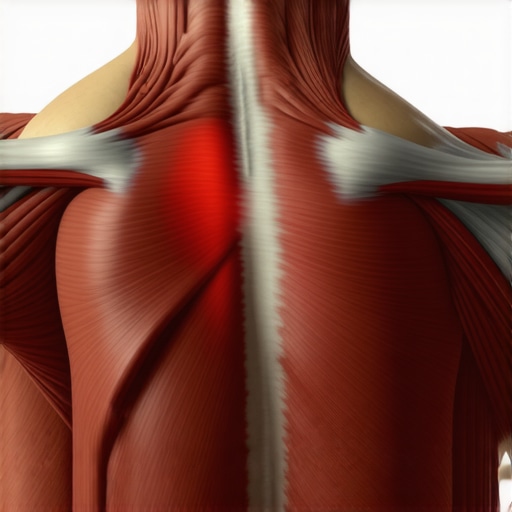
I remember sitting at my kitchen table last October, staring at my laptop, when I tried to pinch my shoulders back. Nothing moved. It literally felt like someone had poured superglue between my shoulder blades, let it dry, and dared me to take a deep breath. I reached back to rub the spot, but my hand couldn’t even find the right angle. That was the moment I realized my daily habits were completely locking up my upper body. I had spent years ignoring the subtle tightness, thinking it was just part of getting older. It wasn’t. It was a cry for help from my thoracic spine.
The Day My Back Decided to Freeze Completely
For months, I made the classic mistake of trying to stretch my way out of this stiffness. I would pull my arm across my chest for minutes at a time, or perform aggressive door frame stretches, wondering why the relief only lasted for about thirty seconds. I didn’t realize that my aggressive static stretching was actually making my joints more unstable, forcing the surrounding muscles to grip even harder to protect me. What I actually needed wasn’t more stretching; I needed targeted mobilization and a better understanding of how my daily habits were locking me down.
Today, we are going to unpack exactly why that stubborn, cement-like feeling settles between your shoulder blades and how to finally melt it away. We will look at how simple changes in your workspace and movement routine can unlock that stiff upper back for good. If you have spent months feeling like your upper back is a solid sheet of metal, you are in the right place.
Is this cement-back feeling actually permanent?
It is easy to worry that your joints are permanently damaged or that you are just stuck with this posture forever. But in most cases, that “glued” sensation is simply your nervous system creating protective muscle tension. When we sit in a collapsed position, our brain decides to park our joints in place to save energy. According to anatomical research published by the National Institutes of Health, prolonged static postures physically alter the sliding properties of our myofascial tissue, making muscles literally stick to one another. The good news is that this tissue is highly adaptable, and we can restore that sliding motion with the right inputs.
Early on, I wasted so much time focusing on the wrong areas. I kept rubbing my neck when the real culprit was my locked-up rib cage and lack of mid-back rotation. Once I began incorporating mobility hacks into my morning routine, everything changed. I also discovered that simple environmental tweaks, like learning how to adjust your steering wheel, kept my shoulders from creeping up toward my ears during my daily commute.
Have you ever tried to roll your shoulders back only to feel a sharp, pinching block in the middle of your spine? Let me know in the comments below if you are currently dealing with this. In the next section, we are going to dive into the exact physical steps and active movements you need to finally break that sticky tissue apart and get your spine moving freely again.
How to Melt the Mid-Back Armor with Targeted Movement
To break through that locked-up sensation, we have to stop treating our spine like a single, rigid rod. Your thoracic spine is built to rotate, bend, and extend. When you starve it of those movements, your nervous system puts the brakes on, locking your joints down to prevent what it perceives as dangerous instability. To release this grip, we need to show the brain that it is safe to move again by using progressive, active mobilization techniques rather than aggressive, static pulling.
I remember trying to force my way through a heavy lifting session when my upper back felt like solid concrete. I tried to push through a set of overhead presses, but my mid-back simply wouldn’t budge. My body compensated by arching my lower spine excessively, which left me with a nasty pinch that lasted for days. That messy session taught me that you cannot force joints to move with brute strength; you must invite them to move using gentle, coordinated breathing and rotational patterns.
Ditch the static pulling and start rotating
If you want to free your shoulder blades, you need to focus on rib cage rotation. The ribs connect directly to your thoracic spine, meaning that if your ribs are stuck, your upper back is going to feel like it is encased in plaster. Instead of pulling your arm across your chest, try the sideline book-opener drill. Lie on your side with your knees bent at ninety degrees to lock your lower back in place. Slowly sweep your top arm open, letting your eyes follow your hand as your chest opens to the ceiling. This gentle, active movement tells your nervous system to release the protective tension holding your ribs hostage.

By moving with your breath, you naturally desensitize the hyperactive muscles around your shoulder blades. If you are struggling with a persistent, nagging sensation in this area, you might also want to learn the secret to calming a sharp pinch in your shoulder blade to address those localized hot spots. Once you restore basic rotational sliding, you can begin to tackle extension.
Use the floor to restore your natural extension
Another highly effective daily drill is the active wall press. Stand with your heels, glutes, and upper back flat against a wall, and slowly slide your arms up in a “Y” shape without letting your lower back arch off the flat surface. If you find yourself struggling to keep your hands flat, it is a clear sign that your shoulder mobility is limited by your stiff mid-back. If this is the case, practicing the simple drill to improve your overhead shoulder reach will help you regain that range of motion without straining your neck.
When these home exercises are not quite enough to break through years of desk-bound stiffness, professional care can make a massive difference. Learning how chiropractic adjustments enhance posture and mobility can help pinpoint exactly which vertebral segments are restricted, giving you a clean slate so your daily mobility drills actually stick. If you frequently find yourself gasping for air when sitting upright, you might also be experiencing how why your desk posture is ruining your breathing capacity, which further locks down your rib cage and mid-back muscles.
When we look at the mechanics of the mid-back, we have to look past the generic advice of simply stretching more. In my journey to reclaim my upper body movement, I fell headfirst into the trap of thinking that if a joint is tight, you just need to pull on it harder. This is perhaps the most common misconception in the physical wellness world today. We treat our bodies like a collection of tight ropes that just need to be yanked loose, when in reality, your nervous system controls muscle tension like a dimmer switch. If your brain senses instability, it dials up the tension to keep you safe.
Why does stretching your upper back feel good but never last?
Most of us have been taught that if a muscle feels tight, we must stretch it. However, static stretching actually decreases the neural drive to those muscles, which can temporarily desensitize the area. The relief is fleeting because you haven’t addressed the underlying motor control. When you passively pull your shoulder blades apart, you might enjoy a brief window of ease, but as soon as you sit back down at your computer, your brain orders those muscles to tighten right back up to support your slumped frame. To break this cycle, you need active, loaded movement that teaches your nervous system how to control these new ranges of motion.
The real secret lies in understanding the difference between structural tightness and neurological guarding. A landmark study on spinal biomechanics published by the National Institutes of Health demonstrates that passive tissue changes require consistent, long-term physical loading, whereas muscle tone can change instantly based on neural feedback. This is why a targeted manual therapy session works so beautifully when paired with movement. If you want lasting results, you have to stop separating your recovery into isolated buckets. Understanding how chiropractic adjustments enhance posture and mobility is critical because the adjustment resets the joint’s neural feedback loop, giving you a temporary window of neurological freedom. But if you do not immediately follow that up with active movement, your body will revert to its default, protective settings.

Another common pitfall is ignoring the joints directly above and below the sticky area. Many people spend weeks performing thoracic extension drills on a foam roller while completely ignoring the fact that their lower back is arching excessively to compensate. This is what we call “fake mobility.” Your mid-back remains as stiff as a board, while your lumbar spine takes a beating. You must learn to lock down your pelvis and lower rib cage to isolate the movement to your thoracic spine. If you are struggling to keep your lower back quiet during these exercises, practicing improving posture through mobility practical chiropractor strategies will help you learn how to stabilize your core while moving your upper frame. For those who feel an absolute block every time they try to stand tall, exploring why chiropractic care is your secret weapon for better posture can help clear the joint restrictions that are physically stopping your vertebrae from tilting back.
Have you ever fallen into the trap of stretching the same spot for months without getting any more flexible? Let me know in the comments below! If you want to dive deeper into building a highly resilient back that can handle hours of desk work without locking up, check out revolutionize your posture with targeted mobility exercises. By moving away from passive pulling and embracing active, nervous-system-based mobilization, you will finally melt that upper back armor for good.
Once you break through that initial layer of stubborn mid-back tension, the real work begins. It is one thing to melt the armor for an afternoon, but keeping those joints sliding freely week after week requires a strategic maintenance plan. When I first unlocked my thoracic spine, I falsely assumed I was cured forever. Within two weeks of returning to my normal desk habits without a maintenance routine, that familiar, heavy cement-like feeling began creeping back between my shoulder blades. I realized that mobility is not a permanent achievement; it is a dynamic state of physical hygiene.
How do I maintain my mid-back mobility over time?
To keep your upper body moving fluidly, you have to transition from aggressive corrective drills to consistent, low-friction habits. For me, this meant setting up a dedicated workspace that does not constantly force my body into a defensive posture. I highly recommend investing in a high-quality external monitor and learning how to adjust your monitor to stop reaching with your chin. This single environmental tweak prevents the forward-head posture that pulls the entire thoracic spine into a locked, rounded position.
Additionally, we must look at how we transition our bodies throughout the day. If you use an adjustable workstation, make sure you understand the best way to transition to a standing desk safely so you do not accidentally overload your lower back and create secondary tension patterns up the kinetic chain. For daily tissue maintenance, I personally swear by a double-lacrosse ball (often called a mobility peanut). By taping two lacrosse balls together, you create a channel for your spinal processes, allowing you to selectively mobilize the ribs and muscles on either side of the vertebrae without pressing directly on the bone. It is an incredibly precise tool that outperforms a standard foam roller every single time.

As we look to the future of spinal health, the integration of biofeedback wearable sensors and personalized biomechanics is set to revolutionize how we track posture. In the coming years, smart clothing will likely cue us to perform active micro-rotations the second our myofascial tissue begins to stiffen at our desks. Until then, we must rely on deliberate movement routines and professional support to keep our joints aligned. Incorporating mobility boosts for posture expert tips for daily adjustments into your weekly schedule ensures that micro-stiffness never has the chance to accumulate into permanent joint restriction.
According to clinical guidelines published by the American Chiropractic Association (ACA), maintaining spinal health requires a dual approach of active patient mobilization and periodic manual adjustments to address mechanical joint fixations that exercise alone cannot clear. If you have been doing your daily drills but still feel a persistent structural block, consider how chiropractic adjustments unlock a pain-free lifestyle today by restoring proper arthrokinematics to your rib cage and thoracic facets. My challenge to you today is to try one advanced maintenance tip: tape two tennis or lacrosse balls together tonight, spend just two minutes rolling out the muscles along your mid-back, and feel the immediate difference in your breathing capacity.
I remember sitting at my kitchen table last October, staring at my laptop, when I tried to pinch my shoulders back. Nothing moved. It literally felt like someone had poured superglue between my shoulder blades, let it dry, and dared me to take a deep breath. I reached back to rub the spot, but my hand couldn’t even find the right angle. That was the moment I realized my daily habits were completely locking up my upper body. I had spent years ignoring the subtle tightness, thinking it was just part of getting older. It wasn’t. It was a cry for help from my thoracic spine.
The Day My Back Decided to Freeze Completely
For months, I made the classic mistake of trying to stretch my way out of this stiffness. I would pull my arm across my chest for minutes at a time, or perform aggressive door frame stretches, wondering why the relief only lasted for about thirty seconds. I didn’t realize that my aggressive static stretching was actually making my joints more unstable, forcing the surrounding muscles to grip even harder to protect me. What I actually needed wasn’t more stretching; I needed targeted mobilization and a better understanding of how my daily habits were locking me down.
Today, we are going to unpack exactly why that stubborn, cement-like feeling settles between your shoulder blades and how to finally melt it away. We will look at how simple changes in your workspace and movement routine can unlock that stiff upper back for good. If you have spent months feeling like your upper back is a solid sheet of metal, you are in the right place.
Is this cement-back feeling actually permanent?
It is easy to worry that your joints are permanently damaged or that you are just stuck with this posture forever. But in most cases, that “glued” sensation is simply your nervous system creating protective muscle tension. When we sit in a collapsed position, our brain decides to park our joints in place to save energy. According to anatomical research published by the National Institutes of Health, prolonged static postures physically alter the sliding properties of our myofascial tissue, making muscles literally stick to one another. The good news is that this tissue is highly adaptable, and we can restore that sliding motion with the right inputs.
Early on, I wasted so much time focusing on the wrong areas. I kept rubbing my neck when the real culprit was my locked-up rib cage and lack of mid-back rotation. Once I began incorporating mobility hacks into my morning routine, everything changed. I also discovered that simple environmental tweaks, like learning how to adjust your steering wheel, kept my shoulders from creeping up toward my ears during my daily commute.
Have you ever tried to roll your shoulders back only to feel a sharp, pinching block in the middle of your spine? Let me know in the comments below if you are currently dealing with this. In the next section, we are going to dive into the exact physical steps and active movements you need to finally break that sticky tissue apart and get your spine moving freely again.
How to Melt the Mid-Back Armor with Targeted Movement
To break through that locked-up sensation, we have to stop treating our spine like a single, rigid rod. Your thoracic spine is built to rotate, bend, and extend. When you starve it of those movements, your nervous system puts the brakes on, locking your joints down to prevent what it perceives as dangerous instability. To release this grip, we need to show the brain that it is safe to move again by using progressive, active mobilization techniques rather than aggressive, static pulling.
I remember trying to force my way through a heavy lifting session when my upper back felt like solid concrete. I tried to push through a set of overhead presses, but my mid-back simply wouldn’t budge. My body compensated by arching my lower spine excessively, which left me with a nasty pinch that lasted for days. That messy session taught me that you cannot force joints to move with brute strength; you must invite them to move using gentle, coordinated breathing and rotational patterns.
Ditch the static pulling and start rotating
If you want to free your shoulder blades, you need to focus on rib cage rotation. The ribs connect directly to your thoracic spine, meaning that if your ribs are stuck, your upper back is going to feel like it is encased in plaster. Instead of pulling your arm across your chest, try the sideline book-opener drill. Lie on your side with your knees bent at ninety degrees to lock your lower back in place. Slowly sweep your top arm open, letting your eyes follow your hand as your chest opens to the ceiling. This gentle, active movement tells your nervous system to release the protective tension holding your ribs hostage.
#IMAGE_PLACE_HOLDER_B#
By moving with your breath, you naturally desensitize the hyperactive muscles around your shoulder blades. If you are struggling with a persistent, nagging sensation in this area, you might also want to learn the secret to calming a sharp pinch in your shoulder blade to address those localized hot spots. Once you restore basic rotational sliding, you can begin to tackle extension.
Use the floor to restore your natural extension
Another highly effective daily drill is the active wall press. Stand with your heels, glutes, and upper back flat against a wall, and slowly slide your arms up in a “Y” shape without letting your lower back arch off the flat surface. If you find yourself struggling to keep your hands flat, it is a clear sign that your shoulder mobility is limited by your stiff mid-back. If this is the case, practicing the simple drill to improve your overhead shoulder reach will help you regain that range of motion without straining your neck.
When these home exercises are not quite enough to break through years of desk-bound stiffness, professional care can make a massive difference. Learning how chiropractic adjustments enhance posture and mobility can help pinpoint exactly which vertebral segments are restricted, giving you a clean slate so your daily mobility drills actually stick. If you frequently find yourself gasping for air when sitting upright, you might also be experiencing how why your desk posture is ruining your breathing capacity, which further locks down your rib cage and mid-back muscles.
When we look at the mechanics of the mid-back, we have to look past the generic advice of simply stretching more. In my journey to reclaim my upper body movement, I fell headfirst into the trap of thinking that if a joint is tight, you just need to pull on it harder. This is perhaps the most common misconception in the physical wellness world today. We treat our bodies like a collection of tight ropes that just need to be yanked loose, when in reality, your nervous system controls muscle tension like a dimmer switch. If your brain senses instability, it dials up the tension to keep you safe.
Why does stretching your upper back feel good but never last?
Most of us have been taught that if a muscle feels tight, we must stretch it. However, static stretching actually decreases the neural drive to those muscles, which can temporarily desensitize the area. The relief is fleeting because you haven’t addressed the underlying motor control. When you passively pull your shoulder blades apart, you might enjoy a brief window of ease, but as soon as you sit back down at your computer, your brain orders those muscles to tighten right back up to support your slumped frame. To break this cycle, you need active, loaded movement that teaches your nervous system how to control these new ranges of motion.
The real secret lies in understanding the difference between structural tightness and neurological guarding. A landmark study on spinal biomechanics published by the National Institutes of Health demonstrates that passive tissue changes require consistent, long-term physical loading, whereas muscle tone can change instantly based on neural feedback. This is why a targeted manual therapy session works so beautifully when paired with movement. If you want lasting results, you have to stop separating your recovery into isolated buckets. Understanding how chiropractic adjustments enhance posture and mobility is critical because the adjustment resets the joint’s neural feedback loop, giving you a temporary window of neurological freedom. But if you do not immediately follow that up with active movement, your body will revert to its default, protective settings.
#IMAGE_PLACE_HOLDER_C#
Another common pitfall is ignoring the joints directly above and below the sticky area. Many people spend weeks performing thoracic extension drills on a foam roller while completely ignoring the fact that their lower back is arching excessively to compensate. This is what we call “fake mobility.” Your mid-back remains as stiff as a board, while your lumbar spine takes a beating. You must learn to lock down your pelvis and lower rib cage to isolate the movement to your thoracic spine. If you are struggling to keep your lower back quiet during these exercises, practicing improving posture through mobility practical chiropractor strategies will help you learn how to stabilize your core while moving your upper frame. For those who feel an absolute block every time they try to stand tall, exploring why chiropractic care is your secret weapon for better posture can help clear the joint restrictions that are physically stopping your vertebrae from tilting back.
Have you ever fallen into the trap of stretching the same spot for months without getting any more flexible? Let me know in the comments below! If you want to dive deeper into building a highly resilient back that can handle hours of desk work without locking up, check out revolutionize your posture with targeted mobility exercises. By moving away from passive pulling and embracing active, nervous-system-based mobilization, you will finally melt that upper back armor for good.
Once you break through that initial layer of stubborn mid-back tension, the real work begins. It is one thing to melt the armor for an afternoon, but keeping those joints sliding freely week after week requires a strategic maintenance plan. When I first unlocked my thoracic spine, I falsely assumed I was cured forever. Within two weeks of returning to my normal desk habits without a maintenance routine, that familiar, heavy cement-like feeling began creeping back between my shoulder blades. I realized that mobility is not a permanent achievement; it is a dynamic state of physical hygiene.
How do I maintain my mid-back mobility over time?
To keep your upper body moving fluidly, you have to transition from aggressive corrective drills to consistent, low-friction habits. For me, this meant setting up a dedicated workspace that does not constantly force my body into a defensive posture. I highly recommend investing in a high-quality external monitor and learning how to adjust your monitor to stop reaching with your chin. This single environmental tweak prevents the forward-head posture that pulls the entire thoracic spine into a locked, rounded position.
Additionally, we must look at how we transition our bodies throughout the day. If you use an adjustable workstation, make sure you understand the best way to transition to a standing desk safely so you do not accidentally overload your lower back and create secondary tension patterns up the kinetic chain. For daily tissue maintenance, I personally swear by a double-lacrosse ball (often called a mobility peanut). By taping two lacrosse balls together, you create a channel for your spinal processes, allowing you to selectively mobilize the ribs and muscles on either side of the vertebrae without pressing directly on the bone. It is an incredibly precise tool that outperforms a standard foam roller every single time.
#IMAGE_PLACE_HOLDER_D#
As we look to the future of spinal health, the integration of biofeedback wearable sensors and personalized biomechanics is set to revolutionize how we track posture. In the coming years, smart clothing will likely cue us to perform active micro-rotations the second our myofascial tissue begins to stiffen at our desks. Until then, we must rely on deliberate movement routines and professional support to keep our joints aligned. Incorporating mobility boosts for posture expert tips for daily adjustments into your weekly schedule ensures that micro-stiffness never has the chance to accumulate into permanent joint restriction.
According to clinical guidelines published by the American Chiropractic Association (ACA), maintaining spinal health requires a dual approach of active patient mobilization and periodic manual adjustments to address mechanical joint fixations that exercise alone cannot clear. If you have been doing your daily drills but still feel a persistent structural block, consider how chiropractic adjustments unlock a pain-free lifestyle today by restoring proper arthrokinematics to your rib cage and thoracic facets. My challenge to you today is to try one advanced maintenance tip: tape two tennis or lacrosse balls together tonight, spend just two minutes rolling out the muscles along your mid-back, and feel the immediate difference in your breathing capacity.
The Hardest Lesson I Learned About Forcing Joints to Move
When I was in the thick of my back stiffness, I fell into the trap of thinking I could bully my body into alignment. Here are three major realizations that shifted my entire approach to physical recovery:
- Your nervous system owns your mobility: You can pull and tug on a muscle all day, but if your brain senses weakness or instability, it will immediately trigger a spasm to protect you. Building strength in your new ranges of motion is the only way to make mobility stick.
- Pain is often a loud neighbor, not the problem: The burning between your shoulder blades is usually just complaining because it is being overstretched. The real culprit is usually a locked-up chest or a completely frozen rib cage. Stop focusing only on where it hurts.
- Passive tools are just primers: Foam rollers and massage guns feel incredible, but they only give you a brief fifteen-minute window of reduced muscle tone. If you do not immediately use that window to perform active, rotational movements, you are wasting your time.
My Essential Toolkit for Upper Body Freedom
You do not need an entire gym to keep your thoracic spine happy. These are the exact items and resources that got me out of pain and kept me moving:
- The taped lacrosse ball peanut: By placing this directly between your shoulder blades against a wall, you can target the small facet joints of your spine with incredible precision. It is cheap, portable, and far more effective than a bulky foam roller.
- The “Y” wall slide drill: I treat this exercise like physical teeth-brushing. Spending two minutes doing active wall presses before lunch resets my posture and keeps my chest from collapsing.
- Professional structural adjustments: When the joints of my rib cage feel physically jammed, I skip the self-treatment and seek a chiropractor. For a complete blueprint on how these physical therapies work hand-in-hand with daily habits, check out the ultimate guide to improving mobility and posture in 2025.
Your Turn to Melt the Armor
Unlocking a stiff upper back is not about finding one magical stretch; it is about changing how you communicate with your nervous system. By replacing passive, aggressive pulling with active, rotational patterns, you show your brain that it is safe to let go of the tension. When you pair these daily movements with strategic care, like knowing how chiropractic adjustments unlock a pain-free lifestyle today, you give your spine the ultimate environment to heal and stay fluid. Do not let another day pass feeling like your mid-back is encased in concrete.
Have you ever struggled with a stubborn knot between your shoulder blades that just won’t budge no matter how much you stretch? Let me know in the comments below!