
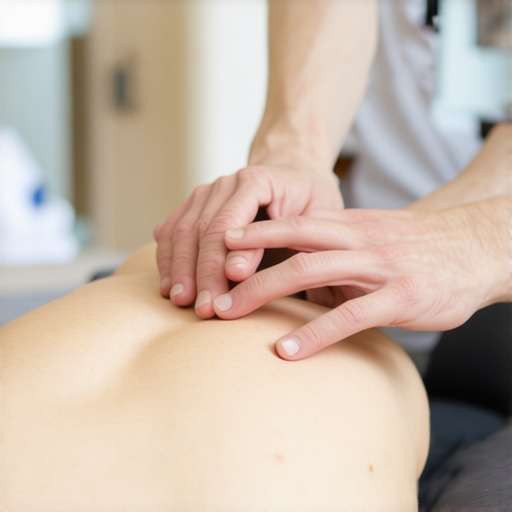
I’ll never forget the Tuesday afternoon I reached for a bottle of milk in the fridge and felt a ‘pop’ that instantly took my breath away. No, really—I could not inhale without a stabbing needle piercing my chest. I spent three hours convinced my heart was giving out, only for the doctor to tell me my vitals were perfect. I felt like I was losing my mind. It turns out, I had a rib that had decided to go rogue, shifting just enough to make every micro-movement a nightmare. It is a specific kind of misery that makes you feel fragile and frustrated all at once. Today, I want to walk you through exactly what is happening when your cage feels ‘off’ and how we can get you back to breathing without that dreaded catch.
That Sharp Pain When You Breathe Is Not All In Your Head
For years, I ignored the occasional twinges in my back, thinking I just needed to sit up straighter. But when a rib actually misaligns, it is a game changer. You might notice why your ribs feel tight when you are under high stress, but this is different; it is a mechanical blockage. Early on, I made the huge mistake of trying to ‘self-adjust’ by twisting violently over the back of a kitchen chair. I thought if I could just hear a crack, the pain would vanish. Instead, I inflamed the surrounding muscles so badly I could barely move for a week. I’ve since learned that how a single rib adjustment can stop that sharp pain when breathing is often the only real way to reset the joint without causing more trauma. Have you ever felt that sharp ‘catch’ in your chest that makes you afraid to take a deep breath? Drop a comment below; I’d love to know I wasn’t the only one spooked by it.
Can a bone actually move or is it just a muscle spasm?
Many people are skeptical that a rib can truly ‘pop out.’ While it does not usually fully dislocate like a shoulder might, the tiny joints where your ribs meet your spine or breastbone can become restricted or ‘subluxated.’ According to the Mayo Clinic, this often presents as costochondritis, where the cartilage becomes inflamed, mimicking more serious cardiac events. If you are struggling with this, you might also find that the move that instantly relieves tension in your lower ribs can offer temporary relief while you wait for a professional to take a look. Often, our own breathing habits are creating tightness that pulls these ribs out of their happy place to begin with. We are going to look at the specific stretches and movements that actually help, rather than hurt, your recovery process.
Stop fighting the spasm and start breathing into it
The immediate instinct when a rib feels stuck is to pull, push, or twist your body in hopes of a release. However, when a rib joint locks up, the tiny muscles between your ribs—the intercostals—go into a protective ‘guarded’ state. It feels like a tight band around your chest. Most people try to take shallow breaths to avoid the pain, but this actually keeps the muscles in a state of alarm. You need to use diaphragmatic breathing to gently push against that restriction from the inside out. Think of your ribcage like an umbrella; you want it to open 360 degrees, not just push out the front. By learning how your breathing habits are creating tightness in your scalenes, you can begin to offload the pressure on those upper ribs. Start with three-second inhales through the nose, focusing on expanding your side ribs rather than lifting your shoulders toward your ears.#IMAGE_PLACE_HOLDER_B#
Stack your ribs over your hips to stop the flare
One of the biggest culprits of recurring rib pain is a ‘shearing’ force caused by poor spinal alignment. If you stand with your lower back arched and your ribs poking forward, you are essentially hanging on the ligaments of your mid-back. This is known as rib flare. To fix this, you need to ‘stack’ your skeleton. Imagine a plumb line dropping from your ear, through your shoulder, and down to your hip. When you learn how to stop your ribs from flaring when you lift your arms, you take the mechanical stress off the costovertebral joints. I used to think standing ‘tall’ meant puffing my chest out like a soldier, but that actually caused my T4 rib to pop out twice in one month. Now, I focus on keeping my bottom ribs ‘tucked’ into my waistband, which creates a stable cylinder of support.
Gentle expansion is better than a forced crack
There is a huge temptation to perform ‘self-adjustments’ by grabbing a doorway and twisting until something pops. I’ve been there—I once tried to use a tennis ball to ‘knead’ a rib back into place and ended up with a bruise the size of a grapefruit and even more inflammation. The key is controlled mobility. Instead of aggressive twisting, use the 30 second wall squeeze to fix forward shoulder roll, which helps reposition the scapula so it isn’t grinding against the ribcage. Using mobility hacks simple adjustments for a more active life allows the joint to find its way back into neutral without the trauma of a forced rotation. If you feel a ‘catch,’ stop. Work around the pain, not through it.
Why your professional reset is the shortcut to stability
While stretches and breathing are vital for maintenance, a rib that is truly ‘stuck’ often requires a high-velocity, low-amplitude thrust to reset the joint mechanoreceptors. This is why chiropractic care is your secret weapon for better posture and rib health. An expert can identify exactly which of the 24 ribs is restricted and in which direction. Once that mechanical blockage is cleared, the nervous system stops sending the ‘pain signal,’ and the surrounding muscles finally let go of their protective grip. You will find that how chiropractic adjustments enhance posture and mobility is not just about the ‘crack’—it is about restoring the sliding surface of the joint so you can rotate your torso without that sharp, localized pinch.
Stop trying to sit like a statue
Most of us were told as children to ‘sit up straight’ with our shoulders pinned back like soldiers on parade. Here is the contrarian truth that most posture gurus won’t tell you: that rigid, static position is actually a recipe for chronic pain. When you force your body into what you think is ‘perfect’ alignment, you are actually creating immense isometric tension in your paraspinal muscles. This is exactly why your perfect posture is actually causing muscle fatigue. In my years of dealing with my own rib issues, I realized that the more I tried to ‘hold’ myself in place, the more brittle my movement became. The real goal isn’t to find one perfect position and stay there; it is to keep your body in a state of ‘dynamic readiness.’ #IMAGE_PLACE_HOLDER_C#
The ‘Oops’ factor of forcing your own adjustments
The biggest trap I see people fall into—and trust me, I was the king of this—is the ‘self-crack’ addiction. You feel a bit of pressure in your mid-back, so you twist until you hear a pop. It feels good for about ten minutes, right? But here is the hidden nuance: you are likely cracking the joints that are already moving too much (hypermobile) rather than the one that is actually stuck. When you do this, you are just destabilizing the area further. You really need to understand the truth about cracking your own knuckles and neck at home before you do more damage to your ligaments. Constant self-manipulation can lead to a cycle of instability that makes it even harder for a professional to get your ribs to stay in place long-term.
Why does my back feel worse after I try to stand up straight?
If you find that standing ‘properly’ causes a burning ache between your shoulder blades, you are likely overcompensating with your superficial muscles instead of engaging your deep core stabilizers. A study published in the British Journal of Sports Medicine highlights that there is no evidence that one specific ‘ideal’ posture prevents pain. Instead, the study suggests that ‘the next posture is the best posture.’ Essentially, movement is medicine. If you are struggling with this, you should check out the ultimate guide to improving mobility and posture in 2025 to learn how to move through ranges of motion rather than just holding a pose.
Focus on the hinge and not the hump
We often focus on the ‘hump’ in our upper back, but the real issue is often a lack of mobility in the thoracic spine joints themselves. If those joints don’t glide, your ribs have no choice but to compensate, leading to those sharp stabs we talked about earlier. To truly fix this, you have to enhance your posture with expert chiropractic techniques in 2025 that focus on joint play, not just muscle stretching. Have you ever fallen into the trap of trying to hold a ‘perfect’ position until you were exhausted? Let me know in the comments below; I’d love to hear your experience with the ‘posture struggle.’I’ve wasted hundreds of dollars on vibrating posture correctors and ‘magic’ shirts that supposedly pull your shoulders back through sheer force of elastic. Honestly, most of it is junk. What actually works for me and stays in my travel bag is a simple ‘peanut’ tool—literally just two lacrosse balls taped together. I use it to specifically target the costovertebral joints where my ribs meet my spine. Unlike a standard foam roller, which can be too broad and actually put pressure on the bones you want to avoid, the peanut allows the spinous processes to drop into the gap while the balls apply pressure exactly where the rib heads sit. This is one of those mobility hacks simple adjustments for a more active life that takes less than two minutes but fundamentally changes how I breathe for the rest of the day. According to the Journal of Manipulative and Physiological Therapeutics, targeted thoracic mobilization like this provides immediate improvements in respiratory function by reducing the mechanical resistance of the chest wall. It is not about brute force; it is about providing the right input to the nervous system so it stops ‘guarding’ the area with muscle spasms.
How do I keep my ribs from locking up again?
The secret to long-term results isn’t a marathon 60-minute yoga session once a week; it is ‘movement micro-dosing.’ I’ve noticed that whenever I am under high stress, my body reverts to a shallow, chest-breathing pattern that pulls on my upper ribs. To counter this, I’ve had to revolutionize my posture with targeted mobility exercises that focus on the serratus anterior and the lower trapezius. Every time I get up to refill my coffee, I perform a single ‘rib-tuck’ exhale, focusing on pulling my front ribs down toward my pelvis. I’ve found that improving posture through mobility practical chiropractor strategies is really about these small, consistent resets. If you feel like your ribs are constantly ‘popping’ or shifting, you likely aren’t weak—you’re just disconnected from the muscles that keep the cage stable.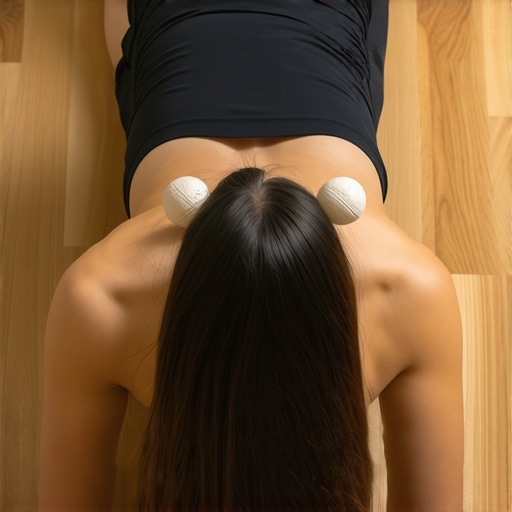
Your phone might soon be your posture coach
Looking toward the future, I predict we are moving away from generic ‘stand up straight’ advice and toward real-time biofeedback integrated into our everyday tech. Within the next few years, I expect to see mainstream wearable sensors—perhaps even built into our earbuds—that don’t just track steps but analyze the specific shearing forces in our thoracic spine. This tech will help us understand the link between mobility and posture on a granular level, catching a rib misalignment before it even starts causing that dreaded stabbing sensation. Until that tech arrives, your best defense is a proactive offense. Try this advanced tip tonight: lie on your side with your knees tucked to your chest, and slowly rotate your top arm in a massive 360-degree circle while keeping your knees glued to the floor. It’s called the ‘Thoracic Windmill,’ and it is the ultimate diagnostic tool for rib health. If one side feels significantly tighter than the other, you know exactly where you need to focus your mobility work tomorrow morning.
Three Hard Truths About Rib Pain I Learned the Hard Way
After years of dealing with ‘pop’ sensations and shallow breaths, I realized that a rib going rogue is rarely an isolated event. First, your body is an expert at compensation; that pain in your front is often a cry for help from a stuck joint in your back. Second, resting for three weeks won’t fix a mechanical misalignment—it just makes you stiff. Finally, the anxiety of ‘cardiac mimicry’ is real, but once you understand the link between mobility and posture, that fear loses its power. You start to see the pain as a signal to move, not a signal to panic. I learned that ignoring the ‘check engine light’ of a stiff mid-back always leads to a bigger flare-up later.
My Non-Negotiable Toolkit for Thoracic Freedom
If you are serious about keeping your ribcage mobile, you need more than just a generic foam roller. I rely heavily on the ‘peanut’ (two taped-together lacrosse balls) because it specifically targets the costovertebral joints where the ribs meet the spine, rather than just rolling over the surface. I also highly recommend diving into the ultimate guide to improving mobility and posture in 2025 for a comprehensive plan. For those moments when you feel truly ‘stuck,’ professional intervention is the fastest path back; why chiropractic care is your secret weapon for better posture is often about that one precise adjustment that resets the nervous system’s protective guarding. #IMAGE_PLACE_HOLDER_E#
Stop Managing the Pain and Start Living Again
You don’t have to walk on eggshells around your own skeleton or live in constant fear of a sharp breath. By integrating mobility hacks simple adjustments for a more active life into your daily coffee breaks, you can build a resilient frame that handles stress without locking up. Remember, how chiropractic adjustments enhance posture and mobility is about restoring your body’s natural ability to rotate and expand. Your journey to a pain-free life starts with that first, deep, unrestricted breath. Have you ever been convinced a rib issue was something much more serious like a heart problem? Let me know your story in the comments below; let’s support each other in getting mobile again.