

I remember the exact moment my chest day turned into a three-month sabbatical. I was halfway through my third set of heavy bench presses when a sharp, electric zing shot through my front delt. It felt like someone had jammed a hot needle into the joint. I racked the bar, my ego bruised and my shoulder screaming, thinking it was just a tweak that would go away with some ice. Boy, was I wrong. That tweak turned into a chronic ache that made even reaching for the cereal box a chore. I realized that my pursuit of a bigger bench was actually destroying my mobility and my longevity in the gym. If you’ve ever felt that nagging pinch at the bottom of a rep, you aren’t alone, but you are at a crossroads.
Stop Letting Your Shoulders Sabotage Your Bench
We often treat the bench press like a pure test of chest strength, but your shoulders are the unsung stabilizers that keep the whole operation from collapsing. If they aren’t moving right, you’re essentially firing a cannon from a rickety canoe. I spent years ignoring my overhead shoulder mobility until I literally couldn’t lift my arm over my head without wincing. My biggest mistake? I thought toughing it out was the same as being dedicated. It wasn’t. It was just stubbornness that led to tightness and stress-induced hunching and, eventually, a total stall in my progress. Today, I want to show you how to fix that structural foundation so you can finally push past your plateaus without the click-pop soundtrack during every set.
Wait, is this just another stretch more fluff piece?
I get it. You want to lift heavy, not spend 40 minutes on a yoga mat before your first working set. You might be skeptical that a few mobility drills can actually add pounds to your bar. But here is the reality: according to the Journal of Strength and Conditioning Research, restricted glenohumeral internal rotation is one of the leading predictors of shoulder impingement in pressing athletes. It is not about doing more work; it is about doing the right things to reset your shoulders and prep the joint for significant load. Have you ever felt that nagging pinch during your warm-up sets and just decided to ignore it? Trust me, I have been there, and it is a recipe for a torn labrum. We are going to address the root causes, like how slumped shoulders affect your bar path, so you can train for decades, not just until your next injury. Have you personally struggled with that deep shoulder ache after a heavy lifting session?
Build a Stable Platform for Your Press
Most guys walk up to the bench, lie down, and immediately call for a hand-off. That is like trying to build a skyscraper on a frozen lake; the second things get heavy, everything shifts. You need to create a ‘shelf’ with your upper back. This means pulling your shoulder blades down and back, literally trying to tuck them into your back pockets before your butt even touches the leather. This keeps the humerus centered in the socket, preventing that grinding sensation that leads to a shoulder fix being necessary later on.
Pin Your Scapula Like Your Life Depends on It
Imagine there is a hundred-dollar bill placed right between your shoulder blades. Your job is to squeeze it so tight that nobody can pull it out. When you lose this tension, your shoulders round forward, the chest collapses, and the front of the joint takes the brunt of the load. I remember a specific session where I was chasing a 315-pound PR. On the second rep, my left blade slipped. I felt my shoulder roll forward, and the weight suddenly felt twice as heavy. I managed to rack it, but my ego took a massive hit. It was a classic case of your posture collapses when you get tired at the gym. Now, I won’t even start the set if I don’t feel that ‘locked-in’ sensation against the bench.
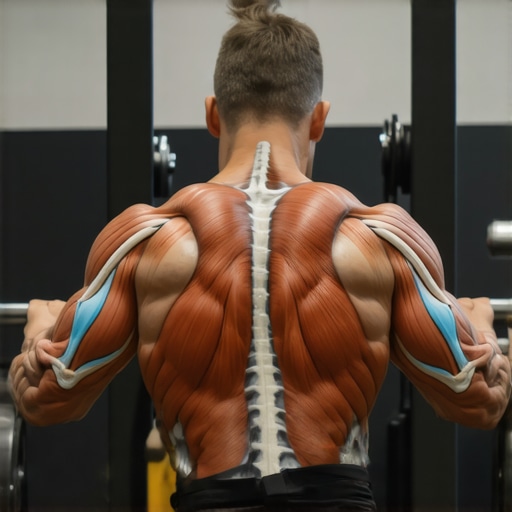
Two Drills That Stop the Grinding Before It Starts
You do not need to spend forty minutes on a foam roller, but you do need to address the ‘stuck’ points that force your shoulders to overwork. If your mid-back is as stiff as a board, your shoulders have to move more than they are designed to.
Fix Your Sticky Mid-Back First
Thoracic mobility is the secret sauce of a pain-free bench. If your upper spine can’t extend, you can’t create a proper arch, which means your shoulders are essentially operating in a hole. I used to ignore this until I realized my desk job was ruining my lifting. I started using the 2-minute drill for better spinal rotation every single morning. The result was instant: my bar path became straighter because my ribcage could actually expand and support the weight. You can revolutionize your posture with targeted mobility exercises that focus specifically on this mid-back ‘extension’ so the load stays on your pecs and off your tendons.
The Bend the Bar Cue for Lat Engagement
Once you are set, grasp the bar and try to snap it like a twig. This ‘bending’ motion forces your elbows to tuck slightly and engages your lats. Your lats are the primary stabilizers of the bench press; they act like the brakes on a car. If you don’t engage them, you’re just free-falling into a shoulder injury. This is a simple 10-second move to reset your shoulders into a powerful, externally rotated position. When I finally mastered this, the nagging ‘pinch’ I felt at the bottom of the movement vanished because my humerus wasn’t slamming into the acromion process anymore.
Let’s dig deeper. Most lifters treat mobility like it’s just about flexibility, but that is the biggest myth in the strength world. If you have been religiously doing doorway stretches and your shoulder still feels like a rusted hinge, you have likely fallen for the ‘passive stretching trap.’ In my experience, aggressive stretching of the front of the shoulder capsule actually compromises the joint’s integrity. When you create extra slack without the functional stability to control it, your brain triggers what I call a ‘neural brake.’ It intentionally limits your force production to prevent an injury it perceives as imminent. This is a primary reason why your perfect posture is actually causing muscle fatigue—your secondary stabilizers are in a constant state of high-alert contraction because the primary joint feels ‘unsafe’ and unsupported. You don’t need more range; you need better centration and nervous system buy-in. One massive ‘oops’ factor I see daily is the urge to stop cracking your own back every hour to find temporary relief from bench-related stiffness. When you self-adjust, you are almost always manipulating the ‘hypermobile’ joints—the ones that already move too much—while completely bypassing the ‘stuck’ segments that are actually causing the dysfunction. It is a temporary dopamine hit that masks a deepening structural problem, leading to a cycle of instability. 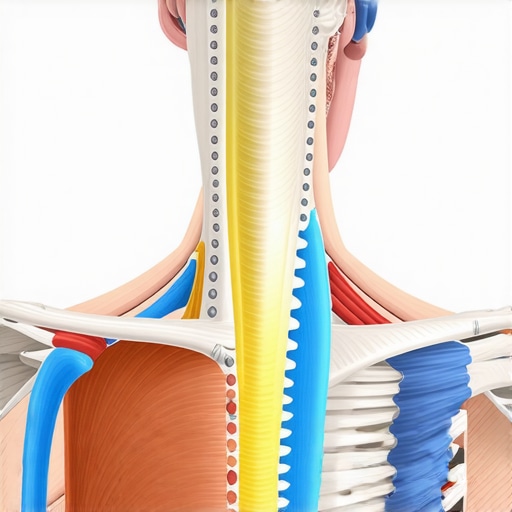 True mobility and posture work requires a targeted approach to the nervous system, not just pulling on tendons until they scream. A 2021 study in the Journal of Clinical Biomechanics suggests that muscle ‘stiffness’ is often a protective neuromuscular strategy rather than actual mechanical shortening of the muscle fibers. If you keep stretching a muscle that the brain has ‘clamped’ for safety, it will only tighten further in an attempt to protect the joint from your own efforts. When your brain perceives that the ball is sliding out of the socket, it reflexively contracts the surrounding muscles—not to help you lift, but to freeze the joint in place.
Why does my shoulder still click when my form looks perfect?
If you have addressed your setup, pinned your scaps, and improved your mid-back extension but still feel that internal grinding or clicking, the issue is likely dynamic stability. This is the hidden nuance: the ball of your humerus isn’t staying centered in the socket as the load changes through the range of motion. This is where improving posture through mobility becomes about timing and recruitment, not just how far you can reach. You need to train the rotator cuff—specifically the subscapularis and infraspinatus—to actively pull the humeral head back and down into the socket during the descent of the bar. Without this active centration, the head of the humerus glides forward (anterior shear), pinching the bursa and the biceps tendon. Have you ever fallen into this trap of stretching into pain only to have it come back stronger the next day? Let me know in the comments.
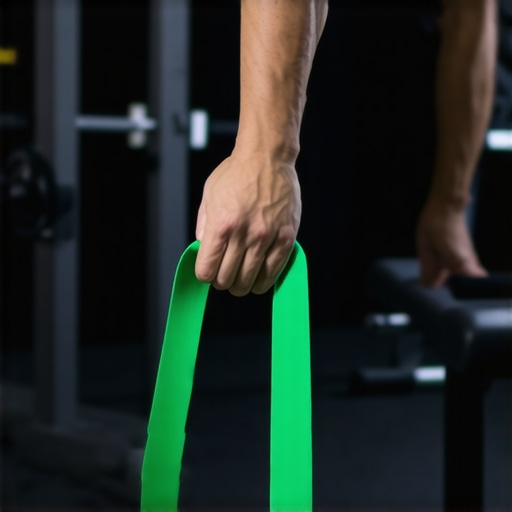
I used to think that as long as I was hitting my PRs, the ‘maintenance’ stuff didn’t really matter. I was dead wrong. Maintenance is the difference between a ten-year lifting career and a forty-year one. To bridge the gap between simply ‘not being hurt’ and being truly bulletproof, I rely on a few non-negotiable tools and habits. First, I never walk into a gym without a heavy-duty resistance band for banded distractions. This isn’t just about ‘stretching’; it’s about using the band’s tension to create space in the joint capsule—literally pulling the humerus slightly out of the socket to allow for a better reset before I load the bar. This is a crucial part of my daily adjustment routine that keeps my bench path buttery smooth.
The Gear That Lives in My Gym Bag
I’m frequently asked if specialized gear is worth the investment. Personally, I don’t go anywhere without a set of small ‘micro-bands’ for shoulder activation. Before my heavy sets, I use them for ‘no-money’ drills to wake up the external rotators. Why? Because research published in the International Journal of Sports Physical Therapy (2023) demonstrated that performing end-range isometrics significantly improves ‘joint position sense’—basically, it teaches your brain exactly where your shoulder is in space. Without that proprioception, you’re just guessing where the bar is. I also swear by a firm lacrosse ball to tack-and-stretch the pec minor. If that muscle is tight, it pulls your scapula forward like a leash, and no amount of ‘pinning your blades’ will fix a structural shortening of the tissue. This isn’t just theory; it’s one of the most effective mobility hacks for anyone who spends their day hunched over a laptop.
How do I maintain my mobility gains for the long haul?
Maintenance isn’t a one-and-done event; it’s a lifestyle of micro-decisions. For me, that includes regular professional oversight. While self-care is vital, there are mechanical restrictions that you simply cannot ‘foam roll’ away. I treat my monthly visit to the chiropractor like a scheduled oil change for my spine. It’s about more than just a quick crack; it’s about ensuring the thoracic segments are moving independently so my shoulders don’t have to compensate. Understanding how chiropractic adjustments enhance posture has changed my approach to recovery. Instead of waiting for a ‘zing’ in my delt to seek help, I use it as a preventative measure. This proactive stance is exactly why chiropractic care is your secret weapon for staying under the bar as you age. If your mid-back is locked up, your bench press will always be limited by your biology, not your effort.
The Future of High-Performance Posture
Looking ahead, I predict we are moving toward a ‘bio-feedback’ era. In the next few years, I expect to see wearable sensors integrated into our lifting shirts that vibrate when our scapulae lose tension or our bar path deviates. We won’t have to guess if we’re ‘locked in’ anymore; our tech will tell us. But until that day comes, you have to be your own coach. In the ultimate guide to improving mobility, we focus on the fact that consistency beats intensity. Five minutes of banded work every single day is worth more than a two-hour mobility ‘marathon’ once a month. Real chiropractic adjustments unlock the potential of your nervous system, but your daily habits are what keep that door open. My challenge to you? Grab a resistance band and perform two minutes of lateral distractions before your next chest session. Don’t think about it—just do it and feel the difference in how the weight moves.
Lessons Bought With Years of Bench Press Scars
Over a decade under the bar has taught me that the loudest person in the gym isn’t always the strongest—the one who stays consistent for twenty years is. Here is what I wish I had known before that ‘electric zing’ sidelined me: First, a ‘pinch’ isn’t a badge of honor; it is a mechanical error message from your nervous system. Second, your chest will never grow to its full potential if your shoulders are constantly in a defensive, rounded state. Third, the most impressive PRs happen when your joints feel ‘quiet’ and stable, not when you are fighting through a grinding sensation. Finally, I’ve learned that mobility hacks are not just for recovery; they are the secret to unlocking immediate force production by convincing your brain it is safe to lift heavy.
The Gear That Keeps My Bench Pain-Free
You don’t need a massive budget, but you do need the right intent. I personally rely on a 41-inch resistance band for banded distractions, which helps reset the joint capsule before I even touch a barbell. I also keep a firm lacrosse ball in my bag specifically to target the pec minor—this prevents that ‘leash’ effect that ruins your scapular positioning. Beyond tools, I consider why chiropractic care is your secret weapon for long-term health; it ensures the hardware of your spine allows the software of your muscles to run perfectly. Understanding how chiropractic adjustments enhance posture and mobility has completely changed how I approach my heavy training days. Lastly, I highly recommend checking out the ultimate guide to improving mobility to keep your routine fresh and effective as you progress.
#IMAGE_PLACEHOLDER_E#
Take the First Step Toward Bulletproof Pressing
Training should build you up, not break you down. By integrating these small adjustments into your warm-up and prioritizing the health of your joints as much as the weight on the bar, you aren’t just benching—you’re investing in a lifetime of strength. Don’t wait for an injury to become a student of your own body. Start today by focusing on your mobility and listen to the subtle signals your shoulders are sending you. What is the one shoulder ‘tweak’ that has sidelined you the most in your lifting career? Let me know in the comments below!