
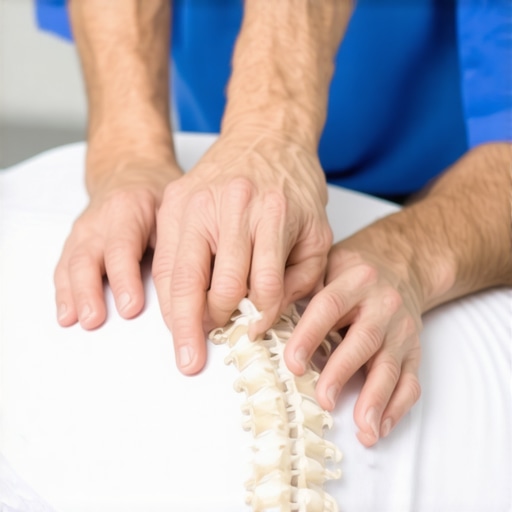
I remember walking into my first chiropractic appointment with a back that felt like a rusty garden gate. My shoulders were practically ear muffs, and I was convinced my spine was a lost cause. I’d spent weeks trying to figure out why my middle back stiffens up during long walks, only to find out I was looking at the wrong map entirely. I sat in that waiting room, clutching my intake forms, terrified that the doctor would just crack me and send me on my way without hearing why I couldn’t sit through a movie anymore. My big mistake early on was thinking the pain was the problem. It wasn’t. The pain was just the smoke; the fire was somewhere else entirely. Today, I want to show you exactly what happens behind those clinic doors so you can stop worrying and start healing. [image_placeholder]
The Secret Language of Your Body During an Exam
When you finally get called back, the exam starts before you even sit on the table. In fact, most chiropractors are scanning you the moment you stand up from the waiting room chair. They’re watching your gait—the way you swing your arms or whether you have a forward lean in your walking stride. I learned the hard way that a chiropractor isn’t just looking for a bone out of place. They are looking for how your nervous system is handling gravity. According to the Journal of Manipulative and Physiological Therapeutics, spinal health is deeply linked to the overall function of your musculoskeletal system. They want to see if your shoulder clicks every time you reach for the seatbelt or if your hips shift to one side when you stand still. Have you ever felt like one leg was shorter than the other while just standing in a grocery line? That’s exactly the kind of clue we’re going to talk about today. We also need to understand how to tell if your leg pain is actually coming from your spine and not just a tight muscle.
Is a chiropractic exam actually worth the hype?
It’s easy to be skeptical when someone tells you that your neck pain is actually coming from your feet. I used to think it was all a bit of a stretch until I realized why your foot arches are collapsing when you stand still and sending tension up to my jaw. The exam is the only time someone looks at you as a whole person, rather than a collection of separate aches. We are going to dive into the physical tests, the posture checks, and the truth about why one shoulder sits higher than the other. This is where we start connecting the dots.
Getting Under the Hood of Your Alignment
The real magic isn’t in the crack itself; it’s in the detective work that happens before the table even moves. When I first started, I thought the doctor was just poking around randomly. Then he hit a spot in my mid-back that felt like a literal electric wire. That’s when I learned about palpation. They are looking for subluxations—places where the joints aren’t moving through their full range. Think of it like a door hinge that’s rusted shut; you can force it open, but it’s better to oil the pin first. This is how chiropractic adjustments enhance posture and mobility over time. It’s not about pushing bones back into place like Lego bricks; it’s about signaling the nervous system that it’s safe to let go of that muscle guard. My own experience taught me that if you ignore the stiffness, you end up wondering why your back pops every time you twist in your office chair without ever finding a permanent fix. #IMAGE_PLACE_HOLDER_B#
Why Standing Still Tells Only Half the Story
Most of us look decent enough in a mirror, but once we move, the wheels fall off. During a proper exam, a pro will watch you squat or reach for your toes to see the simple way to tell if your spine is rotating while you walk. In my case, every time I took a step, my left hip would hike up to compensate for a stuck ankle. I was so focused on my back pain that I didn’t realize the hidden link between your breathing pattern and lower back stability was actually the root of my stiff mornings. They’ll likely check your reflex arc too. If your brain is shouting at your legs to move but the signal is getting muffled by a compressed nerve, no amount of stretching will fix that why your hamstring stretches are not fixing your tight legs problem. It’s about checking the wiring, not just the drywall.
Reset Your Hips Before You Leave the Office
Once the exam is done, the focus shifts to immediate relief and long-term retraining. I used to walk out of the clinic and immediately jump back into my car, sitting for another hour—completely undoing the work. Now, I use the simple hip reset for people who sit for 8 hours right in the parking lot. It keeps the pelvis neutral while the adjustment sets. You also need to pay attention to how to fix the feeling of a locked si-joint by engaging your deep core muscles, not just your abs. If you don’t reinforce the adjustment with movement, your body will revert to its old, crooked habits faster than a rubber band. This is where you revolutionize your posture with targeted mobility exercises to make the changes stick. You have to be an active participant in your own healing, or you’ll just be back on the table next week with the same rusty gate back.
The biggest mistake I see beginners make is assuming that a ‘tight’ muscle is a ‘short’ muscle. In reality, your brain often locks down a muscle to protect an unstable joint nearby. When you constantly stretch a muscle that is trying to protect you, you are essentially fighting your own nervous system. This is specifically why your hamstring stretches are not fixing your tight legs; your body is using those hamstrings as a secondary stabilizer because your core or glutes aren’t doing their job. If you keep pulling on those ‘brakes,’ your brain will eventually just pull them harder, leading to that chronic stiffness that never seems to go away.
Stop Stretching Your Protective Tightness
True expertise in spinal health means recognizing when to move and when to stabilize. I used to think the goal was to be as flexible as a gymnast, but a study published by the Journal of Orthopaedic & Sports Physical Therapy (JOSPT) suggests that joint hypermobility without proper muscle control is a fast track to chronic inflammation. This is why mobility boosts for posture expert tips for daily adjustments focus so heavily on ‘active’ range of motion rather than just passive stretching. You need to teach your brain that it is safe to be in those new positions. If you don’t, your posture will revert back to its ‘hunched’ baseline the moment you walk out of the clinic door. Have you ever fallen into this trap of stretching a ‘tight’ muscle only for it to feel worse an hour later? Let me know in the comments.
Why does your adjustment feel like it disappears by Tuesday?
If you find yourself needing an adjustment every few days just to function, you’re likely ignoring the ‘oops’ factor of daily habits. One massive trap is the ‘self-crack.’ Many of us develop a habit of twisting our own necks or backs to get that satisfying pop. While it provides a temporary endorphin rush, you are almost always ‘cracking’ the joints that are already moving too much, completely bypassing the stiff segments that actually need help. This leads to a cycle of instability where why you should stop rolling your neck to get rid of cracks becomes the most important piece of advice you’ll ever receive. You are essentially wearing out your own ligaments without fixing the root cause. #IMAGE_PLACE_HOLDER_C#
The Diaphragm Connection to Your Shoulders
Another nuance that most people miss is how their breathing drives their upper body tension. If your primary breathing muscle—the diaphragm—is inhibited due to stress or poor sitting habits, your body will recruit the small muscles in your neck and chest to lift your ribcage for every breath. This is why your shoulder tightness is actually a diaphragm problem for thousands of office workers. No amount of massage will fix those shoulders if you are taking 20,000 shallow ‘neck breaths’ every single day. To truly enhance your posture with expert chiropractic techniques in 2025, you have to look at these internal pressure systems. Even something as seemingly unrelated as why your shins feel tight when you wear flat shoes can be a sign that your entire kinetic chain is compensating for a lack of core and pelvic stability. Real progress happens when we stop looking at the ‘sore spot’ and start looking at the system that created it.
I’ve spent thousands on gadgets that promise to fix my back overnight, but most of them ended up gathering dust in my closet. The tools that actually work are the ones that facilitate the body’s own mechanics rather than trying to override them. For example, I swear by a simple tennis ball for daily maintenance. Most people just roll around on it aimlessly, but I’ve found that using the proper way to use a tennis ball for glute pain—pinning it against a wall rather than the floor—allows for much better pressure control. This helps release the piriformis without triggering a massive protective spasm. If you’re struggling with that deep, dull ache in the hip, this is a total game-changer for your evening routine.
The Gear That Actually Lives in My Gym Bag
Beyond the simple stuff, I’ve found that consistency beats intensity every single time. I also rely heavily on a specific lumbar roll when I am at my desk or driving. It isn’t about the cushion itself; it is about maintaining that natural lordotic curve so your vertebrae don’t have to bear the weight of your torso alone. This is one of those mobility hacks simple adjustments for a more active life that keeps me from feeling like a pretzel after an eight-hour shift. If you are a desk worker, knowing the best way to transition from a sitting-to-a-standing-desk is equally vital so you don’t trade back pain for foot fatigue.
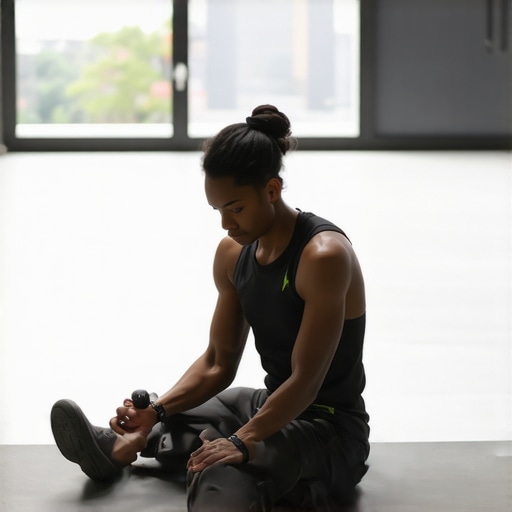
When we talk about the technical side of spine health, we have to look at the work of Dr. Stuart McGill, a leading expert in spine biomechanics. In his research featured in the Journal of Back and Musculoskeletal Rehabilitation, McGill demonstrates that ‘stiffness’ in the core is actually a prerequisite for ‘mobility’ in the limbs. He argues that creating ‘super-stiffness’ through his ‘Big 3’ exercises—the bird-dog, the side plank, and the modified curl-up—is what truly protects the discs from injury. This completely changed how I viewed my morning routine. I stopped doing high-rep sit-ups and started focusing on the daily move to keep your spine young which prioritizes stability over sheer flexibility.
How do I keep my spine in check for the long haul?
Maintenance isn’t a one-and-done deal; it’s about the micro-decisions you make every hour. I keep a timer on my phone that goes off every 45 minutes to remind me to perform a ‘posture reset.’ During this time, I focus on expanding my ribcage and ensuring I’m not breathing into my neck muscles. If you find your progress stalling, it might be time to look at the ultimate guide to improving mobility and posture in 2025 to see how new recovery protocols can fit into your busy schedule. We often overestimate what we can do in a day but underestimate what we can achieve with three minutes of focused movement every afternoon.
Why Biofeedback is the Next Big Leap in Posture
I’m keeping a close eye on the rise of ‘smart’ wearable sensors that are hitting the market. We are moving away from passive chairs and toward real-time biofeedback. Within the next few years, I expect we’ll see compression shirts with integrated haptic sensors that gently buzz your shoulder when you start to slump, effectively retraining your brain’s proprioception while you work. This tech will bridge the gap between your weekly chiropractic visit and your daily habits. It is the future of preventing the ‘tech-neck’ epidemic. For now, you can start today without any tech: Go to a wall and try the 30-second wall squeeze to fix forward shoulder roll. It is the fastest way to reset your brain’s map of where your shoulders should actually sit.
The Hardest Lesson I Learned About Protective Tension
For years, I treated my body like a collection of parts that just needed to be yanked into place. The biggest lightbulb moment I had was realizing that ‘stiffness’ is often a neurological defense mechanism. When your joints are unstable, your brain locks your muscles down to prevent injury. This is specifically why stretching your hamstrings might actually make your back pain worse; you are essentially trying to pull off the seatbelt your body put on for protection. I also learned that a ‘pop’ is just a temporary neurological reset. If you don’t follow up with improving posture through mobility practical chiropractor strategies, you are just waiting for the next spasm to happen. Consistency in small, functional movements beats a marathon stretching session every single time.
The Simple Gear That Saved My Lower Back
I’ve moved away from flashy recovery gadgets and settled on a few essentials that actually work with my biology. I swear by the ‘Big 3’ protocols developed by Dr. Stuart McGill, which emphasize core stability over sheer flexibility. Beyond that, I keep a tennis ball nearby to use the proper way to use a tennis ball for glute pain—focusing on trigger points while standing against a wall to control the depth of pressure. For my desk setup, a firm lumbar roll is non-negotiable because it prevents my pelvis from tucking under and stressing my discs. If you’re ready to overhaul your entire approach to movement, I highly recommend diving into the ultimate guide to improving mobility and posture in 2025 for a deep dive into modern spinal hygiene.
Stop Waiting for Your Back to Fix Itself
Healing isn’t a passive event that happens to you once a week in a clinic; it is a series of tiny wins you accumulate throughout the day. Every time you perform the daily move to keep your spine young, you are retraining your nervous system to feel safe in better positions. You don’t have to accept chronic stiffness as a permanent part of aging. When you pair professional expertise with proactive habits, you’ll find that chiropractic adjustments unlock a pain-free lifestyle today that carries into your future. What is the one specific movement or activity that always seems to trigger your stiffness? Let me know in the comments below.