

I remember the exact moment I realized my fancy, $40 posture corrector was a total lie. I was standing in my kitchen, unstrapping the velcro after an eight-hour shift at the computer, and I literally slumped over like a wet noodle. My back felt exhausted—not from working, but from doing absolutely nothing. I’d spent months trying to find the specific way to sit at a laptop without looking like a question mark, and I thought a brace was my shortcut. Instead, I was just teaching my muscles how to go on a permanent vacation.
The False Security of the Velcro Fix
Look, I get it. We all want that immediate lift. When you first pull those straps tight, you feel like a soldier. Your chest is out, your shoulders are back, and you think you’ve finally cracked the code. But here is the dirty little secret: your muscles are biological tissues that follow the ‘use it or lose it’ rule. When a piece of neoprene and plastic does the job of your rhomboids and traps, those muscles simply stop firing. I made the massive mistake of wearing mine for six hours a day, thinking I was ‘training’ my body. In reality, I was just creating a dependency that left me wondering why your lower back hurts when you try to stand up straight without the extra help.
Does a brace actually fix your alignment for good?
Most people assume that by forcing the bones into a certain position, the body will eventually ‘remember’ it. It’s a logical thought, but it’s scientifically backwards. True posture comes from active stability, not passive restriction. Research published by the Journal of Physical Therapy Science suggests that external supports can lead to decreased electromyographic activity in the very muscles you’re trying to strengthen. Essentially, you’re telling your core to take a nap. If you aren’t integrating improving posture through mobility into your daily life, you’re just putting a band-aid on a structural leak. This is often why your perfect posture is actually causing muscle fatigue; you’re fighting against your own stiffened tissues rather than teaching them to move. Have you ever felt that weird, shaky weakness in your mid-back after taking off a support strap? That’s your body telling you it has forgotten how to hold itself up. Today, we are going to dive into how to actually build a spine that supports itself without the crutch. It’s time to stop being a slave to the straps and start focusing on the movement patterns that actually stick.
Stop Bracing and Start Moving
To fix the ‘wet noodle’ problem, we have to stop treating our spine like a broken tent pole that needs external guy-wires. The real solution lies in active stability. Think of your spine like a high-performance suspension system on a mountain bike. If the shocks are rusted solid, it doesn’t matter how straight the frame is; you’re going to have a rough ride. This is why improving posture through mobility is the first real step. You have to convince your nervous system that it is safe to let go of the tension it has built up as a defense mechanism. I remember one Tuesday afternoon, I tried to head to the gym for a heavy lifting session after wearing my posture brace all day at my desk. I thought I was ‘primed.’ Instead, during my first warm-up set, I felt a sharp, sickening zing in my lumbar spine because my mid-back was so locked up from the brace that my lower back had to do all the bending. It was a classic example of the deadlift mistake that leads to immediate disc pressure, and it all started with a ‘supportive’ strap.
Unlock Your Mid-Back Before You Sit
Your thoracic spine—the part where your ribs attach—is meant to move. When you wear a brace, you turn this area into a frozen block. To reverse this, you need to focus on extension and rotation. Imagine your spine is a stack of sponges; if they are bone-dry, they crumble, but if they are hydrated and mobile, they can take any load. Start by using a foam roller or even the back of your office chair to gently arch backward several times a day. This helps revolutionize your posture with targeted mobility exercises that actually hit the root of the stiffness. If you don’t address the ‘stuck’ segments, your body will just continue to fight itself. 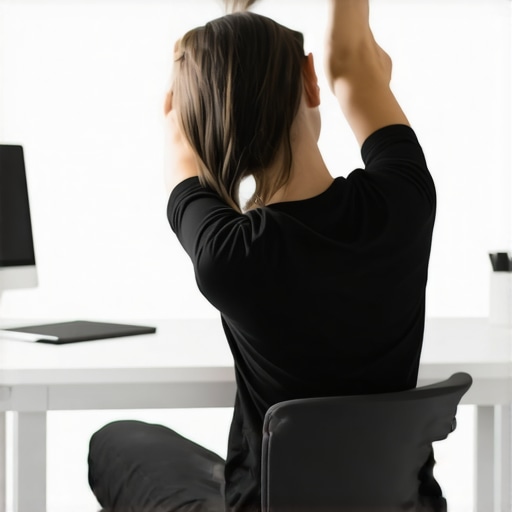
The 30-Minute Movement Rule
No chair, no matter how expensive, is a substitute for blood flow. I used to think I could ‘ergonomic’ my way out of pain, but why your ergonomic desk chair is still giving you back aches usually comes down to static loading. Your muscles are like pumps; they need contraction and relaxation to move fluids and nutrients. I started setting a timer for every 30 minutes. When it dings, I don’t just stand up; I perform a 60-second ‘reset.’ This involves a quick chest opener to how to loosen your chest muscles after a day of hunching and a few deep belly breaths. This isn’t about being a gym rat; it’s about using mobility hacks for a more active life that fit into the cracks of your schedule.
Find the Right Interval for Your Desk
If you’ve made the jump to a standing desk, don’t make the mistake of standing for eight hours straight. That’s just a different way to be static. The goal is to alternate. Understanding the best standing desk interval for maximum back health means you are constantly shifting the load between different muscle groups. When I first tried standing all day, my heels felt like they were on fire and my lower back throbbed. I had to learn that the best way to transition from a sitting to a standing desk is a gradual dance, not a marathon. By rotating your position, you prevent any single joint from bearing the brunt of gravity for too long. This keeps the ‘posture fatigue’ at bay and ensures your muscles stay awake and engaged throughout the afternoon slump.
The real nuance that most people miss—and where I failed for years—is the belief that ‘tightness’ is something that needs to be beaten into submission with endless stretching. We’ve been conditioned to think that if a muscle feels stiff, we should pull on it until it lets go. But here is the contrarian truth: your brain often creates stiffness as a protective shield. If your nervous system senses that your spine is unstable, it will literally ‘lock down’ the surrounding muscles to prevent injury. This is precisely why your hamstring stretches aren’t fixing your tightness; your brain is using those hamstrings as secondary stabilizers because your core isn’t doing its job.
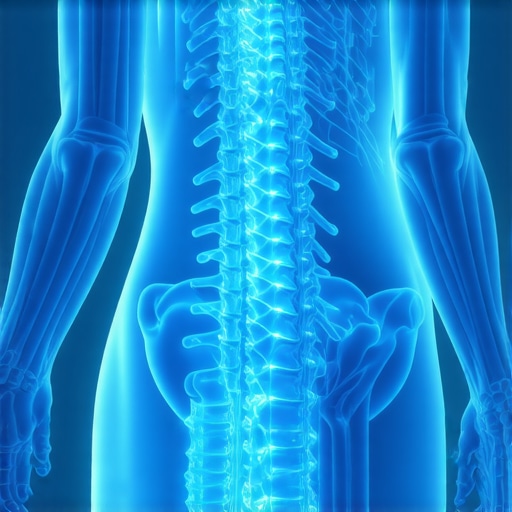
When you force a stretch on a muscle that is trying to protect you, you’re essentially trying to rip the sirens off a police car while it’s chasing a thief. You might feel a temporary release, but the body will usually tighten back up within an hour, often harder than before. This ‘oops’ factor is where most people get stuck in a cycle of chronic soreness. Instead of stretching blindly, you need to prove to your brain that the ‘area’ is stable. This is where the magic of how chiropractic adjustments enhance posture and mobility actually happens. It isn’t just about moving a bone; it’s about high-velocity, low-amplitude input to the nervous system that tells the brain, ‘Hey, this joint can move safely now, you can let the muscles relax.’
Why does my neck still feel stiff even after a professional adjustment?
I get asked this all the time by people who are doing ‘everything right.’ The answer usually lies in the hidden compensation patterns. If you have an adjustment but immediately go back to looking at your phone at a 45-degree angle, you are re-uploading the ‘glitch’ into your system. Research in the Journal of Bodywork and Movement Therapies indicates that chronic muscle tension is frequently a secondary compensation for joint instability elsewhere in the kinetic chain. For instance, you might find that how a single rib adjustment can stop that sharp pain when breathing because that rib was forcing your neck muscles to overwork just to help you inhale. If the rib is out, the neck stays tight, no matter how much you rub it.
We also have to look at the ‘invisible’ triggers. You’d be surprised at why your morning coffee routine is secretly hurting your neck—it’s often the way we crane our heads while scrolling through emails before our eyes are even fully awake. This creates a micro-stressor that sets the tone for the rest of the day. This constant low-level strain is a primary reason why your perfect posture is actually causing muscle fatigue. You are trying to maintain a ‘look’ rather than a ‘function.’ Real progress comes when you stop trying to look like a statue and start moving like a fluid machine. Have you ever fallen into this trap of stretching a muscle that actually needed strengthening? Let me know in the comments.
Once I realized that my nervous system was the one pulling the strings, I stopped looking for ‘hacks’ and started looking for sustainable tools. The reality is that you can have the most expensive setup in the world, but if your environment doesn’t force you to change your shape, you’ll still end up stiff. One of the most life-changing additions to my workspace wasn’t a high-tech exoskeleton, but a simple, firm cushion. Learning the proper way to use a lumbar roll in your office chair did more for my disc health than any $800 ‘ergonomic’ mesh chair ever did. It provides a specific tactile cue that tells my lower back to stay neutral without requiring me to constantly think about it.
Stop buying expensive chairs and start doing this instead
I also became obsessed with ‘movement variability.’ Dr. Stuart McGill, a world-renowned expert in spine biomechanics and author of Back Mechanic, notes that the most important factor in avoiding back pain isn’t staying perfectly upright—it’s the ability to change positions frequently. To manage this, I installed a software called Workrave. It’s a bit annoying at first, but it forces a 30-second ‘micro-break’ every 15 minutes. During these breaks, I don’t check my phone. Instead, I use mobility boosts for posture expert tips for daily adjustments, like a quick wall-slide or a standing glute squeeze. This keeps the blood flowing and prevents the ‘neurological amnesia’ that happens when you sit for hours on end.

How do I maintain my spinal alignment without a coach?
The secret to long-term success is making the environment do the work for you. I’ve found that the ultimate guide to improving mobility and posture in 2025 really boils down to consistent, small inputs. If you can’t get to a professional every week, you need to become your own movement detective. I started filming myself sitting once a week. It was a wake-up call to see how quickly I reverted to a ‘slump’ when focused on a deadline. This self-correction, combined with knowing how chiropractic adjustments enhance posture and mobility, creates a feedback loop where you actually feel the difference between a locked joint and a free one. When you feel that freedom, you stop wanting to go back to the old, painful habits.
Why bio-feedback will replace the posture brace
Looking ahead, I predict a massive shift away from passive supports and toward smart bio-feedback. We are already seeing the rise of wearable sensors that don’t pull your shoulders back for you, but instead give a tiny haptic buzz when your core muscles stop firing. This is the future: tools that teach rather than tools that take over. This shift aligns perfectly with revolutionize your posture with targeted mobility exercises that focus on brain-body connection rather than just muscle strength. I challenge you to try one thing today: download a micro-break app and commit to standing up every time it dings, no matter how ‘in the zone’ you are. Your spine will thank you in ten years.
Lessons from the Other Side of the Slump
After a year of living without the “velcro crutch,” a few things became crystal clear. First, I realized that my body wasn’t weak; it was just confused. When you stop forcing yourself into a rigid shape, you start noticing the subtle signals your nervous system sends. For instance, I finally understood why your head feels heavy after staring at a monitor—it’s not a lack of muscle, but a lack of movement variety. I also learned that the best “workout” for your back is simply the one you actually do during your work hours. Tiny, 30-second resets are worth more than an hour-long yoga session if that yoga session is preceded by eight hours of total stillness. Most importantly, I discovered that the link between mobility and posture is a two-way street; you can’t have one without the other.
The Tools That Actually Earned a Permanent Spot on My Desk
I’ve tested dozens of gadgets, but only a handful truly helped me transition to a pain-free life. I highly recommend investing in a high-quality lumbar roll for your office chair because it provides an external cue without taking over the work of your muscles. Secondly, if you’re looking for a roadmap, the ultimate guide to improving mobility and posture in 2025 is my go-to resource for staying ahead of modern tech-neck trends. Finally, don’t underestimate the power of professional input. Seeing why chiropractic care is your secret weapon for better posture changed my perspective on maintenance; it’s about clearing the path so your body can do what it’s already designed to do. For those days when I feel particularly “stuck,” I use a specific 15-minute flow to open up sticky hips, which surprisingly relieves my mid-back tension every time.
#IMAGE_PLACEHOLDER_E#
Your Spine Deserves More Than a Temporary Fix
It is incredibly tempting to reach for the quick fix when your back is screaming at the end of a long day. But remember: your spine is a living, adapting structure, not a static pillar. By choosing movement over restriction, you are investing in a future where you don’t need to worry about “holding it together.” Start small, use these mobility boosts for posture expert tips, and be patient with your progress. You didn’t develop these habits overnight, and you won’t replace them overnight either—but the freedom of moving without pain is worth every second of the effort. Have you ever tried a posture brace only to find your back felt weaker afterward? Let me know your experience in the comments below!