

I’ll never forget the rainy Tuesday during my sophomore year when I finally realized something was seriously wrong. I was mid-way through a frantic study session for my Anatomy final, ironically enough, when I tried to look up at the clock. My neck seized. It wasn’t just a cramp; it was a deep, gnawing ache that felt like my skull was being pulled forward by a lead weight. I looked in the bathroom mirror and saw a stranger—a version of myself with rounded shoulders and a head that sat inches in front of my chest. I’d spent years ignoring the warning signs, thinking I was too young for back problems. I was wrong.
How I Traded My Study Habits for Chronic Pain
Back then, I made the classic mistake of thinking a dorm bed was a perfectly fine place to write a ten-page paper. I’d prop myself up with pillows, chin tucked to my chest, and grind away for hours. I didn’t realize I was training my muscles to stay in a state of constant tension. This is the silent epidemic hitting campuses everywhere: text neck. It’s more than just a sore muscle; it’s a structural shift that can lead to long-term mobility issues. If you’ve ever felt that burning sensation between your shoulder blades after a long lecture, you know exactly what I’m talking about. We need to talk about the specific way to sit at a laptop without creating a hump before your body forgets how to stand up straight.
Is this text neck thing actually worth the hype?
You might be thinking that it’s just a minor stiff neck and you will eventually sleep it off. I thought the same thing until the tension headaches started making it impossible to focus on my exams. Skepticism is healthy, but your anatomy doesn’t lie. According to research published in *Surgical Technology International*, while the human head weighs about 10-12 pounds in a neutral position, leaning forward at a 60-degree angle to look at a phone increases the effective weight on your cervical spine to a staggering 60 pounds. That’s like carrying an average-sized eight-year-old child on the back of your neck all day.
The Real Cost of Staring at Your Phone All Day
The problem isn’t just the phone; it’s the cumulative hours we spend in a forward-flexed position. I see it in every coffee shop and lecture hall. Students are literally molding their skeletons into a hunch. Early on, I tried to fix it by just forcing myself to sit up straight for five minutes, but my muscles were already too tight to hold it. I had to learn how to fix the computer hunch in under two minutes just to get through my afternoon classes without a migraine. Eventually, I discovered how chiropractic adjustments enhance posture and mobility, which was the game-changer I needed to reverse the damage I’d done during those late-night cram sessions. Have you noticed your neck clicking or felt a constant tightness when you try to look over your shoulder? Let’s dive into the small shifts that will save your spine.
Stop Looking Down Before Your Neck Quits
Imagine your head is like a bowling ball. When you hold it directly over your shoulders, it’s easy to manage. But the second you tilt your arm forward, that weight feels like it triples, and your forearm starts screaming. That’s exactly what your neck muscles are going through every time you glance down at your lap. To stop the cycle, you have to treat your setup like a cockpit.
Bring the Screen to Your Eyes, Not Your Eyes to the Screen
The most immediate fix I implemented was radical: I stopped looking down. If you’re at a desk, your eye level should hit the top third of your screen. When I first tried this in the college library, I used a literal stack of thick textbooks to prop my laptop up. People stared, but for the first time in months, my neck didn’t feel like it was on fire after an hour. This is the simple change to your monitor height that kills headaches before they can even start. If you’re on a phone, bring your elbows to your ribcage and lift the device to your face. It feels awkward for three days, then it becomes a life-saving habit.
The 30-Second Wall Reset That Changed My Library Marathons
During my worst weeks of study-induced pain, I discovered that you can’t just think your way into better posture; you have to physically remind your nervous system where ‘home’ is. I started doing the 30-second wall squeeze to fix forward shoulder roll every time I got up for a coffee. I’d find a flat patch of wall, press my heels, butt, and head against it, and squeeze my shoulder blades back as if I were trying to crush a grape between them. The first time I did it, I heard three distinct pops in my mid-back and felt a rush of blood to my face. It was messy and a little embarrassing in public, but it broke the ‘hunch’ spell instantly. 
Waking Up Your Sluggish Mid-Back
Your thoracic spine—the middle part of your back—is designed to move, but sitting for eight hours turns it into a block of concrete. When this area stiffens, your neck has to overcompensate, leading to that ‘crunched’ feeling. You need mobility hacks: simple adjustments for a more active life that target this specific zone. One trick is to use the back of your chair as a fulcrum: lean back over it gently to extend your spine in the opposite direction of the hunch.
Why Tight Chest Muscles Pull You Forward
We often focus on the back, but the real villain is often the chest. Think of your pectoral muscles like the guy-wires on a tent; if they are too tight, the whole structure collapses forward. I learned how to loosen your chest muscles after a day of hunching by using doorways to stretch my arms out, which finally allowed my shoulders to drop away from my ears. If you don’t address the front of your body, no amount of ‘sitting up straight’ will stick.
The Role of Professional Alignment
Even with these drills, I realized that years of bad habits had created structural ‘locks’ that I couldn’t stretch away on my own. This is where I found that chiropractic care is your secret weapon for better posture. An adjustment is like hitting the reset button on a computer that’s been lagging for weeks. It clears the joint interference so that your exercises actually work. By combining these daily movements with the ultimate guide to improving mobility and posture in 2025, you stop fighting against your own skeleton and start moving with it.Everyone tells you to stretch when you feel tight. I used to spend twenty minutes every morning pulling my head toward my shoulder, thinking I was ‘lengthening’ the tissue. But here’s the nuance: if a muscle is tight because it’s trying to protect an unstable joint, stretching it is like pulling on a knot in a rope—it just gets tighter. This is why why stretching your hamstrings might actually make your back pain worse if the root cause is actually pelvic instability. Your neck is no different. When you find that your neck muscles are hard like a rock, they are likely in a state of ‘protective guarding.’ Instead of mindless stretching, you need how chiropractic adjustments enhance posture and mobility by resetting the neural feedback loop. According to research in the *Journal of Manipulative and Physiological Therapeutics*, muscle stiffness is often a neurological response to joint dysfunction, meaning you can’t just ‘pull’ the tension away.
Stop Cracking Your Own Neck Immediately
Then there’s the ‘self-crack’ trap. I’ll admit, I used to be a chronic neck-popper. I thought that satisfying click meant I was fixing the problem. In reality, I was only hitting the segments that were already too loose, while the truly ‘stuck’ segments remained frozen. This is the truth about cracking your own knuckles and neck at home: you’re essentially creating a stability nightmare. Over time, this leads to an imbalance where your dominant side is always tighter than the other because it’s working overtime to compensate for those loose joints. 
Does your eye prescription change how you hold your head?
Most people never look at their eyes when fixing their neck. But if you have a slight astigmatism or your glasses aren’t quite right, you will subconsciously tilt your chin or lean forward to find the ‘sweet spot’ of focus. This is how your vision is forcing your neck into a forward lean without you even realizing it. You can do all the wall squeezes in the world, but if your eyes are pulling your skull forward, the hunch will return every single time. True mobility requires a systemic look at how your brain perceives its environment. By utilizing why chiropractic care is your secret weapon for better posture, you can address these underlying sensory triggers. Have you ever fallen into this trap of treating the muscle without looking at the neurological cause? Let me know in the comments below.Once I finally stopped fighting my own nervous system, the real challenge began: keeping those gains. It’s one thing to feel great after an adjustment; it’s another to maintain that feeling when you have a 40-hour work week looming. I had to stop treating my body like an emergency repair project and start treating it like a high-performance machine. This meant looking at my environment. I realized that my chair was essentially a ‘C-curve’ factory. I eventually discovered the proper way to use a lumbar roll in your office chair, which provides that essential mechanical support for the lower back’s natural curve. If you’re still using a flat-backed kitchen chair for Zoom calls, you’re basically asking for a disc issue.
How do I keep my spine healthy for the long haul?
Consistency is the only thing that works. You can’t just do one ‘big stretch’ on Saturday and expect it to undo five days of slouching. I started integrating mobility boosts for posture: expert tips for daily adjustments like the ‘Bruegger’s relief position’ every thirty minutes. I set a timer on my phone. Every time it goes off, I stand up, open my palms, and squeeze my shoulder blades. It takes ten seconds, but it interrupts the ‘creep’—that slow deformation of tissues that happens when you stay still. Dr. Stuart McGill, a world-renowned expert in spine biomechanics and author of *Back Mechanic*, emphasizes that ‘movement hygiene’ is more important than gym intensity. He argues that the way you move during the 23 hours you aren’t at the gym determines your long-term spinal health.
Invest in a Dedicated Standing Setup
If you are still working from a sofa, you are living on borrowed time. I finally bit the bullet and learned the best way to transition from a sitting to a standing desk. The trick isn’t to stand all day; it’s to alternate. I use an anti-fatigue mat and keep my screen at eye level. This setup, combined with ways to enhance your posture with expert chiropractic techniques in 2025, changed everything for my productivity. My brain actually functions better when my neck isn’t compressed. 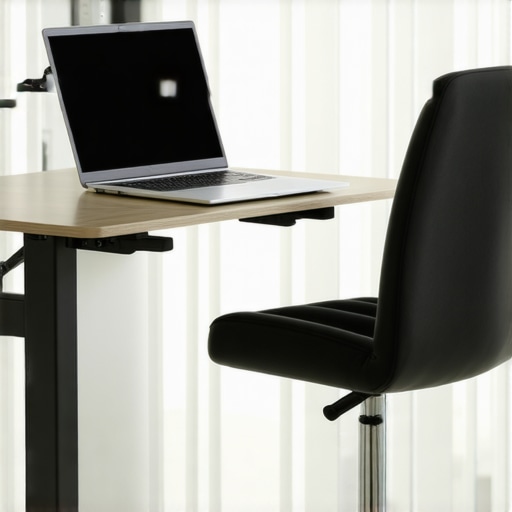
The Future of Posture is Wearable and Smart
I predict that by 2026, we won’t just be ‘trying’ to sit straight. We’ll have haptic feedback sensors built into our shirts that gently vibrate when our shoulders roll forward. We are moving toward a world where biofeedback makes postural awareness subconscious. Until then, you have to be your own sensor. Start by trying this right now: look at your current screen height. If you have to tilt your chin down even a fraction of an inch, find a box or a stack of books and raise it. Do it before you finish reading this page.
What My Spine Doctor Taught Me That Changed Everything
Over years of rehab and research, I’ve realized that pain is actually the very last indicator of a problem. By the time your neck hurts, the dysfunction has been brewing for months. The biggest lightbulb moment for me was learning that chiropractic adjustments aren’t just about ‘cracking’ joints; they are about restoring the signal between your brain and your muscles. If that signal is fuzzy, no amount of stretching will fix your slouch. I also learned that ‘perfect’ posture doesn’t exist. Instead, focus on dynamic posture—the ability to move freely and return to center without tension. Using practical chiropractor strategies taught me that my environment was the silent enemy I needed to defeat first.
The Gear I Use to Fight the Daily Slump
You don’t need a thousand-dollar ergonomic chair to save your spine, but a few specific tools make a massive difference. First, I never sit without the proper way to use a lumbar roll to support my low back. Second, I highly recommend reading Back Mechanic by Dr. Stuart McGill; it’s the absolute gold standard for anyone with a desk job. Third, keep a simple tennis ball in your desk drawer to roll out your glutes and mid-back when you feel a ‘pinch’ starting. Finally, finding a practitioner who understands why chiropractic care is your secret weapon for better posture is the most valuable investment you can make in your future mobility. #IMAGE_PLACE_HOLDER_E#
Start Reclaiming Your Stature Today
It is easy to feel like your body is failing you when you’re stuck in a cycle of stiffness and headaches. But your skeleton is remarkably resilient if you give it the right inputs. You aren’t destined to have a ‘hump’ or live with a permanent ache. By combining small environmental changes with regular chiropractic, posture, and mobility adjustments, you can feel lighter and more energized than you have in years. I promise that the version of you who stands tall and moves without fear of a ‘seized’ neck is closer than you think. Chiropractic adjustments unlock a pain-free lifestyle today if you’re willing to take that first step toward correction. Have you ever tried a standing desk, or do you still find yourself hunched over a laptop at the kitchen table? Let me know in the comments below!