

I remember the exact moment I realized I was crooked. I was standing in front of a tailor’s mirror, trying on a jacket for a friend’s wedding, and no matter how much I adjusted the lapels, the right side hung lower than the left. I looked like a marionette with a loose string. I tried to pull my right shoulder up, but it felt heavy, like there was an invisible weight pulling it toward the floor. It wasn’t just a bad angle; it was my body’s new, dysfunctional ‘normal.’ For years, I just assumed I was built wrong, or maybe I was just tired. But that nagging asymmetry was actually a signal my body had been sending me for a long time.
The Day I Realized My Right Side Was Winning the Tug-of-War
If you are right-handed, chances are your right shoulder is the one dipping down. It seems counterintuitive, doesn’t it? You’d think the side you use more would be stronger and higher. But the truth is, we tend to overwork our dominant side until the muscles literally pull the joint out of its neutral home. I made a huge mistake early on by trying to ‘fix’ it with heavy shrugs on my left side, thinking I just needed to balance the strength. All I did was end up with a massive neck cramp and even more frustration. I didn’t realize that my daily habits, like how I was carrying my laptop bag, were reinforcing this tilt every single hour. It wasn’t about strength; it was about the repetitive tension in the muscles that stabilize the shoulder blade.
Is this lopsided look actually permanent?
Most people fear that once their skeleton settles into this ‘dropped shoulder’ look, they are stuck with it forever. I certainly did. I worried my spine was permanently warping. However, a study in the Journal of Orthopaedic & Sports Physical Therapy points out that this ‘dominant-side shoulder dip’ is often a functional adaptation to repetitive overhead or reaching tasks, rather than a fixed structural deformity. It is essentially your body being too efficient at a lopsided job. I had to learn that the truth about perfect posture is that it isn’t a static pose you hold—it’s about how easily you can move in and out of different positions.
Stop Fighting Your Skeleton and Start Moving Better
The fix isn’t as simple as ‘standing up straight.’ Trust me, I tried that for a month and just felt like a stiff board. The real solution involves teaching your brain and your nerves that it’s okay to let go of that downward tension. When I finally started focusing on why my dominant side always felt tighter, I realized that my shoulder wasn’t just low; it was rolled forward. It was a 3D problem, not a 2D one. I had to stop looking at the mirror for five seconds of ‘good posture’ and start looking at how I lived my life. Have you ever caught your reflection and wondered if your right and left halves were even related? Drop a comment and tell me—does your dominant side feel like it’s constantly carrying the weight of the world? Today, we’re going to walk through how to release that ‘heavy’ feeling and get your alignment back on track.
Reset the Neurological Thermostat in Your Neck
The first step to fixing a lopsided shoulder isn’t a stretch; it is a neurological reboot. Think of your nervous system like a thermostat that has been stuck on a high-tension setting for years. No matter how much you try to manually pull your shoulder up, your brain keeps sending the signal to clamp down for perceived stability. This is exactly why chiropractic care is your secret weapon for better posture, as it addresses the communication between your brain and those overworked muscles. I remember sitting in a dead-stop traffic jam on I-80, fuming because my neck was killing me. I looked down and realized I was death-gripping the steering wheel with my right hand while my shoulder was practically in my lap. I had to learn how to adjust your steering wheel to save your shoulders before I could even think about fixing the muscles themselves. If the environment reinforces the lean, your body will never let it go.
Loosen the Muscles That Are Playing Tug-of-War
When one shoulder hangs lower, the muscles on that side—specifically the pectoralis minor and the latissimus dorsi—are often in a state of chronic contraction. They are literally pulling the house down. Instead of stretching the top of your shoulder (the part that already feels long and tired), you need to target the front and the side. I spent months doing the opposite, stretching my neck until it was raw, only to realize the real culprit was my chest. Once I started using mobility boosts for posture, I focused on opening the ribcage. This allows the shoulder blade to glide back up into its natural notch rather than being pinned to your front. 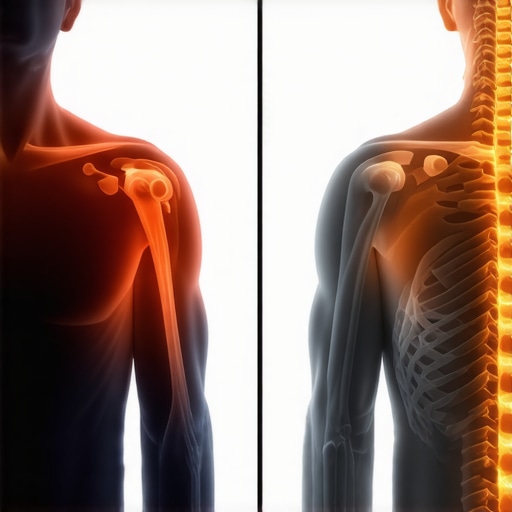
The Specific Reach That Levels Your Collarbones
The most effective move I ever found was a simple ‘reach and rotate’ drill. Stand with your feet hip-width apart and reach your low-side arm toward the ceiling, but instead of just lifting the hand, focus on feeling the ribs on that side expand like an accordion. I once tried this in the middle of a grocery store aisle because I felt that familiar, sharp ‘ping’ in my shoulder blade, and for the first time in weeks, my collarbones actually felt level. You can find similar movements in the 30-second drill for better overhead shoulder mobility. The goal is to remind your brain that the ‘low’ side is capable of upward movement without tension. If you are a lifter, these small resets are actually the shoulder fix for better bench pressing results because they ensure your joints are stacked properly before you add weight.
Check Your Tech Habits Before They Check You
Your alignment is a reflection of your most frequent movements. If you spend eight hours a day with your right hand glued to a mouse that is too far away, your right shoulder will inevitably rotate forward and down. This is why your shoulder pain flares up when you use a computer mouse for extended periods. I shifted my entire workstation—moving my mouse closer to my keyboard and switching hands for simple scrolling tasks. It felt incredibly clunky at first, like trying to write with my toes, but within two weeks, that ‘weight’ on my right side began to lift. You aren’t just fixing a pose; you are auditing the way you interact with the world to stop the daily drainage of your structural integrity.
One of the most frustrating traps I fell into was the ‘stretch it until it stops hurting’ cycle. We are conditioned to believe that if a muscle feels tight, we must pull on it. But here is the nuance most beginners miss: a muscle can feel tight because it is short, or it can feel tight because it is being stretched to its absolute limit like a rubber band about to snap. When your shoulder drops, the muscles on the top of your neck are often ‘locked long.’ By constantly pulling on them, you are actually triggering a protective stretch reflex that makes the muscle clamp down even harder. This is why your gentle stretching is actually causing more inflammation and zero progress. In my journey, I had to stop the mindless pulling and start looking at how the link between mobility and posture requires a stable foundation, not just flexible fibers.
Is your shoulder drop a structural defect or a neurological shield?
It is a question that changed everything for me. We often view our bodies as a collection of pulleys and levers, but it is actually more like a biological computer. If your brain perceives a lack of stability in your core or your rib cage, it will ‘tether’ your shoulder down to create a false sense of security. A study published in the Journal of Bodywork and Movement Therapies highlights that chronic postural deviations are often ‘neuromuscular strategies’ rather than just weak muscles. This means your lopsidedness might be your brain’s way of protecting you from a perceived injury. This is where chiropractic adjustments unlock a pain-free lifestyle today by resetting those neurological signals so your brain feels safe enough to let your shoulders level out. 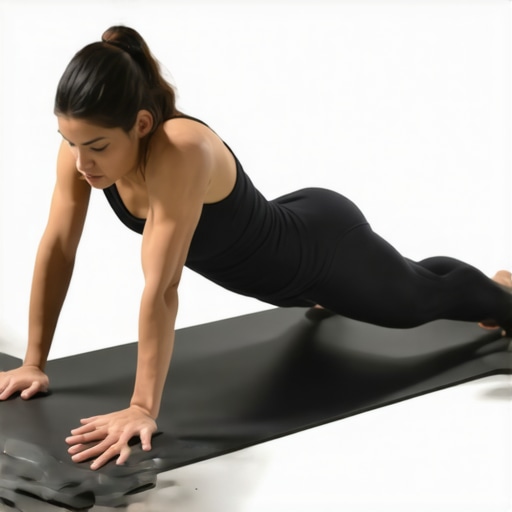
Why Your Tightest Muscle Might Actually Need Strengthening
The ‘oops’ factor I see most often—and one I lived through for years—is ignoring the serratus anterior, that fan-shaped muscle under your armpit. When this muscle is sleepy, your shoulder blade wings out and tips forward, making your dominant side look significantly lower. I spent years stretching my traps when I should have been doing ‘scapular push-ups’ to wake up my stabilizers. Once I integrated mobility boosts for posture that focused on activation rather than just passive reaching, the ‘heavy’ feeling in my right side finally vanished. If you only focus on the part that hurts, you’re just chasing symptoms while the root cause stays hidden in your movement patterns. This is exactly why enhancing your posture with expert chiropractic techniques in 2025 is moving toward a functional approach rather than just ‘cracking’ a joint. Have you ever fallen into the ‘stretch until it stops hurting’ trap only to find yourself stiffer the next day? Let me know in the comments, because once you stop fighting your anatomy and start supporting it, the results come much faster.
Build a Toolkit That Actually Fits in Your Desk Drawer
I used to think I needed an entire home gym to keep my shoulders from drifting toward my knees, but the truth is much simpler. My ‘survival kit’ for maintaining a level frame now consists of three items: a high-density lacrosse ball, a single resistance band, and a vertical ergonomic mouse. The mouse was the biggest game-changer. By keeping my forearm in a ‘handshake’ position, I stopped that subtle, constant internal rotation that was dragging my right shoulder down every time I sent an email. If you find yourself working from a local cafe, you absolutely must learn how to set up your laptop in a coffee shop without ruining your back, or you’ll just end up undoing all your hard work with one afternoon of bad ergonomics. Maintenance is less about grand gestures and more about these tiny, strategic mobility hacks and simple adjustments for a more active life.

How do I maintain these alignment gains over the long haul?
The secret to long-term results isn’t doing more work; it’s doing the right work consistently. Think of your body like a high-performance car; you wouldn’t wait for the engine to explode before getting an oil change. I now view my monthly check-ins with a professional as non-negotiable. Seeing how chiropractic adjustments enhance posture and mobility over months, rather than days, showed me that we are fighting a constant battle against gravity and tech-fatigue. According to a study published in the Journal of Applied Biomechanics, eccentric training of the lower trapezius is the specific ‘missing link’ for those of us struggling with long-term scapular stability. It’s about building the endurance to stay upright. You can revolutionize your posture with targeted mobility exercises that focus on these deep stabilizers, making your ‘natural’ resting position one that is actually healthy.
The Future of Posture Tech is Getting Weird
Looking ahead, I predict we are moving toward an era of ‘passive correction.’ We are already seeing the rise of haptic feedback clothing—smart shirts that send a tiny vibration to your skin the moment your shoulder begins to dip or your head drifts forward. While tech created many of our postural problems, it might also be what helps us solve them. Until those smart-threads become mainstream, we have to rely on the fundamentals found in the ultimate guide to improving mobility and posture in 2025. The goal is to move from ‘fixing’ ourselves to ‘optimizing’ ourselves. Try this advanced tip tonight: instead of just sitting on the sofa, spend five minutes on the floor with a lacrosse ball pinned between your shoulder blade and the ground. Breathe into the pressure and slowly move your arm through its full range of motion. It is the single most effective way to ‘unstick’ a dropped shoulder before the tension sets in for the night.
Everything They Forgot to Tell Me About My Lopsided Frame
Through this process, I discovered that my lopsidedness wasn’t a death sentence for my spine; it was a map of my daily habits. Here are a few things I learned after months of trial and error. First, your jaw might be the silent saboteur of your symmetry. I found that the connection between jaw clenching and upper back knots meant my right shoulder would never stay level as long as my teeth were grinding in stress. Second, pay attention to the sounds your body makes. If you notice the reason your neck clicks when you look over your shoulder, it’s often your musculoskeletal system trying to find a path of least resistance around a tilted frame. Lastly, stop obsessing over the mirror. True alignment is felt in your breathing capacity and your energy levels, not just seen in a five-second reflection check.
The Survival Kit for a Symmetrical Spine
I don’t believe in buying every gadget on the market, but three specific tools made a measurable difference in my recovery. A high-density lacrosse ball is essential for targeted release work on the pectoralis minor. I also swear by a vertical mouse to prevent that constant, subtle internal rotation that drags the dominant shoulder down. Most importantly, I realized that I couldn’t navigate this structural puzzle alone. Learning how to choose an omaha chiropractor that actually listens to your wellness goals was the real turning point for me. Having a professional who understands the biomechanics of a dropped shoulder provides the clarity you simply cannot get from a generic exercise video.
#IMAGE_PLACEHOLDER_E#
Your Body is More Resilient Than You Think
The journey from feeling ‘crooked’ to feeling balanced isn’t about achieving a rigid, perfect posture that you have to maintain with white knuckles. It is about freedom of movement. When you start improving posture through mobility and practical chiropractor strategies, you’re not just fixing a physical look; you’re reclaiming your ability to live without that nagging, heavy sensation on one side. You are not built wrong; you are simply adapted to your environment, and you have the innate power to adapt back toward a more neutral state. Which side of your body feels like it’s doing all the heavy lifting lately? Let me know in the comments below!