
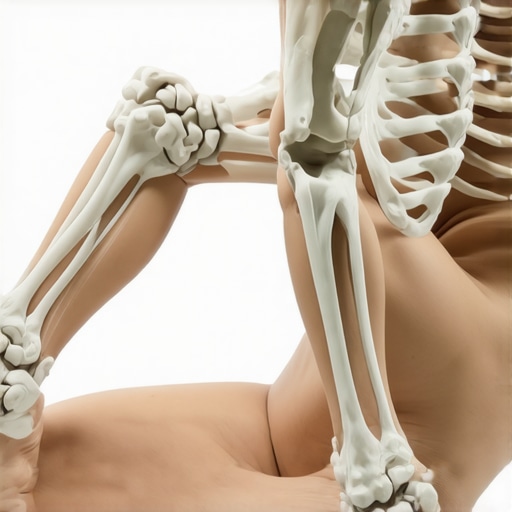
I remember sitting at my cousin’s wedding last summer, trying to look halfway decent in a suit, when I went to cross my right leg over my left. I didn’t just feel tight; I felt like my hip bone had hit a literal brick wall. I actually had to reach down with my hand to hoist my ankle over my knee, and even then, a sharp pinch flared right in my groin. It was embarrassing, uncomfortable, and frankly, a bit scary. That “stuck” feeling isn’t just a sign of being “stiff”—it’s your body’s way of telling you that your pelvis or lower back is screaming for help. Today, we are going to peel back the curtain on why your hip refuses to cooperate and how you can reclaim that lost range of motion. We are moving past the generic “just stretch more” advice that rarely works and looking at how chiropractic adjustments unlock a pain-free lifestyle today by addressing the root cause of the blockage. Have you ever felt that sharp catch in your hip while just trying to relax on the couch? It’s incredibly frustrating when your own body feels like a locked gate.
The Real Reason Your Hip Pinches When You Sit Cross-Legged
For years, I made the classic mistake of thinking I just had “tight hamstrings.” I would spend twenty minutes every morning touching my toes, wondering why your hamstring stretches are not fixing your tight legs. The truth is, that “stuck” sensation often comes from a combination of a tilted pelvis and a lack of internal rotation in the hip joint itself. When your pelvis is out of alignment—perhaps because of how your wallet in your back pocket is twisting your spine—the ball of your hip joint cannot glide smoothly in its socket. Instead of a smooth roll, you get a mechanical jam. This isn’t just my opinion; according to the American Academy of Orthopaedic Surgeons, femoral acetabular impingement (FAI) is a common cause of hip pain in active adults, often triggered by abnormal contact between the hip ball and socket. When you try to cross your legs, you are essentially forcing a square peg into a round hole if your alignment is off. You might also notice the hidden reason your hips feel uneven in the mirror, which is a major red flag that your foundation needs a reset.
Is this just something I have to live with as I get older?
You might think you have simply reached the “age of the creak” where things just stop moving. I have been there, convinced my joints were just rusting out. But here is the kicker: it is rarely a permanent structural breakdown. Usually, it is a functional issue—your muscles and joints have simply forgotten how to work together. If you spend most of your day behind a desk, you likely need the simple hip reset for people who sit for 8 hours to wake up those dormant glutes and release the psoas. This “stuck” feeling is often just a symptom of how to fix the feeling of a locked SI joint, which can refer pain and stiffness directly into the hip. By understanding that your hip mobility is tied to your spinal health, you can stop fighting your body and start working with it. Let’s look at the specific moves that actually open things up.
Stop Shoving Your Hip into a Mechanical Jam
Think of your hip like a heavy oak door hinge. If the house frame is perfectly square, that door swings open and shut without a sound. But if the foundation settles and the frame tilts, the door starts to scrape the floor. You can grease the hinge all day, but until you square the frame, that door is going to catch every single time. Your pelvis is the frame, and your hip joint is the hinge. If you find that why your pelvis shifts to one side while standing, you are already putting your hip in a compromised position before you even try to sit down. The ‘pinch’ you feel is literally the femur hitting the edge of the socket because the angles are wrong. To fix this, we have to move away from aggressive stretching and focus on realignment and stability.
Find Your Sit-Bones Before You Cross Your Legs
The biggest mistake most of us make is ‘slumping’ into our hips. When you sit with a rounded lower back, your pelvis tilts backward, which effectively ‘closes’ the front of the hip joint. When you then try to rotate your leg across your knee, there is no room left for the bone to move. I learned this the hard way. I once spent an entire week trying to ‘stretch out’ a hip pinch using the pigeon pose, thinking I was being a hero. Instead, I woke up with a groin that felt like it had been hit with a hammer. I was forcing a jammed joint to move. The fix was actually simple: I had to sit taller. By rolling my pelvis forward so I was sitting directly on my ‘sit-bones’ (the ischial tuberosities), I created the mechanical space needed for my hip to rotate without the bones colliding. Learning the best way to sit on the floor without hurting your hips starts with this foundational pelvic tilt. 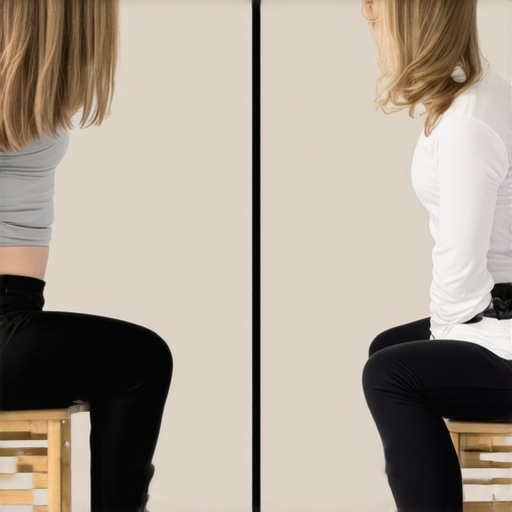
The Tennis Ball Trick That Actually Works
Once you have the alignment sorted, you have to address the ‘guarding’ muscles. When your hip has been pinching for a long time, the surrounding muscles like the piriformis and TFL go into a protective spasm. They are trying to ‘splint’ the area to prevent further damage. To release these without overstretching the joint capsule, you need targeted pressure. However, you can’t just mash the area blindly. You have to learn the proper way to use a tennis ball for glute pain to ensure you are hitting the muscle belly rather than aggravating the sciatic nerve or the bursa. Use the ball against a wall rather than the floor at first; it gives you way more control over the intensity and prevents your body from tensing up in pain.
Why a Professional Realignment Beats Generic Stretching
Sometimes, the ‘jam’ in the hip is actually coming from the back. If your sacroiliac (SI) joint is locked, your hip simply cannot rotate properly. This is where mobility hacks simple adjustments for a more active life become essential. A chiropractor can identify if the blockage is a soft tissue issue or if the pelvic bones themselves need a reset. I’ve seen cases where a single adjustment to the lower spine instantly restored 20 degrees of hip rotation. It’s like someone finally squared that door frame we talked about earlier. Understanding how chiropractic adjustments enhance posture and mobility allows you to stop guessing and start addressing the structural cause of the pinch. You should also audit your daily habits, specifically how to fix the way you stand in line to save your hips, to ensure you aren’t undoing all your hard work by leaning on one leg while waiting for your coffee.
Most people think they just need more ‘core strength’ to fix a hip pinch, but I have found that many are actually over-bracing. If you are constantly ‘sucking it in’ for the sake of aesthetics or misunderstood stability advice, you are creating a pressure cooker in your abdomen that locks your pelvis in place. This explains why your core strength is not protecting your back as expected. Instead of protecting you, that constant tension prevents the hip from rotating freely. It is a nuance that even seasoned trainers often miss. There is also the ‘Oops’ factor of trying to pop your own hip or back when things feel tight. When you feel that jam, your first instinct is to twist until you hear a crack, but why you should never crack your own back while sitting is because you are rarely hitting the stuck joint—instead, you are hyper-extending the ones that are already moving too much, creating instability while the actual blockage remains untouched.
Why does the pinch come back even after I stretch it out?
The answer often lies in the diaphragm. Research published in the Journal of Physical Therapy Science suggests that respiratory patterns are intrinsically linked to lumbopelvic stability. If your ribs are flaring, your psoas is likely acting as a stabilizer instead of a mover. This is the hidden link between your breathing pattern and lower back stability. If you do not fix the breath, the hip will stay ‘guarded’ because the brain does not feel safe letting it go. You might even find how your breathing habits are creating tightness in your scalenes up in your neck, showing that the whole system is connected. 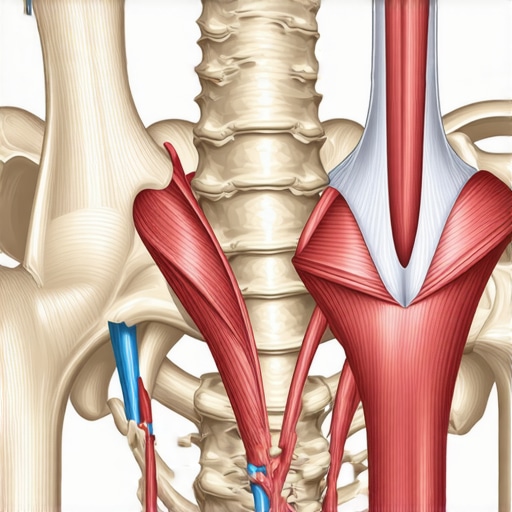
For many, improving posture through mobility practical chiropractor strategies is the only way to break the cycle. Have you ever fallen into this trap of stretching harder and harder only to feel tighter the next day? Let me know in the comments. We need to focus on enhancing your posture with expert chiropractic techniques in 2025 to ensure the foundation is actually set. It is not just about ‘moving more’; it is about understanding the truth about why your lower back spasms suddenly when you try to force mobility your body is not ready for. Utilizing mobility boosts for posture expert tips for daily adjustments can help bridge the gap between a locked-up joint and a fluid stride. You might even need to look at why your shoulder tightness is actually a diaphragm problem to see the full picture of how your body compensates. Often, we focus so much on the hip that we forget the feet. If your foundation is crumbling, your hip has to overwork. This is why your foot arches are collapsing when you stand still, which sends a ripple effect of misalignment up to the pelvis. By using the ultimate guide to improving mobility and posture in 2025, you can start looking at the body as a whole unit rather than a collection of separate parts. Don’t forget that why chiropractic care is your secret weapon for better posture is precisely because it addresses these complex multi-joint connections.
Once you have cleared the initial blockage, the game changes from ‘fixing a fire’ to ‘preventing a spark.’ I have found that the most effective way to scale these results is by treating your mobility like a car’s alignment—you do not just wait for the tires to wear unevenly before seeing a mechanic. This is where why chiropractic care is your secret weapon for better posture comes into play. For me, it is about a monthly ‘tune-up’ that catches those micro-shifts in the pelvis before they turn into that familiar pinch. To supplement this, I swear by a specific tool: the Pso-Rite or a similar psoas-release device. Unlike a generic foam roller that just squashes the surface, this mimics the deep, targeted pressure of a practitioner’s hand. It is brutal at first, but it is the only thing that gets deep enough to shut down a guarding psoas. As noted by Thomas Myers in his seminal work Anatomy Trains, the ‘Deep Front Line’ of fascia connects our inner arch all the way to our diaphragm and hip—if one segment is glued, the whole line suffers. This is why you need the ultimate guide to improving mobility and posture in 2025 to see the full structural map of how your body actually moves. 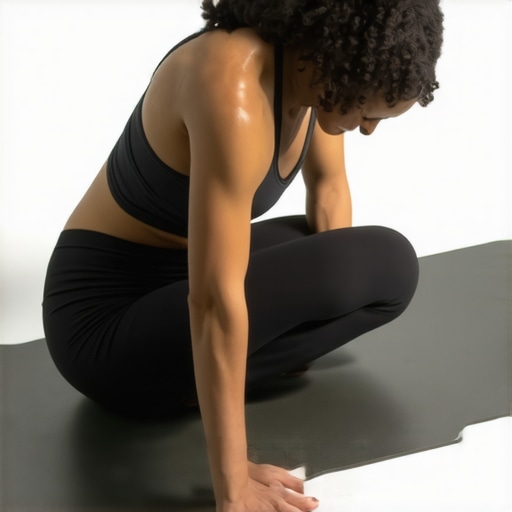
How do I maintain my hip mobility over time?
Consistency beats intensity every single time. You cannot undo 40 hours of sitting with one 60-minute yoga class on Sunday. I recommend mobility hacks simple adjustments for a more active life, like taking your phone calls while in a deep squat or using a standing desk transition. These ‘micro-doses’ of movement keep the joint capsules lubricated. If you are struggling with the long-term commitment, look into improving posture through mobility practical chiropractor strategies to build a sustainable ‘maintenance calendar’ that fits your specific schedule. Utilizing mobility boosts for posture expert tips for daily adjustments ensures that you are not just maintaining, but actually improving as you age. When your pelvis is neutral, how chiropractic adjustments enhance posture and mobility becomes evident in your very first step out of bed. The Shift Toward Real-Time Biometric Posture Feedback is coming faster than we think. I predict we are going to see a massive move toward wearable sensors in our clothing that vibrate the second our pelvis tilts into a ‘jammed’ position. This real-time data will allow us to utilize enhancing your posture with expert chiropractic techniques in 2025 with surgical precision. Instead of guessing why you hurt, your devices will tell you exactly when you need a reset. Until then, stay proactive with revolutionizing your posture with targeted mobility exercises. My advanced tip for you this week: try the ’90/90′ hip switch while focused entirely on nasal breathing. It is a total game-changer for the nervous system.
The Hardest Lessons I Learned About My Own Hip Health
Looking back at my years of frustration, I realized that I was my own worst enemy. The biggest lightbulb moment came when I discovered that why you should stop sucking in your stomach for better posture is actually the first step to letting your hips breathe. I thought I was being ‘fit,’ but I was actually bracing myself into a state of permanent stiffness. I also had to accept that my DIY attempts at relief were often backfiring; specifically, why you should never crack your own back while sitting because it only adds to the instability. Finally, I stopped viewing my hip as an isolated joint and began to see the link between mobility and posture a chiropractors guide as the roadmap to recovery. It wasn’t about one magic stretch; it was about changing how my entire skeleton interacted with gravity.
The Essential Toolkit I Rely on for Daily Relief
I don’t leave my mobility to chance anymore. My daily routine involves three specific non-negotiables. First, I use a firm psoas-release tool to tackle the deep guarding muscles that a foam roller simply can’t reach. Second, I made the simple change to your desk chair that ends back pain by adding a lumbar roll that keeps my pelvis from tucking under. Third, I schedule regular professional check-ups because I know why chiropractic care is your secret weapon for better posture—it catches the mechanical ‘glitches’ before they become full-blown pinches. I trust these methods because they address the structural cause, not just the surface-level symptoms.
It Is Time to Stop Struggling and Start Moving Again
You don’t have to accept a ‘stuck’ hip as your new normal. That pinching sensation is a solvable mechanical puzzle, not a permanent life sentence. When you align your foundation and stop fighting your own anatomy, chiropractic adjustments unlock a pain-free lifestyle today by giving your joints the space they need to glide. Take that first step toward fluid movement—your future self will thank you for the freedom to simply sit down and relax without a second thought. If you are ready to stop guessing and start fixing, feel free to contact us for a personalized assessment. Have you ever felt that sharp catch in your hip while just trying to relax on the couch? Let me know in the comments below!