
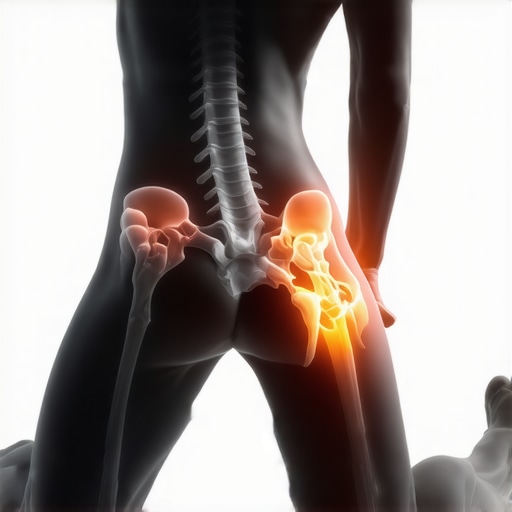
I remember the exact moment my lower back decided to go on strike. I was just reaching for a bag of groceries—nothing heavy, mind you—and bam. It felt like a hot wire had been threaded through my lumbar spine. Like most people, I spent the next three weeks aggressively touching my toes, convinced that if I could just get my hamstrings to loosen up, the pressure would vanish. But here is the kicker: the more I stretched, the more my back throbbed. I was falling into the classic trap of treating a symptom while completely ignoring the engine room.
Your Hamstrings Are Often the Innocent Bystander
[IMAGE_PLACEHOLDER] People love to blame the hamstrings for everything. We treat them like stubborn rubber bands that just need a good yank. However, after years of trial, error, and some very humbling sessions with specialists, I realized that why your hamstring stretch is actually irritating your sciatic nerve is a much bigger deal than simple flexibility. Your body is incredibly smart. When your spine feels unstable or your pelvis is out of alignment, your brain tells your hamstrings to tighten up. They aren’t “short”; they are guarding. They are acting like the brake pads on a car that’s rolling downhill. If you just cut the brakes without fixing the incline, you’re in for a crash. I made the mistake of thinking I was “tighter” than everyone else, but I was really just more unstable. I spent years forcing my body into positions it wasn’t ready for, thinking ‘no pain, no gain’ was the mantra to live by. I was wrong. A 2021 study in the Journal of Biomechanics notes that what we perceive as muscle tightness is often the nervous system limiting range of motion to protect against perceived threats.
Is Your Morning Routine Fueling the Fire?
Does your back feel like a rusted hinge every time you wake up? You aren’t alone. Many of us reach for the floor immediately, but according to Dr. Stuart McGill, a world-renowned expert in spine mechanics, our spinal discs are actually more hydrated and sensitive in the morning, making aggressive forward bending risky. By forcing that stretch, you might be increasing disc pressure rather than finding relief. Instead of pulling on the muscle, we need to look at the hip hinge fix for chronic lower back aches to learn how to move without stressing the spine. We’ve been taught that flexibility is the goal, but for a healthy back, stability is the real king. If you’ve been doing the same toe-touches for months without any progress, it’s time to ask: is this actually doing anything? Have you ever felt that the more you stretch, the tighter you seem to get? Tell me I’m not the only one who has spent hours on a yoga mat only to feel like a pretzel that’s about to snap. Today, I want to show you why we need to stop the tug-of-war with our legs and start looking at why your breathing pattern determines your lower back stability and how our posture actually dictates muscle tension. This is a core part of the ultimate guide to improving mobility and posture in 2025 that I’ve been developing. We are going to stop guessing and start moving with intent.
Look in the Mirror Before You Reach for Your Toes
The first thing I had to do—and what you need to do right now—is stop guessing. Stand sideways in front of a full-length mirror. Are your hips dumped forward? Does your lower back have a deep, aggressive arch? This is a classic sign that your pelvis is out of whack, and it’s a primary reason your hamstrings feel like guitar strings about to snap. You can’t stretch your way out of a structural misalignment. Learning how to spot a pelvic tilt in the mirror was my lightbulb moment. I realized my tightness was actually my body trying to pull my pelvis back into a neutral position. If I had kept stretching, I would have just been pulling against my own safety mechanism. 
Ditch the Rounding and Master the Hinge
I remember trying to lift a 40lb bag of dog food about six months after my first major back flare-up. I did exactly what we are told not to do: I rounded my spine like a scared cat. Pop. The pain was back. That was the day I committed to the broomstick drill. I grabbed a broom, held it against my back—touching my head, mid-back, and tailbone—and practiced bowing without letting the stick lose contact. This is the hip hinge, and it is the single most important movement pattern you will ever learn. Understanding the hip hinge secret for pain-free deadlifts isn’t just for gym rats; it’s for anyone who ever plans on picking up a grocery bag or a toddler. You are teaching your hips to take the load so your spinal discs don’t have to.
Build a Natural Brace with the Dead Bug
Once you stop the cycle of constant stretching, you have to fill that gap with stability. Think of your core not as a six-pack for the beach, but as a biological weight belt. I used to do hundreds of sit-ups, which actually made my back feel worse because of the repeated flexion. Now, I swear by the dead bug. It sounds silly, but keeping your lower back glued to the floor while moving your opposite arm and leg is incredibly difficult if you’re doing it right. This specific dead bug variation that actually protects your spine creates a stiffness (the good kind) that prevents your vertebrae from shearing against each other. It’s about building a spine that doesn’t ache by creating a foundation of control.
Why the Manual Reset Matters
Sometimes, no matter how many dead bugs you do, the engine is still misfiring because the spark plugs are dirty. This is where the structural side comes in. I found that my mobility work only stuck after I got my spine aligned. It’s like trying to balance the tires on a car with a bent axle—you can get the best tires in the world, but the ride will still be shaky. Seeing how chiropractic adjustments enhance posture and mobility gave my nervous system a chance to reset. It cleared the noise so my brain could finally tell my hamstrings to relax. When you combine these best exercises for building a spine that doesn’t ache with a professional assessment, you stop fighting your body and start working with it.The industry has spent decades selling us the idea of a ‘perfect plumb line,’ but the reality is far more nuanced. Everyone tells you to stand up straight like a soldier, but in my experience, rigidity is just another form of dysfunction.
Ditch the Idea of Static Perfection
Most people think posture is a fixed position you hold throughout the day. This is a massive misconception. In fact, the truth about perfect posture and why it doesn’t exist is that your ‘best’ posture is actually your next posture. Your spine is designed for variability. When we try to freeze ourselves into a specific alignment, we create ‘islands of tension’ that lead to the very pain we are trying to avoid. A seminal paper by Dr. Eyal Lederman in Physical Therapy in Sport suggests that postural asymmetries are a normal part of human variation and rarely the primary cause of chronic pain. We need to stop obsessing over being perfectly symmetrical and start focusing on how well we adapt to different positions.
Why does my back still hurt even though my desk setup is perfect?
I see this all the time: patients who have spent thousands on ergonomic chairs and standing desks but still feel like they are falling apart. The trap here is ‘ergonomic complacency.’ You might have the best gear, but if you stay in one spot for four hours, your tissues will still protest. This is often the biggest mistake people make when using a standing desk—they simply trade static sitting for static standing. Mobility isn’t just about how far you can reach; it’s about the frequency of movement.
Stop the Compulsive Self-Cracking Habit
Here is a warning for the ‘self-adjusters’ out there. I used to be one of them—twisting my neck until it popped just to get a few minutes of relief. But here is the ‘oops’ factor: you aren’t usually ‘fixing’ the segment that is stuck. Instead, you are likely over-stretching the ligaments of the joints that are already too loose or hypermobile. You’re getting a temporary dopamine hit from the endorphin release, but you’re actually making the underlying instability worse. This is why the truth about cracking your own back for relief is often a story of diminishing returns. Understanding why you should stop cracking your own back every hour is vital because a professional adjustment is specific; it targets the hypomobile joints to restore balance, rather than just making noise. When you look at how chiropractic adjustments enhance posture and mobility, it’s about precision, not force. We are trying to wake up the nervous system, not just move bones. Have you ever fallen into this trap? Let me know in the comments.Maintaining a healthy spine isn’t a destination; it’s a lifelong negotiation with gravity. Once I got past the acute pain and the constant self-cracking, I had to figure out how to stay there. I used to think I needed a high-end massage chair or a personal stretch therapist, but I’ve found that the most effective tools in my arsenal are surprisingly low-tech. My absolute favorite? A simple lacrosse ball. I use it for myofascial release, specifically targeting the tissues around the shoulder blades and the glutes. This is a game-changer for those days when you can’t get to a professional.
How can I actually stay mobile without it becoming a second job?
The secret is integration, not isolation. You don’t need an hour in the gym; you need frequent, high-quality ‘movement snacks.’ I swear by the 3-minute evening routine for a less stiff morning because it resets my nervous system before I hit the sheets. Consistency beats intensity every single time. If you can commit to the 30-second drill for better overhead shoulder mobility while your coffee is brewing, you’re already ahead of 90% of the population. We are training the brain to recognize these new ranges of motion as ‘safe.’ Research published in The Journal of Bodywork and Movement Therapies (2018) highlights that the stimulation of mechanoreceptors in the fascia during slow, purposeful movement is far more effective for long-term remodeling than aggressive, fast stretching.
My Must-Have Tools for Spinal Longevity
Beyond the lacrosse ball, I recommend a firm foam roller—but not for your lower back. Use it for the thoracic spine to combat that ‘desk hunch.’ I also keep a yoga block nearby to assist with the 2-minute drill for better spinal rotation. When you have the right feedback from a tool, your body stops guessing and starts aligning. This is why I maintain that why chiropractic care is your secret weapon for better posture; it provides the structural reset that makes all your home-work actually stick.
The Future of Your Spine is Probably Digital
Looking ahead, I predict we are going to see a massive shift toward biofeedback wearables. We are already seeing shirts with integrated sensors that vibrate when your shoulders round too far. While some might find it annoying, this real-time data is the future of posture correction. It moves us away from ‘remembering’ to stand up straight and moves us toward ‘re-patterning’ our habits subconsciously. I’m currently testing a few AI-driven apps that track my head position via my webcam, and the awareness it builds is staggering. If you want to take things to the next level, I challenge you to try one ‘balance-focused’ move today—try standing on one leg while you brush your teeth tonight. It’s a simple way to engage your stabilizers without adding a single minute to your busy schedule. Start small, stay consistent, and let your body do the rest.
The Real Reason Your New Mobility Habits Aren’t Sticking
Looking back at my journey, I wish I’d known that the brain is far more protective than we give it credit for. When I stopped trying to force my muscles into submission and started working with my nervous system, everything changed. I learned that why stretching your neck is making your headaches worse is usually because the area needs stability, not more length. My biggest lightbulb moment was realizing that my tightness was actually a cry for support from my core, not a sign that I needed more toe-touches. I also discovered that why your dominant side always feels tighter than the other is often just a reflection of how we interact with our environment, rather than a permanent flaw in our anatomy. Stop viewing your body as a collection of parts to be fixed and start seeing it as a system that requires coordination.
What I Keep in My Daily Spinal Survival Kit
To keep things moving correctly without it feeling like a second job, I rely on a few non-negotiables that have stood the test of time. First, a high-density lacrosse ball is my go-to for localized pressure around the shoulder blades. I also highly recommend looking into the ultimate guide to improving mobility and posture in 2025 to see how these tools fit into a broader plan. For structural maintenance, I never skip my professional check-ups because why chiropractic care is your secret weapon for better posture isn’t just about the audible pop—it’s about the neurological reset that allows your home exercises to actually work. Finally, I keep a lumbar roll in my car, as learning how to use a lumbar roll correctly in an office chair or car seat is the easiest way to prevent disc fatigue during those unavoidable long commutes.
Take the First Step Toward a Spine That Moves with You
Your body is capable of incredible change, even if you’ve felt stuck in a cycle of stiffness for years. Improving your posture isn’t about becoming a rigid statue; it’s about regaining the freedom to move through life without hesitation. By combining smart chiropractic adjustments with consistent, daily movement snacks, you’re building a foundation that will last for decades. Don’t wait for the next sudden back spasm or sharp twinge to start listening to what your spine is trying to tell you. Have you ever noticed that your tight muscles actually feel worse after a long session of static stretching? Let me know in the comments below!