
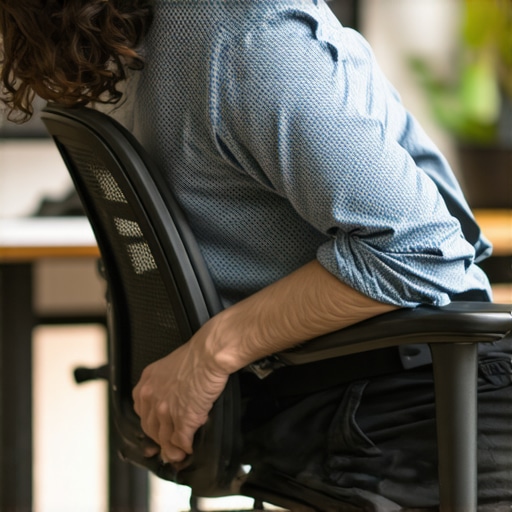
I remember the day I finally unboxed it—a sleek, mesh-backed ergonomic masterpiece that cost more than my first car’s transmission. I sat down, clicked the lumbar support into place, and waited for the magic to happen. Spoiler alert: it didn’t. Two hours later, that familiar, burning throb in my lower back was back with a vengeance. I felt betrayed. I had done the research, read the reviews, and spent the money, yet I was still wondering how to tell if your leg pain is actually coming from your spine or if I was just destined to live in a state of permanent stiffness.
Your Spine Hates Staying Still Even in a $1,000 Seat
Most of us think a chair is a set it and forget it solution for our health. We buy the gear and expect it to do the work of a professional. But here is the kicker: a chair is only as good as the body you put in it. If your joints are locked up, even a gold-plated throne won’t stop the ache. I learned this the hard way when I realized I was creating tightness in my scalenes and psoas by tensing up every time an email notification popped up, regardless of how soft my seat was. We are going to solve the mystery of why your expensive setup is failing you today. We will look at how to integrate simple hip resets and why you might need targeted mobility exercises to actually get the relief you paid for.
Are these high-end chairs just a marketing scam?
Not exactly, but they are often sold as a cure-all when they are really just a tool. The biggest mistake I made early on was thinking I could buy my way out of poor habits. I would sit for six hours straight without a single movement break, thinking the lumbar curve of the chair had my back. It didn’t. In fact, a study published in the Journal of Physical Therapy Science suggests that prolonged static sitting—no matter how ergonomic the chair is—leads to significant muscle fatigue and a measurable increase in spinal load. You cannot stay still and expect to stay pain-free. Have you ever bought a piece of healthy office gear only to find it didn’t change a single thing about your daily pain? I want to hear your story in the comments. We need to stop the upper back burn after long Zoom calls once and for all, but it starts with moving, not just sitting better.
Stop Treating Your Chair Like a Body Cast
Your spine isn’t a structural beam; it is a dynamic suspension system. When you sit perfectly still, even in a high-end chair, you are essentially putting your joints in a cast. Over time, this leads to what clinicians call ‘creep,’ where your ligaments actually start to deform under the constant, unmoving pressure. This is why your lower back hurts when you try to stand up straight after a long session. To fight this, I started using ‘active sitting.’ This means changing my chair’s tension setting so it tilts slightly when I move, forcing my core to stay engaged rather than letting it go completely dormant. If you feel like your body is losing its natural rhythm, mobility hacks and simple adjustments can bridge the gap between sitting and moving.
The Hip Reset That Saved My Productivity
I used to think that the more expensive the chair, the less I had to move. I spent a whole week sitting in a $1,200 chair without doing a single stretch, convinced the lumbar support would do the heavy lifting. By Friday, my hips felt like they were made of concrete and my focus was shot. That was the ‘aha’ moment when I integrated simple hip resets every hour. I literally just stood up, performed a 30-second psoas stretch, and sat back down. The difference wasn’t just physical; I could actually think clearly again because the ‘white noise’ of chronic hip tension had vanished. 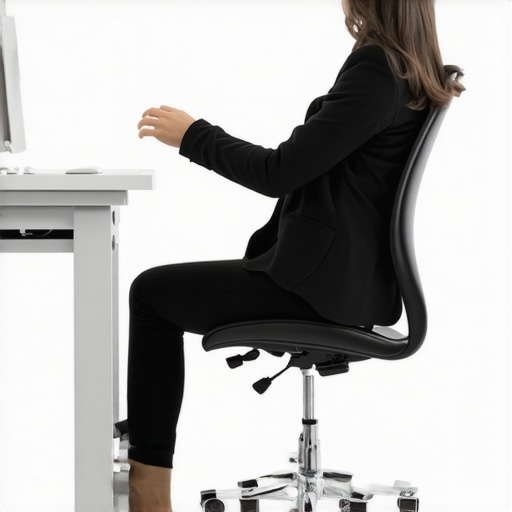
Align Your Eyes to Save Your Mid-Back
Check your monitor first. If you are looking down even slightly, you are essentially hanging a bowling ball off your neck. You need to find the simple change to your monitor height that kills headaches. Your eyes should hit the top third of the screen so your chin stays neutral. Then, look at your arms. If your shoulders are hiked up, you need to learn the best way to position your keyboard for shoulder relief. When your keyboard is too high, you instinctively shrug, which is why your neck muscles are hard like a rock by 3 PM.
Why Adjustments Must Come Before Ergonomics
Sometimes the chair isn’t the problem—the ‘hinge’ is. If your vertebrae are physically restricted or stuck in a pattern of dysfunction, no amount of ergonomic padding will fix the underlying issue. This is where chiropractic adjustments unlock a pain-free lifestyle by restoring the segmental motion that your body has forgotten. It is about clearing the path so your targeted mobility exercises actually reach the right tissues instead of just stretching the same loose spots over and over again. Without proper alignment, you are just trying to build a house on a crooked foundation.Most people think the answer to stiffness is simply more stretching. I see it every day: someone with chronic lower back pain spending twenty minutes a day touching their toes, yet the pain never leaves. But here is the contrarian truth: why stretching your hamstrings might actually make your back pain worse. If your pelvis is already tilted forward, those hamstrings are already under massive tension—not because they are short, but because they are being pulled like a taut rubber band by your bone structure. Stretching them further just irritates the nervous system and creates more instability in the very area you are trying to protect. 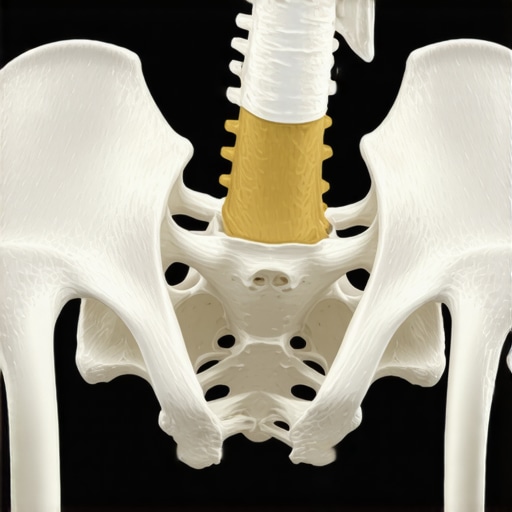
Why Flexibility is Overrated Compared to Stability
We have been conditioned to believe that ‘bendy’ equals ‘healthy.’ In reality, your spine needs a specific amount of stiffness to act as a protective cage for your spinal cord. The biggest ‘oops’ factor I see is people mistaking hypermobility for health. If you are constantly trying to stop rolling your neck to get rid of cracks, you might actually be creating micro-instability in your upper cervical spine. Every time you ‘self-adjust,’ you are usually hitting the segments that are already moving too much, while the truly ‘stuck’ segments stay locked tight. This creates a vicious cycle where you feel a temporary release of endorphins, but the underlying mechanical issue gets worse because you are over-stretching already loose ligaments.
Does more stretching always equal less pain?
Not necessarily. A study in the British Journal of Sports Medicine emphasizes that motor control and proprioception—your brain’s awareness of where your joints are in space—are often far more critical for pain relief than raw flexibility. This is why mobility boosts for posture focus on controlled, active range of motion rather than just flopping into a static stretch. You need to teach your brain how to safely navigate the movement, rather than just forcing the tissue to yield. If you don’t have the stability to support a new range of motion, your brain will quickly ‘reset’ the tension to protect you, which is why that tight feeling returns within an hour.
The Hidden Danger of Chasing the Pop
I used to be a chronic ‘self-cracker.’ I thought if I could just get my mid-back to pop, the weight of the world would lift off my shoulders. But I was ignoring the fact that why your back pops every time you twist in your office chair is often a sign of a compensatory movement. Your body is trying to find movement somewhere because another area is completely jammed. When you see a professional, they aren’t just looking for a loud noise; they are looking for the specific segment that isn’t pulling its weight. This is why how chiropractic adjustments enhance posture and mobility works so differently than a DIY crack. It targets the restriction, allowing the over-worked, hypermobile areas to finally rest. Have you ever fallen into the trap of stretching a spot for months with zero permanent change? Let me know in the comments. It might be time to stop stretching and start looking at the link between mobility and posture from a stability-first perspective. If you are ready to stop the guesswork, what a chiropractor actually looks for during your first exam is the blueprint you need to stop chasing symptoms and start fixing the foundation.
Maintenance isn’t about doing more; it’s about doing the right things consistently. For me, that meant moving past the generic foam rolling routines and getting surgical with my recovery. I keep a standard lacrosse ball—not a fancy vibrating one, just a basic, hard rubber ball—under my desk. I use it to pin down specific trigger points in my glutes while I’m on calls, which is one of those mobility hacks and simple adjustments that actually fits into a busy workday. If you’re serious about the long game, the ultimate guide to improving mobility and posture in 2025 emphasizes that consistency beats intensity every single time.
Ditch the fancy gear for a simple rubber ball
I stopped buying every ‘posture corrector’ advertised on my feed when I realized they were just external crutches that made my internal muscles lazier. Instead, I focused on tools that provide feedback. A simple yoga block or even a rolled-up towel placed behind your shoulder blades while sitting can act as a tactile reminder to stop the slump. The goal is to use improving posture through mobility and practical chiropractor strategies to build a body that doesn’t need a $1,200 chair to feel comfortable. It’s about building an internal brace rather than buying an external one.

Why the 20-8-2 rule beats standing all day
According to the Human Factors and Ergonomics Research Group at Cornell University (CUErgo), the ideal sit-to-stand ratio isn’t a 50/50 split. Their technical documentation suggests a ’20-8-2′ workflow: 20 minutes of sitting, 8 minutes of standing, and 2 minutes of moving or stretching. I’ve found that following the best way to transition from a sitting to a standing desk according to this specific rhythm prevents that ‘concrete hip’ feeling. It prevents the blood from pooling in your legs and keeps your metabolism from dipping into that sedentary ‘sleep mode.’ If you just stand for four hours straight, you’re just trading back pain for foot and ankle fatigue.
Can I stay mobile without a daily gym session?
Absolutely, and frankly, you have to. A one-hour gym session cannot undo fifteen hours of total stillness. You need to sprinkle movement into your day like seasoning. I’ve predicted for a while that the future of this space isn’t in more complex exercises, but in wearable biofeedback—think small sensors that gently vibrate when your cervical spine passes a certain angle of forward lean. Until that tech becomes seamless, your best bet is why chiropractic care is your secret weapon for better posture; it provides the professional oversight to ensure your daily ‘micro-moves’ are actually hitting the right spots. If you want to start today, try implementing the daily move to keep your spine young every morning before you even check your phone. This one habit has done more for my mid-back stiffness than any ergonomic accessory ever could.
I spent years thinking I could buy my way out of a bad back. The biggest lightbulb moment was realizing that the best chair in the world is still just a static object. If you do not address the functional movement of your joints, you are just putting a fresh coat of paint on a crumbling wall. I had to learn that how chiropractic adjustments enhance posture and mobility is about the input to the nervous system, not just the mechanical pop. You also have to realize that the link between mobility and posture is a two-way street; you cannot have one without the other. If your spine is locked, no amount of lumbar support will unlock it.
The Cold Truth About Why Your Gear Cannot Save You
Reflecting on my journey, I realized that I was looking for a savior in a mesh-backed seat when I should have been looking at my own movement patterns. One of the hardest lessons was accepting that my body had adapted to the very chair I bought to save it. When we stay in one position too long, our tissues literally remodel themselves to fit that shape. I found that improving posture through mobility and practical chiropractor strategies was the only way to break that mold. It is not about the chair; it is about the transitions between sitting, standing, and moving.
My Low-Tech Arsenal for a Pain-Free Desk Day
You do not need a massive budget to fix your setup. I swear by three simple things: a standard lacrosse ball for targeted release, a cheap kitchen timer to enforce the 20-8-2 rule, and a firm floor for occasional active rest. If you want a deep dive into the specifics, the ultimate guide to improving mobility and posture in 2025 is the only roadmap you really need. I also highly recommend learning the proper way to use a tennis ball for glute pain because it is the most effective therapy you will ever find for under five dollars. These tools provide the feedback your body needs to stay aware and engaged.
Your Spine Deserves More Than Just a Better Seat
Fixing your workspace is not a weekend project; it is a lifelong commitment to listening to your body’s signals. Do not wait for the burning in your shoulders to become a chronic injury before you decide to act. Start small, stay consistent, and remember that the daily move to keep your spine young is better than a month of intense stretching done poorly. You have the knowledge and the tools; now you just need to integrate them into your daily rhythm. Your future self will thank you for the five minutes of movement you choose to do today. Have you ever invested in a high-end ergonomic chair only to find your pain didn’t go away? Let me know in the comments below.