
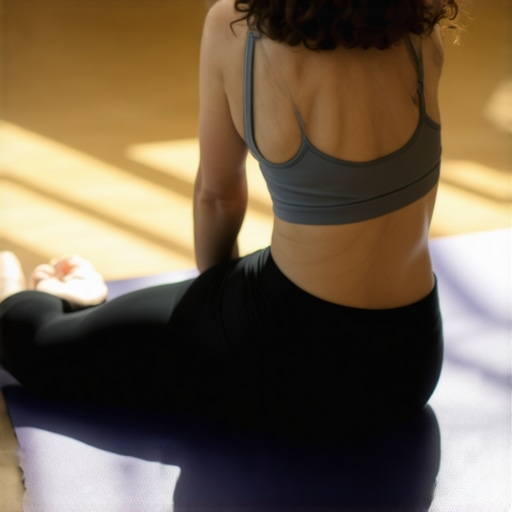
I remember the exact moment my mid-back gave out. I wasn’t doing anything heroic like deadlifting 400 pounds; I was just reaching for a half-empty gallon of milk in the fridge. Pop. Suddenly, it felt like a hot knitting needle was being driven into the space between my shoulder blade and my spine. Every breath felt shallow and sharp. I spent the next three hours wondering about the difference between muscle soreness and joint inflammation, because this felt like a whole new level of betrayal from my own body.
The Day My Mid-Back Decided to Quit on Me
If you’ve ever had that ‘stuck’ feeling where you can’t turn your head or even laugh without a wince, you know exactly the frustration I’m talking about. Early on, I made the classic rookie mistake: I tried to ‘stretch it out’ by violently twisting my torso. I thought if I could just get a good crack, the pain would vanish. Instead, I ended up with a back that was even more inflamed and angry. [image] I didn’t realize that learning how to brace your spine is a skill you need even for the small stuff, not just for the gym. Today, I want to share the exact roadmap I used to stop the spasms and actually heal, rather than just masking the pain with ice packs and prayers. Have you ever felt that sudden, sharp catch in your back from something as silly as a sneeze?
Can these tiny movements really fix a major muscle pull?
It sounds counterintuitive, doesn’t it? When you’re in pain, the last thing you want to do is move. However, the Journal of Orthopaedic & Sports Physical Therapy (JOSPT) notes that early, pain-free movement is actually superior to complete rest for muscle recovery because it promotes blood flow and prevents the surrounding joints from locking up. We aren’t going for a marathon here; we are using targeted mobility to tell your nervous system that it’s safe to let go of that protective spasm. I eventually learned that even the move that instantly relieves tension in your lower ribs could be a game-changer if done at the right stage of recovery. We are going to focus on gentle activation that respects your body’s limits while gently nudging it toward health.
Stop Bracing for Impact and Start Breathing
When a muscle pulls in your mid-back, your first instinct is to hold your breath and freeze. I call this the ‘armor response.’ Your brain thinks there is a structural failure, so it turns your muscles into a rigid cage to protect the spine. The problem is that this armor prevents the very movement needed for healing. To break the cycle, you have to master the hidden link between your breathing pattern and lower back stability. Instead of shallow sips of air, you need to drive your breath into your side-ribs. I once spent forty minutes on my living room floor just trying to get my diaphragm to drop because my ribs were so clamped shut. Once I finally felt that internal expansion, the ‘knitting needle’ pain started to dull from a sharp wince to a manageable ache.
Resetting Your Rib Cage From the Inside Out
To do this effectively, lie on your side with a pillow under your head. Inhale through your nose, imagining your ribs opening like an umbrella expanding in all directions. If you do this right, you will feel a gentle stretch in those tiny intercostal muscles between the ribs. This is often more effective than any aggressive foam rolling. In fact, many people find that the move that instantly relieves tension in your lower ribs is actually a breathing-based reset rather than a physical crack. 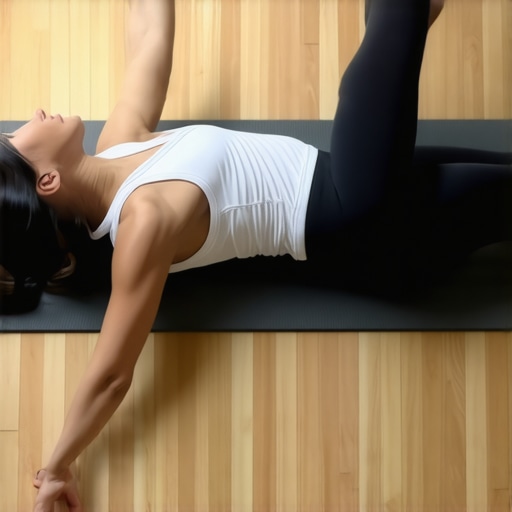
Waking Up the Segments That Stopped Moving
Once the initial fire is down to a simmer, you have to address the ‘stuck’ joints. Your mid-back, or thoracic spine, is designed for rotation. When we sit at desks or drive for long periods, those segments glue together like a rusted door hinge. I noticed why your middle back stiffens up every time you drive over an hour—it is because the spine loses its ‘wiggle room.’ To get it back, use a gentle ‘cat-cow’ movement, but focus specifically on the area between your shoulder blades. I remember the first time I tried this after my injury; I was so terrified of another ‘pop’ that I barely moved an inch. But moving an inch is better than moving zero. This gradual reintroduction of movement is the core of the ultimate guide to improving mobility and posture in 2025.
The Danger of the Do-It-Yourself Crack
One thing I learned the hard way: do not try to self-adjust when you are in a spasm. When you feel that ‘stuck’ sensation, it is tempting to throw yourself over the back of a chair to force a release. I did this once and ended up with a rib that felt like it was floating out of place for a week. You should definitely understand why you should stop rolling your neck to get rid of cracks and apply that same logic to your mid-back. If the movement does not happen naturally during gentle mobility exercises, you need a professional to look at the mechanics.
Why Professional Alignment is the Shortcut
Sometimes, a joint is truly ‘locked’ in a way that exercise cannot reach. I eventually went to see a specialist and learned how a single rib adjustment can stop that sharp pain when breathing almost instantly. It is like clearing a paper jam in a printer; once the physical obstruction is moved, the ‘error message’ in your nervous system goes away. This is one of the primary ways how chiropractic adjustments enhance posture and mobility over the long term. It is not just about the one-time fix; it is about resetting the baseline so your daily stretches actually have a chance to work.
Stop Trying to Stand Like a Statue
Most people think that ‘fixing’ their posture means forcing their body into a rigid, military-style upright position. I see it all the time: people pinning their shoulder blades together as if they are trying to crush a grape between them. In reality, this ‘perceived’ good posture is often just as damaging as the slouch. When you force your shoulders back, you often end up with flared ribs and an over-arched lower back, which is exactly how to stop your shoulders from shrugging towards your ears while actually creating new tension elsewhere. True spinal health isn’t a static position you hold; it’s about ‘movement variability’—the ability of your spine to move through different ranges without getting stuck. 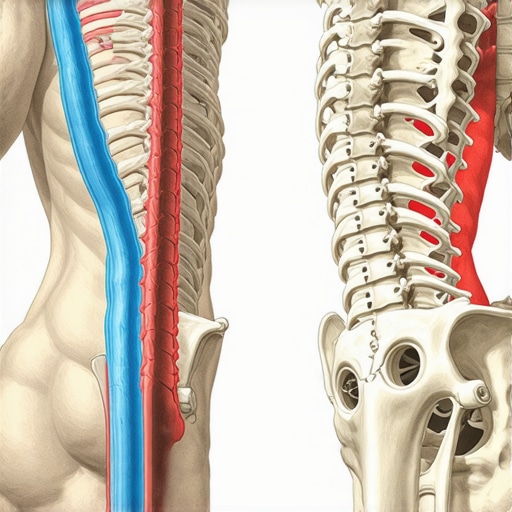
The Dangerous Myth of the Perfect Alignment
One of the biggest traps I fell into was obsessing over symmetry. I would look in the mirror and panic because one shoulder seemed higher than the other. I spent weeks trying to ‘stretch it out’ before I realized the truth about why one shoulder sits higher than the other often has nothing to do with a ‘bad’ back and everything to do with how your internal organs are situated and how you breathe. If you try to stretch a muscle that is actually tight because it’s trying to stabilize an uneven rib cage, you’re just fighting your own biology. This is why why stretching your hamstrings might actually make your back pain worse if the root cause is actually coming from a tilted pelvis or a mid-back that won’t rotate.
Does a louder crack mean a more successful adjustment?
This is the question that separates the beginners from the experts. We’ve all seen the viral videos of massive ‘cracks,’ but clinical research, including studies published in The Spine Journal, suggests that the ‘audible release’ (the pop) is not actually the primary indicator of a successful therapeutic outcome. The sound is just gas bubbles popping in the joint fluid. The real magic of an adjustment is the ‘neurological reset’ it provides to the surrounding muscles. When a professional performs an adjustment, they are sending a high-speed signal to your nervous system to ‘reboot’ the tension levels in that area. It’s why why chiropractic care is your secret weapon for better posture—it clears the static on the line so your brain can finally see what the muscles are doing.
Don’t Confuse Temporary Relief With Long Term Healing
The ‘Oops’ factor for most people is assuming that once the sharp pain is gone, the work is done. This is a massive mistake. A professional adjustment creates a window of opportunity where your joints are moving better and your pain is lower. If you don’t use that window to revolutionize your posture with targeted mobility exercises, your body will eventually revert to its old, painful patterns. You have to teach your brain how to use that new range of motion. Without the follow-up movement, you’re just a car that’s been aligned but is still being driven into the same potholes every day. Have you ever fallen into this trap of stopping your exercises the second the pain dipped? Let me know in the comments.So, how do we stop this from being a cycle of ‘break and fix’? For me, the answer lived in a $15 piece of equipment: the peanut massage ball. I don’t use it to just roll around aimlessly; I use it to pin down the specific tissue right next to those stubborn thoracic segments. This is where mobility hacks for a more active life go from theory to daily reality. If you aren’t addressing the soft tissue around the joint, your adjustments won’t ‘stick’ as long as they should. I’ve found that using this tool for just two minutes before bed keeps my ribs from locking up after a long day at the laptop. Using these tools consistently is why chiropractic care is your secret weapon for better posture, as it ensures your body remains receptive to the work your doctor is doing during your visits.
How do I maintain a pain-free spine for the long haul?
Maintenance isn’t about doing a 60-minute yoga flow every morning—nobody has time for that. It’s about ‘interstitial movement.’ I follow the 20/20/20 rule, but for my spine: every 20 minutes, I spend 20 seconds doing mobility boosts for posture. This keeps the nervous system from defaulting to that ‘frozen’ defensive state we talked about earlier. According to the clinical education protocols from the Postural Restoration Institute (PRI), establishing a proper Zone of Apposition (ZOA)—the area where the diaphragm meets the inner rib cage—is the absolute mechanical prerequisite for spinal stability. Without that rib-to-hip connection, your back is basically a house of cards. When I started focusing on my ZOA rather than just ‘standing up straight,’ my chronic mid-back fatigue disappeared within a month. 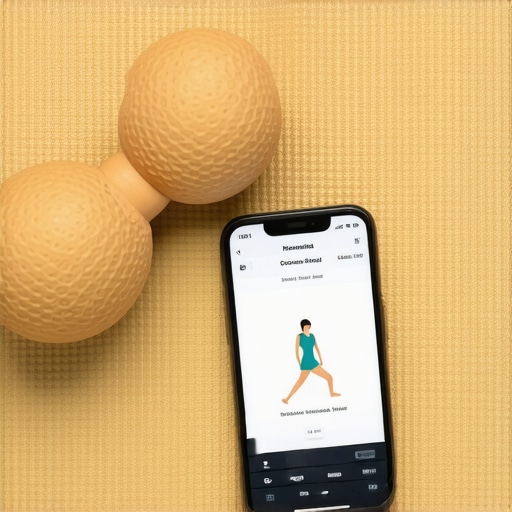
The High-Tech Future of Your Lower Back
I predict that in the next five years, we’re going to move away from ‘ergonomic chairs’ and toward wearable haptic sensors that vibrate when your diaphragm stops moving. We are already seeing the early stages of this with bio-feedback apps that track your respiratory rate. Instead of trying to force a static position, we will be training our bodies to breathe dynamically, which is the real secret to chiropractic adjustments that unlock a pain-free lifestyle. If you can keep your rib cage mobile through your breath, the rest of your posture often takes care of itself. I’ve even started looking into expert chiropractic techniques for 2025 that focus specifically on this neuro-respiratory connection. Before you go back to your day, try this: tonight, lie on your back, put your feet on the wall at a 90-degree angle, and take five slow breaths into your back ribs. It sounds too simple to work, but it is the exact move that keeps me out of the ‘spasm zone’ and keeps my mobility levels high. Let’s get ahead of the pain before it reaches for that gallon of milk for you.
Recovery is rarely a straight line, but it shouldn’t feel like a dead end either. After months of trial and error, I realized that my back wasn’t actually ‘broken’—it was just over-communicating. Once I stopped fighting the signals and started listening to the mechanics of my rib cage, everything shifted. Let’s look at the hard truths I discovered while navigating my own path to a pain-free life.
What My Body Taught Me After That Gallon of Milk Incident
The most important lesson I learned is that consistency beats intensity every single time. I used to think I needed a massive hour-long session to fix my spine, but the real progress happened in those tiny two-minute windows throughout the day. I also realized that the link between mobility and posture is actually a two-way street; you can’t have one without the other. My biggest ‘lightbulb moment’ was realizing that the pain was often a secondary symptom of my body trying to stabilize a rib cage that had lost its ability to expand. I had to stop looking for a ‘quick crack’ and start looking for a sustainable reset.
Tools That Actually Kept Me Out of the Spasm Zone
If you are serious about maintaining your progress, you need a few non-negotiables in your toolkit. First, the peanut massage ball is a must for thoracic mobility. Second, I highly recommend looking into the Postural Restoration Institute (PRI) concepts regarding diaphragmatic breathing—it’s the foundation for everything we’ve discussed. I also rely on mobility hacks for a more active life to keep my joints lubricated when I can’t get to the gym. These aren’t just gadgets; they are the bridge between your professional adjustments and your daily comfort. When you combine these with expert chiropractic techniques for 2025, you create an environment where your body can actually thrive instead of just surviving the workday.
Will You Choose Movement Over Armor?
Don’t let the fear of another ‘pop’ keep you from moving. Your spine is designed to be a spring, not a pillar. By integrating these breathing techniques and gentle activations, you are teaching your nervous system that it is safe to let go of the tension. It is time to revolutionize your posture with targeted mobility exercises and stop living in a defensive crouch. You have the tools, you have the roadmap, and now you have the permission to move again. Have you ever experienced that terrifying ‘stuck’ feeling when reaching for something small? Tell me your story in the comments below.