

I remember one Tuesday morning vividly. I tried to roll over to hit the snooze button, and a sharp, electric jolt shot straight from my ear down to my shoulder blade. I was stuck. For twenty minutes, I laid there like a flipped-over turtle, wondering if this was just what “getting older” felt like. It wasn’t just a bad night’s sleep; it was a recurring structural failure that made me dread going to bed. If you’ve ever felt that terrifying moment where your head simply won’t turn, you know exactly the frustration I’m talking about.
Stop Waking Up with a Locked Neck
If you have ever felt like your neck muscles are hard like a rock before you have even had your first sip of coffee, you are not alone. We spend thousands on high-end mattresses but often ignore the few inches of support that actually hold up our most important asset: our head. Today, I am going to show you the exact pillow height adjustment that silenced the morning “crunch” for me and allowed me to finally roll out of bed without a wince. We are going to tackle the alignment issues that your current pillow is likely making worse every single night. The goal here isn’t just comfort; it’s about maintaining a neutral spine so your nervous system can actually relax while you drift off.
The Huge Mistake I Made with Extra Fluff
Early in my journey to fix my spine, I thought more fluff meant more support. I bought the biggest, loftiest pillows I could find, thinking I was treating my neck to a luxury vacation. Big mistake. By over-stuffing the space behind my head, I was actually putting my cervical spine under immense pressure. A surprising study in the Journal of Manipulative and Physiological Therapeutics suggests that improper sleep posture is a primary trigger for cervicogenic headaches and long-term mobility loss. I was effectively kinked like a garden hose for eight hours straight. This realization is why chiropractic care is your secret weapon for better posture; it addresses the mechanical misalignment that a bad pillow creates. Have you ever bought a “premium” pillow only to find your pain got worse? I’d love to hear your story in the comments.
Is a simple height change actually enough to fix years of pain?
It sounds almost too simple to be true, doesn’t it? We are conditioned to believe that chronic pain requires complex, expensive solutions. However, the mechanical reality of your spine doesn’t care about the price tag of your bedding. It only cares about the angle of your vertebrae. Whether you are looking for the specific way to adjust your pillow for side sleeping comfort or you need to stop your chin from tucking while on your back, getting the height right is the only thing that matters. In the next section, I am going to show you how to measure your “shoulder-to-ear gap” so you can stop guessing and start healing.
To stop the guessing game, you need to treat your spine like a precision instrument rather than a sack of flour. Think of your vertebrae like a stack of children’s blocks; if one is pushed slightly out of line, the whole tower feels the strain. The goal is to fill the exact void between your ear and the tip of your shoulder without tilting your head up or letting it sag down. This misalignment is often why your neck crunches when you turn to look behind you—years of that ‘kink’ have created micro-friction in the joints that shouldn’t be there. To find your magic number, you have to move beyond the fluff and look at the physics.
Find Your Perfect Height with the Wall Test
I used to just poke a pillow in the store and hope for the best, but that never works because store-testing doesn’t account for your mattress’s firmness. Instead, try the ‘Wall Test.’ Stand sideways against a wall as if you were side-sleeping, but keep your shoulders squared. Place your pillow between your head and the wall. If your chin is tilting toward your shoulder or your nose is pointing toward the ceiling, the height is wrong. Your nose should stay perfectly perpendicular to your shoulders. I remember the first time I did this; I realized my ‘firm’ pillow was actually compressing by three inches under the weight of my head, leaving my neck dangling in mid-air. This mechanical failure is why even the best targeted mobility exercises can’t save you if you’re undoing that work for eight hours every night.

Measure Your Shoulder Gap Without the Guesswork
If you are a side sleeper, your shoulder width dictates your pillow height. A linebacker needs a much thicker loft than a petite marathon runner. If your pillow is too thin, your head drops, stretching the top-side muscles and crushing the bottom-side joints. This constant tug-of-war is why the ultimate guide to improving mobility and posture in 2025 emphasizes alignment over everything else. You can use a soft measuring tape to find the distance from the tip of your humerus—the bony part of your shoulder—to the side of your neck. That measurement is the ‘gap’ your pillow must fill when compressed by the weight of your skull. If you buy a pillow that matches this measurement exactly but is too soft, you will still sink into a cervical nightmare.
The Simple Towel Hack for Precision Support
When I was recovering from a particularly bad flare-up where I couldn’t even look at my blind spot while driving, I couldn’t find a pillow that fit my ‘gap’ perfectly. I took a standard pillow that was a bit too thin and started sliding folded hand towels under it inside the pillowcase. It sounds low-tech, but it allowed me to adjust the height by half-inch increments until the sharp pain vanished. It is the same logic as the simple change to your monitor height that kills headaches; small, incremental shifts in geometry lead to massive changes in nerve pressure. If you wake up and find your neck muscles are hard like a rock, try adding or removing one layer of a folded towel tonight. You will be shocked at how a quarter-inch of fabric is the difference between a migraine and a masterpiece of a morning. This level of precision is exactly what a chiropractor looks for during your first exam—finding the specific point where the mechanics have broken down.
I’ve seen it a thousand times: someone feels a ‘knot’ in their upper traps and spends twenty minutes a day pulling their head to the side, trying to stretch it out. Here’s the hard truth: you might be making it worse. We often confuse ‘tightness’ with ‘shortness.’ If your muscles are ‘locked long’—meaning they are already stretched out because your head is jutting forward—then more stretching just increases the instability. This is exactly why stretching your hamstrings might actually make your back pain worse if the root cause is neural tension rather than muscle length. You aren’t fixing the problem; you’re just tugging on an already irritated nerve. A major study published in the Journal of Bodywork and Movement Therapies highlights that movement impairment often stems from a lack of motor control, not just ‘tight’ muscles. This is where the ‘Oops’ factor comes in. Most people try to fix their own alignment by forcefully twisting their neck until it pops. I beg you: why you should stop rolling your neck to get rid of cracks is simple—you are likely hyper-mobilizing the joints that are already loose while the stuck ones stay frozen. This creates a cycle of chronic instability that a pillow alone can’t fix.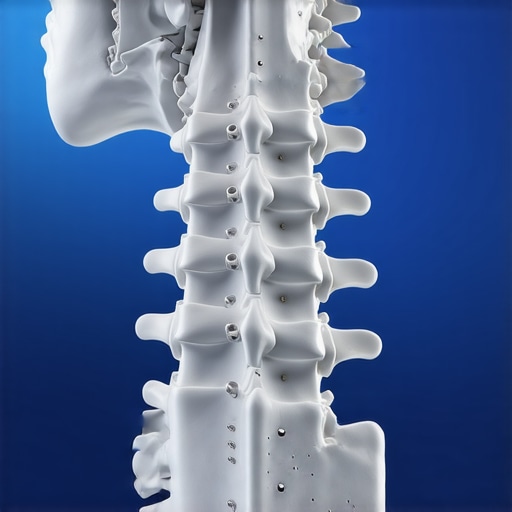
Can a simple adjustment actually retrain your brain’s movement patterns?
It’s not just about the ‘click’ or ‘pop.’ When you receive a professional correction, you are providing a high-velocity, low-amplitude stimulus to the nervous system. This ‘reboots’ the communication between your brain and your paraspinal muscles. This neurological reset is a cornerstone of the link between mobility and posture. Without this reset, your body will revert to its ‘survival’ posture—the hunch—the moment you stop thinking about it. Even the way you breathe matters; I’ve found that how your breathing habits are creating tightness in your scalenes is often the missing link for people who have ‘tried everything’ for their neck pain.
The Trap of Chasing Symptoms Instead of Causes
The biggest mistake is treating the neck in isolation. Your spine is a kinetic chain. If you only look at where it hurts, you’ll miss the fact that your ribs are flared or your pelvis is tilted, forcing the neck to overcompensate. Professional chiropractic adjustments unlock a pain-free lifestyle today by looking at the whole system, not just the squeaky wheel. Have you ever fallen into this trap of stretching a spot for weeks only to have the pain come back the next day? Let me know in the comments. We need to stop ‘stretching’ and start ‘stabilizing’ to see real, lasting change.
I used to think a weekly visit to the clinic was a get-out-of-jail-free card for the sixty hours I spent slumped over a laptop. I was wrong. The real magic happens in the 167 hours between those visits. To maintain that freshly adjusted feeling, I have had to integrate mobility boosts for posture expert tips for daily adjustments into my workflow. It is not about a two-hour gym session; it is about micro-adjustments that prevent the creep of gravity. Since I started viewing my spine as a dynamic structure rather than a static pillar, the results have been night and day. This shift in mindset is how chiropractic adjustments enhance posture and mobility—they give you the clean slate you need to build better habits.
Why I Swear by a Low-Tech Lumbar Roll
I have tried every expensive ergonomic chair on the market, but nothing beats a simple, firm lumbar roll placed exactly at the L3-L4 level of my spine. I keep one in my truck and one at my home office. Most chairs have support that hits too low, pushing your pelvis forward and causing your neck to strain. Knowing the proper way to use a lumbar roll in your office chair changed everything for me because it forces the natural lordotic curve of the lower back, which naturally pulls the head back over the shoulders. This is a technical nuance often cited by Dr. Stuart McGill, a world-renowned expert in spinal biomechanics at the University of Waterloo, who emphasizes that spinal hygiene—the way we move and sit throughout the day—is the ultimate predictor of long-term recovery.
#IMAGE_PLACE_HOLDER_D#
How can I keep my spine aligned for the long haul?
The secret to longevity is not more intensity; it is more consistency. You need to focus on improving posture through mobility practical chiropractor strategies that target the joints, not just the muscles. This means moving every joint through its full range of motion at least once a day. I personally use the 30-second wall squeeze to fix forward shoulder roll every time I finish a conference call. It resets my scapular position and fires up the rhomboids that have gone dormant while I was typing. If you want a challenge, try doing this three times a day for a week; you will find that your resting posture sits much higher without you even trying.
The End of the Guesswork Era
I predict that by 2030, we will not be guessing about our alignment anymore. We are already seeing the rise of wearable haptic sensors that vibrate when your cervical spine exceeds a 15-degree forward tilt. This real-time feedback loop will turn the ultimate guide to improving mobility and posture in 2025 into a personalized, AI-driven experience. However, no sensor can replace the foundational work of keeping your joints mobile. I challenge you to try the 30-second wall squeeze right now. Stand up, find a flat wall, and feel your shoulders drop back where they belong. Your future self will thank you for those few seconds of effort when you wake up without that electric jolt in your neck.
The Hard Truth About My Morning Routine
After years of trial and error, I realized that my neck pain wasn’t a mystery; it was a mechanical consequence of my daily habits. One of the biggest shifts for me was recognizing that stretching isn’t always the answer. If your muscles are already overstretched from a ‘forward head’ posture, pulling on them more just increases the irritation. Another lightbulb moment was the realization that the most expensive pillow in the world is worthless if it doesn’t match your unique ‘shoulder gap’ measurement. This is exactly what the ultimate guide to improving mobility and posture in 2025 taught me: precision matters more than price tags. I also learned that you can’t out-stretch a bad sleeping position, no matter how hard you try.
The Gear That Actually Saved My Neck
You don’t need a massive budget to fix your spine, but you do need the right tools. I swear by my firm lumbar roll for the office, a soft measuring tape for checking my pillow loft, and a simple flat wall for the ‘Wall Test.’ These items help me maintain the progress I make during professional sessions. I’ve found that mobility boosts for posture expert tips for daily adjustments are far more effective when you have these basic tools ready to go. I also highly recommend looking into how your vision is forcing your neck into a forward lean, as a simple monitor adjustment can be the best tool of all for preventing that late-afternoon cervical strain.
Are You Ready to Wake Up Refreshed?
Taking control of your spinal health is a journey, not a sprint. It starts with that first night using a towel to adjust your pillow height and continues with small, daily wins like the wall squeeze. Remember, your body wants to heal; you just have to give it the right environment to do so. Whether you are discovering why chiropractic care is your secret weapon for better posture or simply fixing your desk setup, every small change adds up. Your future self is waiting to wake up without that electric jolt of pain and with the mobility to enjoy the day. Have you tried the towel hack for your pillow yet, or are you still searching for the perfect store-bought option? Let me know in the comments below!